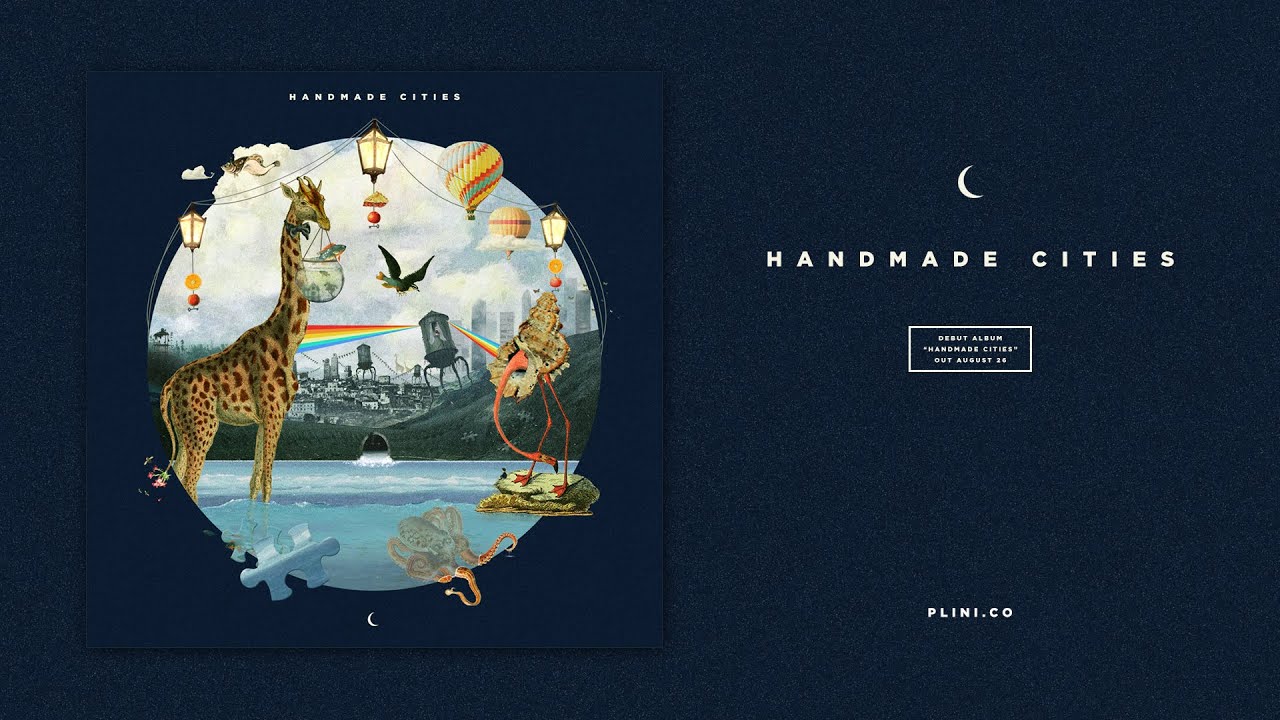
In the contemporary music landscape, few genre divides seem as vast as the chasm separating niche instrumental progressive metal from mainstream pop music. However, in late 2020, that boundary dissolved overnight during the MTV Europe Music Awards (EMA). When American pop icon Doja Cat delivered a heavy rock reinterpretation of her chart-topping single "Say So," guitar enthusiasts immediately recognized an undeniable similarity: the song’s climactic solo mirrored the title track of Australian guitarist Plini’s seminal 2016 album, Handmade Cities.
Rather than initiating high-stakes copyright litigation, Sydney-based virtuoso Plini Roessler-Holgate turned what could have been a contentious legal dispute into a viral marketing triumph. Arriving just three weeks before the release of his sophomore full-length album, Impulse Voices, the incident brought unprecedented exposure to the independent instrumental scene.
Plini’s calm, pragmatic handling of the situation highlighted a broader shift in the modern music industry: the power of direct-to-consumer audience engagement, the value of creative diplomacy, and the erosion of rigid genre silos. Bypassing traditional record label infrastructure, Plini released Impulse Voices to immediate commercial and critical acclaim—generating over one million streams within its first 60 hours. This report provides an in-depth analysis of the controversy, the compositional methodology behind Plini’s music, and what his independent success portends for the future of progressive music.
Detailed Chronology
  [2016]                    [Nov 2020]               [Nov 2020]                [Late Nov 2020]
  Plini releases            Doja Cat performs        Fan investigation         'Impulse Voices' launches;
  'Handmade Cities'         metal version of         reveals MD influence;     1M streams in 60 hours
                            'Say So' at MTV EMAs     Doja Cat apologizes
November 2020: The MTV EMA Incident
Three weeks prior to the scheduled launch of Impulse Voices, Plini’s phone was flooded with messages from fans across the globe. During the 2020 MTV EMAs, Doja Cat unveiled a punk-and-metal-infused arrangement of "Say So." While the performance drew widespread praise for its bold reimagining, eagle-eared listeners noted that the featured guitar solo was virtually identical note-for-note to the main motif of Plini’s 2016 composition "Handmade Cities."
The Online Investigation
Within hours of the broadcast, social media platforms—particularly Reddit, YouTube, and Twitter—were ablaze with speculation. Fans debated whether the solo constituted blatant plagiarism or an uncredited homage. While online commentary grew heated, fan-led sleuthing quickly uncovered the origin: Doja Cat’s musical director had arranged the arrangement and was an avowed admirer of Plini’s work, having intentionally incorporated the phrase as a tribute.
Resolution via Social Media
Recognizing the undeniable similarity, Doja Cat reached out directly to Plini via Instagram direct message to offer a formal apology. She clarified that her musical director’s admiration for Plini’s work led to the uncredited inclusion, adding that had she known, she would have invited the Australian guitarist to collaborate directly. Plini accepted the explanation with good humor, publicly diffusing the outrage and redirecting public interest toward his upcoming musical release.
The Launch of Impulse Voices
Capitalizing on the heightened visibility, Plini released Impulse Voices later that month. Bypassing label distribution entirely, the record surpassed one million streams in just two and a half days, alongside selling out multiple vinyl pressings and physical merchandise bundles.
Supporting Context & Metrics
Independent Commercial Performance
Plini’s career offers a compelling case study in the viability of independent music distribution. Without backing from major or boutique record labels, his direct-to-fan strategy yields exceptional metrics:
Metric
Performance Benchmark
Initial Streaming Volume
1,000,000+ streams within 60 hours of release
Physical Inventory
Complete sell-out of initial vinyl pressings & merch bundles
Marketing Spend
$0 spent on traditional record label PR campaigns
Primary Promotional Catalyst
Viral cross-genre media coverage & organic word-of-mouth
Compositional Methodology and Music Theory Analysis
A primary factor behind Plini’s widespread appeal lies in his distinct approach to song structure. While many technical guitarists prioritize rapid-fire fretboard acrobatics, Plini places primary emphasis on melodic accessibility, utilizing complex rhythm structures to ground his lead lines.
His songwriting methodology turns traditional virtuosity on its head:
Foundation First: Songs are initially constructed using rhythm tracks featuring complex time signatures (e.g., 19/8 meters) and extended chord voicings.
Melodic Layering: Lead melodies are intentionally crafted last. Plini treats the lead line as the "lowest common denominator"—a simple, hummable vocal surrogate designed to anchor listeners through intricate rhythmic changes.
Genre Blending:Impulse Voices features diverse instrumental additions, including saxophone solos, electric harp textures, 1990s ambient electronic beats, and heavy polyrhythmic riffing inspired by Swedish metal pioneers Meshuggah.
Official Statements
On the Doja Cat MTV EMA Controversy
Reflecting on the initial wave of fan messages following the MTV EMA broadcast, Plini noted the evolution of his reaction:
"I was sent the video by a bunch of different fans. Some of them were outraged and some were curious. I watched it and I thought, ‘Hey, that is similar.’ Then I watched it again and I was like, ‘Hey, that’s really similar!’"
Regarding the discovery of how his composition ended up in the pop broadcast, Plini shared:
"I tried to find out who the band was, but some fans did the research for me and found the musical director, who claims to be a big fan of mine. So I found that it was directly inspired—which I actually thought was pretty cool."
Addressing the resolution with Doja Cat and the resulting publicity, he added:
"I think there was enough keyboard warrior outrage that it became an issue, even if I didn’t necessarily think it was a huge issue. I just thought it was hilarious! Doja Cat sent me a big apology on Instagram. She said if the musical director was so big a fan to take a chunk out my song, then he should have just hit me up to collaborate on it. And that was sort of that.
"It was the perfect timing for the album’s press campaign—what better way to get thousands of people who’ve never listened to instrumental prog to at least check it out, because their favourite artist is in a headline?"
On Songwriting Philosophy and Technique
Explaining his approach to balancing technical complexity with accessible arrangements, Plini stated:
"I usually write everything but the melody first. The melody is sort of the lowest common denominator. Once I have something in a stupid time signature with chords all over the place, I’ll think of the simplest thing I can overlay to mark that it’s a song and not a math exercise."
He elaborated on the balance between harmonic complexity and directness:
"A lot of the music I listen to is very simple harmonically; that’s what sounds good to me. I have a lot of simple progressions, but for each chord I’ll find a way to play it that I haven’t done before, and by that time I’ve built it into a new place where it might sound a bit more abstract. Some parts are more just trying to figure out how to get as weird as possible while still sounding pleasant. But I try to make as much room for moments like simple melodies as I do for ‘Check out this sick lick!’"
On Sound Design and Diverse Influences
Discussing the extended time frame that shaped Impulse Voices and his varied musical inspirations, Plini explained:
"I tend to be a bit optimistic with my time management, so it was a positive thing, having a lot of extra time I didn’t think I’d have. It took maybe six or seven months in all, rather than the three I initially planned for, and I had a lot of fun with it. I let everything rest, going into a lot of detail and having everything sound exactly how I wanted it to be before releasing it.
"I’ve listened to so much different music in the last few years, especially a lot of electronic stuff which started sneaking its way into my music. I’d think, ‘Fuck it, I’m gonna put in a dance beat in this section,’ or, ‘There’s going to be a disco beat in 19/8 and we’ll make it as musical as possible.’ I’d learn from the experience."
On his creative process outside the studio, he added:
"So as well as the podcasts, which I felt was something to keep my brain doing new things, I was listening to a lot of different music that really helped with the process. I’d find a little production trick I wanted to use in this song, or a structure I could use to help with that song. It was a constant research process."
Future Outlook
The convergence of Plini’s instrumental progressive rock with Doja Cat’s pop performance points to a broader trend in the modern music ecosystem: the increasing fluidization of musical genres. As streaming algorithms expose listeners to diverse musical styles, historical boundaries between underground genres and mainstream pop continue to soften.
       TRADITIONAL MODEL                       EMERGING HYBRID MODEL
+-----------------------------+        +-----------------------------------+
|  Pop Industry (Mainstream)  |        |      Pop & Mainstream Media       |
+-----------------------------+        +-----------------------------------+
               │                                      ▲     │
      [Strict Genre Wall]                             │     │  Cross-Pollination,
               │                                      │     ▼  Sampling & Homage
+-----------------------------+        +-----------------------------------+
|  Prog / Metal (Subculture)  |        |    Niche Progressive Musician     |
+-----------------------------+        +-----------------------------------+
Key Takeaways for the Music Industry
Agile Public Relations in the Digital Era
Plini’s decision to de-escalate potential intellectual property litigation in favor of creative diplomacy demonstrates a modern PR strategy. By welcoming the homage, he gained cross-audience exposure that traditional marketing budgets could rarely secure.
The Power of the Independent Model
Generating one million streams in 60 hours without record label intervention confirms that niche artists can build sustainable careers through direct-to-fan engagement, specialized physical merchandise, and self-managed digital distribution.
Cross-Genre Evolution
As pop production increasingly adopts elements of rock, metal, and electronic music, technical musicians are finding new avenues for creative contribution. As Plini observed regarding the potential merging of pop and metal arrangements:
"I think it’s awesome that a whole minute of the Doja Cat arrangement was guitar solos. Hopefully more and more pop songs will get rearranged in different ways. Then all we need is for it to happen with metal songs too. Eventually we’ll no longer have genres and it’ll be a happy, happy world."
Plini’s rise demonstrates that technical proficiency and broad artistic appeal are far from mutually exclusive. Through a focus on strong melodies, open-minded composition, and a pragmatic approach to industry dynamics, he continues to help redefine the role of the modern guitar virtuoso in a genre-fluid musical landscape.