Executive Overview
In the cinematic landscape of contemporary American independent film, few works capture the poignant weight of unfulfilled artistic promise quite as delicately as Kent Jones’s Late Fame. Anchored by a masterclass performance from Willem Dafoe, the film serves as both a wry eulogy for the vanished countercultural topography of 20th-century New York and a deft, meditative engagement with F. Scott Fitzgerald’s famous dictum that "there are no second acts in American lives."
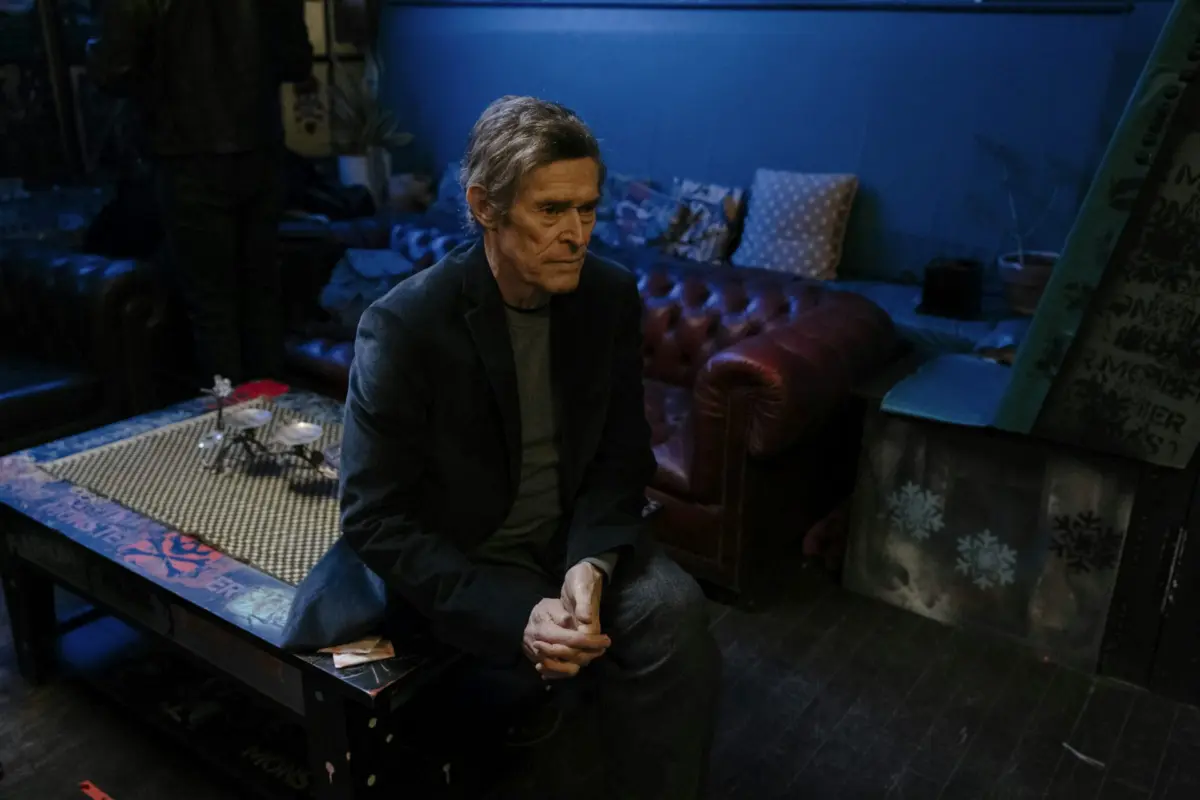
The narrative centers on Ed Saxberger, a man who, nearly half a century ago, occupied a modest, peripheral position in the bustling downtown poetry scene. Today, Ed is a postal worker navigating the chilly, gentrified canyons of Manhattan, existing on a quiet diet of routine, toasted tuna sandwiches, and blue-collar camaraderie over rounds of pool. His single claim to literary posterity is Way Past Go, a slender, long out-of-print volume of Beat-infused verse published decades ago. As Ed himself levelly assesses his past: "I had my moment. It passed."
That quiet obscurity is dramatically disrupted one wintry evening when Ed is approached by Myers—played with a vibrant, vampiric hunger by Edmund Donovan—a twentysomething stranger who hails the aging postal worker as a forgotten literary genius and a living avatar of "Old Downtown." Myers leads a small, nostalgic cadre of self-styled aesthetic contrarians who have unearthed Way Past Go and taken it as their gospel. What follows is a tragicomic collision between eras: a working-class senior citizen trying to reclaim a spark that died decades ago, and a flock of privileged, wealthy poseurs seeking vicarious authenticity through a fabricated counterculture.
Through atmospheric cinematography by Wyatt Garfield and a deeply internalized performance by Dafoe, Late Fame avoids the easy traps of cynical satire or sentimental uplift. Instead, Jones crafts a resonant, melancholic exploration of identity, the unknowability of others, and the quiet dignity of a life lived largely in the shadows.
Detailed Chronology
The Long Sleep: Decades in the Postal Trenches
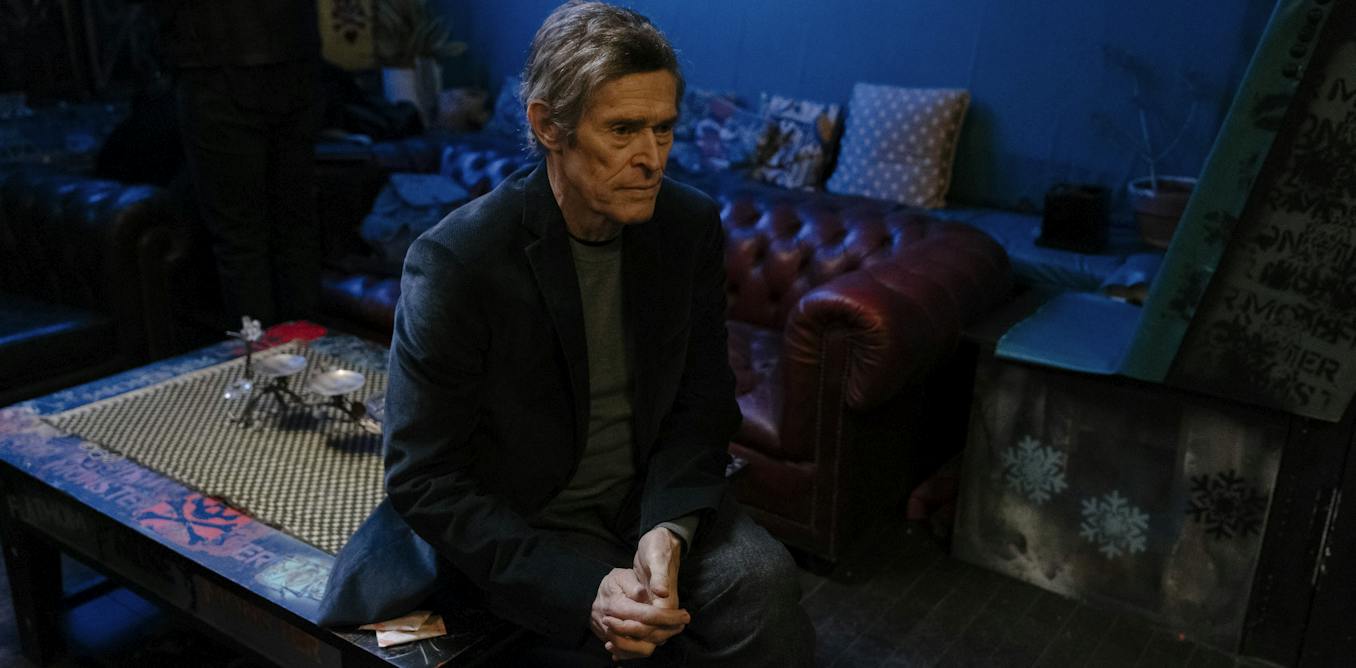
For close to fifty years, Ed Saxberger’s life has been defined by its ordinary, workaday parameters. Once brushing shoulders—however briefly and fleetingly—with titans of the American poetic canon like Allen Ginsberg and Gregory Corso, Ed retreated from the literary fray long ago. His existence is anchored by the rhythmic sorting of mail, the hum of fluorescent lights in postal sorting offices, and quiet evenings in a book-lined one-bedroom Lower East Side walk-up. This apartment, complete with its outdated layout and enduring holdover status from an era of affordable rent, operates as a domestic museum to a past that refuses to stay entirely buried.
Ed’s social circle consists of blue-collar peers: working-class men with whom he shares beer, casual banter, and games of pool. He is estranged from his siblings—a familial fracture left pointedly unexplained, adding to the sense of isolation that pervades his daily routines. He listens to his library of taped poets—T.S. Eliot, Wallace Stevens, Gary Snyder—as a solitary ritual. To all outward appearances, Ed Saxberger is a man who has made peace with his anonymity, insulated from the cultural churn of the twenty-first century.
The Incursion of the Aesthetes
The equilibrium of Ed’s twilight years is shattered on a freezing evening when Myers materializes at his doorstep. Myers is the self-appointed ringleader of a neo-bohemian coterie fascinated by the analogue past. Armed with reverence for Way Past Go, Myers flatters Ed, treating him as a legendary figure who can bridge the chasm between their hyper-digitalized present and the mythical grit of twentieth-century New York.
Initially skeptical yet quietly flattered, Ed allows himself to be drawn into their orbit. He joins them at retro coffeehouses where these young "analogue contrarians" haughtily sneer at digital influencers hunched over smartphones at neighboring tables. Yet, beneath the flattering attention, Ed’s sharp instincts recognize the artifice. These are wealthy kids "slumming on daddy’s dime," decorating loft apartments with expensive first editions of William Burroughs’ Naked Lunch, yet lacking the application or authentic grit to produce creative work of their own. If they were genuine artists, as the film wryly notes, they would be carving out spaces in Bushwick or Hoboken rather than rubbing shoulders with hedge-fund managers in SoHo.
The Pressure to Perform
Buoyed by his new admirers, Ed is pressured to compose a brand-new poem—his first in decades—to serve as the star attraction at an absurd, faux-New Wave "happening." The planning of this event drives the narrative framework of the film.
Ed hits the pavement, searching the chilly Manhattan streets for inspiration. He toys with evocative phrases like "seasons collide," but his yellow legal pad remains stubbornly blank. The creative spark, once kindled half a century ago, seems entirely extinguished.
Complicating his emotional landscape is Grace (Greta Lee), the sole woman in Myers’s group. Older than the rest of the disciples yet significantly younger than Ed, Grace styles herself as the group’s muse, effortlessly channeling the silver-screen poise of Louise Brooks, Marlene Dietrich, and Audrey Hepburn. Grace recognizes the precariousness of her own self-fashioned persona, and she subtly seduces Ed into embracing his improbable shot at late-in-life celebrity. Under her influence, Ed begins to lower his guard, even taking a meeting with a vapid literary agent to discuss a non-existent memoir. In these moments, as Ed testily pulls away from his working-class friends, the audience is left to wonder whether the aging poet is losing his moral compass.
The Climax of the "Happening"
The narrative culminates in the much-anticipated underground event. With no new poem to show for his weeks of agonizing creative labor, Ed faces a choice. When the moment arrives, he resolves the dilemma with pragmatic grace: he reads a 45-year-old poem straight out of Way Past Go.
To the assembled crowd of youthful disciples, the verse hits with the force of revelation; as Ed points out to a slightly disappointed Myers, to these ears, the poem might as well have been written that morning. Yet, woven into the cadence of his delivery are subtle hints of a long-lost romance and deep personal history that may have shaped the trajectory of his entire life. The evening closes not with a triumphant commercial renaissance, but with a quiet return to reality—proving that while second acts in American lives are rare, moments of profound reckoning are entirely possible.
Supporting Context & Metrics
Cast and Crew Overview
- Director/Writer: Kent Jones
- Lead Actor (Ed Saxberger): Willem Dafoe
- Supporting Cast: Edmund Donovan (Myers), Greta Lee (Grace)
- Cinematography: Wyatt Garfield
- Distributor: Vertigo Releasing UK
Critical and Thematic Metrics
- Literary References: The film integrates historical and literary touchstones from the Beat Generation, including figures like Allen Ginsberg and Gregory Corso, alongside audio archival presences of T.S. Eliot, Wallace Stevens, and Gary Snyder.
- Geographical Settings: The Lower East Side (Ed’s historical domain) versus SoHo (the hyper-gentrified landscape of 21st-century commerce and digital detachment).
- Theatrical Precedents: Willem Dafoe’s cinematic lineage within the film draws implicit comparisons to his role as a nocturnal wanderer in Paul Schrader’s Light Sleeper (1992) and his real-world avant-garde roots as a founding member of the Wooster Group.
Official Statements
While traditional studio press releases are minimal for independent character studies of this nature, director Kent Jones and lead actor Willem Dafoe have articulated the thematic core of Late Fame through promotional interviews and festival press materials.
Director Kent Jones on the Illusion of Cultural Continuity:
"The film isn’t simply about aging or the cruelty of the literary marketplace; it’s about how generations project their fantasies onto one another. The young people in the film are hungry for a tangible history that they feel robbed of by the digital age. Ed represents that history, but he is also a flesh-and-blood human being with his own mundane limitations, quiet griefs, and exhaustion. The friction—and the humor—comes from that gap between myth and reality."
Willem Dafoe on Embodying Ed Saxberger:
"What interested me about Ed was that he isn’t a victim, even if he looks vulnerable on the surface. He’s lived a full, quiet life. He knows these kids are playing dress-up, but there’s a strange comfort in letting yourself be played with a little bit when you’ve spent decades feeling invisible. It’s like hearing a song you used to love—you know the record is scratched, but you still want to hear the melody one more time."
Future Outlook
As Late Fame makes its way through international film festivals and theatrical distribution via Vertigo Releasing UK, it is positioning itself as a critical darling for audiences attuned to character-driven cinema. The film’s nuanced exploration of late-life reinvention, digital alienation, and artistic legacy resonates deeply within contemporary cultural discourse.
Looking ahead, Late Fame is expected to become a touchstone for discussions regarding Willem Dafoe’s late-career trajectory—showcasing his ability to subvert his electrifying, theatrical screen presence into a portrait of profound, working-class stillness. For director Kent Jones, the film solidifies his reputation as a vital cinematic essayist capable of bridging narrative fiction with deep historical and cultural critique. Whether Ed Saxberger’s solitary volume of poetry ever finds a wider modern readership remains an open question, but Late Fame ensures that the phantom limb of New York’s vanished bohemia will continue to ache with beauty and tenderness for generations of cinephiles to come.