Executive Overview
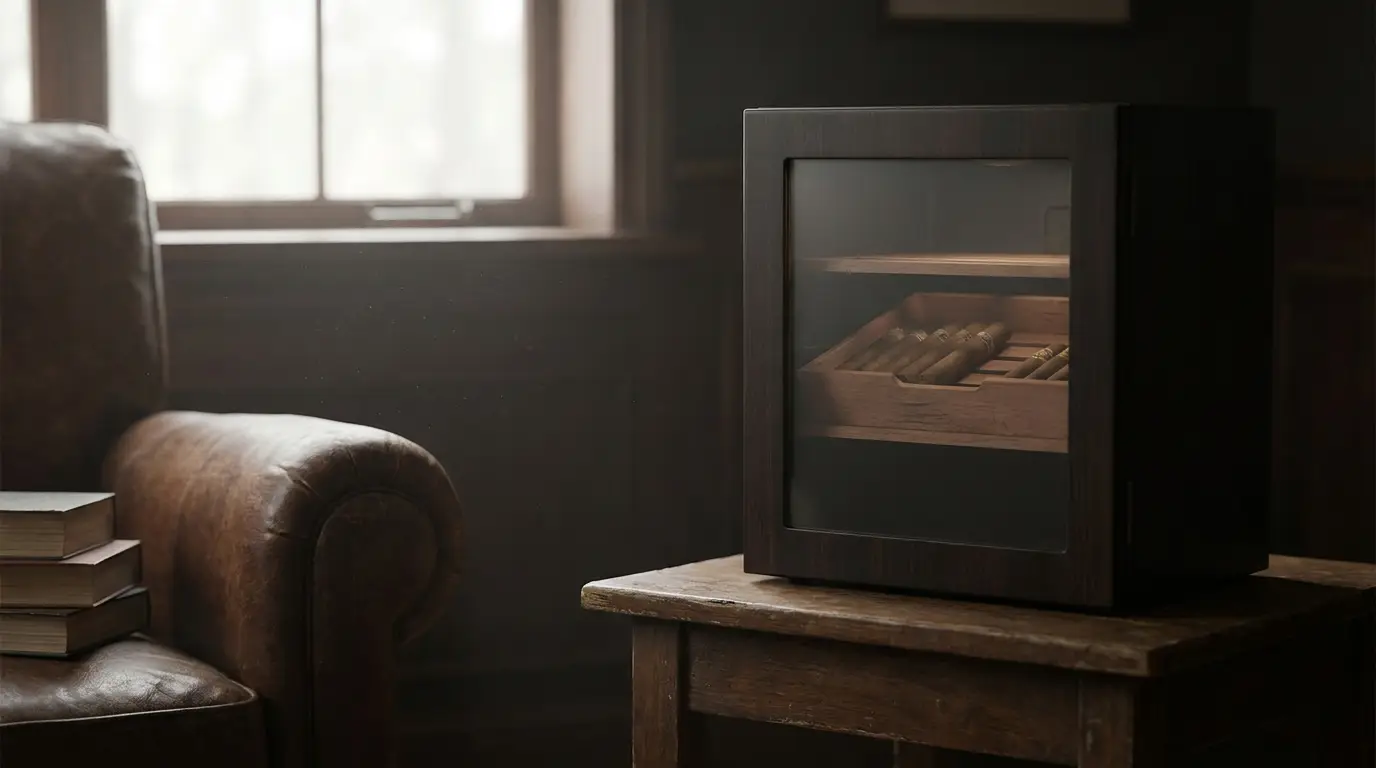
The intersection of luxury lifestyle, advanced home automation, and artisanal craftsmanship has birthed a new paradigm in domestic storage: the smart humidor cabinet. Long gone are the days when cigar enthusiasts relied exclusively on rudimentary wooden boxes, manual analog hygrometers, and passive sponge systems to protect prized tobacco investments. Today, as high-end residential design embraces both automated convenience and bespoke aesthetic statements, climate-controlled smart humidors have ascended to centerpiece status in home studies, private lounges, and custom entertainment rooms.
This transformation mirrors the trajectory of fine wine cellars over the past few decades. Just as serious oenophiles demand precise microclimates to safeguard vintage bottles against temperature spikes and humidity fluctuations, contemporary collectors of premium, hand-rolled cigars require absolute environmental stability. Natural tobacco leaves are remarkably delicate organic materials; even slight deviations in relative humidity (RH) and ambient temperature can trigger catastrophic degradation, rendering expensive collections brittle, moldy, or unburnable.
To combat these vulnerabilities, manufacturers have integrated sophisticated digital sensors, thermoelectric cooling and heating engines, active moisture delivery mechanisms, and internal circulation fans into fine furniture-grade cabinetry. Brands like Raching and specialized luxury curators such as Your Elegant Bar are leading this charge, offering collectors unprecedented remote visibility and peace of mind. This report investigates the technological leap from traditional boxes to intelligent preservation systems, analyzes the physiological science behind cigar storage, maps out the integration of these units into modern smart homes, and forecasts the future trajectory of luxury luxury-lifestyle preservation.
Detailed Chronology: From Desktop Boxes to Connected Microclimates
To understand the profound impact of the smart humidor cabinet, one must trace the historical evolution of cigar storage and preservation methodologies over the last century.
The Era of Passive Preservation (Mid-to-Late 20th Century)
For generations, cigar storage was an analog, highly labor-intensive undertaking. The standard tool of the trade was the desktop humidor—a small-to-moderate wooden chest, typically lined with Spanish cedar, relying on passive humidification systems such as floral foam saturated with distilled water or propylene glycol solutions.
- The Monitoring Challenge: Collectors relied on analog dial hygrometers, which were notoriously inaccurate, frequently drifting out of calibration and requiring salt-test re-calibrations.
- The Maintenance Burden: Owners had to constantly open the box, inspect the cigars visually, manually rotate bundles to ensure even air exposure, and re-moisten the humidification elements whenever ambient seasonal shifts threatened the interior balance.
- The Capacity Bottleneck: As collections expanded from a dozen weekend smokes to hundreds of rare, aged vitolas spanning multiple boxes and collector trays, desktop units proved entirely inadequate.
The Commercial Refrigeration Pivot (Early 2000s)
As the premium cigar market boomed in the late 1990s and 2000s, serious collectors began seeking alternatives to small wooden chests. Many turned to modified wine coolers and beverage refrigerators. While these appliances provided temperature control, they lacked the specialized internal airflow dynamics, humidity management, and aromatic wood linings required for long-term tobacco aging. Modifying off-the-shelf refrigerators often resulted in erratic humidity swings, dry-out zones, and condensation pooling, forcing enthusiasts to seek purpose-built alternatives.
The Rise of Climate-Controlled Cabinetry (2010s)
Recognizing the limitations of converted wine coolers, manufacturers began engineering purpose-built upright cigar cabinets. These units introduced dedicated heating and cooling systems, internal fans to eliminate stagnant air pockets, and expansive Spanish cedar shelving designed to hold entire boxes as well as loose inventory. However, these early electrical cabinets still lacked connectivity and fine-tuned digital automation, often requiring manual adjustments of analog dials to respond to external weather changes.
The Smart Revolution and Connected Living (Present Day)
Today’s smart humidor cabinets represent a complete technological metamorphosis. Driven by the broader Internet of Things (IoT) revolution in smart home design, modern units feature high-precision digital sensors, automated moisture delivery systems, touch-screen control panels, interior LED display lighting, and smartphone app connectivity. These systems continuously monitor environmental parameters in real-time, executing micro-adjustments to temperature and humidity without requiring human intervention. They have transitioned from hidden utility appliances into architectural statement pieces that command attention in high-end residential interiors.
Supporting Context & Metrics: The Science of Cigar Preservation
To appreciate the necessity of active, automated climate control, one must examine the physical and chemical nature of tobacco leaves. A fine cigar is a complex agricultural product that continues to breathe and age long after it has been rolled.
The Environmental Sweet Spot: The "70/70" Rule and Beyond
Historically, the golden rule of cigar storage has been 70 degrees Fahrenheit and 70% relative humidity (RH). While modern connoisseurs often debate exact preferences—some favoring slightly lower temperatures (65°F to 68°F) and lower humidity (65% RH) to prevent mold growth and beetle activation—the margin for error remains razor-thin.
+-------------------------------------------------------------------------+
|                  CIGAR STORAGE ENVIRONMENTAL SPECTRUM                   |
+-------------------------------------------------------------------------+
|  < 60% RH               |  65% - 72% RH          |  > 75% RH             |
|  (Danger Zone)          |  (Optimal Range)       |  (Danger Zone)        |
|                         |                        |                       |
|  • Tobacco dries out    |  • Perfect elasticity  |  • Mold proliferation |
|  • Wrapper cracks       |  • Even, cool burn     |  • Tobacco beetles    |
|  • Oils evaporate       |  • Slow, rich aging    |  • Sour, harsh flavor |
+---------------------------------------------------------+---------------+- Low Humidity (< 60% RH): The essential natural oils within the tobacco leaf evaporate. The wrapper becomes brittle, prone to cracking or unraveling when cut, and burns far too hot and fast, destroying the subtle flavor profiles crafted by the master blender.
- Excess Moisture (> 75% RH): Creates a breeding ground for mold and mildew, which can permanently ruin an entire collection. Furthermore, high humidity encourages the hatching of dormant tobacco beetle larvae (Lasioderma serricorne), whose voracious larvae bore destructive holes through prized wrappers. It also causes uneven, sputtering burns and an unpleasantly heavy, sour taste.
- Temperature Instability: Fluctuations cause the air inside the humidor to expand and contract, forcing moisture in and out of the tobacco leaves. Sustained temperatures above 74°F actively trigger the life cycle of tobacco beetles, while temperatures dipping too low can stunt the delicate aging process.
Comparative Storage Architecture
| Storage Feature | Traditional Desktop Humidor | Standard Upright Cabinet | Smart Humidor Cabinet (e.g., Raching) |
|---|---|---|---|
| Environmental Monitoring | Manual analog hygrometers (high drift rate) | Basic digital hygrometers (limited tracking) | Highly accurate digital sensors with real-time logging |
| Humidification Method | Passive sponges, floral foam, or gel packs | Manual water reservoirs or passive trays | Automated, whisper-quiet ultrasonic or evaporative moisture delivery |
| Temperature Control | None (relies on ambient room climate) | Basic compressor or thermoelectric cooling | Dual-zone active heating and thermoelectric cooling |
| Airflow & Circulation | Natural convection (requires manual rotation) | Minimal or none | Integrated multi-level circulation fans ensuring uniform microclimates |
| Capacity & Layout | 25 to 100 cigars (loose storage) | 200 to 500 cigars (shelves and basic trays) | 400 to 1,500+ cigars (dedicated boxes, sliding drawers, aging trays) |
| Aesthetic Integration | Functional wooden box | Utility appliance appearance | Furniture-grade finishes, Spanish cedar, ambient LED displays |
Official Industry Insights & Expert Perspectives
As the market for luxury home amenities evolves, industry leaders, interior designers, and master blenders are increasingly vocal about the necessity of precision storage.
The Role of Precision in Long-Term Aging
According to leading master tobacconists, aging a cigar is akin to cellaring a fine Bordeaux or vintage Champagne. The chemical reactions that occur within a tightly rolled cigar—where wrapper, binder, and filler leaves meld their complex flavors—require absolute environmental stability.
"When a collector invests thousands of dollars in rare, limited-edition or vintage-dated puros, they are purchasing a living, evolving piece of agriculture," notes a prominent luxury home automation consultant specializing in bespoke gentleman’s studies. "Leaving that investment exposed to the wild fluctuations of residential HVAC systems, seasonal humidity drops, and summer heatwaves is a massive gamble. Smart humidors eliminate the guesswork entirely, providing the rigorous scientific stability required to protect high-end assets."
Bridging Technology and Interior Architecture
Specialty retailers who cater to high-net-worth homeowners emphasize that modern consumers refuse to sacrifice aesthetic beauty for technological utility.
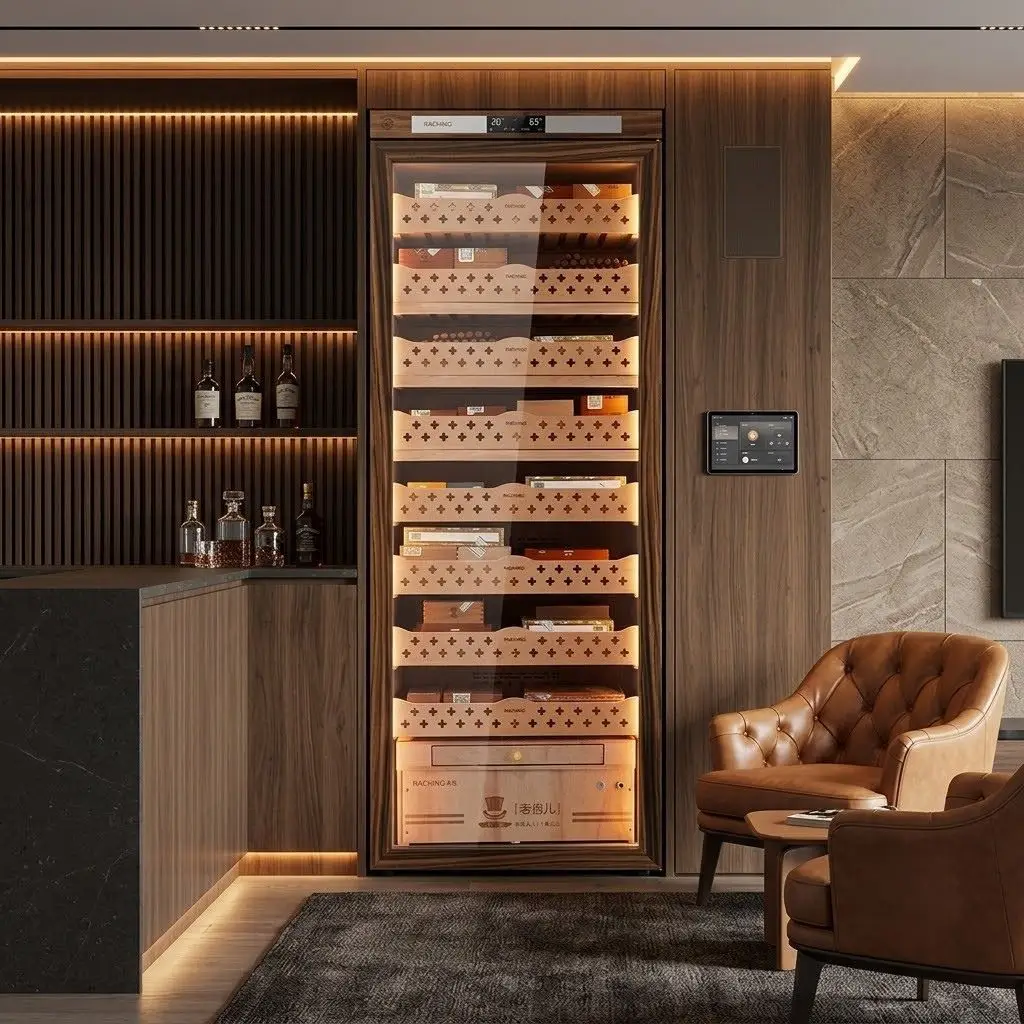
"Our clients are designing sophisticated home bars, private club rooms, and executive studies where every single element must exude timeless elegance," explains a spokesperson for Your Elegant Bar, a premier curator of high-end cigar cabinets. "Units like the Raching smart humidor series prove that you do not have to choose between cutting-edge semiconductor climate control and exquisite furniture craftsmanship. By utilizing genuine Spanish cedar interiors, seamless glass displays, and architectural wood finishes, these cabinets elevate preservation into a stunning visual centerpiece."
Cabinet Humidors in Smart Home Design & Luxury Living
The integration of smart humidor cabinets into modern residential architecture reflects a broader cultural shift in luxury living. Today’s homeowners expect their living spaces to be intuitive, responsive, and deeply tailored to their personal rituals.
Prime Residential Placement
Smart humidor cabinets are rarely relegated to dark basements or utility closets. Instead, their furniture-grade finishes—ranging from rich dark walnuts to sleek piano blacks and brushed metal accents—allow them to anchor key entertainment and relaxation zones:
- The Executive Study / Home Office: Positioned alongside leather wingback chairs and mahogany bookshelves, providing immediate access to an after-hours smoke while serving as a sophisticated design anchor.
- The Private Home Bar / Lounge: Integrated seamlessly into custom cabinetry or standing proudly adjacent to wine chillers and spirit displays, creating a unified beverage and tobacco tasting station.
- The Media Room / Billiards Den: Providing climate-controlled protection in entertainment spaces where social gatherings take place, ensuring cigars are always conditioned to absolute perfection when guests arrive.
Key Evaluation Criteria for Collectors
For homeowners seeking to invest in a smart humidor cabinet, industry experts recommend evaluating several critical pillars:
- Capacity and Internal Layout: Assessing whether the unit accommodates individual loose cigars, open boxes, or entire cabinet selections on sliding Spanish cedar shelves.
- Sensor Accuracy and Connectivity: Ensuring the internal telemetry provides real-time alerts (via mobile app or on-board display) if humidity or temperature strays outside safe thresholds.
- Acoustic Profile: Because these units often reside in quiet studies or bedrooms, whisper-quiet thermoelectric cooling systems are essential to prevent intrusive mechanical hums.
- Lighting and Glass Protection: Look for UV-protected double-paned glass doors paired with soft, cool LED interior lighting that showcases collections without generating ambient heat.
Future Outlook: The Next Generation of Connected Luxury
Looking ahead, the evolution of smart humidor cabinets points toward an increasingly connected and automated future. As smart home ecosystems (such as Apple HomeKit, Crestron, and Control4) become more unified, future iterations of climate-controlled humidors will likely feature deeper home-automation integration.
Imagine receiving a discreet notification on your smartphone or smart-home touchscreen not only when water reservoirs require refilling, but diagnostic alerts predicting mechanical wear before it impacts internal conditions. Furthermore, advancements in energy-efficient thermoelectric materials will allow for even slimmer profiles, greater temperature differential capabilities, and lower power consumption.
As the boundary between utility appliances and bespoke interior furnishings continues to dissolve, smart humidor cabinets will remain at the vanguard of luxury home technology. By fusing the timeless, organic warmth of Spanish cedar with the unyielding precision of digital automation, these advanced preservation systems ensure that the sacred ritual of cigar enjoyment is protected, elevated, and celebrated for generations to come.