In a unprecedented clash between civilian defense leadership and top-tier military brass, General Randy George, the Chief of Staff of the United States Army, was forced into early retirement following a dispute with Secretary of Defense Pete Hegseth. The catalyst for the high-level rupture was an unauthorized low-altitude military helicopter flyby over the Nashville estate of rock musician Kid Rock.
When Army aviation authorities initiated a routine safety and regulatory investigation into the incident—temporarily grounding the involved pilots—Secretary Hegseth publicly intervened to countermand the command structure. Hegseth unilaterally lifted the suspensions, declared the investigation closed, and characterized the aircrews as "patriots." When General George, a four-star officer with nearly four decades of service, insisted on maintaining established military protocols to evaluate potential flight safety breaches, he was instructed by Hegseth to vacate his post.
This abrupt removal has sent shockwaves through the Department of Defense. It highlights growing friction over the politicization of military assets, the erosion of standard operational discipline, and the delicate balance between civilian oversight and the traditional chain of command.
Detailed Chronology
[March 28]  AH-64 Apache flyby over Kid Rock's Nashville estate
    │
[March 29]  Army aviation command suspends pilots pending standard safety review
    │
[March 30]  SecDef Pete Hegseth publicly overrides Army, lifts suspensions via social media
    │
[April 02]  Gen. Randy George insists on protocol; Hegseth forces George's early retirement
    │
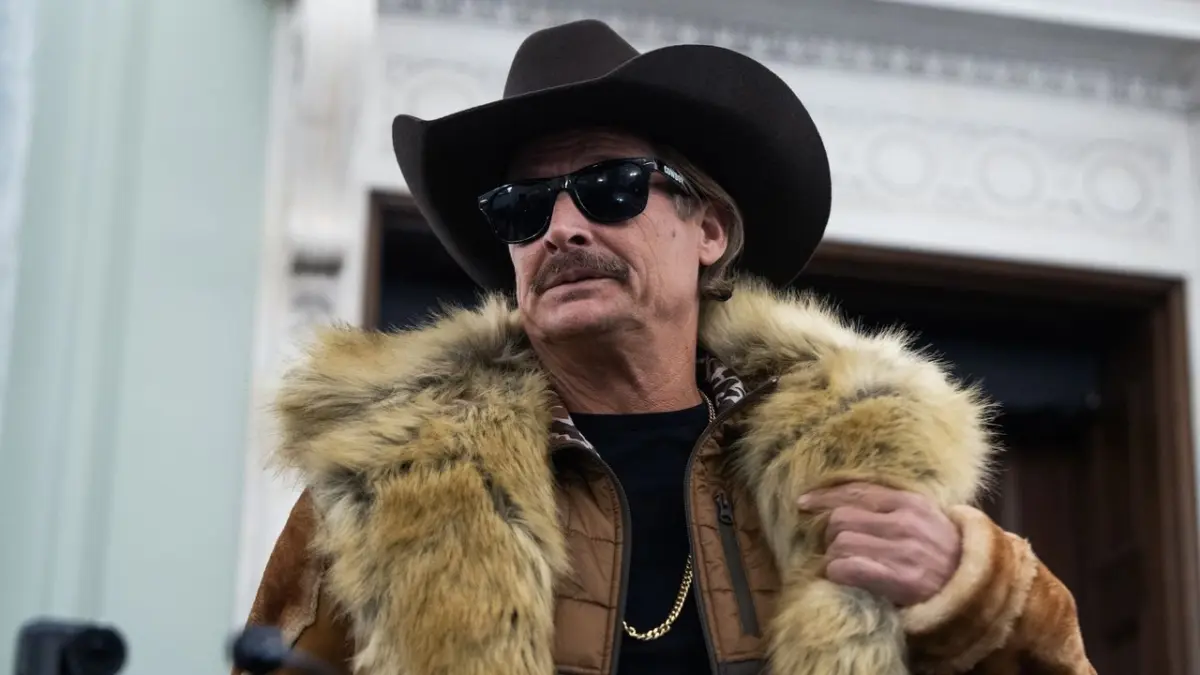
[April 28]  Hegseth and Kid Rock take promotional Apache helicopter flight in Nashville
The Flyby (March 28)
Two AH-64 Apache attack helicopters assigned to the 101st Combat Aviation Brigade—stationed at nearby Fort Campbell, Kentucky—conducted an unscheduled, low-altitude pass over the expansive Nashville, Tennessee property belonging to musician Robert Ritchie, professionally known as Kid Rock. Ritchie, who frequently refers to his mansion as the "Southern White House," captured video footage of the armored gunships banking near his residence and subsequently published the clip across social media channels, captioning it: "God Bless America and all those who have made the ultimate sacrifice to defend her."
The Initial Military Response (March 29)
Following public dissemination of the video, unit commanders within the 101st Airborne Division (Air Assault) initiated standard procedures. Per U.S. Army Aviation Center of Excellence standards and Federal Aviation Administration (FAA) guidelines regarding minimum safe altitudes over populated areas, the two pilots were temporarily suspended from flight status. The administrative suspension was intended to allow flight safety officers to determine whether the low pass was part of an authorized training route, an approved public relations flyover, or an unauthorized deviation from assigned flight plans.
Civilian Override (March 30)
Before the internal command review could conclude, Secretary of Defense Pete Hegseth issued an extraordinary public directive via X (formerly Twitter), directly countermanding the Army’s administrative actions. Hegseth wrote:
"Thank you @KidRock. @USArmy pilots’ suspension LIFTED. No punishment. No investigation. Carry on, patriots."
The Ultimatum and Removal (April 2)
The Secretary’s public intervention created an immediate impasse with military leadership. According to reporting from The Washington Post, General Randy George communicated to colleagues and Defense Department officials that adhering to standard administrative protocols was essential to uphold flight safety standards and preserve operational integrity across the force. George maintained that waiving safety inquiries for high-profile public figures established a dangerous precedent for aviation discipline.
Within 48 hours of expressing his dissent, General George was asked by Secretary Hegseth to step down as Chief of Staff of the Army, terminating a 39-year military career short of his full tenure. No formal, public justification for the relief was provided by the Pentagon at the time.
Public Celebration (April 28)
Four weeks after General George’s forced departure, Secretary Hegseth joined Kid Rock in Nashville for a promotional flight aboard a U.S. Army helicopter as part of early media events tied to the United States Semiquincentennial (America’s 250th anniversary).
Hegseth posted images of the flight online, stating:
"Joined my friend @KidRock — and some of our great @USArmy Apache pilots — for a ride this morning. (More to come on that!) Kid Rock is a patriot and huge supporter of our troops. The War Department is wasting no time celebrating America’s 250th — home of the free because of the brave."
Supporting Context & Operational Metrics
Military Aviation Protocols and Safety Standards
Under U.S. Army Regulation 95-1 (Flight Regulations) and Department of Defense Directive 5500.07 (Standards of Conduct), military aircraft operations are strictly governed to mitigate operational risk and prevent the misuse of federal assets.
Minimum Altitudes: Non-essential low-level flights over congested areas or private residences below 1,000 feet are generally prohibited unless operating along published military training routes (MTRs) or participating in pre-approved public events.
Flight Authorization: Flyovers for non-military events require explicit approval through the Office of the Assistant Secretary of Defense for Public Affairs. Spontaneous flybys over private residences—regardless of the owner’s public stature—are classified as unauthorized deviations.
Cost Metrics: Operating an AH-64 Apache attack helicopter costs approximately $5,000 to $7,000 per flight hour in fuel, maintenance wear, and logistical overhead. Diverting operational assets for non-sanctioned passes exposes the military to scrutiny regarding resource allocation.
Parameter
Standard Protocol
Kid Rock Incident Action
Flight Authorization
Mandatory Pentagon/OASD-PA Clearance
Unsanctioned local deviation
Initial Command Action
Temporary flight suspension pending review
Suspended by 101st CAB leadership
Review Process
Safety & regulatory mishap prevention audit
Canceled by Secretary of Defense
Administrative Outcome
Disciplinary action or retraining if non-compliant
Full reinstatement without record
Strategic Friction: Civilian Control vs. Uniformed Expertise
The dismissal of General George underscores a deepening structural friction within the Department of Defense. While the U.S. Constitution establishes civilian control over the armed forces via the President and the Secretary of Defense, historical norms rely on mutual deference: civilian leaders establish broad strategic policy, while uniformed flag officers manage internal discipline, tactical standards, and personnel management.
Direct intervention by a Defense Secretary into lower-level tactical safety reviews breaks long-standing administrative boundaries, potentially weakening the authority of intermediate commanders to enforce standards within their units.
Official Statements & Public Fallout
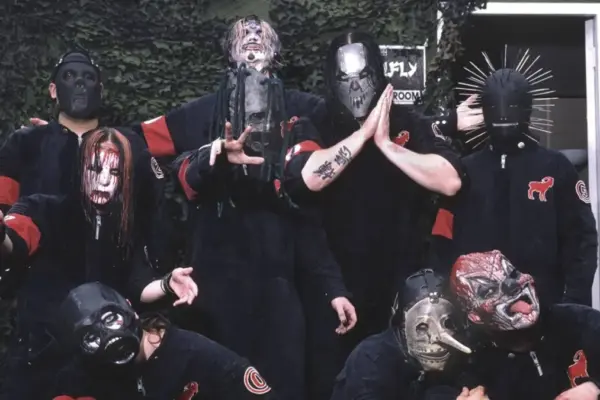
The abrupt firing of the Army’s top general triggered immediate reactions across both military and culture-sector landscapes, highlighted by a notable defense of General George from an unexpected source: Tool frontman Maynard James Keenan.
Maynard James Keenan’s Support
Keenan, a former U.S. Army soldier who attended the United States Military Academy Preparatory School (USMAPS) alongside General George before pursuing a career in music, publicly condemned the political pressure forced upon his former classmate.
Sharing his personal connection to the general, Keenan stated:
"As you can imagine, most of my classmates at West Point Prep were there with a singular mission—to be a West Point graduate and serve in our military. Focus, drive, a plan, and zero compromise. I, on the other hand, was one of the few with doubts and inner conflict.
"So when my heart spoke louder than the outside influencers and I declined my appointment to West Point, most of those around me saw it as a huge mistake. But a handful were very supportive. They knew me well enough to respect that decision. One of those supportive classmates was my Cross Country teammate, Randy George.
"Randy went on to be a four-star general and Chief of Staff for the U.S. Army. He was approaching his 40th year of service. I can’t even imagine how disappointed and upset he must feel for having been ‘asked’ to retire early. So I’m just here to return that favor of support. We’re here for you, Randy. Might be time for a beer or three. See you soon."
Institutional Reactions
Inside the Pentagon, the move has drawn silent concern from current and retired senior officers. Internal leaks published by national defense media outlets indicate that senior commanders view the decision as a damaging signal to the officer corps. The perception that adhering to safety regulations can lead to career termination at the executive level threatens to undermine accountability mechanisms across all service branches.
Future Outlook & Strategic Implications
Long-Term Impact on Military Discipline
The summary dismissal of a military branch chief over a regulatory dispute establishes a problematic precedent for the Department of Defense:
Erosion of Subordinate Command Authority: Unit commanders may hesitate to enforce routine discipline or investigate safety violations if senior civilian officials can arbitrarily reverse decisions based on public relations or political considerations.
Chilling Effect on Safety Reporting: The U.S. military’s aviation safety record relies heavily on non-punitive, rigorous safety evaluations. Bypassing these procedures jeopardizes the system designed to identify systemic flight risks before catastrophic accidents occur.
Heightened Politicization: Rebranding the Department of Defense in public communications as the "War Department"—a term retired in 1947—alongside public alliances with celebrity figures signals a shift toward a more nationalistic and media-centric defense posture, potentially alienating traditionalists within the armed services.
As Congress exercises its oversight duties through the Senate Armed Services Committee, lawmakers are expected to question Defense Department leadership regarding the circumstances of General George’s dismissal and the long-term operational consequences of overriding established military safety protocols.