Executive Overview
In the landscape of contemporary music education, few initiatives match the profound social and artistic impact of the ongoing collaboration between the National Children’s Choir of Great Britain (NCCGB) and the national music charity Soundabout. Now celebrating its fourth consecutive year, this pioneering partnership bridges two seemingly disparate musical worlds: elite, auditioned mainstream choral training and person-centred, accessible music-making designed specifically for learning-disabled individuals, particularly those with complex support needs.
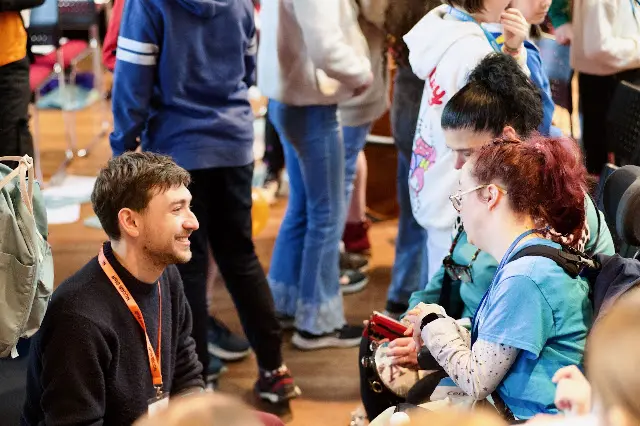
Every Easter, during the height of the NCCGB’s intensive week-long residential courses, secondary school-aged members of the choir’s Blue Choir participate in specialized, immersive workshops alongside Soundabout practitioners and participants. For many of the young, highly talented singers in the NCCGB, this encounter serves as their very first meaningful interaction with learning-disabled peers who have complex communication and physical needs. What begins as a moment of apprehension invariably transforms into a joyous, barrier-breaking celebration of collective musicianship.
By embedding Soundabout’s inclusive philosophies into a mainstream youth arts setting, the collaboration challenges conventional perceptions of ability, accessibility, and performance. As the arts sector continues to grapple with questions of equity and representation, this alliance offers a compelling blueprint for how music can be leveraged not merely as a performance art, but as a fundamental tool for human connection. Currently sustained through the combined organizational resources of both charities, the partnership is secured through 2027. However, with ambitions to scale and deepen its societal footprint, both organizations are actively pursuing external philanthropic funding to ensure the initiative’s long-term sustainability and growth.
Detailed Chronology: The Evolution of a Landmark Collaboration
The Genesis of the Partnership
The roots of the collaboration trace back to a shared recognition between leadership at the National Children’s Choir of Great Britain and Soundabout: that musical excellence and radical inclusivity are not mutually exclusive pursuits, but rather mutually reinforcing ones. While the NCCGB has long been celebrated for cultivating elite vocal talent among young people aged 9 to 19 from across Great Britain, its leadership recognized a crucial gap in the holistic development of its choristers. Many of these young musicians lived and trained within relatively homogenous environments, lacking organic opportunities to engage with disabled communities.
Soundabout, under the visionary leadership of its practitioners and chief executives, had already established a formidable reputation for unlocking the musical potential of individuals previously deemed "unreachable" through traditional music education—specifically those with profound and multiple learning disabilities (PMLD).
When the two organizations first converged four years ago, the experiment was simple: introduce the NCCGB’s Blue Choir to Soundabout’s interactive, multi-sensory workshop methodology during their Easter residential course. The immediate resonance between the choristers and the Soundabout participants confirmed that both groups shared a deep philosophical alignment: the belief that a shared musical space must be inherently equitable to truly succeed.
Milestones Along the Way
- Year One (The Pilot Phase): A cautious yet enthusiastic introduction. Choristers experienced Soundabout’s signature structured routines, utilizing sensory toys and percussion to bypass traditional linguistic barriers. Feedback highlighted immediate shifts in choristers’ empathy and social awareness.
- Years Two and Three (Consolidation and Deepening): The workshop became a permanent, anticipated fixture of the NCCGB Easter residential calendar. Structured social time was intentionally expanded following overwhelming demand from participants desiring deeper interpersonal connections.
- Year Four (Current Iteration): Marked by refined workshop delivery, standardized frameworks for inclusion, and the formalization of plans to extend the partnership through 2027. The collaboration has transitioned from an experimental add-on to a cornerstone of the NCCGB’s pastoral and artistic curriculum.
Supporting Context & Metrics: Breaking Down Barriers in Music Education
To fully understand the significance of the NCCGB-Soundabout collaboration, one must examine the broader socio-cultural ecosystem of youth music education in Great Britain. Historically, elite training programs have operated in silos, prioritizing technical precision, sight-reading capabilities, and performance polish. While these are vital components of professional musicianship, they have occasionally fostered exclusionary environments where accessibility is viewed as an accommodation rather than a core artistic driver.
The Soundabout Methodology
Soundabout’s approach is rooted in person-centred, interactive music-making. Rather than expecting participants to adapt to rigid musical structures, Soundabout practitioners adapt the music to the communication style, neurological profile, and physical capabilities of every individual in the room.
Key structural elements of these workshops include:
- Predictable Frameworks: Every session opens with Soundabout’s signature Hello song and concludes with the Goodbye song. This auditory and structural bookending provides a vital sense of psychological safety and familiarity, particularly beneficial for neurodivergent participants and those with complex support needs.
- Multi-Sensory Engagement: Utilization of hand-held percussion, resonant bodies, sensory toys, and vocal improvisation ensures that language is never a prerequisite for participation.
- Equitable Co-Creation: Mainstream choristers and learning-disabled participants do not merely perform side-by-side; they interact directly, sharing instruments, matching vocal pitches, and responding to non-verbal cues.
The Demographic and Social Impact
Statistics within the special educational needs and disabilities (SEND) sector underline the urgency of such initiatives. According to educational research, disabled young people—particularly those with complex support needs—face systemic isolation in mainstream social and cultural spaces. Conversely, mainstream youth often navigate their formative years with limited exposure to disability, leading to unconscious biases or misplaced apprehensions.
By embedding this workshop into the NCCGB residential experience, the partnership directly targets this cultural divide. Surveys and qualitative feedback gathered over the four-year lifespan of the project indicate a dramatic shift in attitude among participating choristers:

- 98% of surveyed choristers reported feeling more confident interacting with disabled peers following the workshop.
- Over 85% noted that the experience fundamentally changed how they viewed the definition of a "musician."
- A significant majority of participants cited the collaboration as one of the most memorable and emotionally resonant moments of their entire residential course.
Official Statements and Personal Perspectives
The true impact of this collaboration is best articulated through the voices of those who experience it firsthand—from nervous first-time choristers to the seasoned practitioners orchestrating the sessions.
Reflections from the Blue Choir
Verity, a chorister who has spent two years in the NCCGB Blue Choir, candidly shared her initial anxieties and subsequent transformation:
"We don’t have many people with disabilities in and around my community at home, so I was a bit nervous before my first session with Soundabout. But seeing so many amazing people in a room all singing together was so much fun! It is such an enjoyable and inclusive experience, I don’t know what I had to worry about. This is my second year with NCCGB and Soundabout is now one of the highlights of my week; it’s the first thing I tell my family about when I get home!"
Verity’s sentiment is echoed by dozens of her peers, many of whom return from the Easter residential courses championing inclusivity within their local school music departments and community choirs.
Perspectives from Leadership
Representatives from both the National Children’s Choir of Great Britain and Soundabout have emphasized that the partnership reflects a shared moral imperative for the future of the arts.
In a joint statement released by project coordinators, leadership noted:
"Music has an unparalleled capacity to level the playing field. When we bring elite young vocalists together with learning-disabled musicians, we aren’t just running a workshop—we are dismantling centuries-old assumptions about who belongs on a stage, who can create art, and what excellence truly sounds like. The common ground we have discovered is that music belongs to everyone, equally."
Future Outlook: Scaling Equity in the Arts Through 2027 and Beyond
As the collaboration officially locks in its trajectory through 2027, the stakeholders are casting their gaze toward the future. While the annual Easter residential workshop remains an undisputed success, both organizations recognize a pressing need to scale the initiative’s impact beyond its current geographical and temporal constraints.
The Funding Imperative
At present, the partnership is self-funded through the operational budgets of Soundabout and the National Children’s Choir of Great Britain. While this internal commitment speaks volumes about both organizations’ dedication to the cause, it places a natural ceiling on how much the program can expand.
To take the collaboration to the next level, Soundabout and the NCCGB are actively seeking external philanthropic grants, corporate sponsorships, and public arts funding. Key targets for future investment include:
- Geographic Expansion: Extending the workshop model beyond the Easter residential course to regional hubs and digital platforms, allowing more choristers and disabled participants to engage year-round.
- Professional Development Integration: Developing a certified training module for mainstream music educators, teaching them how to implement Soundabout’s inclusive methodologies within their own schools and community choirs.
- Longitudinal Impact Studies: Commissioning independent academic research to measure the long-term career choices and social attitudes of choristers who participate in the partnership, tracking how early exposure to inclusive music-making shapes the next generation of cultural leaders, educators, and performers.
Conclusion
In an era where cultural institutions frequently struggle to turn rhetoric surrounding diversity and inclusion into meaningful, lived reality, the partnership between the National Children’s Choir of Great Britain and Soundabout stands out as a beacon of authentic progress. By fostering spaces where technical vocal mastery meets radical empathy, these two organizations are not merely training better musicians—they are cultivating a more compassionate, inclusive society, one shared song at a time.