Executive Overview
In the sprawling, interconnected landscape of contemporary global music, few artists operate with the radical cross-cultural fluency of Sydney-born multi-instrumentalist Julian Belbachir. Straddling continents, traditions, and centuries of musical evolution, Belbachir has returned with “M’Bara Meskin,” a daring, reggae-infused dub reinvention of a centuries-old devotional song hailing from Morocco’s revered Gnawa tradition. Released as the lead single on September 11, the track serves as the powerful precursor to his forthcoming studio album, The Golden Light, slated for release in February 2027.
The project is far more than a simple genre exercise; it is an ambitious transcontinental tapestry. Recorded across sessions spanning Morocco, Mali, Australia, Canada, and Jamaica, “M’Bara Meskin” preserves its original Moroccan Arabic vocal delivery while grafting it onto the hypnotic, bass-heavy foundations of Jamaican dub and reggae. Behind this sonic alchemy is an artist whose life has been defined by a deep, immersive study of diasporic traditions.
The song tells the poignant story of poor M’Bara—a destitute figure left outside a shrine in tattered clothes, forced to brew his tea from discarded leaves, while the elite inside (the Sidi and the Lalla) sip theirs comfortably in their slippers. For Belbachir, this historical parable is not merely a regional folklore piece; it is a timeless metaphor for the precarity and marginalization faced by artists navigating the modern creative economy.
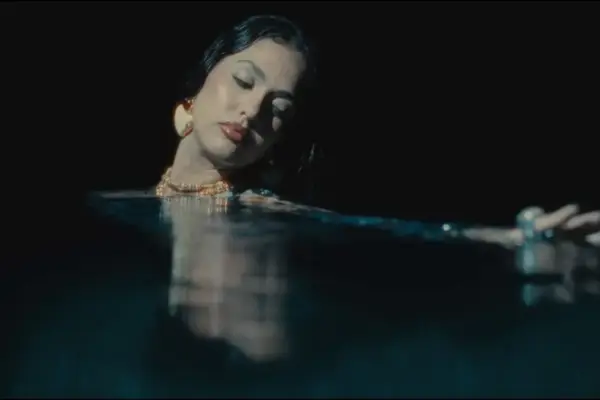
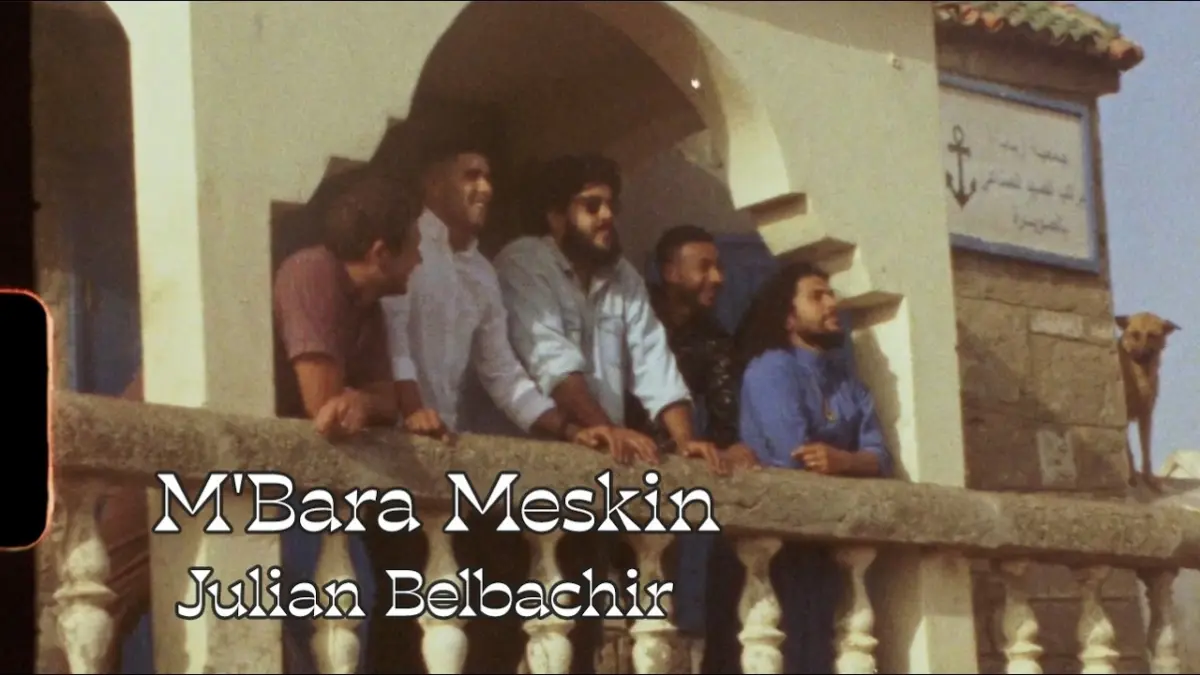
Accompanied by a visually striking Super 8 music video filmed across two trips to the Atlantic coastal city of Essaouira, “M’Bara Meskin” sets a high artistic bar for The Golden Light. The upcoming album promises an unprecedented gathering of more than 30 musicians from Mali and Morocco, tracing the ancient, sorrowful trade and migration routes of West Africans across the Sahara. Through meticulous musicianship, deep-rooted respect for tradition, and modern production sensibilities, Belbachir is carving out a unique space in modern world music—one that honors the past while fearlessly building bridges toward the future.
Detailed Chronology
Early Foundations: Sydney’s Multicultural Crucible (1990s–Early 2000s)
Julian Belbachir’s entry into the world of percussion was neither accidental nor casual; it was forged in the rich, multicultural melting pot of inner-city Sydney. Born to a Moroccan father and an Australian mother, Belbachir grew up in the vibrant urban neighborhoods of Surry Hills and Redfern. During the late 20th century, these areas were hubs of cultural exchange, counterculture, and Indigenous Australian activism.
By the age of five, young Belbachir was already being initiated into the complex polyrhythms of West African drumming. Under the direct mentorship of griots and master drummers belonging to Sydney’s burgeoning African diaspora, he developed an intuitive, bodily understanding of rhythm that transcended sheet music. This early immersion laid the groundwork for a lifelong obsession with the drum as a vehicle for storytelling, spiritual expression, and community healing.
The Transcontinental Apprenticeship: West Africa and North Africa (2000s–2010s)
As his technical proficiency grew, local mentorships yielded to international pilgrimages. Belbachir embarked on an extensive, multi-year educational journey across West Africa and North Africa. He traveled deep into Guinea, Senegal, Mali, and his father’s homeland of Morocco to study under the watchful eyes of legendary percussionists and master instrument-makers.
During his time in the Wassoulou region of Mali, Belbachir mastered the kamele n’goni—the traditional, hypnotic harp-lute whose pentatonic scales form the backbone of much of modern Malian blues and roots music. In Morocco, he absorbed the intricate, syncopated rhythms of Gnawa music, mastering the qraqeb (iron castanets) and the deep, resonant thrum of the guembri (a three-stringed lute made from camel hide and wood). This exhaustive, hands-on apprenticeship transformed Belbachir from an enthusiastic student of world music into an authentic practitioner capable of moving fluidly between distinct regional idioms.
The OKA Years and the Solo Transition (2013–2022)
Upon returning to Australia, Belbachir’s reputation as a versatile percussionist culminated in a pivotal career milestone: joining OKA, the celebrated Australian Indigenous dub band known for blending electronic production, world music instrumentation, and First Nations Australian culture. From 2013 to 2022, Belbachir served as the group’s rhythmic engine, touring extensively and refining his ability to fuse acoustic ethnic instrumentation with deep electronic basslines and reggae skanks.
The sudden passing of OKA’s visionary founder, Stuart “Boga” Fergie, marked a profound turning point for the band and for Belbachir personally. Thrust into a period of mourning and creative reassessment, Belbachir stepped firmly into the solo spotlight. In 2022, he released his critically acclaimed debut solo album, Babdoukkala, a deeply personal record that showcased his mastery over multiple instruments and signaled his arrival as a major compositional voice in contemporary global roots music.
The Genesis of The Golden Light (2022–Present)
Building upon the momentum of Babdoukkala, Belbachir began conceptualizing his most expansive project to date: The Golden Light. Recognizing that Gnawa music itself was historically carried into Morocco by West Africans transported north across the Sahara—many of them victims of the trans-Saharan slave trade—Belbachir decided to physically and musically retrace those exact historical migration routes.
Over several years, he orchestrated recording sessions spanning Morocco, Mali, Australia, Canada, and Jamaica. By uniting more than 30 master musicians from West and North Africa—including legendary Malian guitarist Moussa Diakite, best known for his stellar work alongside Salif Keita—Belbachir constructed a transatlantic dialogue between Gnawa spiritualism, Wassoulou blues, and Jamaican dub. The culmination of these exhaustive sessions is “M’Bara Meskin,” released on September 11 as the definitive opening salvo for an album scheduled to drop in February 2027.
Supporting Context & Metrics
The Cultural Anatomy of “M’Bara Meskin”
To fully appreciate Julian Belbachir’s adaptation, one must understand the socio-religious weight of the original composition. Gnawa music is not merely entertainment; it is a sacred, healing tradition practiced by the Gnawa people—descendants of enslaved and incorporated sub-Saharan Africans living in Morocco. Central to the tradition are the Lila rituals—all-night spiritual ceremonies led by a Maalem (master musician) designed to invoke ancestral spirits and cleanse the participants of spiritual trauma.
“M’Bara Meskin” (“Poor M’Bara”) is a well-known standard within this vast repertoire. The song’s lyrics paint a stark picture of social stratification and indifference. M’Bara, an impoverished outcast, is relegated to the dirt outside the protective walls of a saint’s shrine, forced to forage for discarded tea leaves to brew a meager hot drink. Meanwhile, inside the sanctuary, privileged figures—referred to respectfully by the Moroccan honorifics Sidi (gentleman) and Lalla (lady)—relax in comfort, sipping their fresh tea while wearing their indoor slippers.
By translating this centuries-old critique of economic disparity into a modern reggae and dub framework, Belbachir connects the historical suffering of North and West African diasporas to the universal, anti-colonial struggles championed by Jamaican sound-system culture. The heavy basslines and spacious, echo-drenched production of dub do not dilute the song’s spiritual gravity; rather, they amplify its hypnotic, trance-inducing qualities, proving that the meditative cadence of Gnawa shares a profound rhythmic DNA with the meditative pulse of roots reggae.
The Transnational Production Footprint
The creation of “M’Bara Meskin” and the broader The Golden Light album represents a logistical and artistic feat of the highest order. Below is a breakdown of the geographic and institutional nodes that shaped the project:
- Morocco (Rabat, Marrakech, and Essaouira): The spiritual and vocal heartland of the project. Here, traditional Gnawa vocalists laid down the primary Moroccan Arabic melodic lines, while field recordings and Super 8 visual footage were captured.
- Mali (Bamako): The instrumental cradle. Master musicians, including Moussa Diakite (lead guitarist for Salif Keita), infused the tracks with West African guitar stylings and rhythmic precision, honoring the historical corridor between the Niger River and the Atlas Mountains.
- Australia (Sydney and Melbourne): Belbachir’s home base, where initial production arrangements, percussion overdubs, and structural mixing took place, drawing on his decades of experience within the Australian multicultural and Indigenous music scenes.
- Jamaica & Canada: The mixing and dub-production hubs. Applying vintage Jamaican analog mixing techniques, engineers infused the multi-track recordings with characteristic tape delays, spring reverbs, and seismic sub-bass frequencies, successfully marrying North African folklore with Caribbean sound-system culture.
Official Statements & Artistic Vision
Julian Belbachir on the Struggles of the Modern Artist
In interviews surrounding the release of “M’Bara Meskin,” Julian Belbachir has been vocal about why this specific historical narrative resonated so deeply with him in the 21st century. Far from treating the song as a museum piece, Belbachir views the plight of poor M’Bara as an ongoing contemporary reality for creative workers across the globe.
"I hear the song as a portrait of the hardships musicians face in their daily lives," Belbachir explains.
"When you look at M’Bara sitting outside the shrine, brewing tea from leaves that other people have thrown away, you see the ultimate outsider—someone who provides spiritual or cultural value to society, yet is left to scrape by on the absolute margins. That is the reality for countless traditional and independent musicians today. We carry the cultural memory, we build the sacred spaces for communities to gather, yet the socio-economic structures often leave us sitting outside in the cold."
Translating Tradition Through Modern Dub
Discussing the stylistic choice to merge traditional Gnawa with Jamaican dub, Belbachir emphasizes the natural spiritual affinity between the two genres:
"Gnawa music is inherently trance-inducing. It’s built on repetitive, hypnotic rhythmic patterns designed to alter consciousness and connect the listener with something ancient and larger than themselves. Jamaican dub does the exact same thing through the mixing board. By taking the vocal delivery in Moroccan Arabic and placing it over a heavy reggae and dub foundation, we aren’t breaking the tradition—we are honoring its migratory spirit. Music has always traveled across borders, and these sounds naturally recognize one another."
Future Outlook
The Golden Light Album Release (February 2027)
With the release of “M’Bara Meskin” on September 11, the global music community has been put on notice. The track serves as the opening chapter of The Golden Light, an album that has been nearly five years in the making. Scheduled for full release in February 2027, the LP is expected to feature collaborations with over 30 distinct artists, making it one of the most ambitious cross-cultural world music projects of the decade.
Music industry analysts anticipate that the album will bridge critical gaps between world music purists and contemporary electronic/dub audiences, opening doors for expanded international touring. Belbachir’s ability to weave authentic field recordings, master-level instrumental performances, and modern production polish positions The Golden Light as an early contender for critical acclaim upon its 2027 drop.
Visual Storytelling: The Essaouira Super 8 Project
Complementing the auditory experience is a visually mesmerizing music video shot entirely on vintage Super 8 film. Captured across two separate pilgrimages to the Atlantic port city of Essaouira—the historic coastal Moroccan town globally famous for its annual Gnawa World Music Festival—the video offers an intimate, unvarnished look into the collaborative process.
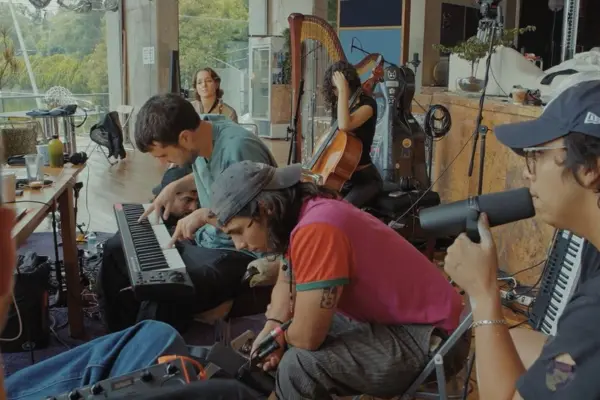
Rather than relying on glossy, high-definition digital aesthetics, the warm, grainy texture of Super 8 film lends the project a timeless, archival quality. The footage follows Belbachir’s international collaborators through intense rehearsal circles, spontaneous recording sessions, and quiet moments of community bonding along the Moroccan coastline. This visual approach reinforces the overarching theme of The Golden Light: preserving human connections, honoring ancestral lineages, and capturing the fleeting, beautiful moments of artistic creation before they slip away into history.
As the countdown to February 2027 continues, Julian Belbachir stands at the vanguard of a new wave of global fusion artists—one who proves that by looking backward into the deep wells of history, we can find the exact frequencies needed to navigate our shared musical future.