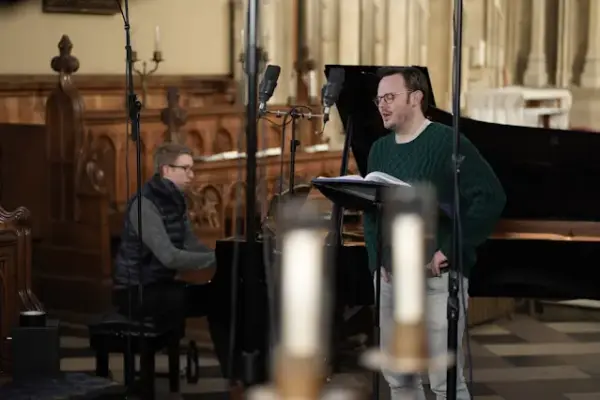
For nearly thirty years, British singer-songwriter Michael Weston King has navigated a labyrinth of musical iterations, shifting effortlessly from the shimmering pop-sensibilities of the late 20th-century UK underground to the dust-blown, emotive depths of Americana and cool country. Spanning roughly 20 albums across a career defined by resilience, reinvention, and uncompromising artistic integrity, King’s journey is a testament to the enduring power of classic storytelling.
Whether cutting his teeth in the post-punk vibrancy of late-1970s Liverpool, spearheading the critically adored country-rock outfit The Good Sons, or spending the last decade and a half enchanting audiences alongside his wife and musical partner, Lou Dalgleish, as the acclaimed country duo My Darling Clementine, King has remained a steadfast champion of authentic songwriting.
Yet, his latest creative chapter arrives under the long, heavy shadow of profound personal grief. Following the devastating loss of his granddaughter, Bebe, who was tragically killed in the horrific Southport knife attacks, King’s creative landscape was irrevocably altered. In the wake of this unimaginable tragedy, the planned collaborative projects for My Darling Clementine were temporarily set aside. Instead, King and Dalgleish channeled their processing of grief into separate solo endeavors.
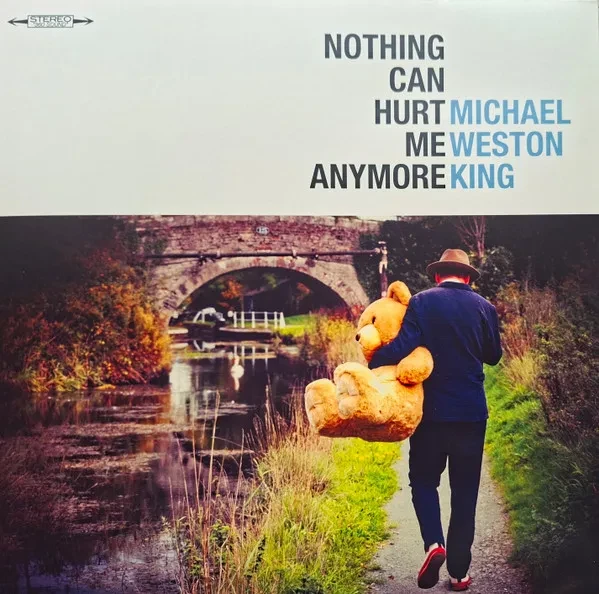
The resulting record, King’s Nothing Can Hurt Me Anymore—released via Continental Song City—is a staggering achievement. It is a work that balances piercing tragedy with a quiet, hard-won optimism. Hailed by Elvis Costello as "a beautiful, complex piece of work," the album captures the essence of a seasoned artist confronting life’s harshest realities and finding a way to march forward. This feature-length profile explores King’s storied musical lineage, his landmark collaborations with icons like Townes Van Zandt, the evolution of My Darling Clementine, and how he and Dalgleish are finding healing through the catharsis of song.
Detailed Chronology: From Merseyside Pop to Transatlantic Americana
The Formative Years: Liverpool, Eric’s, and Fragile Friends
Michael Weston King’s musical awakening began in the crucible of late-70s Merseyside. Hailing originally from Stockport, a young King found his way into Liverpool’s legendary club Eric’s.
"I was too young, but they weren’t strict on the door," King recalls with a wry laugh. Despite his age, he witnessed pivotal moments in modern music history, catching Joe Jackson’s debut tour. Within a few years, King took his first steps as a performer, assembling a band called Fragile Friends. Musically aligned with the atmospheric, synth-touched melodicism of bands like China Crisis, this initial venture represented King’s brief, bright "pop years."
However, the trajectory of his artistic life shifted permanently in 1981 with the release of Elvis Costello’s landmark country-covers album, Almost Blue.
"My awareness of good country—George Jones, Merle Haggard, Gram Parsons—was raised," King explains, "and a year or two later, I became aware of songwriters like Townes Van Zandt and Guy Clark."
Immersed in these new sonic textures, King served a spell as a guitarist in Gary Hall & The Stormkeepers, a northern outfit navigating a hybrid country-folk landscape. By the early 1990s, this evolution coalesced into The Good Sons, a gritty, compelling country-rock band signed to the German independent label Glitterhouse.
The Good Sons, Townes Van Zandt, and the US Interlude
During their active run from 1995 to 2001, The Good Sons released four acclaimed albums, toured extensively, and shared stages with Americana royalty such as Joe Ely and Steve Earle. King’s parallel work organizing UK tours for British folk legends like John Renbourn and Bert Jansch further cemented his deep appreciation for traditional songcraft.
King’s burgeoning transatlantic connections soon bore extraordinary fruit. Having struck up a friendship with cult American singer-songwriter Townes Van Zandt, King managed to secure a guest vocal from the legend himself for The Good Sons’ debut album, Singing The Glory Down.
"He sang on my track Riding The Range, and a year later cut the song himself," King notes proudly. "Not that many people can say they had a song recorded by Townes!"
Van Zandt’s subsequent UK tour brought further surreal milestones. When the Tindersticks popularized Van Zandt’s Kathleen in the indie charts, it dramatically altered audience turnout.
"Where he’d normally play to 250 people, there were 800 to 900 at London’s Union Chapel—he was completely taken aback," King recalls.
The Good Sons subsequently signed with the Texan label Watermelon, which had established a distribution partnership with Sire. Their third record, Wine, Lines and Valentines, channeled a driving, melodic rock energy reminiscent of Soul Asylum. But just as international momentum was building, fate intervened cruelly. In 1998, Watermelon Records collapsed, and shortly thereafter, a severe road crash in Germany left King hospitalized and the band’s equipment destroyed. Though they would reunite briefly for the 2001 album Happiness, the era of The Good Sons had drawn to a close.
The Solo Years and the Birth of My Darling Clementine
Transitioning to a solo career, King found personal and creative renewal when he met Lou Dalgleish, a gifted singer-songwriter. King released his stark solo debut, God Shaped Hole, in 1999.
"It was a real miserable record, but still my biggest seller in Germany!" he jokes.
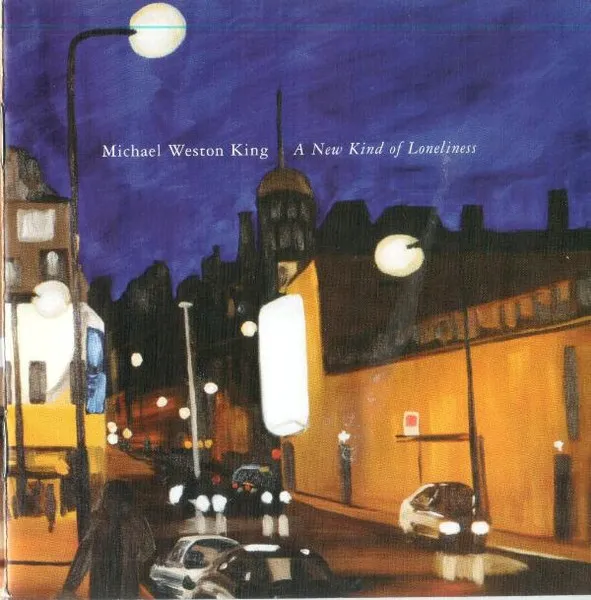
Subsequent efforts, such as 2003’s A Decent Man—produced by and featuring the late, great Scottish singer-songwriter Jackie Leven—showcased King’s growing penchant for elegant, transatlantic arrangements driven by his cool, clear vocal delivery.
By 2010, however, the relentless grind of the solitary troubadour was taking its toll. "I did lots of solo tours in America and toured myself out," King reflects. "The dream of one man and his guitar driving across the prairie to the next gig wears you down. Then I thought, ‘I’m married to this amazing singer, how can we combine our voices?’ I was listening to a Porter Wagoner and Dolly Parton album and thought, this would be brilliant."
This revelation birthed My Darling Clementine in 2011. Their debut album, How Do You Plead?, offered a contemporary yet utterly authentic take on classic country duets. Bolstered by stellar British musicians steeped in roots traditions, such as Geraint Watkins and Martin Belmont, the project struck an immediate chord. Dalgleish’s track The Other Half emerged as a modern-day Patsy Cline torch ballad. What was initially conceived as a one-off experiment quickly demanded a continuation.
Supporting Context & Metrics: A Discographic Tapestry
Over three decades, Michael Weston King’s artistic footprint has expanded across numerous distinct eras, collaborative projects, and critically lauded releases:
- Total Career Output: Approximately 20 studio albums spanning solo work, band projects, and duets.
- The Good Sons Era (1995–2001): 4 studio albums released via Glitterhouse and Watermelon Records, blending heartland rock with alternative country sensibilities.
- My Darling Clementine Milestones:
- How Do You Plead? (2011) – The critically acclaimed debut of country duets.
- The Reconciliation? (2013) – Produced by Colin Elliot (Richard Hawley), leaning further into country-soul.
- The Other Half (2015) – A unique collaboration with crime writer Mark Billingham, blending music and spoken word with guest appearances from Graham Parker and David Morrissey.
- Still Testifying (2017) – A record exploring the nuances of marriage, wit, and darker social themes, including domestic abuse (No Matter What Tammy Said).
- Country Darkness (EP Series) – Radical, genre-bending reworkings of Elvis Costello’s country-soul catalog, featuring Attractions pianist Steve Nieve.
- Recent Solo Additions: The Struggle (2022) and the profoundly personal Nothing Can Hurt Me Anymore (2024).
Official Statements and Artistic Evolution
The thematic depth of King and Dalgleish’s catalog has always relied on keen observational writing, but their work took on complex socio-political and personal dimensions over the years. Discussing Still Testifying, King notes how domestic dynamics and life’s trials frequently informed their writing.
"A lot of the songs Lou and I were writing were about marriage and life troubles, a bit of wit and banter," King explains, "but Lou’s song, No Matter What Tammy Said (I Won’t Stand By Him), which sounds light-hearted on the surface, is actually about domestic abuse."
This balance of levity and gravity has defined their artistic output. Yet, nothing in their collective or individual histories could have prepared them for the seismic shock of 2024. Following the Southport knife attack, which claimed the life of King’s granddaughter, Bebe, the duo’s world was shattered.
"It changed our lives," King states quietly. "We are still broken-hearted, but we have to push forward. As songwriters, you put stuff that affects you into your songs, and nothing can be more affecting than what happened to us."
Faced with this insurmountable grief, the planned collaborative My Darling Clementine album was shelved. The emotional weight required solitude.
"We didn’t feel we could write jointly; we needed to be in our own place," King shares.
The resulting solo record, Nothing Can Hurt Me Anymore, is a paradox: quietly positive and dramatically uplifting, yet underpinned by an authentic, devastating sorrow.
"It’s not a doom and gloom record," King clarifies. "There are dark moments, but we needed hope and optimism. Ironically, I think it’s the best record I’ve ever made."
Elvis Costello, validating his old peer’s artistic triumph, sent a personal email to King praising the release as "a beautiful, complex piece of work." Dalgleish’s corresponding solo statement, titled The Leaving And The Left Behind and also helmed by producer Colin Elliot, is slated for release at the end of the year.
Future Outlook: Healing on the Road
Despite the lingering shadow of unspeakable tragedy, Michael Weston King and Lou Dalgleish refuse to let the music fade. Their commitment to their craft and to each other has manifested in an exhaustive touring schedule and an innovative live concept.
Between February and June, the duo completed an intensive 42-date tour across seven countries. In late July, they reunited the original My Darling Clementine band—featuring Martin Belmont’s signature rockabilly-country-swing guitar—for an intimate, resonant performance inside a church at Twickenham’s High Tide festival.
Looking ahead to the winter months, My Darling Clementine will return to the live stage under the banner "Together Apart." Fronted by producer Colin Elliot, the upcoming tour is structured in two distinct halves: the first dedicated to beloved catalog favorites, and the second trading songs from their powerful, newly minted solo records.
The tragedy that visited their family will never truly leave them. However, through uncompromising honesty, decades of musical craftsmanship, and the shared sanctuary of song, Michael Weston King has forged a pathway forward—proving that even in the darkest hours, the human spirit can find a voice to sing.