Executive Overview
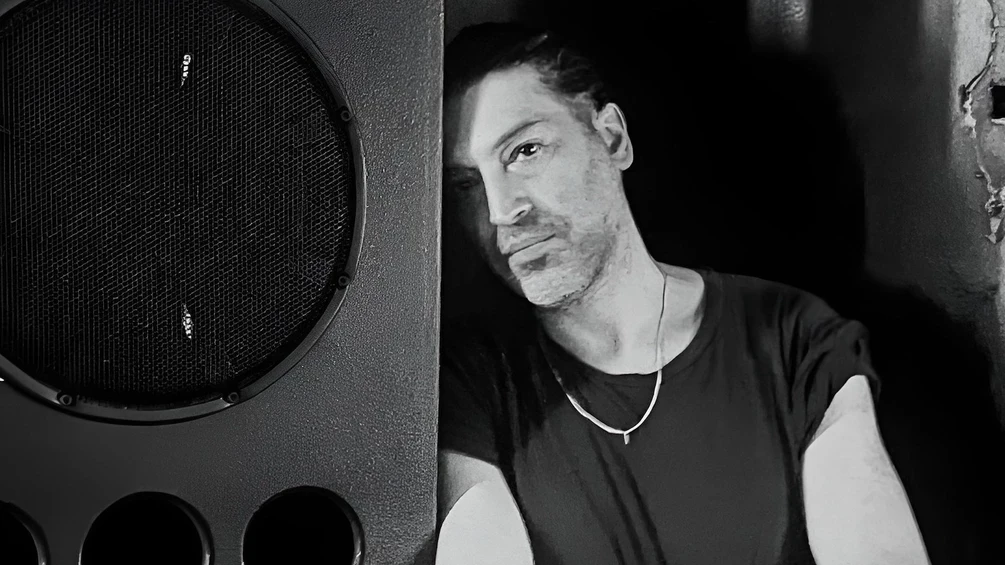
For ten defining years at the turn of the millennium, Monday nights in London belonged to a sweaty, chaotic, boundary-blurring sanctuary known simply as Trash. Helmed by a visionary 22-year-old Erol Alkan, the party did not merely provide a weekend’s worth of escapism at the start of the working week; it fundamentally rewrote the blueprint for independent club culture in the United Kingdom. Now, nearly two decades after the strobe lights flickered off for the final time, Alkan is ready to tell the full story.
Titled Trash: A Club, A Sound, A Home and slated for release on January 14, 2027—precisely thirty years to the day since the very first party took place—the forthcoming publication promises an exhaustive, deeply personal account of one of the most influential institutions in modern electronic and alternative music history.
The announcement follows a wave of cryptic social media teases last week that sent long-time devotees and modern music historians into a frenzy. Those digital breadcrumbs have now coalesced into a major publishing event. Distilled from more than 70 hours of recorded conversations, the book brings together Erol Alkan’s own vivid recollections alongside the oral histories of 39 key figures who helped shape, sustain, and survive the Trash phenomenon.
Rather than a standard coffee-table retrospective, Trash: A Club, A Sound, A Home positions itself as an essential cultural archive. It chronicles how a modest Monday-night gathering at a basement venue in Shoreditch evolved into a global touchstone for alternative clubbing, bridging the fractured worlds of indie rock, electroclash, post-punk, and underground dance music at a time when genre lines were fiercely guarded and strictly enforced.
Detailed Chronology: From Archway to Global Infamy
The Genesis (1997)
Long before he was a celebrated producer, remixer, and electronic music auteur, Erol Alkan was a kid from Archway, North London, who had barely ventured beyond his local postcode. At just 22 years old, with aspirations of playing guitar in a band but no concrete roadmap for his future, Alkan stepped behind the decks to launch Trash at Plastic People.
In 1997, the London nightlife landscape was dominated by monolithic, big-room dance events and rigid stylistic silos. House, techno, and trance reigned supreme in massive superclubs, while traditional indie nights were largely confined to sticky-floored student unions playing predictable Britpop anthems. Trash offered a radical third option. It was a space where the jagged edges of post-punk and no wave could comfortably rub shoulders with the driving mechanization of electro, garage rock, and underground disco.
The Plastic People Years and the Sonic Shift
Initially settling into Plastic People—a venue that would itself attain legendary status in London clubbing lore—Trash quickly established a reputation for unpredictability. Alkan’s curatorial ethos defied the prevailing snobbery that separated rockists from dance music enthusiasts. On any given Monday, clubbers might hear ESG mixed seamlessly into Daft Punk, or the Rapture blended with classic new wave.
This genre-agnostic approach acted as a magnetic pull for a generation of emerging musicians, artists, and creative misfits. Trash was not just a place to consume music; it was a cultural incubator. Throughout the early 2000s, the club night served as an essential early live platform and DJ booking ground for acts that would go on to define the decade’s alternative music boom.
The Migration and the Finale (2007)
As the night outgrew its intimate beginnings at Plastic People, Trash made the pivotal migration to The End, another of London’s monumental, now-lost nightlife cathedrals. The move allowed the production values and the scale of the party to expand without sacrificing the gritty, intimate intensity that defined its ethos.
However, all revolutionary movements must eventually reach their terminus. In 2007, exactly ten years after its inception, Trash drew to a close. Upon pulling the plug on the institution, Alkan made a public vow never to resurrect the party—a promise he has steadfastly kept in the years since, refusing the lucrative reunion offers that routinely tempt legacy club brands.
Supporting Context & Metrics: The Anatomy of a Cultural Shift
To understand the weight of Trash: A Club, A Sound, A Home, one must examine the staggering roster of talent nurtured by the night and the sheer volume of oral history compressed into its pages.
The Numbers Behind the Book
- Release Date: January 14, 2027 (marking the 30th anniversary of the first Trash party).
- Source Material: Over 70 hours of recorded conversations.
- Contributors: 39 distinct oral histories from individuals integral to the club’s operation, performance legacy, and cultural impact.
- Lifespan of the Club: 10 years (1997–2007).
A Roll Call of the Avant-Garde
The footprint of Trash on 2000s alternative culture is writ large across its booking history. The club functioned as an early institutional home and proving ground for artists who would soon conquer international charts.
Among the foundational live acts to grace its stages were Hot Chip, LCD Soundsystem, and the Klaxons. The club’s booking policy was equally progressive when it came to international selectors and boundary-pushing producers. Notable sets and performances included visits from:
- Felix Da Housecat
- Chilly Gonzales
- Peaches
- Richard X
- Tiga
Furthermore, the club’s gravitational pull drew in members of bands who would become household names. The book and the oral histories feature insights from luminaries such as:
- Gaspard Augé and Xavier De Rosnay of Justice
- William Rees of Mystery Jets
- Nick Zinner of the Yeah Yeah Yeahs
- Nik Colk Void of Factory Floor
By breaking down the invisible walls between the indie gig circuit and the electronic club scene, Trash anticipated the bloghouse era and the genre-fluid digital landscape of the 2010s and 2020s. It proved that a dancefloor could be simultaneously cerebral, visceral, and rock-and-roll.
Official Statements and Reflections
The announcement of the book has naturally prompted deep reflection from Alkan, who has shared candid insights into the psychological and social landscape that birthed Trash, as well as the heavy burden of its legacy.
In an extensive statement shared via Instagram, Alkan laid bare his early anxieties and the cultural friction he faced as a young DJ attempting to validate a new style of clubbing:
"This book explores how and why Trash happened, the steps leading up to it and a series of twists and turns which allowed it to go from a modest Monday night indie club into what was then regarded by some as one of the best clubs on the planet, if not the best. When Trash closed, I vowed never to do the party again, and have stayed true to that ever since," Alkan wrote.
Reflecting on his roots and the unconventional path that led him to cultural stewardship, he continued:
"I was 22 when I started Trash, and whilst I had dreams of playing guitar in a band, the truth is I had no idea what I was going to do in life. I certainly didn’t feel a DJ career was possible as it seemed alien to a kid from Archway who had barely left his own postcode. Plus, DJs from our corner of culture weren’t seen as valid, and indie clubs didn’t hold the same value as dance clubs. But I think Trash helped change that."
Alkan’s reflections highlight a crucial turning point in British music journalism and nightlife history: the elevation of the resident DJ from a functional background operator to a visionary curator and cultural auteur.
Future Outlook & Availability
While Erol Alkan has reiterated that the book does not signal a physical return or a one-off reunion of the club night—maintaining the sacred vow he made in 2007 when the doors of The End closed for the final time—Trash: A Club, A Sound, A Home serves as the definitive spiritual successor to the party.
For those eager to immerse themselves in the ethos of the era, the publication arrives with an accompanying artifact. Pre-orders for the book are currently live via Rough Trade, with physical copies bundling an exclusive curated mix of the tracks that defined the Trash dancefloor. Additionally, music enthusiasts can dive into the sonic archives right now, including a newly surfaced archival recording of a vintage Alkan set recorded live at the party in 2002, which offers a masterclass in the eclectic, high-energy mixing style that captivated London’s underground.
As the January 2027 release date approaches, Trash: A Club, A Sound, A Home stands poised to inspire a new generation of promoters, musicians, and clubbers—reminding the cultural landscape that sometimes the most enduring musical revolutions happen on a Monday night in a dark basement, fueled by nothing more than raw intuition and a refusal to play by the rules.