Executive Overview
In an era where global music often risks homogenization through digital algorithms and cross-continental file-sharing, the Ghent-based quartet Bamako Express has carved out a strikingly organic, deeply rooted alternative. Their debut single, "Yira Ye," serves as the thrilling opening salvo for their eagerly anticipated debut album, L’Ombre du Croco, slated for release via Trad Records.
Taking its title from a Bambara phrase that loosely translates to "that’s how it is," "Yira Ye" is far more than a lead single; it is a masterclass in cross-cultural composition. The track encapsulates the band’s entire ethos: a seamless, respectful, and electrifying dialogue between European folk traditions and the rich, polyrhythmic heritage of West Africa’s Mande culture.
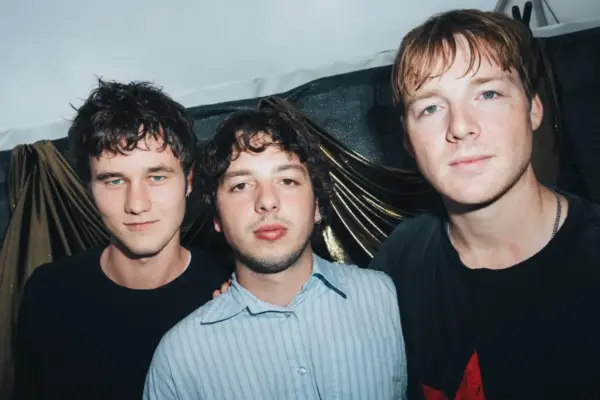
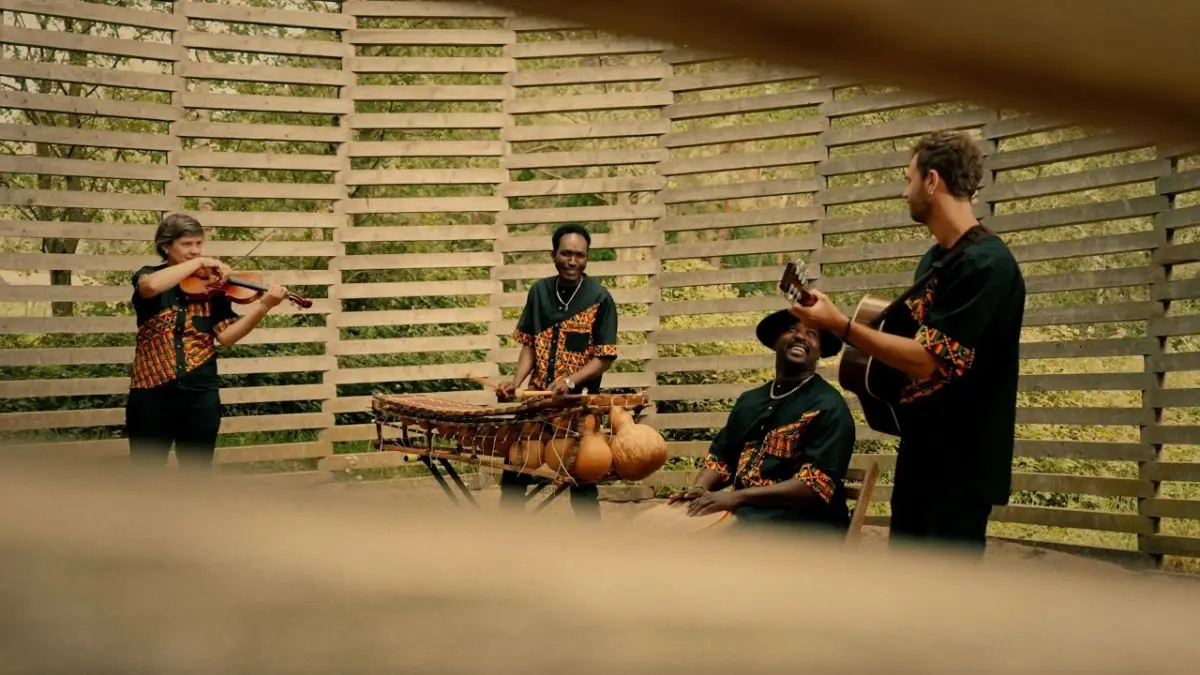
Formed in the vibrant cultural hub of Ghent, Belgium, Bamako Express brings together two distinct musical worlds. The ensemble pairs the intricate, emotive stylings of Belgian folk instrumentalists Anouk Sanczuk (violin) and Florian De Schepper (guitar) with the resonant virtuosity of Malian balafonist and vocalist Joël Massa Diarra and Burkinabè percussionist Ousmane Dembélé on djembe and calabash. Sung entirely in Bambara, their music defies conventional genre boundaries, appealing equally to the contemplative listener and the unbridled social dancer.
Over the past year, the band has traversed the subterranean circuits of concert halls and the sweaty, energetic balfolk dance floors of Flanders—where couples traditional-dance to live, driving acoustic instrumentation. Their relentless touring schedule and undeniable chemistry culminated in a major career milestone: winning Best Live Band at the Flanders Folk Awards.
Recorded expertly by Jeroen Geerinck at Studio Trad, "Yira Ye" bridges continents not as a gimmicky fusion experiment, but as a conversation between equal partners. The violin and the balafon trade melodic duties with breathtaking agility, supported by a rhythm section that drives both introspection and movement. As the world awaits the full-length release of L’Ombre du Croco on October 30, Bamako Express stands at the vanguard of a new wave of European-African sonic collaborations, proving that borders fade quickly when the groove is authentic.
Detailed Chronology: The Genesis and Evolution of Bamako Express
To understand the weight and texture of "Yira Ye" and L’Ombre du Croco, one must retrace the chronological milestones that transformed four distinct musicians into a unified powerhouse. Transcultural bands often face the hurdle of sounding disjointed—like two separate groups sharing a stage. Bamako Express bypassed this pitfall through a deliberate, organic timeline of listening, collaboration, and shared physical space.
Phase One: The Meeting of Musical Minds in Ghent
Ghent has long fostered a progressive, open-minded folk scene, serving as a fertile breeding ground for acoustic experimentation. Anouk Sanczuk and Florian De Schepper were already established names within the Belgian folk and balfolk circuits. Sanczuk’s violin playing is characterized by a lyrical clarity that honors traditional European modal structures while remaining flexible enough to absorb outside influences. De Schepper’s guitar work provides both harmonic scaffolding and textural depth, capable of moving from delicate fingerpicking to soaring, blues-tinged solos.
The catalyst for Bamako Express occurred when Sanczuk and De Schepper crossed paths with Joël Massa Diarra, a master balafonist and vocalist originating from Mali, and Ousmane Dembélé, a powerhouse percussionist from Burkina Faso skilled in the nuanced languages of the djembe and calabash. Rather than forcing a predetermined Western framework onto the African musicians—or vice versa—the quartet engaged in a prolonged period of informal jam sessions. They sat in living rooms and small rehearsal spaces across Ghent, trading rhythms, learning traditional melodies, and testing the tensile strength of their respective musical idioms.
Phase Two: Hitting the Road and Conquering the Balfolk Scene
Music designed to make people move must be tested in the crucible of live performance. Throughout the preceding year, Bamako Express took their nascent sound directly to the people, embedding themselves in the vibrant European balfolk ecosystem.
For the uninitiated, balfolk events are social gatherings where participants dance traditional European folk dances—such as mazurkas, circles, schottisches, and bourrées—often accompanied by high-energy live bands. Introducing a Malian balafon, a Burkinabè djembe, and Bambara-language vocals to dancers accustomed to diatonic accordions and bagpipes could have proven jarring. Instead, the rhythmic precision of Dembélé and the hypnotic, percussive nature of Diarra’s balafon locked immediately into the physical demands of the dancers.
Audiences quickly realized that the foundational pulse of Mande music shares a profound, kinetic kinship with European folk rhythms. The band sharpened their live show night after night, transforming rehearsal ideas into battle-tested anthems.
Phase Three: Critical Acclaim and the Flanders Folk Awards
The momentum generated by their relentless touring did not go unnoticed by the cultural establishment. In 2026, Bamako Express achieved a monumental breakthrough when they were awarded Best Live Band at the Flanders Folk Awards.
This accolade was a watershed moment. It validated not only their technical proficiency and stagecraft, but also the broader cultural shift occurring within the Flemish folk community—a community increasingly willing to look beyond European borders to refresh its sonic vocabulary. The award cemented Bamako Express’s reputation as a must-see live act, elevating their profile far beyond underground folk circles and setting the stage for their debut studio release.
Phase Four: Entering Studio Trad and the Birth of "Yira Ye"
With their live synergy perfected, the band entered Studio Trad under the guidance of engineer and producer Jeroen Geerinck. The goal was simple yet demanding: capture the raw, breathing energy of their live performances without losing the sonic fidelity required for a definitive studio statement.
It was during these sessions that "Yira Ye" took its final form. Acting as the lead single for L’Ombre du Croco, the track was carefully engineered to showcase the conversational dynamic between Sanczuk’s violin and Diarra’s balafon. Every breath, every strike of the wooden keys, and every sweep of the guitar strings was captured with crystalline clarity, preserving the human element at the core of the project.
Supporting Context & Metrics: Cultural Synthesis and Musical Anatomy
To fully appreciate the achievement of "Yira Ye," one must examine the deep cultural frameworks and musical mechanics that make the track work. The collaboration between European folk instrumentalists and West African masters is fraught with historical pitfalls, yet Bamako Express navigates these waters with absolute cultural fluency.
The Linguistic and Philosophical Weight of "Yira Ye"
The title phrase, "Yira Ye," drawn from the Bambara language (spoken by millions across Mali and neighboring West African nations), carries a philosophical weight that anchors the entire album project, L’Ombre du Croco ("The Crocodile’s Shadow").
"Yira Ye" roughly translates to "that’s how it is" or "that’s the way things are." It is an expression of acceptance, resilience, and unvarnished truth in the face of life’s unpredictable currents. By singing in Bambara, Joël Massa Diarra preserves the storytelling tradition inherent to Mande culture, where songs serve as historical chronicles, moral guides, and emotional outlets. Even for listeners who do not understand the language, the emotional register of Diarra’s vocal delivery communicates urgency, warmth, and profound gravity.
The Balafon and the Violin: A Transcontinental Dialogue
In traditional European balfolk, the violin acts as the primary melodic carrier. Its soaring timber cuts through the acoustic space, guiding dancers through complex turns and steps. Similarly, in Mande music, the balafon—a West African wooden keyed percussion instrument played with mallets—serves as a central melodic and rhythmic anchor.
On "Yira Ye," Bamako Express performs a brilliant compositional sleight of hand by treating the violin and the balafon as narrative equals. Rather than one instrument accompanying the other, the melody is passed back and forth between Sanczuk’s bowed strings and Diarra’s wooden mallets.
This exchange creates a mesmerizing auditory illusion: the timbre of the European violin and the earthy, resonant warmth of the African balafon blend so naturally that they sound like two facets of the same ancient instrument. Overpinning this dialogue is Ousmane Dembélé’s dynamic percussion work on the djembe and calabash, providing a polyrhythmic foundation that subverts rigid Western four-four time signatures while remaining entirely accessible to dancers.
Structural Arc of the Single
Musically, "Yira Ye" is structured as a journey rather than a static pop song. The track opens with quiet, contemplative melodic passages, allowing the listener to settle into the interplay between the violin and the balafon. As the groove establishes itself, the energy swells, transitioning smoothly into a full-blown dance rhythm.
Midway through the track, guitarist Florian De Schepper steps forward to deliver a luminous guitar solo. De Schepper’s playing avoids the trap of heavy-handed rock fusion; instead, he adopts a modal, fluid approach that mirrors the ornamentation of both West African kora/balafon lines and European folk modal scales. Recorded with pristine warmth by Jeroen Geerinck, the solo serves as a bridge between the acoustic roots of the band and contemporary European folk sensibilities.
Official Statements and Artist Insights
The philosophy driving Bamako Express is articulated clearly through the backgrounds and intentions of its members. While the band operates primarily in the instrumental language of sound, their collaborative framework represents a conscious rejection of cultural isolationism.
Bridging Musical Legacies
In interviews and press statements surrounding the release of L’Ombre du Croco, the ensemble has consistently emphasized that Bamako Express is not a "side project" or a temporary musical tourism experiment. It is a permanent artistic home built on mutual respect.
"When you play traditional music from different continents, the danger is treating one side as the ‘exotic spice’ and the other as the core," notes the collective artistic ethos of the group. "In Bamako Express, the Mande tradition brought by Joël and Ousmane and the European folk tradition brought by Anouk and Florian sit at the exact same table. Neither adapts to the other; they meet in the middle and create something entirely new."
The Role of Studio Trad and Production Integrity
Engineer Jeroen Geerinck, operating out of Studio Trad, played a vital role in ensuring that the band’s organic live energy translated effectively to the recording studio. Speaking on the tracking sessions for L’Ombre du Croco, Geerinck highlighted the unique challenges of recording acoustic instruments from disparate cultural traditions:
"You are dealing with instruments that have vastly different frequency responses and dynamic ranges," Geerinck explains. "The balafon has sharp wooden transients, the violin has high-frequency harmonic overtones, the calabash provides deep sub-bass frequencies, and the djembe cuts right through the middle. The key was not to over-produce them, but to give each instrument room to breathe in the stereo field so that when they lock together, you feel like you are standing right in the middle of the room with them."
Future Outlook: L’Ombre du Croco and Beyond
With the release of "Yira Ye" and the upcoming launch of their debut full-length album L’Ombre du Croco on October 30 via Trad Records, Bamako Express is poised to transition from regional critical darlings to international touring fixtures.
The October 30 Album Release and European Tour
The arrival of L’Ombre du Croco will be accompanied by an extensive live touring schedule across Belgium, the Netherlands, France, and beyond. Having already conquered the demanding balfolk festival circuit and earned the 2026 Best Live Band award at the Flanders Folk Awards, the band enters this album cycle with immense momentum.
Their live show—praised for its hypnotic intensity and joyful inclusivity—will serve as the primary vehicle for introducing the broader thematic scope of L’Ombre du Croco to global audiences. Promoters and festival bookers across Europe are already taking notice, positioning the quartet as headliner material for world music, folk, and cross-genre festivals.
Redefining Contemporary Folk Music
Beyond immediate commercial prospects, Bamako Express represents a vital blueprint for the future of acoustic music. In an interconnected world, traditional music cannot afford to remain static or culturally insular. By demonstrating that European folk modalities and West African Mande rhythms can converse on equal footing without losing their respective identities, Bamako Express is expanding the very definition of what "folk music" means in the twenty-first century.
As listeners stream "Yira Ye" and prepare for the full-length voyage of L’Ombre du Croco, they are invited into a sonic space where geography dissolves, rhythms converge, and the timeless phrase "Yira Ye"—that’s how it is—takes on a joyful, unifying new meaning.