Executive Overview
In the mid-1970s, at the blood-soaked height of Northern Ireland’s Troubles, a Protestant woman named Charlotte stood at the back of a Belfast parochial hall, cheerfully handing out paper cups of squash and flat lemonade to Catholic teenagers. Her husband, a Catholic man named Eoin, manned the door. Inside, their young daughter danced, part of a community youth club run by the local Catholic parish.
To the casual observer, it was a mundane scene of civic and parental duty. But viewed through the prism of twentieth-century Irish history, it was an act of quiet, radical defiance. Charlotte did not convert; she remained a member of the Church of Ireland, attending Sunday services with her sister while Eoin dutifully drove her there, having attended his own Vigil Mass the night before to clear his Sunday morning.
This domestic snapshot is just one of hundreds captured in a landmark oral history project led by researchers at Queen’s University Belfast (QUB) and conducted by research fellow Dr. Ruth Duffy. Designed to document the lived realities of mixed-religion marriages across Ireland, the archive moves past the monolithic narratives of sectarian warfare to explore how macro-level political conflict translated into the micro-level rhythms of daily family life.
Rather than neatly resolving hostilities, mixed marriages in Ireland often translated the island’s political and religious divisions into the intimate sphere of the home. These unions were shaped by asymmetric sacrifices, institutional hostility, forced compromises, and strategic silences. Yet, they also revealed extraordinary acts of everyday endurance—reminding historians that peace was being forged in domestic spaces decades before the political breakthroughs of the 1994 ceasefires and the Good Friday Agreement.
Detailed Chronology: Love, War, and Institutional Friction
To understand the weight of a mixed marriage in twentieth-century Ireland, one must trace how personal relationships collided with rigid ecclesiastical and political structures. For decades, unions across the Protestant-Catholic divide were not merely personal choices; they were battlegrounds for institutional authority.
The Early Decades: Baptismal Paradoxes and the Long Shadow of War
The friction of mixed marriages predates the Troubles by generations. Archival testimonies reveal a landscape where institutional surveillance began at birth. Consider the remarkable testimony of a woman named May, who uncovered a startling family secret when ordering documents for her own wedding. Her father, who had lived his entire life believing he was a cradle Catholic, discovered he possessed two baptismal certificates.
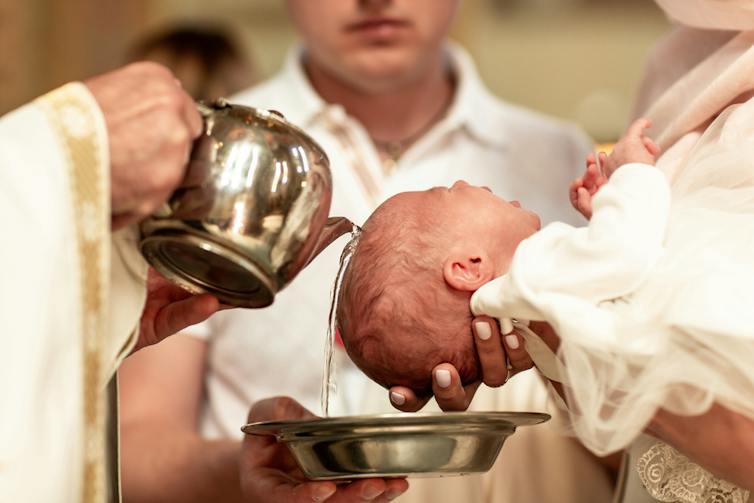
He had been baptised first in 1912 as an infant at St John’s Church of Ireland Cathedral in Belfast. Three years later, in 1915, while his father was away fighting on the Western Front, he was baptised a second time at St Matthew’s Catholic Church in the Short Strand. Left to raise six children alone amid the anxieties of the First World War, May’s Catholic grandmother likely sought the institutional shelter and social capital of her own church, weaponizing the sacraments to secure survival and community support.
The Mid-Century Stranglehold and Institutional Coercion
By the mid-twentieth century, the rules governing inter-church unions—particularly the Roman Catholic Church’s Ne Temere decree—placed immense psychological and social burdens on families. Couples faced the threat of excommunication, social ostracisation, forced emigration, and, in extreme cases, violent intimidation.
Ceremonies were frequently described by participants as "days to be got through"—marriages conducted without music, stripped of joy, and attended by strained relatives who regarded the union as a catastrophic betrayal of community trust. When children arrived, the institutional battle lines were drawn. A common, albeit fraught, compromise dictated that sons would be raised Catholic and daughters in the mother’s Protestant tradition. However, the execution of this agreement was rarely peaceful.
In testimonies gathered by the QUB research team, participants like Sarah—the fourth child and only daughter of a mixed marriage—recounted harrowing tales of institutional humiliation. Sarah’s mother, an Evangelical Protestant, agreed to let her three sons be baptised in the Catholic church. Yet, each time, she was barred from participating in the sacrament alongside her husband, forced instead to watch from the back of the chapel while her baby was handed over.

When Sarah was born, her mother fought to ensure she would be raised within her own faith. The pushback was swift and severe. At six months old, Sarah was allegedly taken without her mother’s consent—an incident she describes as a "kidnapping"—and baptised in a Catholic chapel under intense familial and clerical pressure. Her father, buckling under institutional weight, capitulated. Consequently, Sarah’s household operated as a domestic DMZ: children attended different churches, learned different histories, played opposing sports, and navigated parallel worlds defined by unspoken boundaries and heavy silences.
The Crucible of the Troubles (1968–1998)
When open civil conflict erupted in the late 1960s, the intimacy of cross-community households grew even more perilous. In a society where neighborhoods were starkly segregated by peace lines and political violence could strike on any doorstep, mixed families lived on the frontline.
As the poet Michael Longley captured with devastating economy in his verse Wounds, the Northern Ireland conflict was terrifyingly close-range—a war where a man could be executed in his own home while supper dishes sat on the table. In this climate, a mixed family’s survival depended on elaborate emotional labor. Husbands and wives negotiated dual identities, managed hostile extended families, and shielded their children from the vitriol of a polarized society.
Yet, amid the trauma, survival was often enacted through mundane rituals: a husband driving his wife to a distant church, a neighbor slipping a church collection envelope into a handbag, or a pair of grieving clergymen—one Protestant rector and one Catholic priest—visiting a bereaved daughter to pay their respects after her parents passed away.
Supporting Context & Metrics: The QUB Oral History Archive
The stories of Charlotte, Eoin, May, and Sarah are preserved thanks to a specialized oral history initiative spearheaded by Queen’s University Belfast and executed by research fellow Dr. Ruth Duffy.
- Project Scope: The archive compiles dozens of intimate, long-form interviews with individuals from mixed-religion households across Northern Ireland and the Republic, capturing a generation of family histories that official state archives and political histories frequently overlooked.
- Methodology: Utilizing qualitative oral history methods, the project prioritizes self-narrated accounts, allowing participants to frame their family histories on their own terms, free from political spin or partisan historiography.
- Societal Impact: Academic research surrounding the project emphasizes that mixed marriages have historically been burdened with excessive symbolic weight—invoked by commentators either as proof of utopian peace-building or as evidence of ethnic betrayal. The QUB archive disrupts these binaries by highlighting the sheer ambivalence, psychological cost, and gritty resilience required to sustain these families.
- Historical Precedents: Historical data referenced by project researchers aligns with broader academic findings cataloged by institutions such as the Conflict Archive on the Internet (CAIN) and independent truth recovery panels, documenting systemic issues including forced adoptions, institutionalized religious segregation, and sectarian displacement ("burn-outs") throughout the 20th century.
Official Statements and Academic Perspectives
The insights generated by the Queen’s University Belfast project have reframed how historians and sociologists view the legacy of the Northern Ireland conflict.
Dr. Ruth Duffy and the project leadership have consistently underscored the ethical imperative of recording these narratives while the older generation of children from these marriages—many now elderly—are still able to speak.
"These are life histories marked by weddings without music… mixed marriage did not resolve the hostilities of Irish politics so much as translate them into the rhythms of daily life," project researchers noted in preliminary findings. "Here, contradiction was negotiated through mundane ritual and strategic silence; acts of conciliation and maintenance."
Scholars emphasize that the children of mixed marriages inherited not only the political fallout of a divided society but also the unique emotional "textures, ambiguity, and awkwardness" of their parents’ compromises.
Reflecting on the motivations of interviewees, researchers noted a powerful, collective desire among participants:
"Many of them voiced a similar impulse to share so their parents’ story could be captured; their history is important for people to know, in a small way… These families do not need their stories to be romanticised. They need them to be recognised."
The academic consensus emerging from the archive suggests that true societal reconciliation in Ireland cannot be fully understood through peace accords and parliamentary debates alone. Instead, it must account for the micro-histories of ordinary people who lived out the conflict’s contradictions at kitchen tables, in church pews, and across schoolyard divides.
Future Outlook: Re-Evaluating the Legacy of Conflict
As Northern Ireland continues its slow, generation-long healing process following the Good Friday Agreement, the lessons offered by the QUB mixed-marriage archive point toward a profound shift in historical methodology.
For decades, the public memory of the Troubles has been dominated by the macro-narratives of paramilitaries, state security forces, and political elites. The oral history project suggests a compelling alternative: that the most enduring testaments to coexistence are found in the intimate histories of families who crossed community lines at immense personal cost.
Moving forward, historians and peace-building practitioners plan to utilize these oral archives to educate younger generations on the human cost of sectarianism. By moving away from clichéd tropes of "forbidden love" and dramatic thriller narratives, researchers hope to foster a more nuanced appreciation of how ordinary citizens absorbed the shocks of political extremism.
The legacy of couples like Charlotte and Eoin—and the complex, sometimes painful childhoods endured by their children—offers a timeless blueprint. Their stories demonstrate that peace is rarely an abstract political achievement handed down from above. Rather, it is built out of small, unheroic, and repetitive acts of daily care: a cup of flat lemonade handed out in a parochial hall, a collection envelope carried across a sectarian divide, and the quiet, persistent labor of loving someone across a barricade.