Executive Overview
The contemporary global music landscape is experiencing a profound renaissance of analog, roots-driven African sounds, with audiences increasingly seeking authenticity over digital polish. Amid this global rediscovery, the Ghanaian eight-piece highlife ensemble Amamere has emerged as one of the most vital custodians of West African musical heritage. Hailing from Cape Coast—the historic Fante fishing port and cultural crucible that birthed highlife titans such as Ebo Taylor and C.K. Mann—Amamere is not merely imitating the golden age of Ghanaian guitar-band music; they are actively breathing new life into it.
This cultural momentum is crystallized in their live performance video of "Kokonsani," captured on July 4 at the prestigious Afrika Festival Hertme in the Netherlands. The performance marks a milestone for the group: their inaugural international tour outside of Ghana. Recorded in support of their 2025 critically acclaimed debut album, Man Shall Be Free, released via the Afro Urban Project, the live rendition of "Kokonsani" showcases the precision, joy, and historical depth that define the ensemble.
More than just a touring act, Amamere represents a living lineage. The band’s genetic and artistic makeup is deeply intertwined with the architects of highlife. Featuring members whose lineage traces directly back to legendary outfits like Osibisa and the bands of C.K. Mann and Prince Sparrows, Amamere bridges the gap between mid-century analog experimentation and 21st-century global festival stages. This report provides a comprehensive examination of Amamere’s roots, their debut record, the significance of their maiden European tour, and the broader implications of their ascent for the future of traditional African music preservation and dissemination.
Detailed Chronology: From Cape Coast to the Global Stage
To understand the weight of Amamere’s current international trajectory, one must trace the historical and physical journey that brought them from the coastal shores of Ghana to the open-air theaters of Europe.
The Crucible of Cape Coast
Cape Coast has long held a mythic status in the geography of West African music. Characterized by its colonial architecture, Atlantic breezes, and vibrant maritime culture, the city functioned as a primary melting pot where traditional Fante rhythms—such as osode, the rhythmic music of local fishing communities—collided with Western brass band arrangements, calypso, and jazz. It was here that highlife was forged, evolving from acoustic palm-wine guitar strumming into the thunderous, horn-driven guitar-band configurations of the 1960s and 1970s.
Amamere absorbed this sonic ecosystem from birth. Rather than looking to contemporary pop trends for inspiration, the members immersed themselves in the archives of Ghanaian highlife. They studied the intricate polyrhythms of Ga kpanlogo drumming, the stinging, blues-infused lead guitar lines pioneered by Ebo Taylor, and the hypnotic, cyclical groove of electrified osode.
Formation and the Genesis of Man Shall Be Free
The formation of Amamere was an exercise in generational continuity. The group coalesced around a shared vision: to resurrect the acoustic warmth and compositional depth of 1970s highlife without sounding dated or overly academic.
The culmination of these efforts arrived with their 2025 debut album, Man Shall Be Free, issued through the Afro Urban Project. The album serves as both a historical preservation project and a contemporary artistic statement. Much of the tracklist is dedicated to reworking compositions by veteran bandleaders—most notably the father of drummer Rim Akandoh Jnr, who played with C.K. Mann before spearheading the Prince Sparrows Band. By filtering these classic arrangements through modern studio techniques while retaining an all-analog ethos, Amamere crafted a record that resonated immediately with world music critics and purists alike.
The Breakthrough: Afrika Festival Hertme 2026
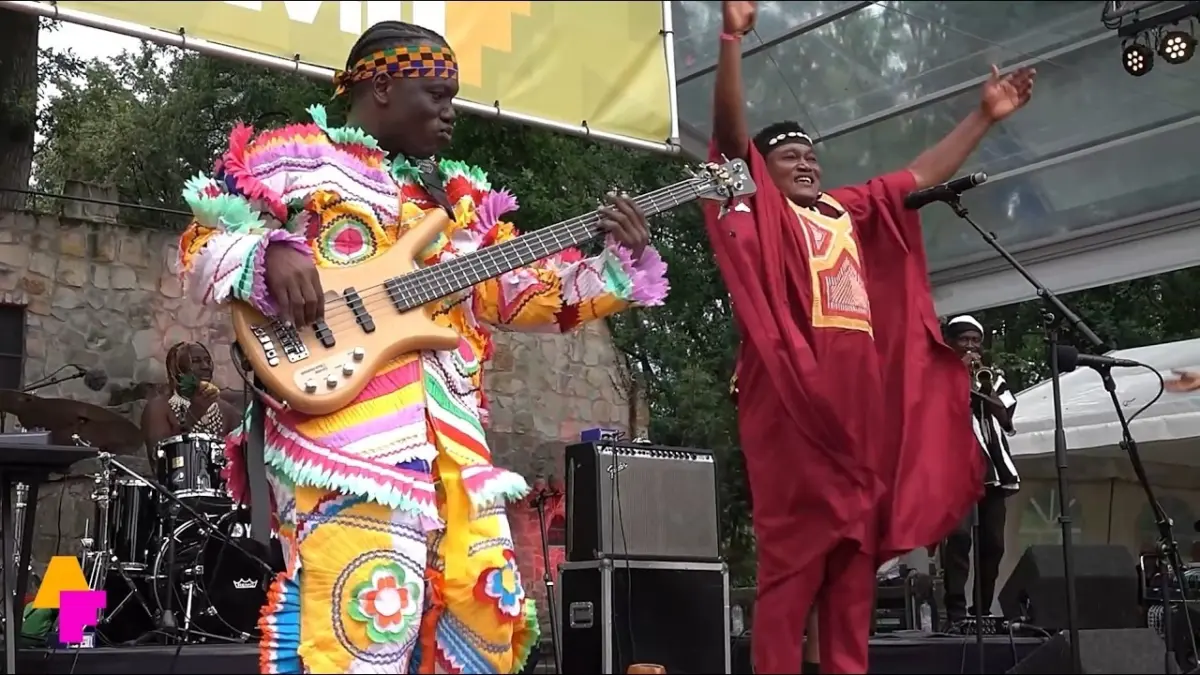
The pivotal moment in the band’s contemporary narrative occurred on July 4, 2026, at the renowned Afrika Festival Hertme in the Netherlands. Performing as an eight-piece ensemble on their maiden tour outside of Ghana, Amamere took to the stage to deliver a masterclass in highlife execution.
The centerpiece of their set was a blistering, dynamic live take on "Kokonsani"—the opening track of Man Shall Be Free. Captured on professional video, the performance serves as a masterclass in high-energy West African musicianship. Eric Asiedu Agyekum’s lead guitar dances effortlessly across the front of the stage, framed by soaring tenor saxophone and trumpet lines. Beneath the sonic architecture lies the relentless, driving groove of the rhythm section, cementing Amamere’s reputation not just as studio revivalists, but as a formidable live touring machine capable of captivating diverse European festival audiences.
Supporting Context & Metrics: Lineage, Instrumentation, and Musical Anatomy
Amamere’s sonic identity is not built in a vacuum; it is sustained by an intricate network of familial pedigree, specialized instrumentation, and deep-seated cultural traditions.
The Royal Bloodline of Highlife
The members of Amamere carry some of the most illustrious surnames in the history of Ghanaian popular music. This familial connection transforms the band from a standard musical collective into a cultural institution:
- Rim Akandoh Jnr (Drums): Sitting behind the drum kit, Akandoh Jnr brings premier contemporary rhythmic precision to the group, having spent the late 2010s drumming for highlife icon Ebo Taylor.
- Rim Akandoh (Patriarch/Legacy): Akandoh Jnr’s father, Rim Akandoh Snr, is a highlife royalty figure in his own right, having held down the drum stool for C.K. Mann before leading the legendary Prince Sparrows Band. Much of Amamere’s repertoire breathes new life into his compositions.
- Emmanuel Adjei (Trumpet): Adjei’s musical pedigree is equally staggering; he is the grandson of Mac Tontoh, the legendary co-founder of the pioneering Afro-rock and highlife fusion band Osibisa.
The Rhythm and Brass Architecture
Amamere’s sound relies on a meticulously balanced orchestration that mimics the classic golden-era guitar bands while injecting a fresh, muscular vitality:
| Instrument / Role | Performer | Musical Significance & Heritage |
|---|---|---|
| Lead Guitar | Eric Asiedu Agyekum | Sits out front with stinging, melodic phrasing reminiscent of 1970s Ghanaian guitar masters. |
| Drums | Rim Akandoh Jnr | Provides the foundational pocket; former percussionist for Ebo Taylor. |
| Ga Kpanlogo & Congas | Dominic Ansah | Interlocks beneath the drum kit, driving the polyrhythmic pulse rooted in Ga and Fante traditions. |
| Trumpet | Emmanuel Adjei | Carries soaring horn lines; grandson of Osibisa’s Mac Tontoh. |
| Tenor Saxophone | Ensemble Member | Weaves harmonic counter-melodies over the top of the brass section. |
Linguistic and Cultural Context: Decoding "Kokonsani"
The track that launched their international acclaim, "Kokonsani," is rich in cultural subtext. In Twi, one of Ghana’s most widely spoken languages, kokonsani translates directly to "gossip" or a gossipmonger.
While the musical arrangement of the track is built upon electrified osode rhythms—traditionally performed by the Fante fishing communities along the coast—the lyrical content provides a sharp, contemporary social commentary. Written by Rim Akandoh Jnr, the lyrics tackle the timeless human vice of gossip, using witty vernacular imagery delivered over a deceptively joyous, danceable groove. This juxtaposition of heavy social critique and celebratory dance music is a hallmark of classic highlife, proving that Amamere understands not just the technical parameters of the genre, but its sociopolitical soul.
Official Statements and Critical Reception
The global music community has responded to Amamere’s emergence with widespread critical acclaim, viewing the band as a necessary antidote to the hyper-commercialized, heavily quantized pop music dominating contemporary charts.
Industry and Festival Commentary
Curators at the Afrika Festival Hertme noted that Amamere’s debut European appearance was one of the most anticipated cultural exchanges of the summer. festival organizers remarked:
"Bringing an eight-piece traditional highlife band straight out of Cape Coast to the Netherlands is no small logistical feat, but the cultural payoff is immeasurable. Amamere represents the unbroken thread of African musical history. When they play, you aren’t just hearing notes; you are hearing the history of the Gold Coast, the Atlantic, and generations of master musicians speaking through their descendants."
Afro Urban Project Perspectives
The Afro Urban Project, which championed the release of Man Shall Be Free, has positioned Amamere as the flagship act for their mission to document and elevate authentic urban and roots music from the African continent. In promotional notes accompanying the album release, label representatives emphasized the urgency of the project:
"Highlife is the grandfather of so much modern African popular music, yet for decades, the genre’s guitar-band era has been underrepresented on global stages in its purest form. Amamere corrects this imbalance. They do not dilute their sound for Western palates; they invite the world to step into their rhythmic universe on authentic terms."
Future Outlook: The Global Resurgence of Highlife
As Amamere wraps up their historic maiden international tour and the reverberations of their Afrika Festival Hertme performance continue to spread via digital platforms, the band’s trajectory points toward an exceptionally bright future.
Expanding the Global Footprint
The success of Man Shall Be Free and the viral traction of their live "Kokonsani" video have opened doors for future international routing. Industry insiders predict that the group will likely secure extended booking agents across Europe, North America, and potentially festival circuits in Asia and Latin America, where analog roots music has cultivated passionate, dedicated followings.
Preserving the Archive for Future Generations
Beyond touring, Amamere’s success signals a broader cultural shift within Ghana and the diaspora. By proving that traditional, uncompromised highlife can capture the imagination of contemporary global audiences, they have created a viable economic and artistic template for younger generations of musicians. Rather than abandoning traditional instrumentation for electronic bedroom production, emerging artists in Cape Coast, Accra, and Takoradi now have living proof that mastery of heritage instruments—the guitar, the trumpet, the kpanlogo drum—holds international currency.
Conclusion
Amamere’s journey from the coastal fish markets of Cape Coast to the festival stages of Europe is more than a standard tour announcement; it is a triumph of cultural lineage and artistic integrity. Through blistering musicianship, deep familial ties to highlife royalty, and an uncompromising dedication to the analog guitar-band aesthetic, Amamere has ensured that the golden age of Ghanaian highlife is not confined to history textbooks or dusty vinyl records. It is alive, it is urgent, and it is dancing into the future.
To experience the studio cut of "Kokonsani," listeners can stream the track via the Amamere Bandcamp Page, and physical or digital copies of the debut album Man Shall Be Free can be ordered directly through the Afro Urban Project distribution network.