Executive Overview
The landscape of digital audio workstations (DAWs) and music production plugins has long been dominated by corporate giants iterating on safe, familiar formulas. Yet, beneath the surface of the mainstream market, a vibrant ecosystem of independent developers continues to push the boundaries of how we create sound. Enter Tamber—an eclectic, burgeoning software suite born out of the COVID-19 pandemic. Conceived by musician and developer Zoe Wrenn as a suite of bespoke, highly specific tools for her own creative workflow, Tamber has evolved into a fully realized commercial start-up as of 2024.
Priced at an accessible $9.99 per month or $99 annually, Tamber offers a bundled suite of five distinct creative applications spanning workflow optimization, unconventional instrumentation, dynamic live performance control, and immersive sound discovery. Far from being a collection of hollow digital gimmicks, Tamber’s applications—Librarian, City Packs, Sonic Atlas, Tamby, and Gestures—demonstrate a rare blend of technical ambition and genuine musical utility. By integrating synaesthetic tagging systems, crowdsourced global field recordings, AI-driven DAW assistance, and webcam-based motion tracking, Tamber challenges producers to rethink their habits, workflows, and relationship with modern music technology.
Detailed Chronology
The Genesis: From COVID-19 Lockdown Project to Commercial Start-Up
The story of Tamber is rooted in the isolation and introspection of the early COVID-19 lockdowns. Facing the same creative friction that plagued many solo musicians cut off from physical collaboration, Zoe Wrenn set out to build custom digital tools to streamline her personal writing and production processes. Wrenn was not aiming to build a commercial product; rather, she needed idiosyncratic utilities that answered specific creative headaches—organizing chaotic sample libraries, exploring geographic soundscapes, and experimenting with alternative control methods.
As Wrenn shared glimpses of her bespoke tools online, the software unexpectedly went viral within niche music production communities. The overwhelming digital response revealed a profound market appetite for software that prioritized tactile experimentation and out-of-the-box thinking over standard-issue EQ plugins and compressor emulations. Recognizing the broader potential of her digital workshop, Wrenn transitioned the project from a private sandbox into a formal commercial enterprise in 2024. Today, Tamber has expanded into a tight-knit team of music lovers and developers, scaling Wrenn’s original vision into a five-part application suite designed to inject unpredictability and inspiration back into the modern digital studio.

Supporting Context & Metrics: The Tamber Ecosystem Under the Microscope
Tamber’s current software suite is divided into five specialized applications, each tackling a different facet of the modern music-making process. To understand the value proposition of the $99 annual subscription, one must examine how these tools function in practice.
1. Librarian: The Synaesthetic Sample Organiser
For any modern producer, hard drives are a graveyard of disorganized WAV files, unlabelled one-shots, and chaotic splice downloads. Tamber’s Librarian steps into this crowded market—competing directly against established paid heavyweights like Waves’ COSMOS Sample Finder and Sononym—with a zero-dollar entry point (available independently) and a radical differentiator: a synaesthesia-inspired tagging system.
Beyond standard metadata like genre, instrumentation, and BPM, Librarian allows users to search samples using descriptive tags based on feel, texture, and colour. Developed with input from artists who experience synaesthesia, these designations are far from arbitrary. Searching for a "spongy" sound yields audio selections that genuinely evoke that tactile sensation. Furthermore, users can search via audio input by uploading or directly recording samples into the app, saving favored sounds to custom "crates" for immediate access during a DAW session.
2. City Packs: Crowdsourced Global Ambiences
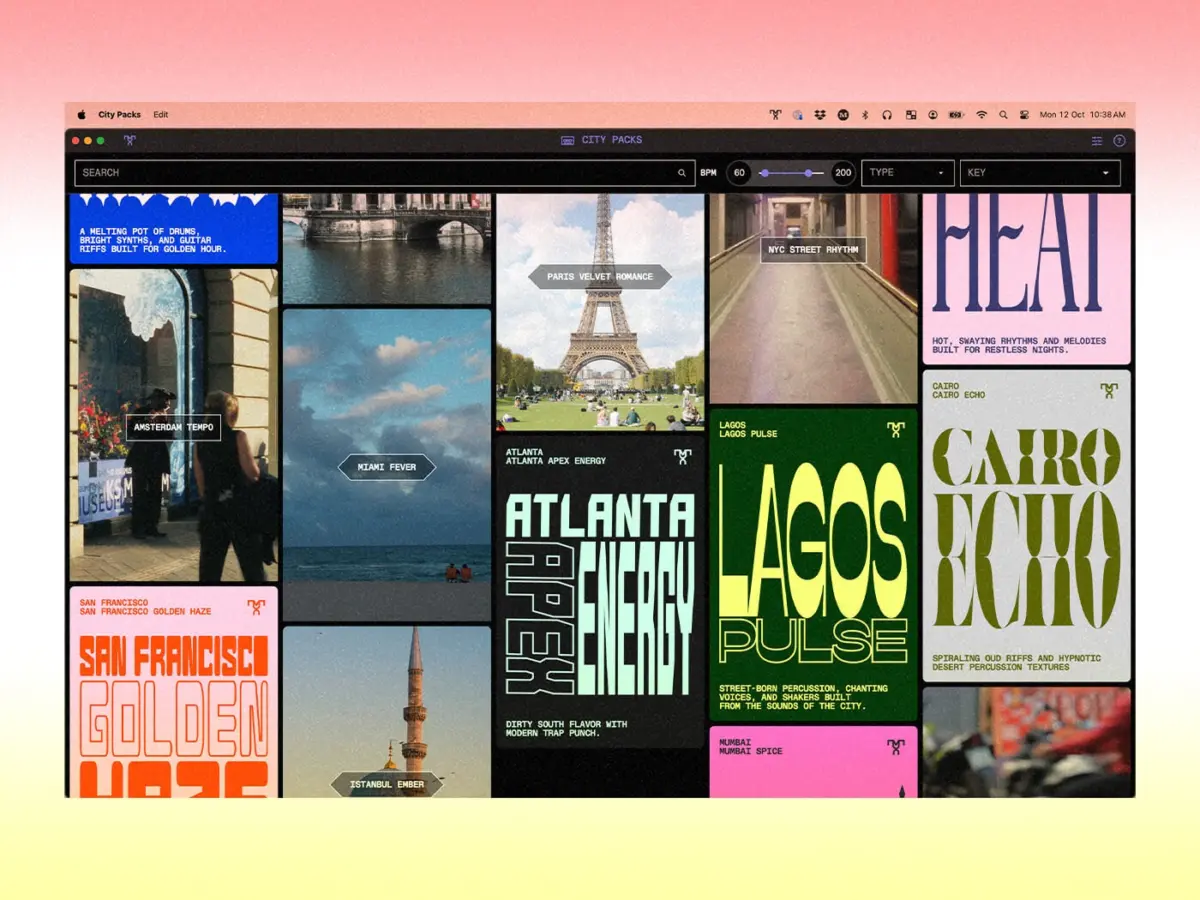
Complementing the sample management features, City Packs represent a global crowdsourcing effort by Tamber’s user base. Field recordings submitted from around the world were handed over to professional producers who carved out usable percussion loops, melodic elements, and atmospheric pads.

The resulting library brims with rare found sounds, non-Western instruments, and evocative sonic backdrops. While these packs are not yet searchable directly within Librarian—a feature slated for a later update—they serve as an invaluable resource for producers seeking to break away from sterile, royalty-free sample packs and inject authentic global textures into their tracks.
3. Sonic Atlas: Geography as Inspiration
Rather than serving as a direct source of raw audio material, Sonic Atlas is a music discovery tool designed to cure writer’s block. Users select a historical date range, spin a virtual globe, and allow their ears to wander across international musical landscapes.
While deeply inspiring, the application is tightly integrated with Apple Music. Producers who rely on alternative streaming ecosystems like Spotify or Tidal will find their listening restricted to brief, functional previews, limiting the application’s utility for non-Apple users.
4. Tamby: The AI-Powered DAW Assistant
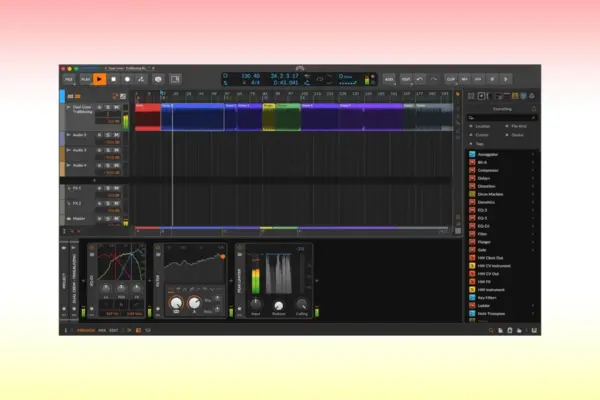
Positioned at the bleeding edge of workflow technology, Tamby is an AI-powered assistant designed to interact with Ableton Live (versions 11 and 12). Controlled via text or voice commands, Tamby can automate complex tasks such as instantiating tracks, loading stock or third-party plugins, arming recordings from specific bars, and toggling loop states.

In practical testing, Tamby frequently outperforms native voice-control implementations found in deeply integrated hardware-software ecosystems like Universal Audio’s LUNA. Naturally, generative AI tools are not infallible; giving vague instructions can lead to erratic results. For instance, asking the assistant for "a hybrid reverb plugin" might summon an unexpected algorithmic space, whereas explicitly requesting "Ableton Live’s Hybrid Reverb" yields the correct tool. With compatibility expansions already underway for Apple Logic Pro and Image Line FL Studio, Tamby represents a pragmatic glimpse into hands-free studio automation.
5. Gestures: Webcam-Based Motion Control
Rounding out the suite is Gestures, an innovative software synthesizer and MIDI controller that transforms an ordinary computer webcam into an expressive performance interface. By tracking both hands simultaneously, users can assign one hand to trigger notes and chords while the other modulates parameters in real-time.
Remarkably responsive even in low-light environments, Gestures bridges the gap between expensive hardware expression controllers—such as the Audima Sway or Roli Airwave—and software-based setups. Beyond its built-in synth engine and fun vocoder capabilities, Gestures can be MIDI-mapped to control any third-party instrument or effect plugin in a producer’s collection, delivering high-end spatial performance control at a fraction of the hardware market cost.
Official Statements and Industry Reception
The critical reception of Tamber highlights a fascinating paradox in modern software licensing. In a market where consumers increasingly suffer from subscription fatigue, forcing users into a bundled ecosystem can be a double-edged sword.

Industry analysts and early reviewers have noted that Tamber’s eclectic mix of tools—ranging from AI assistants to webcam-tracking synths—makes it difficult to neatly categorize the target demographic. As reviewer Clovis McEvoy points out, some producers will inevitably clamor for Tamber to "un-bundle" its offerings, preferring standalone, perpetual-license purchases over a recurring subscription fee.
However, Tamber’s leadership maintains that the interconnected nature of the suite justifies the unified pricing model. Zoe Wrenn and her team have positioned Tamber not as a set of isolated plugins, but as an evolving creative philosophy. In an era where artificial intelligence in music tech is routinely criticized as a superficial marketing buzzword, Tamber’s deliberate, artist-first implementation of AI (via Tamby) and sensory mapping (via Librarian and Gestures) offers a compelling counter-narrative. It is software built by musicians who understand the psychological blocks of the creative process, designed specifically to dismantle them.
Future Outlook
As Tamber looks toward the horizon, the roadmap ahead is ambitious. The immediate technical priorities include deep integration between the sprawling City Packs library and the Librarian search engine, ensuring that crowdsourced global field recordings are instantly accessible at the click of a synaesthetic tag.
Simultaneously, the development team is doubling down on cross-DAW compatibility for the Tamby AI assistant. Bringing text-and-voice automation out of Ableton Live and into heavyweights like Logic Pro and FL Studio will dramatically expand Tamber’s potential user base, transforming the assistant from a niche utility into an industry-wide workflow standard.

Whether Tamber can successfully convince a skeptical, subscription-weary producer community to embrace its bundled ecosystem remains to be seen. Yet, by resisting corporate homogenization and delivering genuinely powerful, slightly eccentric tools that spark real inspiration, Tamber has carved out a vital space for itself. For creators willing to look past the traditional plugin format, Tamber proves that the future of music software doesn’t have to be sterile—it can be wonderfully, humanly weird.