Executive Overview
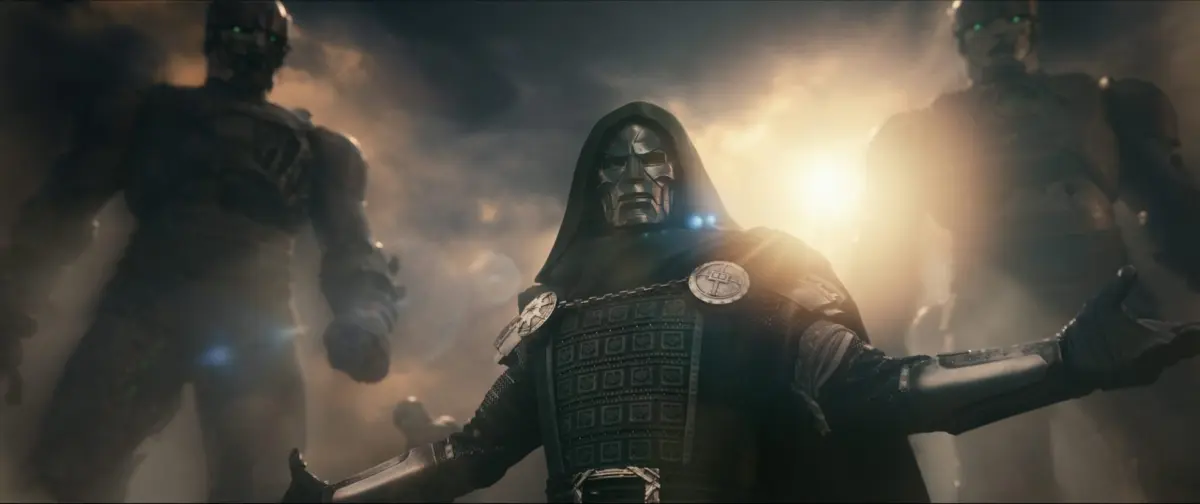
As the cinematic landscape prepares for the seismic arrival of Avengers: Doomsday later this year, the Marvel Cinematic Universe (MCU) is bracing for the introduction of its most formidable and complex antagonist to date: Doctor Doom. Portrayed by Robert Downey Jr.—the very actor whose career-defining performance as Tony Stark/Iron Man helped launch the MCU in 2008—the casting choice alone has ignited intense global speculation. How can the cinematic architect of modern superheroism now embody its ultimate existential threat? The answer likely resides within the infinite possibilities of the multiverse, where alternate timelines and variant personas collide.
Yet, the intrigue extends far beyond behind-the-scenes casting logistics or multiversal mechanics. Doctor Doom—historically recognized as Marvel Comics’ premier supervillain—embodies a compelling philosophical paradox. He is a megalomaniacal dictator driven by supreme intellect, yet his ultimate objective has frequently been the salvation and perfection of the world. In numerous legendary comic arcs, Doom has achieved what Earth’s mightiest heroes never could: eradicating poverty, ending war, and curing global hunger.
This dynamic exposes a fundamental structural difference between traditional Western narrative traditions and superhero storytelling. While conventional literature rewards protagonists who enact permanent systemic change, the superhero genre relies on villains to attempt transformation, while heroes perpetually defend the status quo. With Doctor Doom, this dichotomy becomes especially provocative. Born into a working-class Romani family in the fictional European nation of Latveria, Victor von Doom’s harrowing origins and genuine administrative successes make him a deeply sympathetic authoritarian. As the MCU edges toward Avengers: Doomsday and its subsequent follow-up, Avengers: Secret Wars, audiences are forced to confront an uncomfortable question: when the world is fundamentally broken, is a benevolent tyrant truly worse than freedom coupled with perpetual suffering?
Detailed Chronology: From Fantastic Four #5 to the Multiversal Stage
1962–1980s: The Genesis of an Icon
Created by Stan Lee and Jack Kirby, Doctor Doom made his publishing debut in Fantastic Four #5 (July 1962). Unlike many of his contemporaries who remained localized to a single hero’s rogue gallery, Doom’s immense popularity and intellectual reach allowed him to seamlessly transition across the broader Marvel continuity. He quickly established himself as a persistent menace to Spider-Man, Daredevil, the Avengers, and his arch-nemesis, Reed Richards.
Despite the relentless efforts of these heroes to thwart his global ambitions, comic book history reveals a fascinating truth: on the rare occasions when Doctor Doom successfully conquered Earth, his stewardship was remarkably effective.
1987: Emperor Doom and the Price of Peace
The definitive exploration of this theme arrived in the 1987 graphic novel Emperor Doom. In this storyline, Doom successfully seizes global control by hypnotizing United Nations delegates and engineering his appointment as supreme world leader. Rather than plunging the planet into dystopian ruin, Doom institutes radical systemic reforms:
- Solves global hunger permanently.
- Eradicates international poverty.
- Abolishes apartheid and state-sponsored discrimination.
- Halts the nuclear arms race entirely.
Despite unprecedented global prosperity, the Avengers mobilize to overthrow him, dismantling his utopian regime in the name of liberty. In a poignant narrative panel, Captain America justifies the violent restoration of the status quo to a population facing renewed starvation, declaring: "The world isn’t perfect, but people are free to make their own choices."
2015: Secret Wars and the Preservation of Reality
Decades later, Marvel’s 2015 Secret Wars event cemented Doom’s status as a cosmic savior. When a catastrophic incursion event threatened to destroy the entire multiverse, Doctor Doom—with the aid of Doctor Strange and molecule-manipulating powers—intervened. He forged a patchwork planet known as Battleworld out of the surviving fragments of dead realities, effectively preserving human existence when all else failed. Once again, heroes eventually overthrew his absolute rule to restore the fragile, flawed multiverse as it was before. This 2015 epic serves as the direct narrative blueprint for the upcoming cinematic event, Avengers: Secret Wars (2027).
Supporting Context & Metrics: The Philosophy of the Status Quo
To fully understand why Doctor Doom’s narrative function differs so radically from standard literary antagonists, one must examine the socio-historical mechanics of the comic book industry.
The Umberto Eco "Oneiric Climate"
In his foundational academic essay The Myth of Superman, philosopher Umberto Eco analyzed how serialized American comics maintained audience engagement over decades without genuine chronological progression. Due to sporadic distribution networks at local newsstands, publishers could never guarantee that a reader would purchase consecutive issues. Consequently, writers operated within an unchanging "oneiric climate" (a dreamlike state), where major developments were quickly reversed to ensure any reader could pick up any issue without feeling alienated.
As Marvel expanded its interlocking continuity across thousands of comic series, merchandise lines, and creative teams, maintaining this status quo became even more vital. According to late Marvel visionary Stan Lee, this preservation strategy was known as "the illusion of change." Major events like Secret Wars or Emperor Doom could introduce temporary, world-shattering shifts, but editorial mandates inevitably reset the universe back to baseline.
[Traditional Western Narrative]
Hero Ventures Out -> Changes the World -> Hero is Changed by Actions

[Superhero Comic Narrative]
Villain Attempts Change (Status Quo Threat) -> Heroes Defend Status Quo -> Universe Resets
This structural reality creates a distinct cognitive dissonance when translated to the big screen. Moviegoers are traditionally trained to root for characters who challenge unjust systems and force progress. In contrast, cinematic superheroes are fundamentally conservative agents dedicated to preventing systemic disruption—a dynamic that will be severely tested when Robert Downey Jr.’s Doctor Doom presents audiences with a rational, results-driven alternative to global chaos.
Official Statements & Industry Insights
Industry analysts, comic historians, and production insiders have weighed heavily on the monumental casting choice and its thematic implications for the MCU.
Speaking at recent entertainment industry panels, Marvel Studios executives have emphasized that the introduction of Doctor Doom is designed to push the cinematic universe into morally grey territory. Following the conclusion of the "Infinity Saga" and the complex multiverse expansions of Phase 4 and 5, the studio recognized the need for an antagonist possessing both intellectual supremacy and profound emotional resonance.
Film historians tracking the evolution of Robert Downey Jr.’s career note the poetic irony of his transition from Tony Stark to Victor von Doom. While Stark represented capitalist ingenuity, techno-optimism, and institutional reform from within the system, Doom represents the rejection of flawed democratic systems in favor of absolute, technocratic paternalism.
Academic researchers specializing in comic book sociology point out that Doom’s unique appeal stems from his self-made architecture:
"Unlike heroes who inherit vast fortunes, receive state-sponsored serums, or possess cosmic gifts granted by birthright, Victor von Doom clawed his way to supremacy through sheer intellectual willpower. He is an industrialist-scientist who actually believes his own rhetoric about saving humanity—and historical comic data demonstrates that, from a utilitarian perspective, he often delivers on that promise."
Future Outlook: The Road to Doomsday and Beyond
As Marvel Studios ramps up production for Avengers: Doomsday, early production whispers and post-credits teases (such as those hinted at following Avengers: Endgame: Encore) suggest a monumental narrative pivot. The multiverse is fracturing under an existential, otherworldly threat, and standard Avengers protocols are entirely inadequate.
Solving a multiversal crisis requires ruthless, uncompromising choices—decisions that democratic coalitions and reactive heroes are incapable of making. This vacuum opens the door wide for an agent of absolute transformation like Doctor Doom.
What to Expect in the MCU Phase 6 and Beyond:
- The Multiversal Variant Reveal: Robert Downey Jr.’s introduction will likely bridge the emotional attachment fans hold toward Iron Man with the terrifying authoritarian brilliance of Victor von Doom, exploring themes of alternate-reality identity.
- Latverian Geopolitics on Screen: The cinematic adaptation is expected to explore Latveria not merely as a fictional despotic wasteland, but as a hyper-efficient, prosperous society that genuinely prefers Doom’s iron-fisted protection over the chaotic vulnerability of the rest of the world.
- The Philosophical Showdown: Avengers: Doomsday and Avengers: Secret Wars will force audiences to grapple with a profound ethical dilemma: Is a peaceful, orderly world under a benevolent dictator objectively superior to a free world plagued by endless conflict?
Ultimately, as moviegoers flood theaters for Avengers: Doomsday, the real question is not whether the Avengers will defeat Doctor Doom, but whether audiences will leave the cinema secretly wishing a real-world Victor von Doom would step forward to fix our own troubled planet—assuming, of course, they can find someone as uniquely brilliant and charismatic as Robert Downey Jr. to do the job.