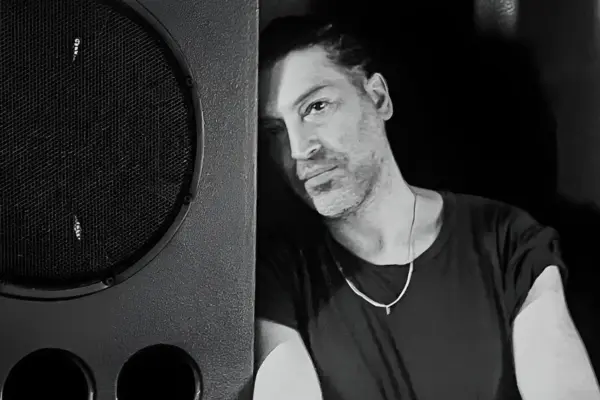
For nearly three decades, British singer-songwriter Michael Weston King has navigated a shifting musical landscape, deliberately trading the fleeting commercial highs of the Britpop era for the enduring, narrative-driven depths of alternative country and Americana. Boasting a prolific discography comprising roughly 20 albums across various solo projects, duos, and bands, King has consistently cultivated a distinct transatlantic sound characterized by a cool, clear vocal delivery and elegant, roots-conscious arrangements.
His latest artistic milestone, the solo album Nothing Can Hurt Me Anymore, is currently turning critical heads much the same way his acclaimed country-duet project, My Darling Clementine—formed alongside his wife and musical partner Lou Dalgleish—has done for the past fifteen years. Yet, this newest chapter arrives under the shadow of unimaginable personal tragedy. In 2024, the couple’s world was upended when King’s granddaughter, Bebe, fell victim to the horrific knife attack in Southport.
Rather than abandoning their craft, King and Dalgleish channeled their grief into separate creative outlets, resulting in a profound new era of solo work. Nothing Can Hurt Me Anymore is a testament to resilience: a record that manages to be simultaneously devastating and uplifting. Praised by Elvis Costello as "a beautiful, complex piece of work," King’s latest release, alongside Dalgleish’s forthcoming companion album, proves that while music cannot erase profound loss, it can provide a vital framework for survival and healing.
Detailed Chronology: From Stockport Punk to Americana Vanguard
The Formative Years and Pop Beginnings
Michael Weston King’s musical journey began in earnest at the end of the 1970s inside Eric’s, the legendary Liverpool club that served as a crucible for post-punk and new wave. "I was too young, but they weren’t strict on the door," King recalls with a laugh. "I saw Joe Jackson’s first tour, although I missed Elvis Costello."
It would take a couple of years before King stepped out of the audience and onto the stage, forming his first proper band, Fragile Friends. Musically aligned with the sophisti-pop sounds of contemporaries like China Crisis, Fragile Friends defined King’s early pop aspirations. However, the trajectory of his musical identity was permanently altered in 1981 with the release of Elvis Costello’s Almost Blue—a landmark covers album of classic country standards.
"My awareness of good country—George Jones, Merle Haggard, Gram Parsons—was raised, and a year or two later, I became aware of songwriters like Townes Van Zandt and Guy Clark," King explains. This pivot toward roots music saw him joining the northern hybrid country-folk outfit Gary Hall & The Stormkeepers as a guitarist before he ultimately took the helm of his own country-rock vehicle, The Good Sons, in the early 1990s.
The Rise and Fall of The Good Sons
Signed to the German independent label Glitterhouse, The Good Sons quickly established themselves within the burgeoning European Americana scene, securing support slots with heavyweights such as Joe Ely and Steve Earle. Between 1995 and 2001, the band released four critically praised albums.
King’s burgeoning reputation also saw him organizing UK tours for folk icons like John Renbourn and Bert Jansch. His ambition eventually carried him stateside, where he struck up a transformative friendship with legendary cult songwriter Townes Van Zandt. Van Zandt agreed to contribute guest vocals to a duet on The Good Sons’ debut album, Singing The Glory Down.
"He sang on my track ‘Riding The Range,’ and a year later cut the song himself," King notes with justifiable pride. "Not that many people can say they had a song recorded by Townes!"
Van Zandt’s subsequent trip to the UK for live performances proved eye-opening. Buoyed by the Tindersticks recording a cover of his song "Kathleen," which climbed high into the indie charts, Van Zandt went from playing to intimate rooms of 250 people to a stunned crowd of 800 to 900 fans at London’s Union Chapel.
The Good Sons subsequently secured a deal with the Texan indie label Watermelon, which had formed a partnership with Sire Records. The collaboration yielded their third album, Wine, Lines and Valentines. "It was a rocking record, somewhere like Soul Asylum—guitar-driven but melodic," King recalls. "It was exciting."
However, momentum ground to a sudden, catastrophic halt in 1998. Watermelon Records collapsed, and shortly thereafter, King was involved in a severe road crash in Germany that left him hospitalized and the band’s equipment completely destroyed. Although The Good Sons mounted a brief nostalgic reunion for the 2001 album Happiness, the accident effectively marked the end of the line for the group.
The Solo Years and the Birth of My Darling Clementine
Transitioning into a solo career, King found his personal and creative life revitalized by his meeting with gifted singer-songwriter Lou Dalgleish. King’s 1999 solo debut, God Shaped Hole, set a melancholy tone. "It was a real miserable record, but still my biggest seller in Germany!" he admits.
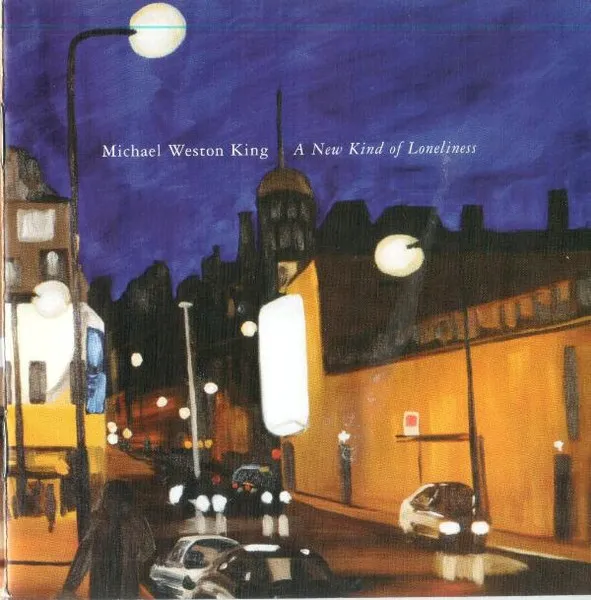
Subsequent work included collaborations with the late Scottish singer-songwriter Jackie Leven, who produced and performed on 2003’s A Decent Man before leading King’s touring band, The Decent Men. As King and Dalgleish forged a deeper songwriting partnership, their material embraced an elegant transatlantic sheen, underscored by King’s cool, articulate vocals and lush arrangements.
Yet, after years of relentless touring across the United States, the solitary troubadour lifestyle began to take its toll. "I did lots of solo tours in America and toured myself out," King reflects. "The dream of one man and his guitar driving across the prairie to the next gig wears you down. Then I thought, ‘I’m married to this amazing singer, how can we combine the voices?’ I was listening to a Porter Wagoner and Dolly Parton album and thought, this would be brilliant."
This revelation birthed My Darling Clementine in 2011. Designed as a contemporary yet fiercely authentic exploration of classic country duets, their debut album, How Do You Plead?, featured elite UK musicians well-versed in roots idioms, such as Geraint Watkins and Martin Belmont. Bolstered by King’s stockpile of country-leaning compositions and Dalgleish’s Patsy Cline-esque torch ballads, what was originally intended as a one-off side project blossomed into a critically lauded, fifteen-year institution.
Supporting Context & Metrics: A Collaborative Legacy
My Darling Clementine’s discography reads as a masterclass in modern Americana adaptation, marked by conceptual ambition and cross-genre collaborations:
- The Reconciliation? (2013): Produced by Colin Elliot (noted for his work with Richard Hawley), this sophomore release leaned heavily into a lush country-soul aesthetic.
- The Other Half (2015): A unique multidisciplinary collaboration with acclaimed crime novelist Mark Billingham, transforming My Darling Clementine narratives into a spoken-word and musical stage show featuring guest appearances by Graham Parker and actor David Morrissey.
- Country Darkness (2020): A critically acclaimed series of four EPs wherein the duo reimagined the more obscure country-soul catalog of Elvis Costello as intricate duets, backed by Costello’s longtime Attractions pianist, Steve Nieve.
- Live Performance Footprint: The duo’s dedication to touring remains relentless, highlighted by a massive 2024 run covering 42 dates across seven international countries between February and June, alongside special festival appearances.
Official Statements and Personal Perspectives
The trajectory of King and Dalgleish’s career was brutally interrupted in 2024 by the Southport knife attack, which claimed the life of King’s granddaughter, Bebe. The tragedy fundamentally shattered their creative process as a joint unit.
"It changed our lives," King shares candidly. "We are still broken-hearted, but have to push forward. As songwriters, you put stuff that affects you into songs, and nothing can be more affecting than what happened to us."
Reflecting on the decision to pursue separate artistic expressions in the wake of the tragedy, King notes:
"We didn’t feel we could write jointly; we needed to be in our own place."
Despite the agonizing emotional weight of his new solo album, Nothing Can Hurt Me Anymore, King is quick to clarify its underlying ethos:
"It’s not a doom and gloom record. There are dark moments, but we needed hope and optimism. Ironically, I think it’s the best record I’ve ever made."
Validation of this artistic triumph came swiftly, most notably via a personal correspondence from Elvis Costello, who hailed the release as "a beautiful, complex piece of work."
Future Outlook: Healing, Touring, and New Horizons
While the profound grief of their loss will never fully dissipate, Michael Weston King and Lou Dalgleish have mapped out a resilient path forward for the remainder of 2024 and beyond.
Rather than shelving their live commitments, the pair have restructured their performance framework. Following their extensive spring tour and a memorable summer performance at Twickenham’s High Tide festival—which featured a reunion of the original My Darling Clementine band, including Martin Belmont’s signature rockabilly-swing guitar—the duo is preparing for a new phase of live shows.
Later in the year, they will embark on a unique tour titled My Darling Clementine – Together Apart. Designed in two distinct halves, the concerts will first showcase beloved legacy material from their fifteen-year catalog, before the second half features trading performances of material from their respective solo records.
Lou Dalgleish’s upcoming solo album, tentatively titled The Leaving And The Left Behind and helmed once again by producer Colin Elliot, is slated for release late in the year. Through unwavering dedication to their craft, mutual support, and the cathartic power of songwriting, Michael Weston King and Lou Dalgleish continue to honor their past while navigating an unimaginably painful future, proving that even in the face of absolute tragedy, art can serve as a steadfast vessel for survival.