Executive Overview
The rapid integration of generative artificial intelligence across visual design, marketing, and audio synthesis has ignited a ideological divide within the global music industry. While record labels and tech-forward creators champion automated tools as cost-effective catalysts for boundless experimentation, a growing cohort of seasoned artists is sounding the alarm over visual homogenization, artistic devaluation, and the erosion of human connection.
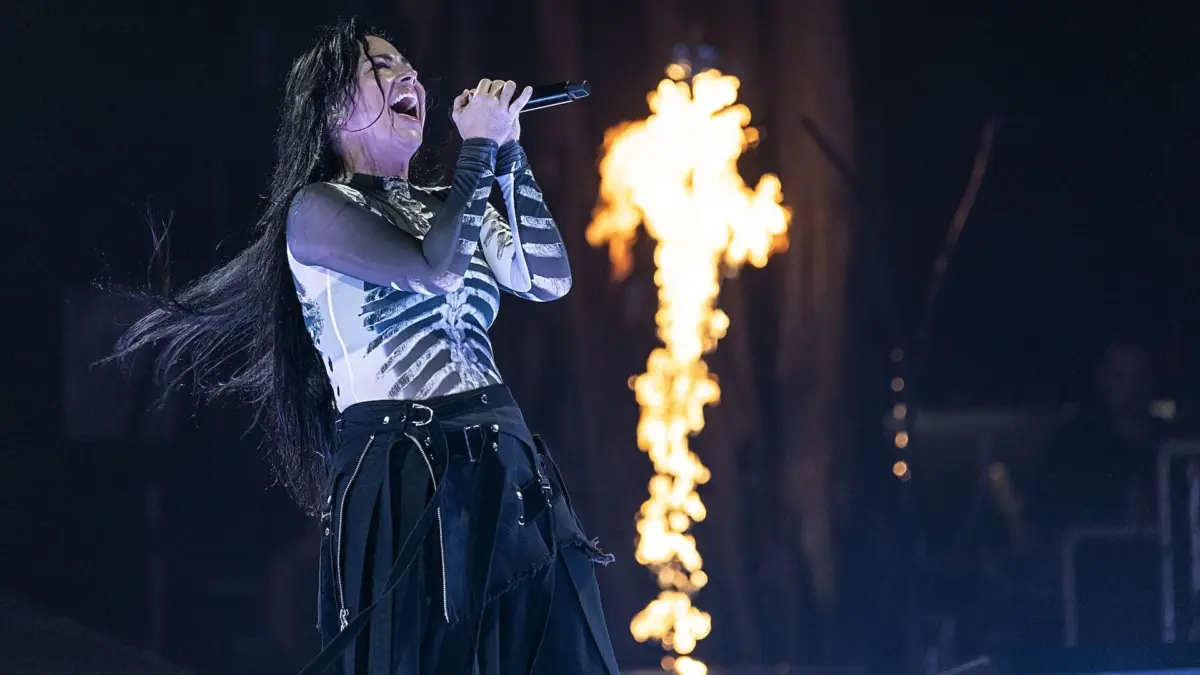
At the epicenter of this debate is Amy Lee, frontwoman of the Grammy-winning rock band Evanescence. Speaking at the Sick New World festival in Fort Worth, Texas, Lee articulated a firm critique of the current digital landscape, characterizing the influx of low-effort, AI-generated imagery as an "ocean of lame." However, rather than succumbing to techno-pessimism, Lee predicts an impending historical correction—a cultural "pendulum swing" wherein audiences, exhausted by algorithmic noise and ubiquitous synthetic content, will place a premium on authentic, human-crafted art.
Lee’s perspective highlights a widening divide in rock and metal culture. Just days prior to her comments, Avenged Sevenfold guitarist Zacky Vengeance issued a defense of generative AI, utilizing an AI-drafted statement to argue that emerging technologies expand artistic limits rather than stifle human ingenuity.
As physical reissues—such as Evanescence’s upcoming 2006 album The Open Door via Craft Recordings—reassert the value of tangible, historically rooted artistic artifacts, the industry faces a pivotal question: Will AI serve as an empowering creative co-pilot, or will its over-saturation trigger a widespread cultural demand for organic craftsmanship?
Detailed Chronology: From Algorithmic Marketing to Festival Floor Critique
                                 TIMELINE OF EVENTS

  [ mid-2000s ] -------------- [ Recent Months ] -------------- [ Festival Season ] ------------- [ Nov 6 ]
  Release of Evanescence's    Surge in AI-generated             Amy Lee speaks on 'Rocked'       Craft Recordings
  'The Open Door' (Organic    promotional materials &           podcast; Zacky Vengeance         reissues 'The Open
  gothic visual identity)     unauthorized graphic assets       issues pro-AI statement          Door' vinyl/CD
The friction between traditional artistic control and automated asset generation has escalated alongside the democratization of text-to-image software. The timeline leading to Lee’s public statements reflects a rapid shift in how musical acts manage their visual identities in an algorithmic ecosystem.
The Genesis of Synthetic Promotional Collateral
Over the past two years, independent promoters, streaming platforms, and third-party event organizers have increasingly turned to generative algorithms to produce key art, promotional posters, and social media assets. This transition has frequently bypassed the direct oversight of recording artists, resulting in visual collateral that misrepresents band aesthetics or delivers surreal, uncanny caricatures.
The Sick New World Flashpoint
During the Sick New World festival at the Texas Motor Speedway in Fort Worth, Texas, Amy Lee addressed these developments directly during an appearance on the Rocked podcast. The catalyst for her critique was a recent promotional poster created for an event involving Evanescence.
The image, generated via AI without the band’s creative input, drew Lee’s immediate disapproval for its lack of aesthetic standards and missed opportunity for basic human photography.
The Parallel Industry Counter-Narrative
Lee’s comments occurred nearly simultaneously with a contrasting stance taken by Avenged Sevenfold’s Zacky Vengeance. Known for embracing decentralized finance, Web3, and advanced tech applications, Avenged Sevenfold entered the debate with Vengeance issuing a formal statement—partially generated by an AI platform—defending the technology against industry skepticism.
Re-Anchoring in Physical Legacy
Against this backdrop of synthetic automation, Evanescence announced the upcoming reissue of their multi-platinum 2006 sophomore studio album, The Open Door. Scheduled for release on November 6 through Craft Recordings, the reissue stands as a practical counter-weight to digital asset generation, offering fans tangible physical media, original dark-romantic art direction, and mastered audio rooted in mid-2000s human production.
Supporting Context & Industry Metrics
To understand Lee’s critique, one must examine the macro-environmental factors driving both AI adoption and the subsequent artist backlash. The music business currently operates in a state of hyper-saturation, where digital distribution channels are inundated with vast quantities of content daily.
Digital Bloat and the "Ocean of Lame"
The rapid deployment of generative AI tools has significantly lowered the barrier to entry for media creation, leading to a crowded digital landscape. Visual art, once defined by bespoke photography, digital painting, and typography, is frequently replaced by prompt-driven imagery characterized by telltale algorithmic artifacts: distorted anatomy, asymmetrical lighting, and generic glossy textures.
                  THE CREATIVE SATURATION PARADOX

   High  ^
         |      [ Traditional Craft ]                [ AI Oversaturation ]
         |   * High Perceived Value               * Low Barrier to Entry
  ART    |   * Human Imperfection                 * Homogenized Visuals
  VALUE  |   * Emotional Resonance                * Audience Fatigue
         |
   Low   +------------------------------------------------------------------->
         Low                        MEDIA VOLUME                         High
Industry analysts note that while AI lowers production budgets for promoters and independent entities, it introduces severe brand erosion for established artists. For an act like Evanescence—whose brand identity is anchored in gothic romanticism, orchestral grandeur, and detailed visual aesthetics—unauthorized, low-quality synthetic graphics dilute decades of carefully curated imagery.
The Economics of Authenticity
Paradoxically, as synthetic media becomes ubiquitous, the market value of verified human authenticity is rising. This shift is evident across several music industry vectors:
- Physical Media Growth: Vinyl, CD, and cassette sales have sustained multi-year growth trends, driven by consumer demand for tangible ownership, physical artwork, and detailed liner notes.
- Live Performance Premiums: Live music revenues have reached record highs post-pandemic, reinforcing that audience engagement relies fundamentally on real-time, shared physical experiences.
- Artistic Licensing and Rights Management: Intellectual property disputes regarding training data for machine learning models have led legacy artists to demand strict legal protections against unauthorized synthetic reproductions of their likenesses, voices, and visual style.
Official Statements and Comparative Positions
The debate over generative technology in the arts is best illustrated by contrasting the perspectives of Amy Lee and Zacky Vengeance. Their statements represent two distinct philosophies currently shaping modern rock music.
========================================================================================
                               PHILOSOPHICAL DIVIDE
========================================================================================
          AMY LEE (EVANESCENCE)                 ZACKY VENGEANCE (AVENGED SEVENFOLD)
----------------------------------------------------------------------------------------
* Philosophical View: Humanist/Organic         * Philosophical View: Techno-Utilitarian
* Core Argument: AI causes oversaturation;     * Core Argument: Tech fear is historical;
  triggers demand for human craft.               AI expands creative boundaries.
* Primary Concern: Visual degradation, loss     * Primary Concern: Stagnation through
  of emotional resonance, low effort.            resistance to technological shifts.
========================================================================================
Amy Lee: The Case for Organic Resurgence
Speaking with Rocked at Sick New World, Amy Lee framed the current digital landscape not as a permanent decline, but as a temporary state that will inevitably provoke a human-centric counter-reaction.
"It’s my hope and belief," Lee stated regarding a potential return to traditional art forms. "Doomscrolling is real. It’s hard not to look around and just feel like, ‘Oh man, we’re so cooked. This is just going on a downhill path.’ But when in the world has there ever not been a pendulum swing back the other way when things become too extreme? More and more, I feel in my own heart, I see people wanting real art, real artists, real things made by hand. I feel like that is where we’re headed—that’s beautiful and fun and exciting. With all the craziness in the world, like we need each other; we need an outlet to let it out."
Lee addressed the specific incident involving an AI-generated promotional poster, highlighting the gap between automated speed and basic aesthetic standards:
"It looked like I put out that poster," Lee recalled. "I saw this horrible poster the other day of something we were about to do. I’m like, why? It’s so ugly. It’s like the ugliest, worst, most horrible [thing]. It’s like, you could have snapped a picture of us anywhere and put it on your poster."
She concluded with an assessment of how algorithmic saturation alters artistic valuation:
"We’re in a new world. Our phones are part of it. We’re going to have to find the way for authenticity and finding each other in the real world and making art in the real world. I really do think the value of that has only gone up through the ocean of lame."
Zacky Vengeance: The Techno-Utilitarian Perspective
In contrast, Avenged Sevenfold guitarist Zacky Vengeance offers a pragmatic defense of generative software. Avenged Sevenfold has consistently positioned itself at the intersection of heavy music and emerging tech, previously embracing blockchain infrastructure, interactive digital spaces, and non-fungible tokens (NFTs).
Vengeance’s statement—deliberately drafted using an AI platform to underline his point—draws parallels between current anxieties and historical tech transitions:
“Every major technological advancement has been met with fear and resistance,” Vengeance noted. “AI is no different. It’s not the death of creativity or human ingenuity; it’s an expansion of what’s possible.”
From Vengeance’s perspective, generative tools function as modern instruments—force multipliers capable of unlocking new aesthetic boundaries when guided by human direction.
Future Outlook: The Pendulum Swing and Human-Centric Valuation
As the music industry navigates the integration of AI models, the tension between automated efficiency and human craft is likely to redefine creative strategies across several key areas.
1. The Revaluation of Visual and Audio Craftsmanship
If Amy Lee’s "pendulum swing" thesis holds true, the market will likely see a sharp divergence in production strategies:
- Mass-Market Automated Collateral: Budget-constrained marketing campaigns may rely on AI tools for low-tier promotional assets, risking consumer fatigue and brand dilution.
- Premium Human-Crafted Branding: Major acts and independent artists seeking distinct market positioning will increasingly emphasize "hand-made," analog, or traditionally produced art assets. Certifications or transparent labeling indicating human-driven photography, physical set construction, and traditional mixing may emerge as key differentiators.
2. Physical Legacy and Archival Releases
The upcoming reissue of Evanescence’s The Open Door on November 6 via Craft Recordings illustrates the enduring appeal of physical legacy products.
As streaming platforms are inundated with AI-generated audio tracks and synthetic artwork, physical reissues serve an important dual purpose: they provide reliable revenue streams through collectible box sets, vinyl pressings, and archival materials, while offering fans a tangible connection to an era defined by human studio collaboration.
                           THE STRATEGIC FORK AHEAD

                           /---> Synthetic Efficiency (AI)
                          /      - Lower operational costs
                         /       - Infinite asset generation
  Music Industry Vector -        - High risk of visual/auditory homogenization

                          ---> Organic Premium (Human-Made)
                                - High emotional resonance
                                - Scarcity-driven market value
                             -> - Authentic fan-artist connection
3. Sociological Fatigue and the Live Experience
The psychological concept of "doomscrolling"—the perpetual consumption of negative or low-quality digital media—has created a paradox for modern artists. While digital platforms are essential for audience outreach, they can also cultivate consumer burnout.
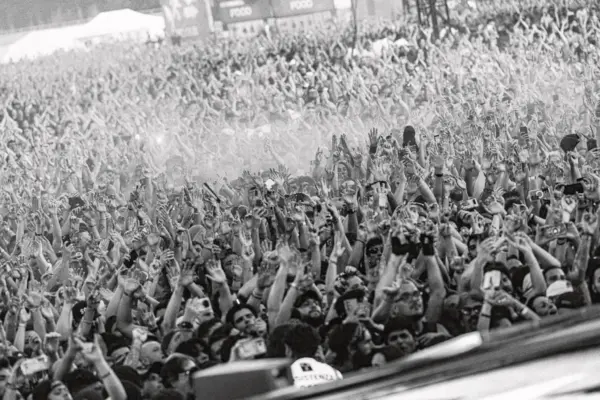
Live music festivals like Sick New World serve as physical antidotes to digital fatigue. In live environments, the unscripted, imperfect, and visceral nature of real-world human performance cannot be duplicated by generative software.
Ultimately, while generative AI will remain a permanent component of the broader media infrastructure, the insights offered by veteran artists like Amy Lee highlight a crucial economic truth: as synthetic content becomes infinite and inexpensive, authentic human expression becomes increasingly rare, valued, and essential.