Executive Overview
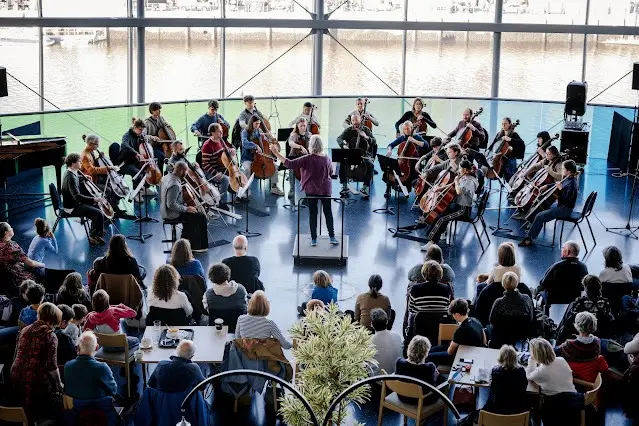
In a landmark event highlighting the profound synergy between world-renowned virtuosity and grassroots music education, internationally acclaimed cellist Sheku Kanneh-Mason recently stepped away from the main concert stage to share an intimate, unforgeable moment with the future of classical music. Following an acclaimed regional tour alongside the Royal Northern Sinfonia and conductor Dinis Sousa—where they performed Camille Saint-Saëns’ technically demanding and emotionally resonant Cello Concerto No. 1 across Middlesbrough, Kendal, and Gateshead—Kanneh-Mason joined a 24-piece massed cello ensemble on the vibrant concourse of The Glasshouse International Centre for Music.
The impromptu yet meticulously organized gathering brought together students from The Glasshouse’s esteemed Young Sinfonia and its Centre for Advanced Training (CAT) programmes. Standing shoulder-to-shoulder with their musical idol were dedicated music tutors, professional players from the Royal Northern Sinfonia, and accomplished alumni of The Glasshouse’s pioneering educational initiatives. Together, the 24 cellists created a rich, warm, and resonant wall of sound that captivated weekend visitors, casual shoppers, and dedicated classical music enthusiasts alike.
This collaborative public performance served as the crown jewel of The Glasshouse’s ongoing Make Music Young People initiative and featured prominently in the venue’s beloved Sunday Lunchtime Concerts series. Designed to break down the traditional barriers separating elite performers from everyday audiences, the event exemplified the transformative power of community music-making. Far from being a mere photo opportunity, the collaboration underscored Kanneh-Mason’s long-standing personal commitment to arts advocacy, mentorship, and youth empowerment. By placing developing musicians side-by-side with an artist of international renown, the institution provided an invaluable masterclass in artistry, stagecraft, and the pure, unadulterated joy of shared performance.
Detailed Chronology: From Orchestral Triumph to Concourse Collaboration
The events leading up to Sunday’s magical concourse performance spanned a busy, high-energy week of rigorous rehearsals, sweeping orchestral drama, and grassroots community engagement across the North of England.
The Regional Tour: Saint-Saëns on the Road
The journey began earlier in the week as Sheku Kanneh-Mason teamed up with the prestigious Royal Northern Sinfonia and dynamic conductor Dinis Sousa. The ensemble embarked on a celebrated regional tour that stopped in Middlesbrough, Kendal, and finally the state-of-the-art acoustic spaces of The Glasshouse in Gateshead.
At the heart of the tour was a breathtaking interpretation of Camille Saint-Saëns’ Cello Concerto No. 1 in A minor, Op. 33. Known for its continuous, unified movement structure and soaring lyrical passages interspersed with virtuosic pyrotechnics, the concerto demands absolute mastery and deep emotional vulnerability. Kanneh-Mason’s performances drew widespread critical acclaim, praised for his velvety tone, phrasing maturity, and magnetic stage presence. Audiences across the North experienced firsthand why the British cellist has become one of the most compelling classical artists of his generation since capturing global attention after winning the BBC Young Musician competition in 2016 and subsequently performing at the wedding of Prince Harry and Meghan Markle.
The Rehearsal: Behind Closed Doors in the Northern Rock Foundation Hall
As the orchestral tour concluded in Gateshead, Kanneh-Mason’s work was far from over. Rather than taking a well-deserved rest, the cellist transitioned seamlessly from the professional orchestra stage into the educational wing of The Glasshouse.
Inside the acoustically pristine Northern Rock Foundation Hall, the atmosphere crackled with nervous anticipation and electric excitement. A select group of young cellists—ranging from enthusiastic teenagers in the Centre for Advanced Training (CAT) to gifted members of the Young Sinfonia—gathered for an intensive rehearsal session. They were joined by experienced instrumental tutors, professional section players from the Royal Northern Sinfonia, and dedicated alumni who had grown up through The Glasshouse’s various outreach pipelines.
Under the guidance of educators and with Kanneh-Mason actively participating, listening, and offering gentle guidance, the ensemble worked through a diverse and challenging repertoire. The programme purposefully bridged classical heritage with American vernacular music, rehearsing a movement from Heitor Villa-Lobos’s evocative Bachianas Brasileiras No. 1—a masterwork scored for an orchestra of cellos—alongside lively, rhythmic arrangements of music by George Gershwin and ragtime pioneer Scott Joplin.

The Concourse Performance: Music for the Public
Following the intensive workshop, the 24 cellists moved from the private confines of the rehearsal hall out into the soaring, light-filled public concourse of The Glasshouse.
Timed to coincide with the venue’s popular Sunday Lunchtime Concerts series, the massed ensemble took their positions in a wide semi-circle, welcoming a curious and rapidly growing crowd of weekend visitors. The open-plan architecture of The Glasshouse, with its striking glass facades overlooking the River Tyne, provided a stunning backdrop for an acoustic performance that dissolved the boundary between performer and listener.
When the bows struck the strings in unison for the Villa-Lobos movement, the rich, organ-like resonance of 24 cellos filled the cavernous concourse. The transition from the intricate counterpoint of the Brazilian masterwork to the swinging syncopations of Joplin and Gershwin demonstrated not only the technical versatility of the young musicians but also their ability to communicate joy and narrative through their instruments. For the audience, stumbling upon a free pop-up concert featuring a global cello superstar alongside local teenagers was an unforgettable cultural highlight.
Supporting Context & Metrics: The Architecture of Music Education in the North
To fully appreciate the significance of Sheku Kanneh-Mason’s collaboration at The Glasshouse, one must examine the robust educational ecosystem that made such an event possible. The Glasshouse International Centre for Music (formerly known as Sage Gateshead) has long punched above its weight as a regional powerhouse for arts education, inclusion, and professional performance.
The Make Music Young People Programme
At the core of these grassroots initiatives is the Make Music Young People framework, an overarching institutional commitment designed to ensure that socio-economic background, geography, or prior experience never serve as barriers to musical excellence. The programme operates on the philosophy that every child has the right to discover, explore, and master an instrument, supported by world-class infrastructure and tutorship.
Within this framework sits The Glasshouse’s Weekend School, a vibrant community hub that offers non-auditioned, inclusive ensembles, youth bands, and choirs. Open to young people of all ages and abilities, these groups foster a sense of belonging and collaborative spirit. Crucially, applications for these community ensembles remain open all year round, ensuring that doors are never closed to a child inspired to pick up an instrument.
The Centre for Advanced Training (CAT)
For students displaying exceptional dedication, raw talent, and a deep-seated passion for classical or contemporary performance, The Glasshouse hosts a specialized Centre for Advanced Training (CAT). Funded in part through national creative initiatives, the CAT programme provides intensive, high-level instrumental training, music theory, composition workshops, and performance opportunities for gifted youth across the North East and beyond.
The CAT pathway is designed to bridge the gap between recreational youth music-making and conservatoire-level professional preparation. Students in the programme receive one-to-one instrumental lessons from leading professionals—such as members of the Royal Northern Sinfonia—as well as masterclasses with visiting international artists like Kanneh-Mason.
The Metrics of Impact
- Ensemble Scale: The massed cello performance brought together 24 cellists, creating a rare and visually striking acoustic powerhouse.
- Intergenerational Collaboration: The line-up successfully blended four distinct tiers of the musical ecosystem: international soloists, professional orchestral musicians, seasoned music educators, and developing youth artists/alumni.
- Accessibility: As part of the Lunchtime Concerts and Make Music Young People streams, the public performance was entirely free of charge, reinforcing The Glasshouse’s mission to democratize access to high-art experiences.
- Geographic Reach: The surrounding regional tour spanned key cultural hubs in the North of England, including Middlesbrough, Kendal, and Gateshead, bringing high-caliber orchestral music directly to regional audiences outside traditional southern-centric metropolitan circuits.
Official Statements and Reflections
The profound emotional impact of the day was captured in reflections shared by the participants, organizers, and Sheku Kanneh-Mason himself, who continually emphasizes the vital importance of arts education in a shifting cultural landscape.

Reflecting on the unique conclusion to his Northern tour, Sheku Kanneh-Mason shared:
“After my concerts in Middlesbrough, Kendal and then here at The Glasshouse this week, it was a really special conclusion to hear the young cellists play in the rehearsal and then to join them out on the Concourse, on Sunday morning. The next generation of musicians matters so much and I loved seeing all the enthusiasm and hearing the talent.”
Music educators and administrators at The Glasshouse echoed these sentiments, noting that interactions of this caliber leave an indelible mark on young minds. For a teenager studying in the CAT programme, sharing a music stand or playing side-by-side with an artist whose recordings they listen to daily transforms abstract career aspirations into tangible, achievable reality.
Furthermore, orchestra members from the Royal Northern Sinfonia praised the dedication of the young cellists, highlighting how vital these cross-generational collaborations are for the health of the broader classical music ecosystem. In an era where funding for arts education in schools faces persistent pressure, community-anchored institutions like The Glasshouse serve as essential safe havens where talent is identified, nurtured, and celebrated.
Future Outlook: Sustaining the Momentum of Grassroots Classical Music
As the final notes of the concourse performance faded into the bustling weekend atmosphere of Gateshead, the ripples of the event extended far beyond a single Sunday morning. The collaboration between Sheku Kanneh-Mason and The Glasshouse’s young cellists serves as a powerful blueprint for how major cultural institutions can actively engage with their local communities while maintaining the highest standards of artistic excellence.
The Road Ahead for The Glasshouse
Building on the success of the Make Music Young People programme and the popular Lunchtime Concerts series, The Glasshouse plans to expand its outreach initiatives in the coming seasons. By deepening partnerships with regional schools, increasing scholarship opportunities within the Centre for Advanced Training, and continuing to invite world-class soloists into educational spaces, the institution aims to cement the North East of England as a premier breeding ground for musical talent.
The Role of Artist Advocacy
Artists like Sheku Kanneh-Mason play an indispensable role in shaping the future of classical music. By willingly stepping outside the insular bubble of elite concert halls and engaging directly with children, students, and local communities, they humanize the art form and inspire a diverse new generation of listeners and players.
The image of 24 cellists—young and old, professional and student—playing Villa-Lobos and Joplin under the soaring glass roof of The Glasshouse sends an unambiguous message: classical music is not a relic of the past locked behind velvet ropes, but a living, breathing, and inclusive community art form that belongs to everyone. As these young cellists return to their practice rooms, armed with the memory of playing alongside one of the world’s great virtuosos, the future of the cello—and of orchestral music in the North of England—burns brighter than ever.