Executive Overview
Music is often defined not merely by the notes etched into a groove, but by the deeply personal milestones, architectural memories, and cultural epochs it anchors us to. For veteran British singer-songwriter Claire Hamill, the trajectory of her life and career can be neatly charted through ten pivotal recordings. From the mid-century pop harmonies echoing through a remote Teesside coffee bar to the cutting-edge electronic art-pop of the 1980s, Hamill’s sonic education reads like a masterclass in the evolution of modern popular music.
In a comprehensive retrospective curated by writer Michael Heatley, Hamill opens up her personal record collection—and her vault of memories—to reflect on the tracks that shaped her artistic identity. Far from being a standard list of greatest hits, her selections offer a rare, intimate look at the intersections of familial perseverance, countercultural bohemianism, the bittersweet realities of the music industry, and the profound emotional resonance of arrangement and vocal delivery.
As Hamill continues her creative journey with the release of A House Among The Trees by the Claire Hamill Band via Archway Ocean, and prepares for a major live appearance at the Nene Valley Rock Festival, this deep dive into her foundational records provides an authoritative, reflective portrait of an artist whose life has been entirely dedicated to the craft of song.
Detailed Chronology: Ten Records That Shaped Claire Hamill
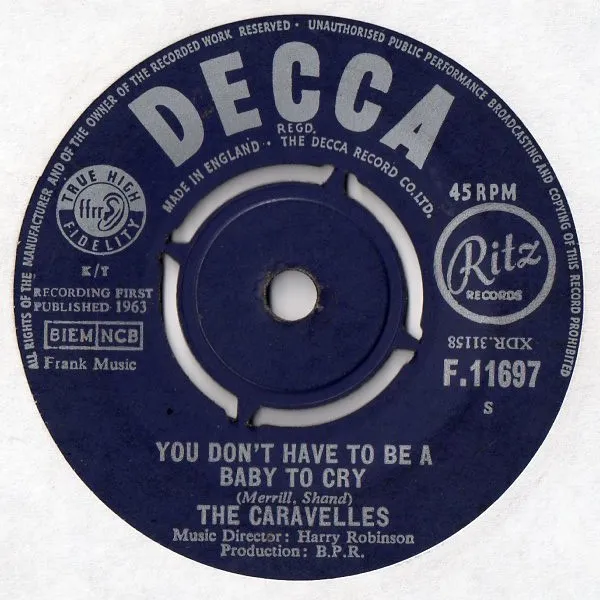
1. The Caravelles – You Don’t Have To Be A Baby To Cry (Decca, 1963)
- Format: 7” Single, UK | Estimated Collector Value: £5
The genesis of Hamill’s lifelong romance with music began in the domestic warmth of vocal harmony. Long before she stepped onto a professional stage, a young Hamill was transfixed by the sound of her mother and Auntie Josie singing together. This foundational exposure to harmony set her firmly on her artistic path.
The atmosphere shifted dramatically when Hamill moved to Teesside at the age of 12. There, her parents opened a pioneering local coffee bar—a venue serving up cold Coca-Cola and classic jukebox tunes in an area where nothing of the sort existed for 30 miles. While the jukebox hummed with the sounds of the era, it was the raw, emotive vocal blend of The Caravelles that imprinted on her soul, defining what it meant to be truly musical.
2. The Beach Boys – Good Vibrations (Capitol, 1966)
- Format: 7” Single, UK | Estimated Collector Value: £8
If vocal harmony provided Hamill’s first musical spark, The Beach Boys blew the doors off her understanding of arrangement. Describing Good Vibrations as "mind-blowing," Hamill recalls the moment popular music stepped into an orchestral, multi-dimensional realm. The intricate shifts and studio wizardry of Brian Wilson’s masterpiece marked a massive leap forward in her musical education.
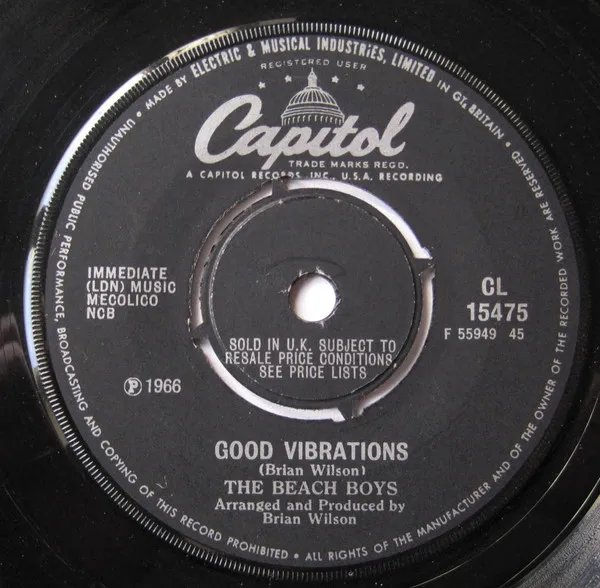
Yet, music in the Hamill household was also a communal affair. While Good Vibrations represented high art and production ambition, "Sloop John B" served a different social function. Universally known by her family members, it was the go-to anthem for family gatherings, proving that great music could bridge complex orchestration and populist sing-along joy.
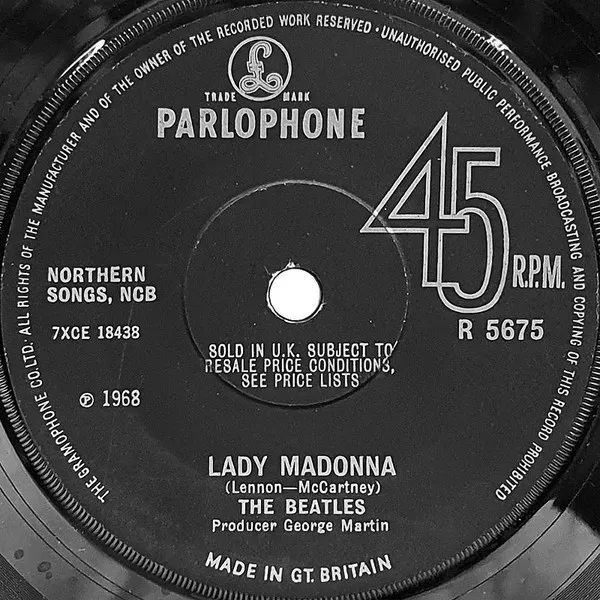
3. The Beatles – Lady Madonna (Parlophone, 1968)
- Format: 7” Single, UK | Estimated Collector Value: £60
The late 1960s brought personal upheaval alongside cultural revolution. Following the breakdown of her parents’ marriage, Hamill’s mother returned to the workforce, retraining and utilizing her former skills as an ICI typist to support the family. Watching her mother navigate this challenging transition, Hamill drew a direct parallel to the subject of The Beatles’ Lady Madonna.
It was also during this era that Hamill’s active participation in music began to blossom. Having mastered the melancholy brilliance of "Eleanor Rigby"—one of the first songs she learned to play and sing—she found herself on holiday in Whitby with a neighborhood friend. Spotted by the friend’s guitar-playing father, a teenage Hamill was coaxed into performing at a local pub. Stepping up to the microphone, her rendition of "Eleanor Rigby" captivated the room, earning her an immediate wave of endearment and validating her burgeoning confidence as a performer.
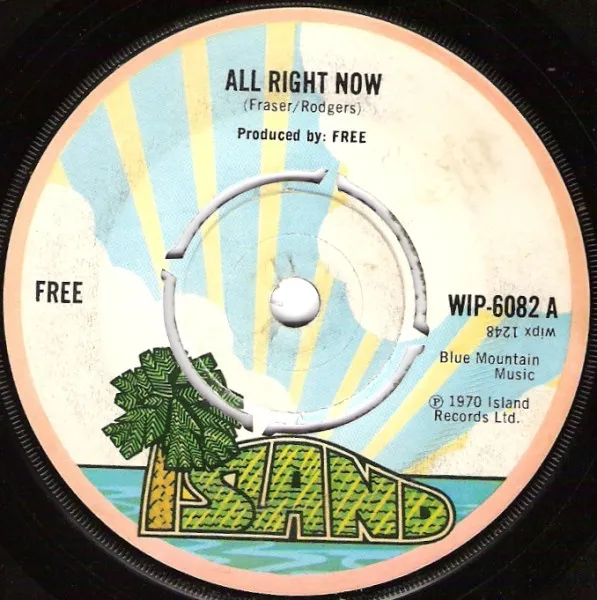
4. Free – All Right Now (Island, 1970)
- Format: 7” Single, UK | Estimated Collector Value: £5
No British youth culture of 1970 would be complete without the driving, blues-infused rock of Free. For Hamill and her school peers, Free wasn’t just a band; they were their band. The local connection only deepened the obsession: powerhouse vocalist Paul Rodgers hailed from Middlesbrough, and his mother lived on the very same road as Hamill’s convent school.
Hamill recalls the chaotic daily spectacle of three floors of schoolgirls sprinting to the top windows simply hoping to catch a glimpse of Rodgers. This brush with proximity to fame soon turned into reality when, at 17, Hamill found herself hanging out at Island Records’ legendary Basing Street headquarters. There, she formed a warm friendship with guitarist Paul Kossoff, sharing cups of tea and quiet conversations. It was an early, sobering lesson in the music industry: that the brightest stars often bear the heaviest burdens, and that fame can be a double-edged sword for the young.
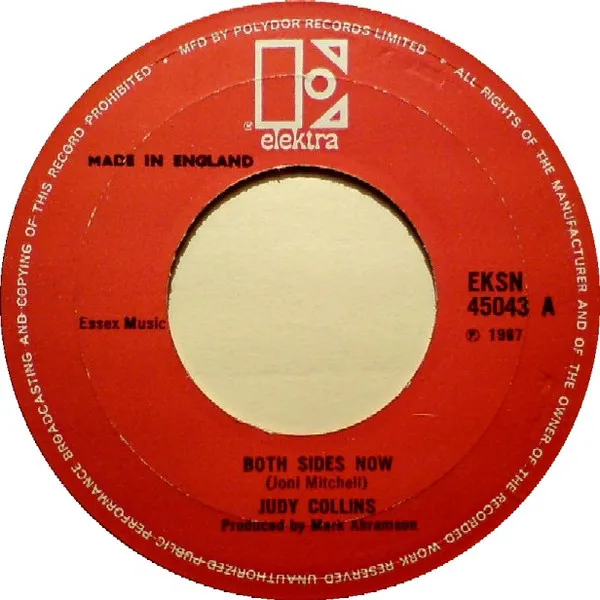
5. Judy Collins – Both Sides, Now (Elektra, 1970)
- Format: 7” Single, UK | Estimated Collector Value: £5
The boyfriend of Hamill’s mother—the very same man who had ushered her onto her first pub stage in Whitby—possessed an extraordinary record collection that served as an ongoing educational tool. Through him, Hamill was introduced to the work of Joni Mitchell via Judy Collins’ celebrated rendition of Both Sides, Now.
Upon realizing that Mitchell was the mastermind behind the composition, Hamill experienced a profound epiphany: "Now I know who I am: I’m like Joni Mitchell, because I write songs as well." Unlike the traditional, folk-heavy vocal styling of contemporaries like Sandy Denny, Mitchell’s introspective, poetic approach resonated deeply with Hamill’s own internal voice. Years later, this circle completed itself when Hamill was officially introduced to Mitchell in David Geffen’s Los Angeles office—an unforgettable encounter with her ultimate songwriting idol.
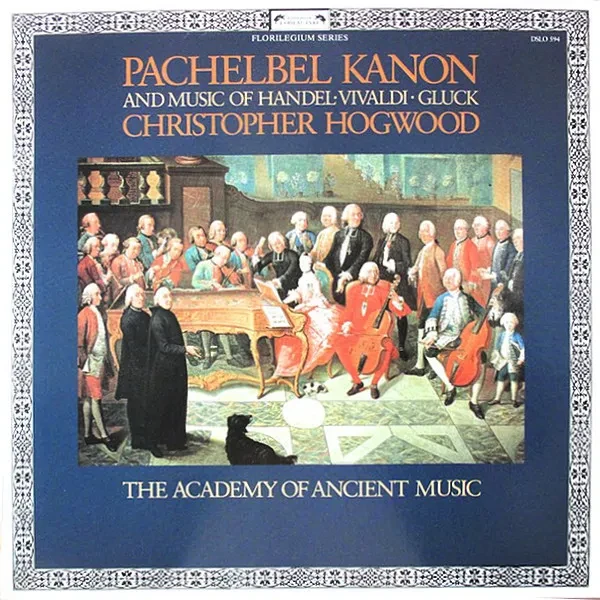
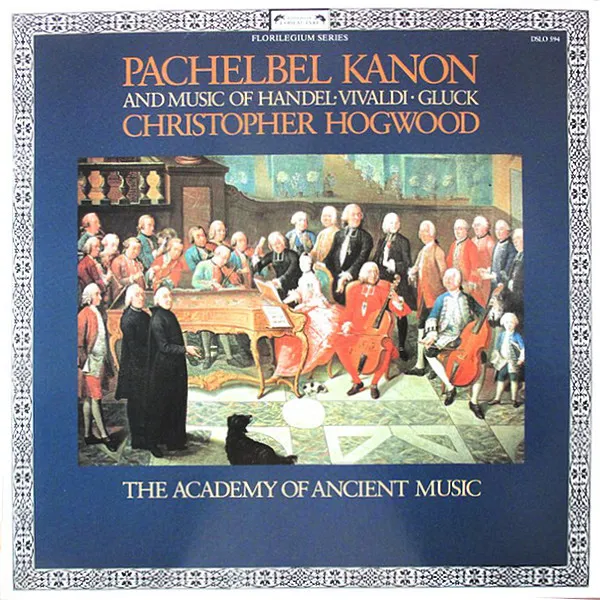
6. Academy of Ancient Music – Pachelbel’s Canon in D (L’Oiseau Lyre, 1981)
- Format: LP, UK | Estimated Collector Value: £10
By the 1980s, Hamill’s career was intersecting with television and multimedia. Her then-husband, Nick Austin, launched a pioneering satellite TV channel dedicated to classical and new-age music, broadcasting in the early hours on Channel 4.
Michael Appleton, an ex-producer of The Old Grey Whistle Test, crafted a mesmerizing video featuring Emperor penguins waddling in precise time to Pachelbel’s Canon in D, commissioning Hamill to write a vocal accompaniment. While the resulting collaboration captured the public imagination, the television establishment proved curiously selective. When invited onto the popular BBC Saturday morning children’s show Going Live, the producers delivered a famously blunt refusal: "No, we don’t want Claire, we just want the penguins."
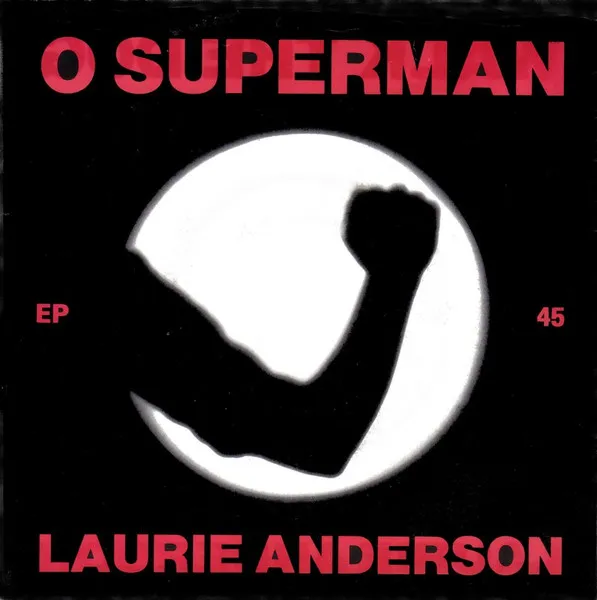
7. Laurie Anderson – O Superman (Warner Bros, 1981)
- Format: 7” Single, UK | Estimated Collector Value: £5
As an adventurous listener tuned into John Peel’s legendary BBC Radio 1 show, Hamill was among the first to encounter Laurie Anderson’s avant-garde masterpiece O Superman. The track’s striking use of rhythmic, breathy vocal textures left an indelible mark on Hamill, who openly borrowed that signature technique for her own composition, The Moon Is A Powerful Lover.
Navigating the bustling London music scene of the era, Hamill frequently crossed paths with Peel at industry events. True to his reputation, the iconic broadcaster kept her grounded, famously admonishing her at a party: "Claire Hamill, you’ve been to too many of these parties lately; you’re a bit of a ligger, aren’t you?" Despite the gentle scolding, Hamill remembers Peel with immense affection.
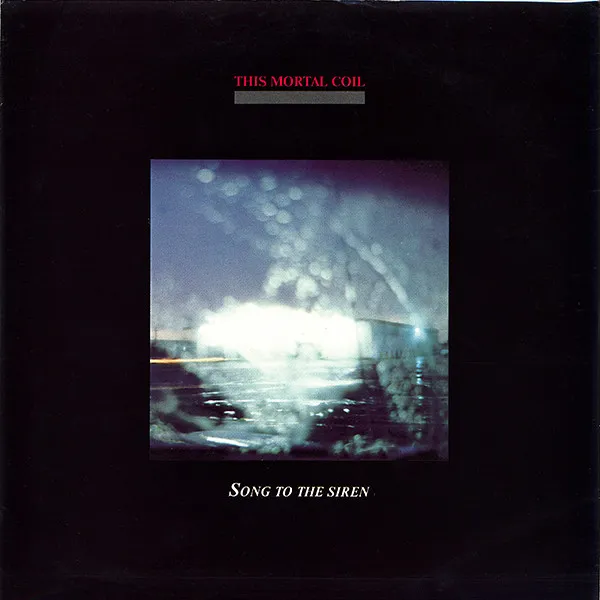
8. This Mortal Coil – Song to the Siren (4AD, 1983)
- Format: 7” Single, UK | Estimated Collector Value: £15
A towering achievement in ethereal dream-pop, This Mortal Coil’s interpretation of Tim Buckley’s Song to the Siren, fronted by Cocteau Twins vocalist Elizabeth Fraser, remains a masterwork. Hamill holds Fraser in the highest regard, praising her distinct, otherworldly vocal delivery as a pinnacle of British singing.
This record also holds deep personal resonance. While playing a club in Denver, Colorado, in 1974, Hamill met the song’s original composer, Tim Buckley. The two musicians struck up an immediate friendship, bonding over the shared rigors of life on the road. Like Paul Kossoff, Buckley’s tragic and premature passing remains a poignant loss in Hamill’s musical memories.
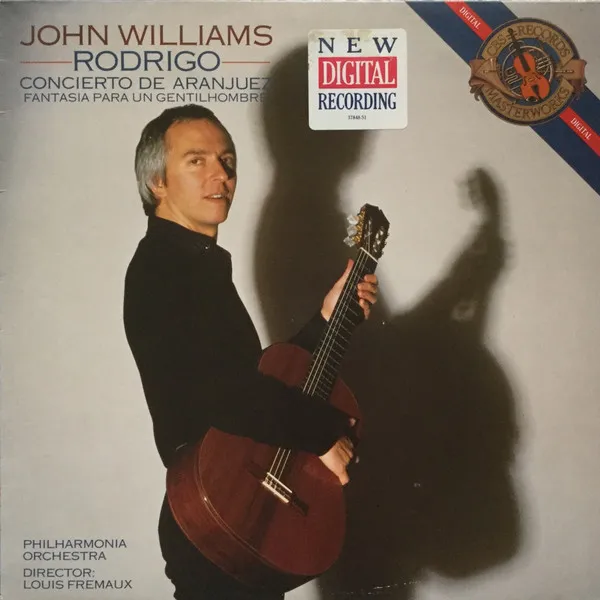
9. John Williams – Rodrigo’s Concierto de Aranjuez (Sony Classical, 1984)
- Format: CD, UK | Estimated Collector Value: £5
Hamill’s classical ambitions met the unyielding wall of international copyright law when she attempted to reimagine Joaquín Rodrigo’s timeless Concierto de Aranjuez with a contemporary beat.
Determined to do things by the book, Hamill penned a polite, heartfelt letter to Rodrigo’s daughter—the legal owner of the composition—explaining her deep admiration for the piece and asking for permission to record her newly written lyrical adaptation. The response was swift and uncompromising: "Absolutely not!" An instructive tale in the bureaucratic hurdles that often govern the intersection of classical preservation and modern pop adaptation.
10. Seal – A Kiss from a Rose (ZTT, 1994)
- Format: CD, UK | Estimated Collector Value: £5
Closing out the chronological journey is a record that represents a rare milestone in Hamill’s personal collection: the first physical compact disc she actively went out and purchased with her own money.
Growing up on a strict 50p weekly pocket money allowance in a household without a record player, buying music was a luxury of the distant future. By the time she was immersed in the music industry, promotional copies flowed freely, rendering retail purchases unnecessary for years. However, Seal’s A Kiss from a Rose proved irresistible. Hamill praises its structural sophistication—noting how the pre-chorus brilliantly subverts standard pop expectations before dropping into the main hook—alongside its lush arrangement, stellar production, and soaring vocal performance.
Supporting Context & Metrics
To contextualize Hamill’s journey within the broader landscape of music preservation and collecting, Michael Heatley’s retrospective highlights the shifting market valuations of these physical formats. While streaming has dominated contemporary consumption, the physical artifacts of the 1960s, ’70s, and ’80s remain coveted commodities:
- Entry-Level Nostalgia (£5 Range): Iconic singles like The Caravelles’ You Don’t Have To Be A Baby To Cry, Free’s All Right Now, Judy Collins’ Both Sides, Now, Laurie Anderson’s O Superman, and Seal’s A Kiss from a Rose maintain accessible collector valuations around £5, making them staple finds for grassroots crate-diggers.
- Mid-Tier Collector Pieces (£8–£15): Landmark releases such as The Beach Boys’ Good Vibrations (£8), Pachelbel’s Canon in D via the Academy of Ancient Music (£10), and This Mortal Coil’s atmospheric Song to the Siren (£15) command steady collector interest.
- The High-Value Outlier (£60): The standout valuation in Hamill’s selection belongs to The Beatles’ Lady Madonna (Parlophone, 1968), commanding upwards of £60 on the UK secondary market—a testament to the enduring, inflation-resistant demand for original Parlophone pressings of the Fab Four.
Official Statements & Industry Reflections
Throughout her recollections, Hamill offers unfiltered insight into the realities of the music business across four decades. Her observations bridge the gap between wide-eyed fandom and hard-won industry maturity:
- On the realities of early fame: Reflecting on her interactions with Paul Kossoff and Tim Buckley, Hamill notes: "Fame, it’s a terrible thing for young people sometimes… like Kossoff, a tragic loss."
- On artistic self-discovery: Describing the moment she encountered Joni Mitchell’s songwriting through Judy Collins, she emphasizes the importance of representation in art: "I didn’t feel like Sandy Denny, who had a very traditional, folky voice… I just went, ‘Now I know who I am: I’m like Joni Mitchell, because I write songs as well.’"
- On media eccentricity: Remembering the late, great BBC DJ John Peel, she fondly recalls his grounded pragmatism: "Peel was absolutely adorable… [he told me] ‘Claire Hamill, you’ve been to too many of these parties lately; you’re a bit of a ligger, aren’t you?’"
Future Outlook
While deeply rooted in the foundational records that shaped her youth and early career, Claire Hamill’s musical narrative is very much an ongoing, active endeavor.
With the recent release of her latest project, A House Among The Trees, by the Claire Hamill Band via the Archway Ocean label, Hamill continues to demonstrate the enduring strength of her songwriting craft. Fans and followers of her storied career will also have the opportunity to experience her work live on stage, as she is slated to perform at the upcoming Nene Valley Rock Festival this September.
From singing harmonies in a Teesside coffee bar to navigating the complexities of modern copyright law and festival stages, Claire Hamill’s vinyl journey proves that a life immersed in great music leaves an indelible, lifelong resonance.