The intersection of opera and modern social trauma has rarely yielded a work as politically charged, musically expansive, and culturally urgent as The Central Park Five. Composed by Anthony Davis with a libretto by Richard Wesley, this monumental opera confronts one of the most glaring miscarriages of justice in modern American history: the wrongful arrest, conviction, and subsequent exoneration of five Black and Hispanic teenagers in New York City.
Originally premiering at the Long Beach Opera (LBO) in 2019, the opera earned Davis the prestigious Pulitzer Prize for Music in 2020. This week, the definitive studio-recorded edition of this masterwork was released globally via the Platoon platform, preserving an essential performance that features key members of the LBO’s 2022 production cast under the baton of conductor Anthony Parnther.
In an era where opera is often pigeonholed as a museum art form fixated on 19th-century European melodramas, Davis’s body of work aggressively shatters that paradigm. The Central Park Five joins a lineage of socially conscious, historical-political operas penned by Davis—including X: The Life and Times of Malcolm X, Amistad, and Wakonda’s Dream. By examining the systemic racism, media sensationalism, and political opportunism that defined the 1989 Central Park jogger case, Davis translates the raw grief and enduring resilience of the Exonerated Five into an idiom that fuses contemporary classical music, jazz, R&B, and hip-hop.
This retrospective and analytical report explores the historical backdrop of the case, the creative evolution of Davis and Wesley’s operatic vision, the structural brilliance of the score, and the broader cultural implications of capturing this socio-political drama on record for contemporary audiences.
Detailed Chronology: From the 1989 Jogger Case to the Platoon Release
To understand the emotional and structural weight of Davis and Wesley’s opera, one must trace the timeline of the tragedy it depicts and the long road toward artistic and legal reckoning.
The Spring of 1989 and the Media Frenzy
On April 19, 1989, a young white female investment banker jogging in New York City’s Central Park was brutally beaten, raped, and left for dead. In the ensuing mass panic and media hysteria, the New York City Police Department rounded up several teenagers who had been in the park that evening.
Out of these interrogations emerged five youths: Kevin Richardson, Raymond Santana, Korey Wise, Yusef Salaam, and Antron McCray. Ranging in age from 14 to 16, these boys were subjected to coercive interrogations without legal counsel or adequate parental presence. Despite a complete absence of DNA evidence linking them to the crime, the police extracted coerced video confessions.
The case instantly polarized the city, fanned by a sensationalist press that weaponized racial animus. Capitalizing on the public outrage, a politically ambitious real estate developer purchased full-page advertisements in four major New York newspapers demanding the return of the death penalty. This campaign not only poisoned the jury pool but cemented a narrative of urban decay and racialized criminality that would resonate in American politics for decades. In 1990, despite conflicting physical evidence and coerced testimonies, the teenagers—subsequently dubbed the "Central Park Five"—were convicted and sentenced to prison terms ranging from 5 to 13 years.
The 2002 Confession and Exoneration
The truth remained buried until 2002, when Matias Reyes, a serial rapist and murderer already serving a life sentence, confessed to committing the Central Park assault entirely alone. DNA profiling definitively matched Reyes’s genetic material to the crime scene, completely excluding all five men.
Subsequent investigations exposed systemic coercion within the NYPD and the district attorney’s office. In December 2002, a New York state judge vacated the convictions of Richardson, Santana, Wise, Salaam, and McCray. Though they had already served their full sentences—losing their youth, freedom, and foundational years to the penal system—they were officially exonerated, later securing a civil settlement from the city in 2014.
The Operatic Journey: From Five to Pulitzer and Platoon
Anthony Davis’s creative engagement with this material began long before its full-scale theatrical realization.
- 2016: Davis and librettist Richard Wesley premiered a chamber opera titled Five with Trilogy: An Opera Company in New Jersey, laying the foundational thematic and musical architecture for what would become a much larger canvas.
- 2019: Long Beach Opera commissioned and premiered The Central Park Five, expanding the score and deepening the psychological and political scope of the narrative.
- 2020: In recognition of its fearless political resonance and compositional mastery, The Central Park Five was awarded the Pulitzer Prize for Music.
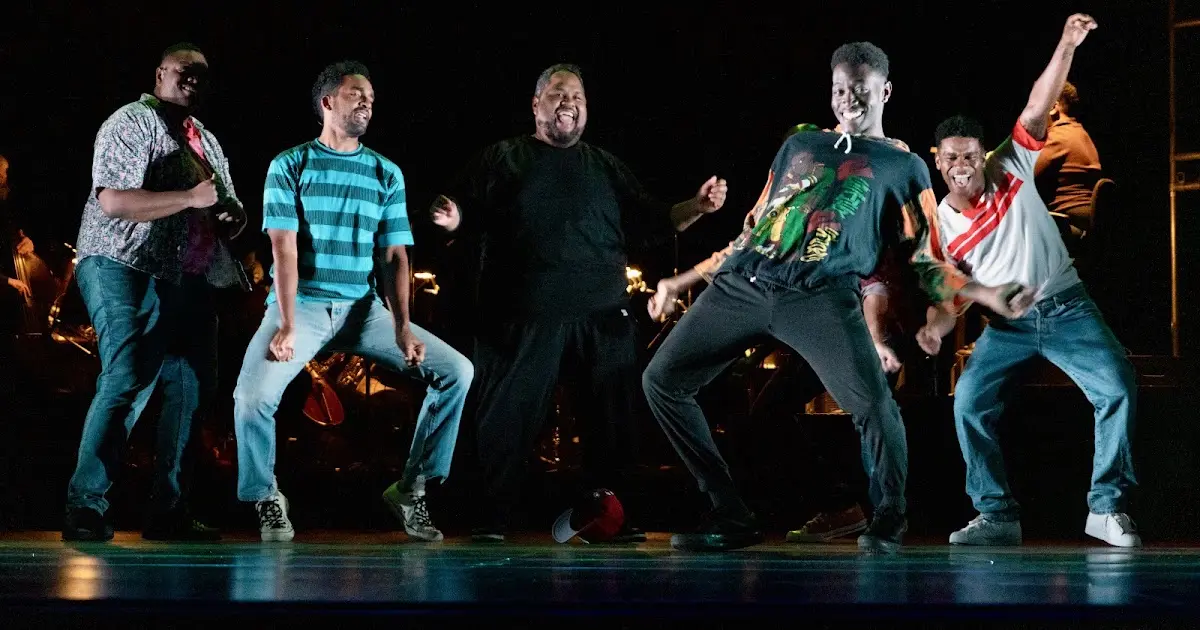
- 2022: The opera received renewed life through a March run by Portland Opera, followed by a triumphant return to Southern California in June 2022, where LBO mounted a brand-new production directed by James Darrah Black.
- 2024–2025: The momentum of Davis’s operatic output continued to ripple nationwide, highlighted by Detroit Opera’s landmark presentations of X: The Life and Times of Malcolm X (2022), followed by an expanded orchestration of The Central Park Five in March 2025.
- The Present: Culminating this multi-year trajectory, LBO and Platoon released the official studio recording of The Central Park Five, making this vital American opera universally accessible to global streaming audiences.
Supporting Context & Metrics: Anthony Davis and the Politicized Score
To evaluate The Central Park Five purely as a standard opera is to misunderstand its architecture. Anthony Davis, born in New Jersey and educated at Yale University, has carved out a singular niche as one of America’s most intrepid composer-activists. Acclaimed internationally as a virtuoso free-jazz pianist and ensemble leader, Davis’s musical DNA bridges disparate worlds: European classical structuralism, African and non-Western rhythmic traditions, gospel, rhythm and blues, and Indonesian gamelan. Currently serving as a professor of music at the University of California, San Diego, Davis uses his platform to interrogate historical atrocities through sound.

A Legacy of Operatic Activism
Davis’s catalog is defined by its willingness to tackle raw historical and political raw nerves:
- X: The Life and Times of Malcolm X (1986): Premiered by the New York City Opera with a libretto by Christopher Davis, this landmark work traced the spiritual and political evolution of the civil rights icon. A newly conceived production featuring baritone Davóne Tines premiered at Detroit Opera in 2022, subsequently traveling to the Metropolitan Opera in 2023 and Seattle Opera in 2024, proving the enduring relevance of Davis’s early operatic language.
- Amistad (1997): Premiered by the Lyric Opera of Chicago, this opera examined the 1839 slave mutiny aboard the Spanish schooner Amistad and the subsequent landmark U.S. Supreme Court ruling that freed the captive Africans. Recorded by New World Records and later streamlined by Davis for its 2008 revival at the Spoleto Festival USA, Amistad demonstrated Davis’s facility with epic choral-orchestral writing.
- Wakonda’s Dream (2007): Premiered by Opera Omaha, this work explored the generational trauma of a contemporary Native American family caught in the shadow of the historic 1879 trial in Nebraska, which legally recognized Native Americans as human beings under the law.
Musical Synthesis in The Central Park Five
In The Central Park Five, Davis utilizes his multi-genre fluency to mirror the chaotic collision of social forces. The score resists neat categorization, weaving together complex contemporary classical counterpoint with the syncopated impulses of jazz, the emotional cadence of R&B, and the urgent, percussive drive of hip-hop.
This stylistic pluralism serves a narrative function. The institutional machinery of the state—represented by the police, prosecutors, and the media—is often underscored by rigid, dissonant, and monolithic orchestral walls. In contrast, the inner lives, familial bonds, and resilience of the five young men are illuminated through lyricism steeped in Black American musical traditions. The result is a sonic tapestry that honors the cultural identities of the protagonists while laying bare the structural violence enacted against them.
Official Statements and Artistic Vision
The gravity of the subject matter demanded a collaborative artistic team capable of handling complex socio-political themes with nuance, empathy, and uncompromising artistic integrity.
Composer Anthony Davis has been outspoken about the historical and contemporary implications of the case, framing the persecution of the teenagers not as an isolated judicial error, but as the foundational spark of a modern political movement:
"1989. A group of predominantly Black and Hispanic teenagers enter Central Park in New York City. They turnover garbage cans, throw rocks, harass people on bicycles. A young woman is sexually assaulted in the Park and six teenagers are detained and questioned about the assault. Five of the teenagers, Kevin Richardson, Raymond Santana, Korey Wise, Yusef Salaam and Antron McCray become the center of a criminal case that would polarize New York City. The Exonerated Five were falsely accused and convicted of the crime with no physical evidence. Condemned publicly by the press, the Exonerated Five were victims in a culture war waged against Black and Hispanic communities. A politically ambitious real estate mogul condemns the teenagers with a full page ad, proclaiming ‘Bring Back the Death Penalty. Bring Back Our Police!’ The persecution of the Central Park Five marks the beginning of Donald Trump’s political career, built on racial animus and the exploitation of the deep rooted racial divide in America."
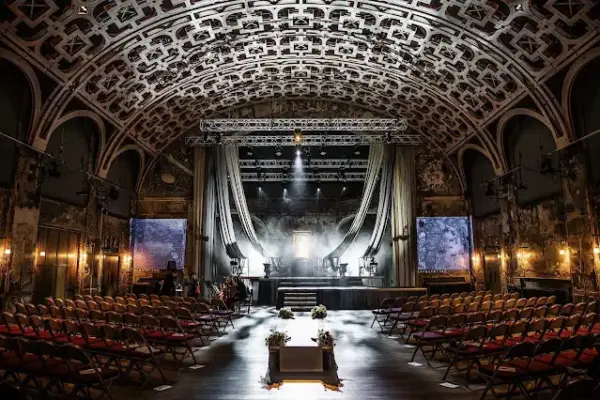
This perspective is echoed in the staging and performance history championed by Long Beach Opera. Founded in 1979 as Southern California’s oldest operating opera company, LBO has long forged a reputation for defying conservative operatic conventions. Under the leadership of Artistic Director James Darrah Black and Music Director Christopher Rountree, LBO specializes in immersive, boundary-pushing productions that integrate film, modern dance, and newly commissioned scores.
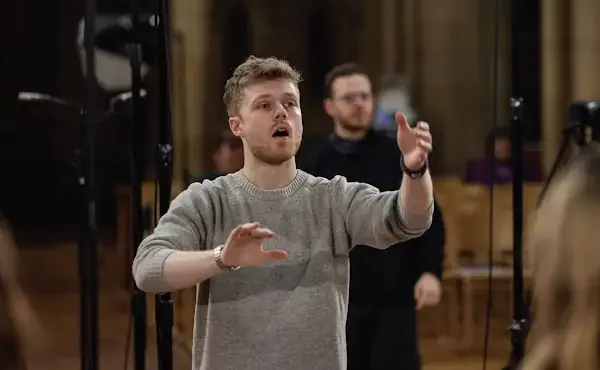
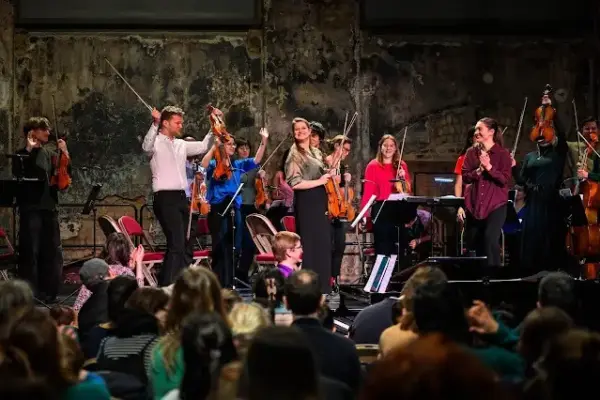
Bringing this theatrical intensity into the recording studio required a world-class cast and instrumental ensemble. The Platoon recording features a tour-de-force roster of vocalists under the precise and emotionally charged direction of conductor Anthony Parnther:
- Cedric Berry as Yusef Salaam
- William Powell III as Antron McCray
- Bernard Holcomb as Kevin Richardson
- Orson Van Gay II as Raymond Santana
- Ashley Faatoalia as Korey Wise
- Justin Ryan as The Masque
- Lacey Jo Benter as the District Attorney
- Todd Strange as Donald Trump
- Joelle Lamarre in multiple ensemble roles, including "Antron’s Mother" and "Kevin’s Mother"
- Lindsay Patterson Abdou as Sharonne Salaam and others
- Corey Estelle in ensemble roles
- José Luis Maldonado as Raymond’s Father and Matias Reyes
This ensemble breathes vital humanity into characters who were once flattened by tabloid headlines into political caricatures. By rendering their trauma, familial love, and eventual vindication through soaring vocal lines and rich dramatic pacing, the performers reclaim the narrative agency of the Exonerated Five.
Future Outlook: The Legacy of The Central Park Five in Contemporary Culture
As The Central Park Five makes its permanent home in the global digital landscape through its Platoon release, its cultural footprint continues to expand. The opera arrives at a critical juncture in American civic discourse, where questions of systemic racism, prosecutorial accountability, mass incarceration, and the manipulation of public opinion remain intensely relevant.
The institutional embrace of Davis’s work—underscored by major productions from regional houses like Long Beach Opera and Portland Opera, to massive national stages like Detroit Opera—indicates a shifting paradigm within the performing arts. Modern opera audiences are increasingly demanding works that engage directly with contemporary history and social justice. No longer content to retreat entirely into mythological fantasies or historical escapism, opera companies are recognizing that the art form possesses a unique capacity to process national trauma and provoke moral reckoning.
Looking forward, the publication of this definitive recording ensures that The Central Park Five will serve as an educational and artistic touchstone for generations to come. It stands as a permanent monument to the resilience of Kevin Richardson, Raymond Santana, Korey Wise, Yusef Salaam, and Antron McCray, while offering an unflinching critique of the media and political apparatuses that sought to destroy them. Through Anthony Davis’s visionary score and Richard Wesley’s incisive libretto, the tragedy of 1989 is transformed into a timeless meditation on truth, perseverance, and the ongoing struggle for true American justice.