Executive Overview
The landscape of modern popular music is rarely built on sudden, isolated explosions of genius; rather, it is constructed through a slow, cumulative accretion of foundational influences. Every chord progression, lyrical cadence, and studio innovation can be traced back to specific moments of sonic awakening experienced by the artists who would later come to define the genre.
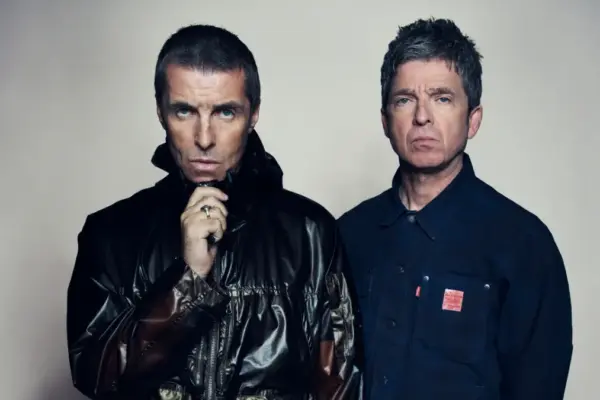
In a recent, deeply personal retrospective interview conducted by Michael Heatley—tied to the release of The Roaring Waves via InsideOutMusic—distinguished guitar virtuosos Steve Hackett and Steve Rothery opened their personal archives to examine the defining 45s and LPs that shaped their artistic identities. Spanning the vibrant cultural upheaval of the mid-1960s through the atmospheric dawn of the late-1970s, this curated collection of ten landmark records offers a masterclass in musical evolution.
Featuring rare UK pressings ranging from Motown soul and raw British rhythm and blues to intricate folk-protest and baroque pop, this list is far more than a nostalgic exercise in record collecting. It serves as an archaeological dig into the psyche of progressive rock royalty. With valuations spanning from modest £3 charity shop finds to £175 collector’s holy grails, these vinyl artifacts encapsulate the exact moments youthful innocence collided with revolutionary sound design, ultimately forging the templates for progressive rock, art-pop, and beyond.
Detailed Chronology: The Soundtrack of an Awakening
1. Martha & The Vandellas – Dancing In The Street
- Label & Format: Stateside (SS 345), 7″ Single, UK, 1964
- Estimated Collector Value: £20
The journey begins in the autumn of 1964 at the iconic Battersea Funfair. For a fourteen-year-old on the cusp of musical discovery, the world was rigidly divided along social fault lines. "There were groups of young teenagers standing about, all the girls on one side, boys on the other, everyone afraid to talk to each other," recalls the artist.
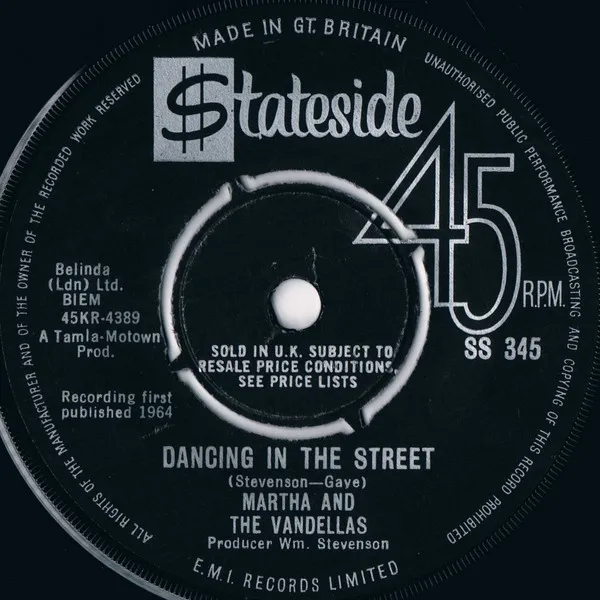
Into this atmosphere of adolescent paralysis dropped Dancing In The Street. Written by Marvin Gaye, William "Mickey" Stevenson, and Ivy Jo Hunter, the track was ostensibly a global call to joyful, uninhibited movement. Yet, for teenagers paralyzed by social anxiety, it was initially an aspirational fantasy rather than an immediate reality. Years later, a meeting with Martha Reeves allowed the musician to express his ultimate admiration: calling it quite simply the greatest song in the entire Motown catalog—a transcendent, all-encompassing clarion call to youth that touched every emotional base.
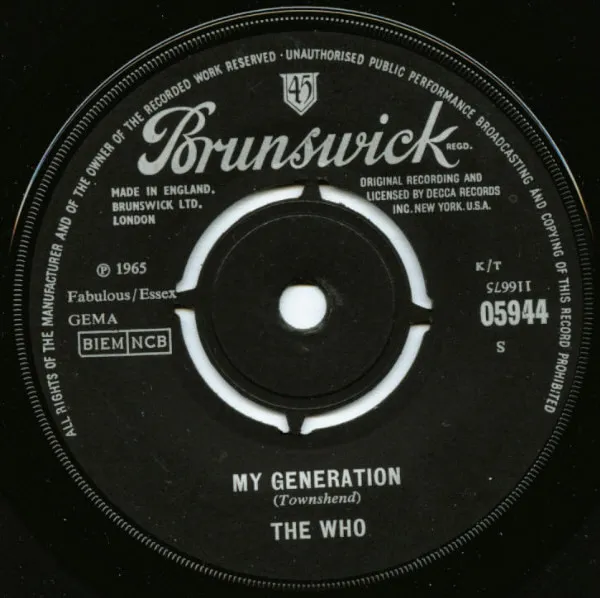
2. The Who – My Generation
- Label & Format: Brunswick (05944), 7″ Single, UK, 1965
- Estimated Collector Value: £20
By 1965, the polite boundaries of early pop were violently shattered by The Who’s generational anthem. Driven by sheer, unfiltered aggression and youthful insolence, My Generation was a direct call to arms.
A fascinating technical misconception highlights the lasting impact of this recording: many aspiring guitarists of the era assumed the frantic, stuttering solo in the middle was played on a six-string. It was only later revealed to be John Entwistle’s trailblazing bass work. Untethered to fleeting subcultural movements like Mod or Hippie—fashions viewed as temporary aesthetic prisons—The Who projected an uncompromising attitude that completely defied the aging process, remaining as vital today as it was during the height of the Swinging Sixties.
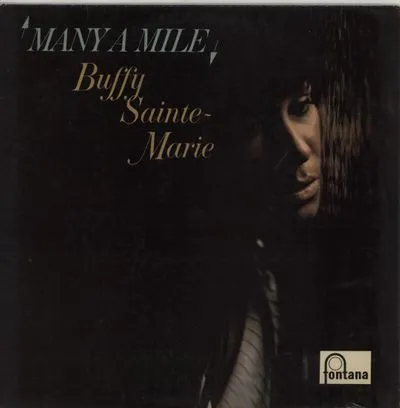
3. Buffy Sainte-Marie – Many A Mile
- Label & Format: Fontana (TFL 6047), LP, UK, 1965
- Estimated Collector Value: £5
Shifting away from electric fury, the mid-1960s folk revival provided an entirely different kind of emotional resonance. At age fifteen, the discovery of Buffy Sainte-Marie’s sophomore LP, Many A Mile, introduced a potent mix of traditional folk structures and urgent, politically charged protest writing.
The standout track, Must I Go Bound, featured a centuries-old lyrical framework interpreted through Sainte-Marie’s uniquely trembling, utterly heartbreaking vocal delivery. This sonic vulnerability left an indelible mark, first witnessed on the 1965 television program Heartsong alongside contemporaries like Marianne Faithfull and Julie Felix. It proved that raw emotional pain, delivered a cappella or over sparse acoustic instrumentation, could match the impact of a full rock band.
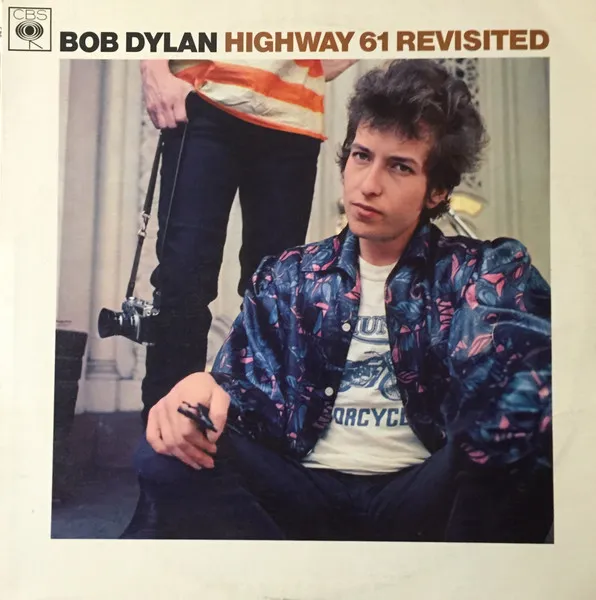
4. Bob Dylan – Highway 61 Revisited
- Label & Format: CBS (BPG 62572), LP, UK, 1965
- Estimated Collector Value: £80
The mid-sixties seismic shift from acoustic troubadour to plugged-in prophet is crystallized in Bob Dylan’s Highway 61 Revisited. This record served as a bridge between obsessive "Dylanologists" fixated on primitive folk recordings and those seeking advanced sonic architecture.
Initially, young rock guitarists trained on Cream and Jeff Beck struggled to appreciate Dylan’s sparse musicality, missing the point of his unparalleled lyrical intensity. However, once Dylan recruited a powerhouse backing ensemble featuring guitar master Mike Bloomfield and keyboardist Al Kooper, tracks like Like A Rolling Stone transformed. The fusion of razor-sharp wordplay with explosive electric instrumentation created a new paradigm for popular songwriting.
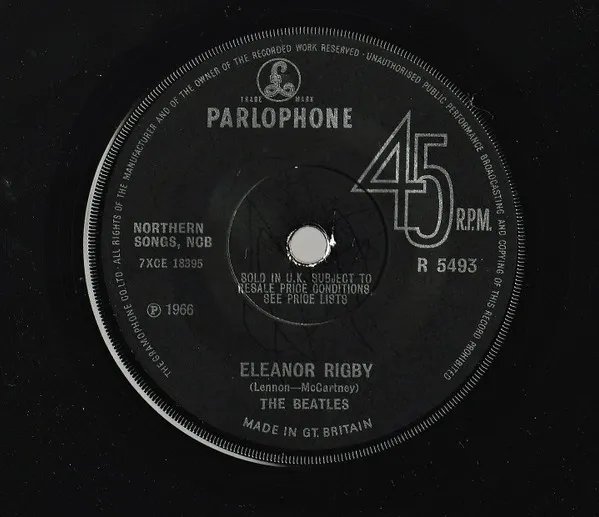
5. The Beatles – Eleanor Rigby
- Label & Format: Parlophone (R 5493), 7″ Single, UK, 1966
- Estimated Collector Value: £15
For many musicians, Eleanor Rigby represents the absolute pinnacle of Western popular composition. Operating as a brilliant hybrid—simultaneously rock and roll yet entirely outside traditional boundaries—it discarded standard romantic tropes in favor of a fly-on-the-wall mini-documentary about urban loneliness.
Its narrative brilliance set a high-water mark for all subsequent pop writing. Years later, during formative discussions within the newly minted lineup of Genesis, fellow songwriter Peter Gabriel noted the immense difficulty of executing convincing narrative arcs in music. Yet, McCartney’s haunting depiction of lonely lives intersecting in a deserted church achieved this with effortless mastery, establishing a permanent standard for lyrical storytelling.
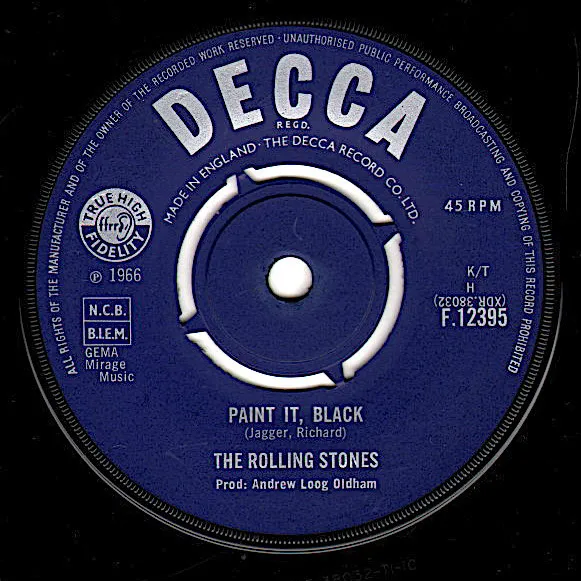
6. The Rolling Stones – Paint It, Black
- Label & Format: Decca (F 12395), 7″ Single, UK, 1966
- Estimated Collector Value: £15
The dark, hypnotic allure of 1966 was largely defined by Mick Jagger and The Rolling Stones’ excursions into non-Western instrumentation. Anchored by Brian Jones’s swirling sitar and Keith Richards’ relentless guitar attack, Paint It, Black is a masterclass in musical construction.
Functioning almost as a two-part invention, the verse melody and the sitar line weave together in a dense tapestry that blurs the lines between verse and chorus. For budding guitarists spending hours in their childhood bedrooms trying to untangle the song’s intricate phrasing, it was a crucial exercise in stylistic synthesis, proving that rock and roll could successfully absorb Eastern modal scales without losing its menacing edge.
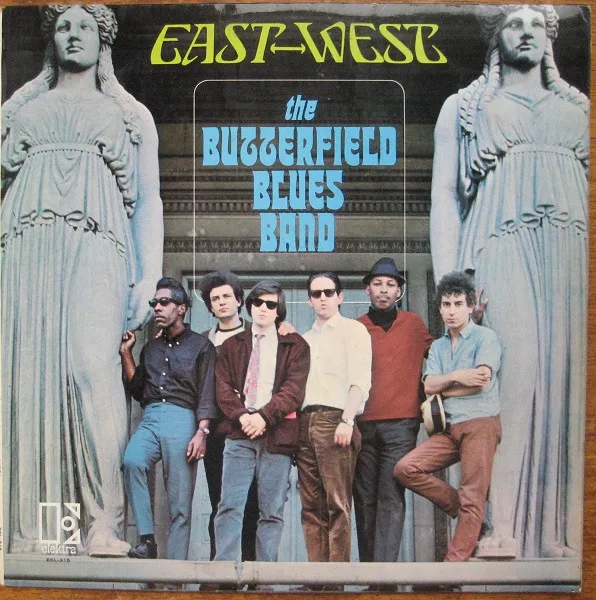
7. Paul Butterfield Blues Band – East-West
- Label & Format: Elektra (EKL 315), LP, UK, 1966
- Estimated Collector Value: £50
Witnessing the Paul Butterfield Blues Band live at the legendary Eel Pie Island in 1966—playing to an intimate audience of barely twenty people—was a transformative rite of passage. From the very first note blown on the harmonica, the performance shattered conventional expectations.
While deeply rooted in traditional blues, the album’s monumental title track, composed by Mike Bloomfield, pioneered what would eventually become world fusion. Stretching across extended durations, the track fluidly migrated through Eastern, Western, Mexican, and Indian musical idioms. It offered a breathtaking blueprint for long-form instrumental improvisation.
8. The Beatles – Sgt. Pepper’s Lonely Hearts Club Band
- Label & Format: Parlophone (PCS 7207), LP, UK, 1967
- Estimated Collector Value: £175
As the undisputed heavyweight of this collection—fetching up to £175 on the collectors’ market—Sgt. Pepper’s Lonely Hearts Club Band completely redrew the map of recorded music. From its opening moments, the title track actively subverts expectations, transitioning abruptly from an orchestra tuning up into a hard-driving rock band.
Paul McCartney’s commanding vocal performance, punctuated by perfectly timed instrumental interjections, demonstrated a rare compositional restraint: the Beatles instinctively knew precisely when to stop playing. This calculated use of space, surrealism, and magic realism laid the groundwork for progressive rock’s theatrical ambitions. Furthermore, tracks like She’s Leaving Home served as direct thematic bookends to Eleanor Rigby, exploring the quiet desperation of domestic isolation with unprecedented orchestral grandeur.
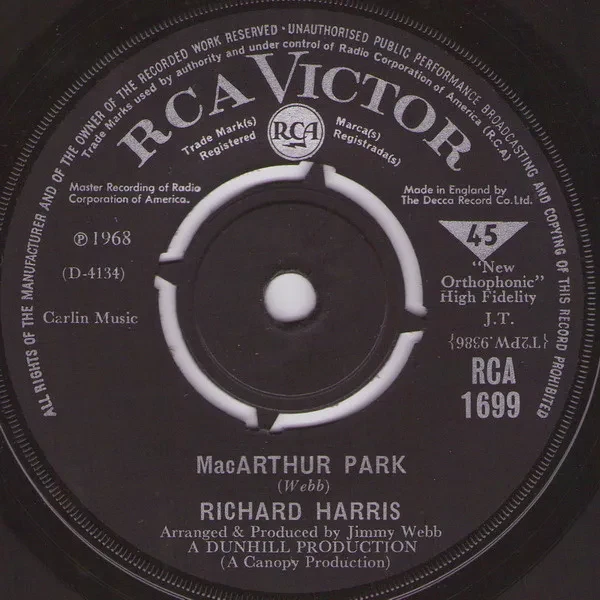
9. Richard Harris – MacArthur Park
- Label & Format: RCA (1699), 7″ Single, UK, 1968
- Estimated Collector Value: £3
Though often overlooked in favor of gritty blues and avant-garde rock, Richard Harris’s grandiose 1968 recording of MacArthur Park—written by a remarkably youthful Jimmy Webb—played a foundational role in shaping the ambitions of early progressive rock.
Featuring an intricate chord sequence, daring orchestral arrangements, and a runtime stretching to nearly seven minutes, the track operated as an emotional paean to lost love. Actor Richard Harris approached the vocal with an intense, theatrical gravity. For aspiring bands like Genesis, this was the holy grail: a template for multi-part storytelling, shifting time signatures, and the seamless integration of classical and contemporary instrumentation.
10. Kate Bush – The Man With The Child In His Eyes
- Label & Format: EMI (2806), 7″ Single, UK, 1978
- Estimated Collector Value: £15
The chronological survey concludes in 1978 with the breathtaking arrival of Kate Bush. Written when she was just thirteen years old, The Man With The Child In His Eyes demonstrated a staggering compositional maturity.
Balancing youthful fantasy with the early, dizzying stirrings of romantic awakening, Bush captured emotions that most adults struggled to articulate. Lifted from her landmark debut album, The Kick Inside, the song utilized lush brass arrangements and fragile piano work to establish a unique space in British art-pop. Like Jimmy Webb before her, Bush proved that profound emotional resonance requires neither age nor conformity, but rather absolute artistic vision.
Supporting Context & Metrics
To understand the enduring cultural and financial value of these ten releases, one must examine the intersection of physical media preservation and historical musicology. Vinyl collecting has transitioned from a niche hobby into a major cultural preservation movement, with mid-60s UK first pressings commanding significant premiums among audiophiles.
| Artist / Title | Label & Catalog # | Release Year | Format | Collector Est. Value | Core Genre |
|---|---|---|---|---|---|
| Martha & The Vandellas – Dancing In The Street | Stateside (SS 345) | 1964 | 7″ Single | £20 | Soul / Motown |
| The Who – My Generation | Brunswick (05944) | 1965 | 7″ Single | £20 | R&B / Rock |
| Buffy Sainte-Marie – Many A Mile | Fontana (TFL 6047) | 1965 | LP | £5 | Folk / Protest |
| Bob Dylan – Highway 61 Revisited | CBS (BPG 62572) | 1965 | LP | £80 | Folk-Rock / Blues |
| The Beatles – Eleanor Rigby | Parlophone (R 5493) | 1966 | 7″ Single | £15 | Baroque Pop |
| The Rolling Stones – Paint It, Black | Decca (F 12395) | 1966 | 7″ Single | £15 | Psychedelic Rock |
| Paul Butterfield Blues Band – East-West | Elektra (EKL 315) | 1966 | LP | £50 | Blues / World Fusion |
| The Beatles – Sgt. Pepper’s… | Parlophone (PCS 7207) | 1967 | LP | £175 | Art Rock / Psychedelia |
| Richard Harris – MacArthur Park | RCA (1699) | 1968 | 7″ Single | £3 | Orchestral Pop |
| Kate Bush – The Man With The Child… | EMI (2806) | 1978 | 7″ Single | £15 | Art-Pop |
The valuation disparity—ranging from the accessible £3 price point of Richard Harris’s MacArthur Park to the coveted £175 threshold commanded by pristine UK stereo pressings of Sgt. Pepper’s Lonely Hearts Club Band—reflects supply-chain dynamics, historical pressing quantities, and the ongoing demand among Baby Boomer and Gen-X collectors alike.
Official Statements & Industry Perspectives
Reflecting on the cultural impact of these recordings, Michael Heatley notes that the interviews underscore a vital truth about the creative process:
"Great art does not happen in a vacuum. When you trace the lineage of progressive rock and art-pop back to its source, you find artists who were not merely consumers of popular culture, but active, obsessive students of it. Whether it was Steve Hackett analyzing the modal guitar work of Mike Bloomfield or Steve Rothery dissecting the narrative economy of Lennon and McCartney, these records represent the bedrock upon which modern musical architecture was built."
Furthermore, industry analysts point out that the cross-pollination of genres observed during the 1960s—where folk artists embraced electric instruments, soul singers delivered sociopolitical manifestos, and rock bands incorporated Indian sitars and classical string quartets—permanently altered the expectations placed upon commercial songwriters.
Future Outlook: Preserving the Analog Blueprint
As the music industry continues its digital migration toward streaming platforms and algorithmic curation, the cultural significance of physical vinyl archives remains paramount. The retrospective insights shared by Steve Hackett and Steve Rothery serve as a timely reminder of the tactile connection between listener, medium, and sound.
Looking ahead, the market for vintage UK vinyl pressings from the golden era of 1964–1978 is projected to remain robust. As museums, academic institutions, and dedicated collectors increasingly recognize mid-century popular music as a legitimate classical canon of the modern age, the preservation of these specific pressings becomes an act of cultural stewardship.
Ultimately, these ten records—from the bustling fairgrounds of Battersea to the quiet bedrooms of teenage guitar heroes—prove that transformative art leaves permanent shockwaves. They are not merely relics of a bygone era; they are the enduring blueprints of modern musical expression.
Interview curated by Michael Heatley. Steve Hackett and Steve Rothery’s collaborative album, The Roaring Waves, is available now via InsideOutMusic.