Executive Overview
Nearly three centuries after its initial publication on October 28, 1726, Jonathan Swift’s Gulliver’s Travels remains one of Western literature’s most potent instruments of satire. Capable of provoking, amusing, and profoundly shocking contemporary readers, the masterwork is universally recognized as a defining pillar of Enlightenment critique. Most readers are familiar with the biographical baseline: Swift was not only born in Ireland but served as the Dean of St Patrick’s Cathedral in Dublin when he penned what is unquestionably his magnum opus.
Yet, mainstream literary appreciation often overlooks a foundational dimension of the text—one that is inextricably bound to Swift’s identity as a member of Ireland’s Protestant elite. Far from being an abstract exercise in misanthropy, Gulliver’s Travels is deeply shaped by the contradictions, anxieties, and humiliations experienced by the Anglo-Irish ruling class. Operating as a minority elite, this group’s identity was constructed on the paternalistic assumption that their historic mission was to bring order, civilization, and reason to a supposedly wild and benighted nation.
However, this civilising mission was crippled from its inception by an irreconcilable paradox. The Anglo-Irish originally styled themselves as “the English people of Ireland,” tasked with modelling a superior culture to the native inhabitants. Instead, they quickly discovered that living in Ireland relegated them, in the eyes of the Westminster metropole, to a position of systemic inferiority. Swift’s masterpiece turns this geopolitical vertigo into an artistic method. By utilizing dizzying shifts in scale, perspective, and cultural estrangement, Gulliver’s Travels systematically dismantles the illusion of Western European authority, transforming the psychological trauma of the colonial intermediary into a universal critique of human folly.
Detailed Chronology and Historical Context
To understand the bitter edge of Gulliver’s Travels, one must trace the historical crucible of the 1720s that birthed it. The text did not emerge in a political vacuum; it was forged during a period of intense crisis in Anglo-Irish relations, characterized by economic exploitation, legislative subjugation, and a growing sense of betrayal among the Protestant establishment.
The Anglo-Irish Predicament and the Drapier’s Letters
Swift’s political consciousness during the composition of Gulliver’s Travels was acutely sharpened by his involvement in Irish resistance to British economic policies. In 1724, two years before his masterwork reached the presses, Swift published the Drapier’s Letters, a series of fiercely argued political pamphlets designed to thwart the imposition of Wood’s halfpence—a debased copper coinage foisted upon Ireland by royal patent without the consent of the Irish parliament.
In these letters, Swift gave voice to the profound frustration felt by the Anglo-Irish regarding their unstable political status. He famously articulated this existential paradox with a rhetorical question that exposed the fragility of colonial citizenship:
"Am I a freeman in England, and do I become a slave in six hours by crossing the Channel?"
This acute sense of geographical disorientation—where crossing a narrow body of water strips an individual of their fundamental rights—directly foreshadows the mechanics of Gulliver’s Travels. Lemuel Gulliver’s voyages are defined by sudden transitions that disorient, strip away status, and render the traveler powerless. Swift’s contemporary, the philosopher and scientist William Molyneux, had diagnosed this structural dilemma decades earlier in The Case of Ireland’s Being Bound by Acts of Parliament in England Stated (1698), writing:
"If the English in Ireland be treated as Englishmen, they will be Englishmen still in their hearts and inclinations, but if they be oppressed, they will turn Irish, for fellowship in suffering begets love and unites interests."
Caught between an imperial power that regarded them as provincials and a native population they had dispossessed, the Anglo-Irish elite inhabited a twilight zone of identity. It was precisely this "fellowship in suffering" and the bitter realization of colonial second-class status that fueled Swift’s savage satirical engine.
Deconstructing Imperial Authority: The Four Voyages
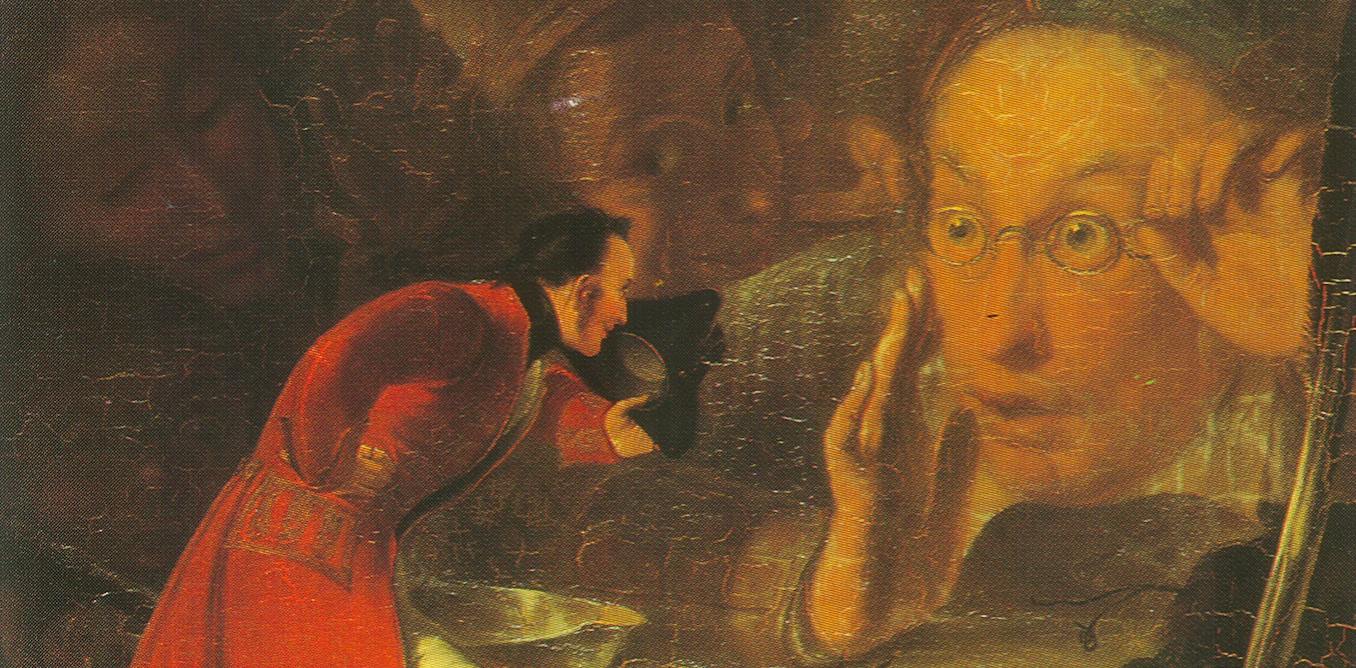
Swift subverts the burgeoning 18th-century genre of travel literature. While standard travelogues of the era served to validate European perspectives as objective, definitive, and universally authoritative, Gulliver’s Travels systematically destabilizes the traveler’s gaze.
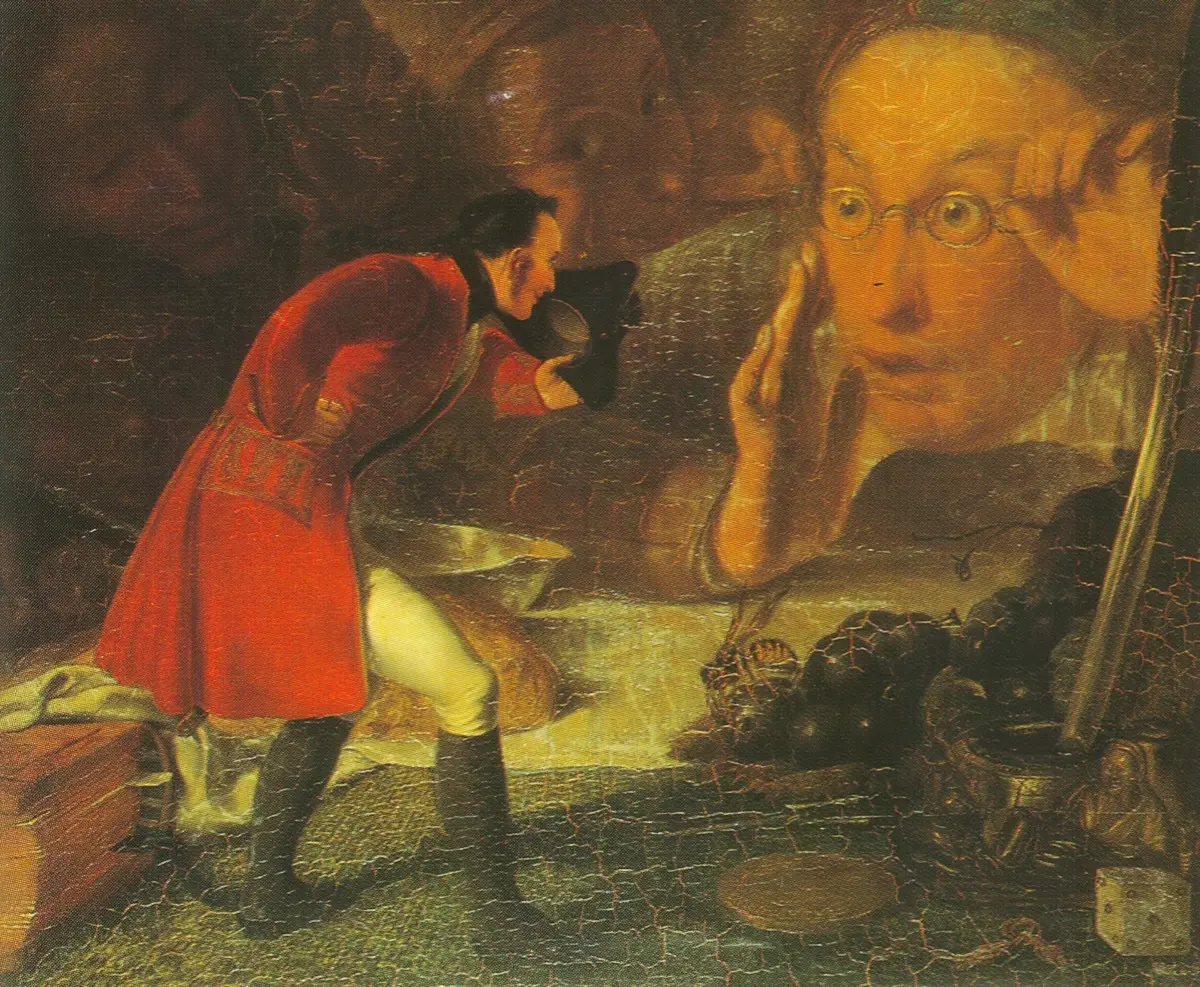
- Part I: Lilliput and the Incongruity of Power. Gulliver finds himself a giant among the six-inch-tall Lilliputians. The humor stems from their microscopic self-importance; the "most mighty Emperor of Lilliput" styles himself the "delight and terror of the universe," ruling an empire that spans a mere twelve miles in circumference. Yet, Gulliver’s physical dominance is constantly undermined. When the Lilliputians calculate the staggering cost of feeding him, they seriously contemplate execution, rejecting the idea only because a rotting mountain of human flesh would spark a catastrophic plague. Here, Swift satirizes the inflated ambitions of European statecraft, showing that grand imperial designs are often fragile, petty, and biologically burdensome.
- Part II: Brobdingnag and the Miniature Human. Inverting the first book, Gulliver is cast into a world of giants where he is reduced to the size of an insect. Seeking to impress the King of Brobdingnag, Gulliver boasts of European civilization, military might, and political institutions. The King listens with clinical detachment before delivering a devastating verdict: the English are "the most pernicious race of little odious vermin that nature ever suffered to crawl upon the surface of the earth." Swift utilizes scale to puncture European arrogance, exposing the barbarity hidden beneath polite cultural veneer.
- Part III: Laputa and the Madness of "Projectors." Gulliver’s third voyage takes him to the flying island of Laputa and the Grand Academy of Lagado, where common sense is abandoned in favor of absurd pseudo-scientific experiments. Swift’s targets were the "projectors"—the 18th-century equivalent of technocratic innovators and speculative scientists—specifically lampooning England’s Royal Society, founded in London in 1660 to advance natural knowledge. Swift held a deep-seated contempt for abstract intellectualism divorced from human utility, a theme he revisited in his harrowing 1729 satirical essay, A Modest Proposal, where a cold-blooded "projector" suggests solving Irish poverty by selling impoverished infants as delicacies for the rich.
- Part IV: The Houyhnhnms and the Tragedy of the Yahoos. The final book presents the hyper-rational horses, the Houyhnhnms, who rule over the Yahoos—bestial, degraded creatures that Gulliver slowly and agonizingly recognizes as human. The Houyhnhnms calmly debate whether to exterminate the Yahoos, a chilling foreshadowing of modern state-sponsored atrocities. Gulliver, desperate to disown his species, abases himself before the horses. Upon returning home, he cannot bear the presence of his own family, choosing instead to live out his days conversing with horses in the stable.
Supporting Context and Metrics
To properly evaluate the cultural footprint and structural impact of Gulliver’s Travels, scholars and literary historians examine several critical metrics regarding its publication, reception, and thematic evolution:
| Publication Metric / Analytical Category | Historical Data & Critical Consensus |
|---|---|
| First Publication Date | October 28, 1726 (London, anonymously published by Benjamin Motte). |
| Immediate Reception | An instant commercial and critical success; first impression sold out within a week. Prime Minister Robert Walpole and other statesmen were famously stung by the political barbs. |
| Literary Genre | Menippean satire, speculative fiction, travel literature subversion, political allegory. |
| Primary Biographical Influence | Swift’s tenure as Dean of St Patrick’s Cathedral, Dublin (1713–1745); active resistance against British mercantilist exploitation (e.g., Drapier’s Letters, 1724). |
| Key Archival Targets | The British Monarchy, Whig political hegemony, the Royal Society, imperial expansionism, and colonial paternalism. |
Perspectives from Modern Scholarship
Modern literary historians and cultural critics increasingly emphasize the post-colonial dimensions of Swift’s output, viewing his irony not merely as general misanthropy, but as a sophisticated weapon forged in the crucible of Anglo-Irish marginalization.
Dr. Carole Fabricant, a leading scholar of 18th-century literature and Swiftian studies, has frequently noted how Swift’s geographical displacement in Dublin fundamentally conditioned his worldview. "Swift was trapped between two worlds," Fabricant observes. "He viewed himself as an Englishman by culture and education, yet he was treated by the English administration as an expendable colonial subject. This forced him into a position of perpetual double vision—able to see through the grand narratives of empire because he experienced firsthand their hypocritical and oppressive machinery."
Furthermore, contemporary historians of science note that Swift’s critique of the Royal Society in Part III was remarkably prescient. Long before the ecological and ethical crises of modern industrial technocracy, Swift identified the danger of scientific inquiry divorced from moral responsibility. The "projectors" of Lagado—attempting to extract sunbeams from cucumbers or convert human excrement back into food—serve as timeless warnings against blind faith in rationalist progress without human empathy.
Future Outlook: The Enduring Relevance at 300 Years
As humanity approaches the tercentenary of Gulliver’s Travels, the work’s core philosophical inquiries have lost none of their urgency. In an era marked by resurgent nationalisms, technological hubris, algorithmic "projectors," and persistent geopolitical inequalities between dominant global centers and marginalized peripheries, Swift’s masterpiece offers an essential diagnostic tool.
The "Anglo-Irish dilemma"—the psychological fracture of identifying with a dominant power structure that simultaneously devalues and exploits one’s homeland—finds echoes in modern post-colonial states worldwide. More broadly, Gulliver’s descent into madness in the stables reminds readers of the psychological peril of total alienation: the danger of rejecting one’s shared humanity in a quixotic quest for absolute purity or rational perfection.
Ultimately, Jonathan Swift’s enduring achievement lies in his refusal to offer a single, comfortable frame of reference. By fracturing perspective across scales of six inches and sixty feet, across flying islands and rational pastures, Gulliver’s Travels shatters the conceit that any single culture holds a monopoly on reason or civilization. Three hundred years on, Swift’s savage indignation continues to compel readers to step outside their native paradigms, look in the mirror, and question the fundamental myths upon which their worlds are built.