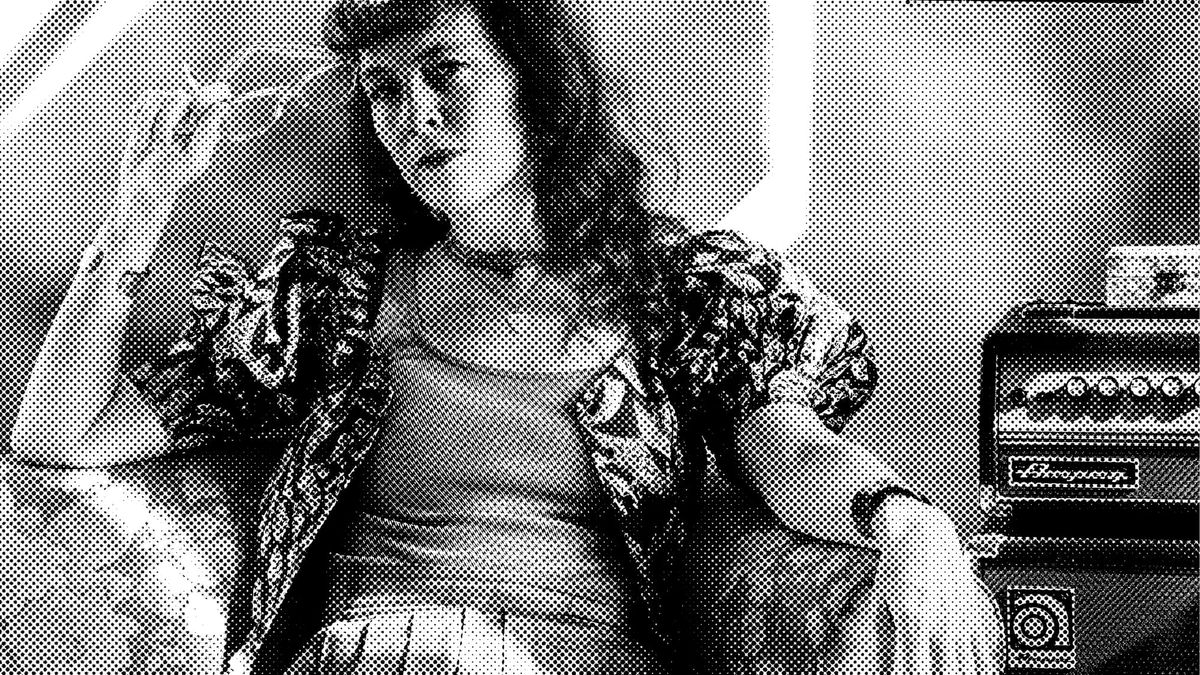
In the literary and cultural landscape of 2026, few releases have captured the collective zeitgeist quite like Melissa Auf der Maur’s debut memoir, Even the Good Girls Will Cry: My ’90s Rock Memoir. Crowned the prestigious Book of the Year by Rough Trade, the publication transcends the typical boundaries of backstage rock-and-roll confessionals. Instead, it functions as a profound cultural artifact, a sociological lens through which to examine gender politics, artistic identity, and the monumental, structural shift from the analog twentieth century to the hyper-digitized twenty-first.
Best known for her tenure as the magnetic bassist of alternative rock royalty Hole and The Smashing Pumpkins, Auf der Maur has penned a text that is as intellectually rigorous as it is emotionally raw. In an extensive interview with Emily Waller, the musician-turned-author unpacks the visceral experience of coming of age during a turbulent historical threshold. She illuminates how the counterculture of the 1990s served as a crucible for modern creative resistance, while issuing a clarion call for solidarity between Generation X and Generation Z. As the memoir takes its place as a defining text of contemporary nonfiction, Auf der Maur’s reflections offer vital insights into the preservation of human memory, the persistent struggles for gender equity, and the enduring, communal power of music.
Detailed Chronology: From Montreal Roots to Alternative Royalty
To understand the weight of Even the Good Girls Will Cry, one must trace the trajectory of Melissa Auf der Maur’s life—a journey rooted in the artistic soil of Montreal and propelled onto the global stadium stage. Raised by parents who modeled a life built on radical honesty, artistic risk-taking, and deep civic devotion, Auf der Maur was inoculated early against conventional societal expectations. Her mother, a steadfast product of second-wave feminism, instilled in her a fierce independence that directly challenged the traditional domestic templates historically prescribed for women.
Before she ever strapped on a bass guitar or faced the blinding lights of global arena tours, Auf der Maur’s primary creative obsession was photography. Drawn to the quiet solitude of the darkroom and the alchemy of celluloid, she was initially too reclusive to imagine a life front and center on a stage. However, a profound prophetic dream at the age of nineteen shifted her trajectory entirely. Convinced that music was the ultimate conduit for human connection, she pivoted toward sound, leading her directly into the epicenter of the 1990s alternative rock explosion.
Her induction into Hole in 1994 placed her at ground zero of a male-dominated musical landscape. While the decade was celebrated for its anti-establishment ethos and commercial breakthroughs by bands like Nirvana, female musicians routinely found themselves isolated tokens on festival bills alongside aggressive heavy-rock acts such as Marilyn Manson, Limp Bizkit, and Korn. Despite these structural imbalances, Hole achieved massive cultural dominance, securing magazine covers and top-forty hits while carving out an uncompromising space for women on their own terms. Auf der Maur’s eventual transition from active touring musician to multidisciplinary artist and archivist marks the next phase of her evolution—one dedicated to documenting, contextualizing, and passing the torch to the generations of creators rising in her wake.
Supporting Context & Metrics: The Evolution of Women in Music and Media
The cultural resonance of Even the Good Girls Will Cry is deeply intertwined with the shifting paradigms of gender representation in the modern entertainment industry. When Auf der Maur joined Hole in the mid-1990s, the music industry was operating under a distinctly patriarchal framework disguised as countercultural rebellion. Women in rock were frequently scrutinized through a hyper-sexualized or marginalized lens, forced to fight twice as hard for institutional validation.
Fast-forward to the musical landscape of 2026, and the paradigm has undergone a seismic shift. Today’s mainstream music industry is undeniably dominated by female powerhouses—artists like Olivia Rodrigo, Billie Eilish, and Taylor Swift dictate the cultural conversation, artistic trends, and commercial metrics on a global scale. This evolution represents the fruition of decades of foundational labor by pioneering women in alternative and punk rock.
However, Auf der Maur is careful to contextualize this progress, drawing a sharp distinction between the insular world of commercial entertainment and the broader geopolitical reality for women. Even as female artists command stadium tours and chart-topping success, fundamental human rights face unprecedented rollbacks. In the United States, neoconservative legislative shifts continue to threaten reproductive autonomy. Globally, rates of violence against women remain alarmingly high, while systemic oppression in underdeveloped regions routinely strips girls of basic bodily autonomy.
Amidst these macro-level challenges, contemporary artists are proving that cultural influence can be leveraged for systemic change. Auf der Maur highlights the philanthropic efforts of 23-year-old superstar Olivia Rodrigo, whose Daisy Chain Fields initiative successfully raised $20 million to protect and advocate for women’s and girls’ rights in America. This intersection of artistic platform and direct political activism exemplifies the exact lineage of empowerment that Auf der Maur’s memoir seeks to honor and accelerate.
Official Statements & Insights: Melissa Auf der Maur in Conversation
In her dialogue with Emily Waller, Auf der Maur articulates a clear philosophical framework regarding generational responsibility, artistic legacy, and the psychological impact of digitization. Below are key excerpts and thematic breakdowns from their exchange:
On Intergenerational Solidarity
"I believe my generation’s counterculture and alternative music reflected the painful birth canal into the 21st-century. Through the fire we went, and now we are all going through forevermore. Gen X and Gen Z have a lot to do and learn together."
Auf der Maur emphasizes that the turn of the millennium was an era of extreme, disorienting transition—a bridge over troubled waters marked by the death of the analog world and the aggressive dawn of corporate capitalism and environmental decay. She views her memoir not merely as a nostalgic trip down memory lane, but as an official "report" handed down to young people navigating their own coming-of-age crises in an increasingly volatile world.
On the Illusion of Digital Convenience vs. Analog Truths
Addressing the modern obsession with digital documentation, Auf der Maur issues a stern warning regarding humanity’s reliance on cloud storage and algorithms:
"We are analog humans, but the threat of becoming a trans-human race is real. We must be highly conscious and aware of this transition in order to sustain humanity and remain human."
Reflecting on her own habits of keeping daily diaries and photographing her surroundings deliberately, she argues that the conscious act of stepping outside a moment to record it imprints memory onto the human psyche far more effectively than passive digital capture. Furthermore, she critiques the monetization of personal archives by tech conglomerates, advocating for tangible, analog records as essential safeguards for the preservation of authentic human history.
On the Unfiltered Magic of the 1990s
Contrasting the raw ethos of her formative years with the highly curated, filter-driven reality of the mid-2020s, Auf der Maur champions the beauty of unpolished human experience:
"One of the most gorgeous and significant essences of the 90s, was how effortless and natural it all was. There was nothing contrived or controlled about it. It all just unfolded with the messy power of humanity and youth. I fear in this new world of filters, ambition, digital connection and disconnected emotions, we will lose the magic power that creates counterculture movements."
Future Outlook: The Ongoing Mission of Gen X and Gen Z
As Even the Good Girls Will Cry solidifies its status as Rough Trade’s Book of the Year for 2026, Melissa Auf der Maur’s ongoing book tour has taken on the character of a grassroots crusade. Her mission extends far beyond literary promotion; she travels as an active advocate for pro-human, pro-analog resilience.
In her midlife resurrection as a published author and cultural historian, Auf der Maur senses an electric synergy between her own Generation X and the contemporary members of Generation Z. Both demographics share a deep-seated skepticism toward institutional platitudes and an urgent desire for authentic, community-driven rebellion.
Looking forward, the dialogue initiated by Auf der Maur’s memoir offers a roadmap for the future. By acknowledging the painful "birth canal" of the twenty-first century and rejecting the sanitized, surveillance-driven trajectories of modern digital culture, artists and thinkers across generations can forge resilient alliances. As women continue to lead the vanguard of cultural expression while battling systemic regressions in civil rights, works like Even the Good Girls Will Cry serve as vital torches—illuminating the fire through which we have passed, and guiding the way toward a more sustainable, equitable forevermore.