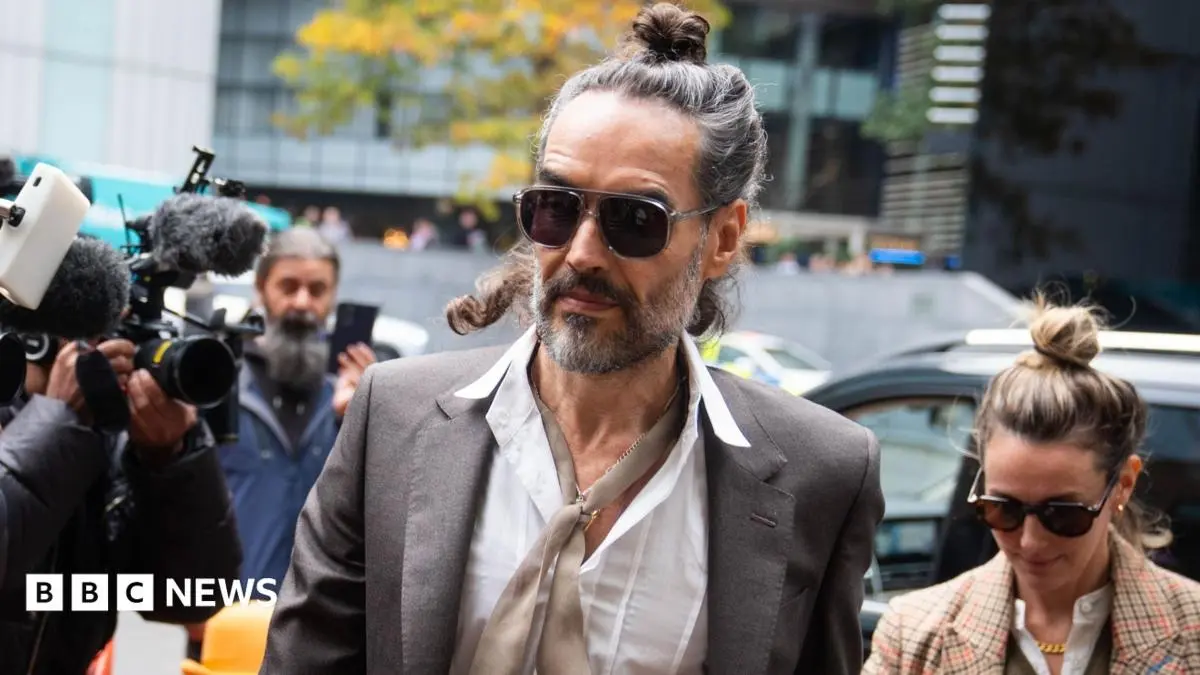
LONDON — The high-stakes legal proceedings involving entertainer and media personality Russell Brand reached a critical juncture on Friday at London’s Southwark Crown Court. As the trial enters its final stages, prosecuting and defending counsel delivered compelling closing speeches to the jury, framing the core issues of consent, credibility, and historical accountability.
Brand, 51, stands trial facing a total of seven criminal charges stemming from incidents allegedly occurring between 1999 and 2009. The charges comprise three counts of rape, three counts of sexual assault, and one count of attempted indecent assault. Throughout the proceedings, Brand has maintained his innocence, vehemently denying all allegations brought against him.
Executive Overview
The trial has drawn intense public scrutiny, placing the spotlight on the intersection of historical sexual offense allegations, the power dynamics of the entertainment industry, and the evolution of public figures over time.
During Friday’s session, prosecutor Reil Karmy-Jones KC addressed the jury in a passionate closing statement, emphasizing that the six complainants—none of whom knew one another prior to coming forward—shared strikingly similar experiences. Karmy-Jones argued that the women had endured years of psychological distress, haunted by memories of the alleged assaults, and derived no personal or financial benefit from participating in the legal process other than the possibility of closure.
Conversely, the defense, represented by Polly Dyer, focused heavily on Brand’s character history, pointing out his clean record for the vast majority of his adult life, save for a minor, decades-old cannabis possession conviction. The defense also integrated character testimony from Brand’s current wife, Laura, who described him as a devoted and kind family man.
As the jury prepares to deliberate, the case underscores the complexities inherent in prosecuting historical sexual abuse allegations, particularly when the accused is a prominent public figure whose persona has undergone significant transformation in the public eye over the decades.
Detailed Chronology and Courtroom Proceedings
The courtroom drama at Southwark Crown Court has unfolded over several weeks, featuring detailed testimonies from both the prosecution and defense witnesses. Friday’s closing arguments provided both legal teams an opportunity to synthesize the complex body of evidence presented to the jury.
The Prosecution’s Closing Argument: Reil Karmy-Jones KC
Taking center stage, Karmy-Jones dissected the mechanics of the alleged offenses and the psychological impact on the six women involved. She forcefully dismissed the defense’s narrative that the complainants had been influenced or encouraged to fabricate or "re-invent" their stories by a television documentary that previously examined Brand’s conduct.
"There is no magic force in this documentary," Karmy-Jones told the court. "What in fact happened was these women have realized they are not alone and have bravely come before you to tell the truth. Truth they have lived with, which in some cases has haunted them for years."
The prosecutor detailed a recurring behavioral pattern described by multiple accusers. According to Karmy-Jones, the women recalled Brand exhibiting a rapid and frightening shift in demeanor:
"How many said he was nice and then there was a like a personality change… His eyes changed, he snapped, from charming to frightening to nasty."
Karmy-Jones further elaborated on the alleged lack of consent during the encounters, noting that the complainants stated Brand ignored verbal and physical rejections. "He didn’t listen when I said no, he didn’t stop, he didn’t care, pulling, pushing… thrusting," she told the jury, adding that in the rape counts, "he kept on going until he achieved his ultimate aim."
Addressing disparities in memory, the prosecutor pointed out a stark contrast between Brand’s initial police interviews—where, she argued, he professed a lack of memory regarding the periods in question—and his detailed recollections presented during the trial. She remarked that people who experience trauma often retain vivid memories of the core events rather than peripheral details, such as the intricacies of an outfit worn years prior.
Karmy-Jones also directly addressed Brand’s potential personal evolution. Acknowledging that the defendant may indeed be a changed man today, she argued that his current character does not invalidate his past actions:
"He may now be a completely different person to the man he was between 1999 and 2009. He may well look back and not find some of his jokes funny. He may now treat women with kindness and consent."
The Defense and Character Testimony: Polly Dyer
The defense team, led by Polly Dyer, focused on casting doubt on the reliability of the historical allegations and emphasizing Brand’s clean legal history.
In terms of formal criminal record, Dyer placed an agreed set of facts before the court, confirming that Brand had pleaded guilty to a single charge of possessing cannabis on April 20, 1995, for which he received a fine. Dyer underscored to the jury that, outside of this decades-old minor drug offense, Brand has no other "convictions, cautions, reprimands, or warnings" on his record.
Earlier in the week, the defense called character witnesses, most notably Brand’s wife, Laura. Taking the stand, Laura testified that her husband was a "kind and wonderful father."
Karmy-Jones acknowledged Laura’s poise, referring to her as an "undoubtedly lovely wife" who had "bravely" given testimony. However, the prosecution sought to contextualize her evidence within the timeline of the charges. Karmy-Jones reminded the jury that Laura was not present during the periods when the alleged offenses took place—spanning the decade from 1999 to 2009—and that any contact between Brand and the complainants occurred long before his current domestic life was established.
Supporting Context & Metrics: The Anatomy of Historical Trials
The trial of Russell Brand sits at the center of a broader societal and legal reckoning regarding historical sexual misconduct claims within the entertainment and media sectors. Analyzing the broader context of such trials reveals several critical structural, psychological, and evidentiary challenges that frequently define these legal battles.
The Psychology of Delayed Reporting
Criminological and psychological research consistently demonstrates that victims of sexual assault often delay reporting incidents to law enforcement by years, or even decades. Factors contributing to this delay include:
- Power Dynamics: The disparity in social status, financial influence, or professional power between an established celebrity and an accuser.
- Fear of Disbelief: Apprehension regarding public scrutiny, victim-blaming, and the skepticism often directed at allegations leveled against beloved public figures.
- Trauma Suppression: The psychological mechanisms of trauma, which can cause individuals to compartmentalize or suppress memories until triggered by external events, such as media coverage or investigative journalism involving the same perpetrator.
Evidentiary Challenges in Historical Cases
Trials involving allegations dating back fifteen to twenty-five years present distinct hurdles for both prosecution and defense:
- Scarcity of Physical Evidence: Forensic evidence is rarely available in historical cases, placing immense weight on testimonial evidence, contemporaneous notes, medical records, or communications (such as letters, emails, or early text messages).
- Reliability of Human Memory: Memories inevitably degrade over time. Prosecutors must demonstrate consistency in the core narrative despite peripheral inconsistencies, while defense attorneys leverage lapses in memory or shifting details to undermine witness credibility.
- The "Bandwagon" Defense Argument: Defense teams frequently argue that subsequent media coverage or documentaries create a psychological contagion, leading complainants to reinterpret past consensual or ambiguous encounters as non-consensual. Prosecutors must systematically counter this by highlighting independent, corroborating patterns of behavior among witnesses who had no prior contact with one another.
Official Statements and Legal Positions
Throughout the trial, both legal teams have maintained rigid positions reflecting their respective mandates under English criminal law.
-
The Crown Prosecution Service (CPS) / Prosecution Stance:
The prosecution’s core argument rests on the proposition that multiple independent witnesses, unknown to one another, describing identical behavioral patterns and predatory tactics provides a compelling body of circumstantial and direct evidence. Karmy-Jones reiterated that the complainants had nothing to gain from subjecting themselves to the grueling nature of a public criminal trial other than seeking personal closure and speaking truth to power. -
The Defense Stance:
Brand’s legal representation has consistently argued that the allegations are false, exaggerated, or the product of retrospective misinterpretation shaped by intense public media coverage. By establishing Brand’s lack of prior sexual offense convictions and emphasizing his current rehabilitation, family life, and personal growth, the defense aims to create reasonable doubt in the minds of the jurors regarding his actions during the late 1990s and 2000s.
Future Outlook and Procedural Next Steps
With closing speeches concluded, the trial moves into its final, most critical phase.
Jury Deliberations
The judge will provide formal legal directions to the jury, outlining the standard of proof required for a criminal conviction—namely, that the jurors must be satisfied beyond a reasonable doubt on each individual count. The jury will then retire to consider its verdict on all seven charges:
- Three counts of rape
- Three counts of sexual assault
- One count of attempted indecent assault
Broader Legal and Cultural Ramifications
Regardless of the jury’s ultimate verdicts, the trial has already secured a significant place in contemporary legal history. It highlights the evolving framework within the UK criminal justice system for handling historical sexual offenses, the increasing willingness of prosecutors to bring forward complex multi-complainant cases, and the ongoing public debate concerning accountability, redemption, and the permanence of historical actions in the digital age.
The trial at Southwark Crown Court continues as the jury prepares to deliberate the fate of one of Britain’s most recognizable and polarizing cultural figures.