Executive Overview
In the rapidly evolving landscape of electronic music production and live performance hardware, bespoke instrumentation has traditionally been the exclusive domain of boutique tinkerers and expensive custom design shops. Over the past decade, Buenos Aires-based manufacturer Yaeltex has steadily dismantled this barrier, offering musicians a modular, build-to-order platform that bridges the gap between personal ergonomic preference and professional studio hardware.
Now, the company has announced its most significant leap forward to date: the Yaeltex V3 platform.
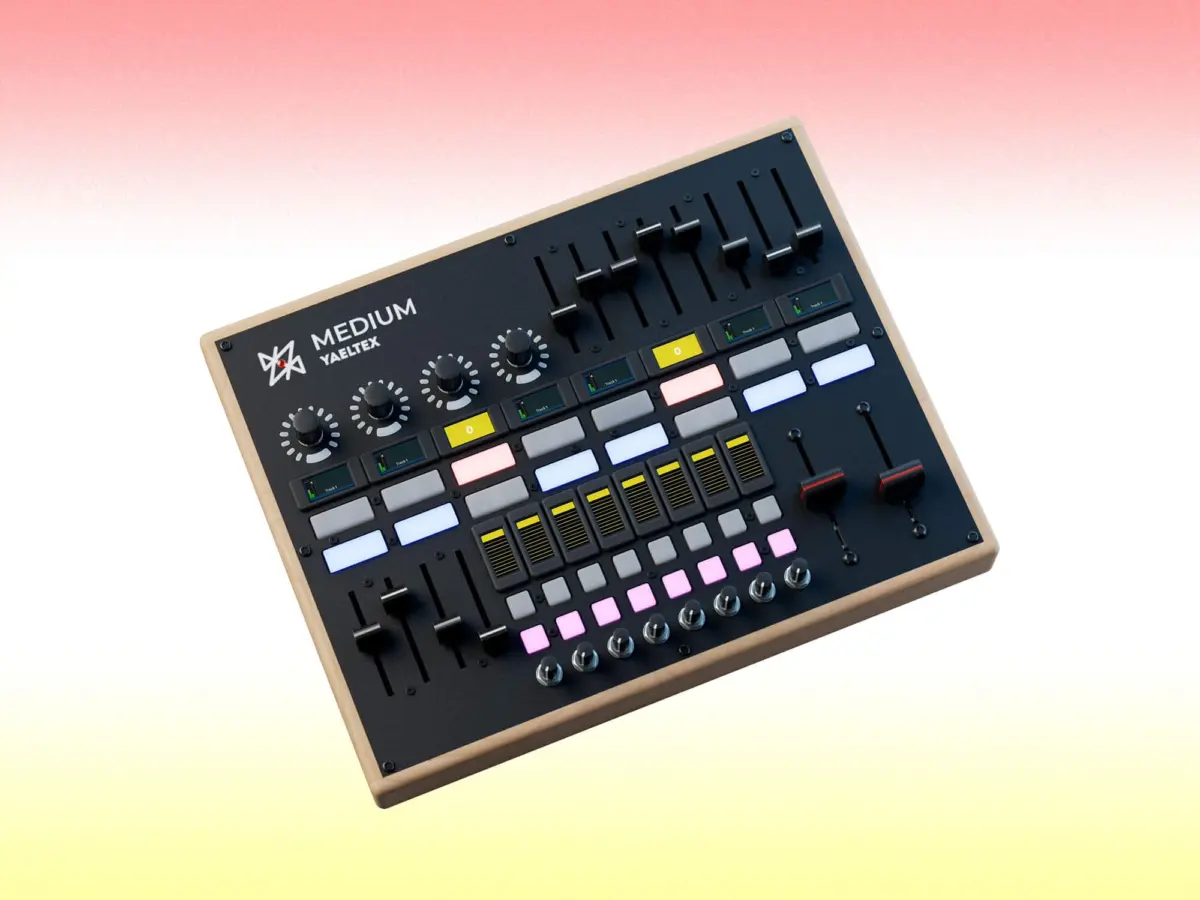
Representing a comprehensive, ground-up redesign of the hardware, firmware, and software ecosystem that Yaeltex has refined since 2020, the V3 platform introduces features long demanded by its high-profile user base. Headlining these updates is the integration of vibrant, full-colour user-configurable displays—a feature co-founder Mateo Ferley Yael notes has been the most requested addition since the debut of the V2 iteration.
Beyond visual feedback, the V3 architecture introduces the powerful new Kilomux mainboards, which radically expand hardware capacity by doubling endless encoder limits and analogue input potentials. Coupled with a completely rewritten companion software suite—Kilowhat V3—and enhanced routing capabilities via dual USB-C architecture, Yaeltex is positioning the V3 not merely as an incremental upgrade, but as a future-proof, highly professional control ecosystem designed to withstand the rigorous demands of global touring and complex studio workflows.
Detailed Chronology: From Patagonian Workshop to Global Standard
To understand the magnitude of the V3 release, it is essential to trace the trajectory of Yaeltex, a brand rooted in DIY ethos that evolved into an industry-standard choice for some of electronic music’s most forward-thinking artists.
The Early Years: Patagonia Beginnings (2009–2016)
The story of Yaeltex began far from the bustling manufacturing hubs of North America, Europe, or East Asia. It originated in Bariloche, nestled within the scenic landscapes of the Patagonia region of Argentina. Brothers Alejo Yael and Mateo Ferley Yael shared a common frustration among electronic musicians: factory-standard MIDI controllers rarely matched the precise, idiosyncratic needs of a live performer or studio engineer.
Driven by necessity and a passion for engineering, the brothers built their very first custom controller in 2009. What started as a personal quest for a better workflow slowly snowballed into local requests from fellow musicians seeking bespoke hardware solutions. Recognizing a broader market gap for personalized, tactile control surfaces, the brothers officially incorporated Yaeltex in 2016. That same year, they launched V1, establishing a foundational two-case modular framework that allowed users to select and arrange their preferred pots, faders, and buttons into a unified chassis.
The V2 Revolution and In-House Manufacturing (2020–2023)
As demand scaled globally, Yaeltex realized that relying on off-the-shelf core components would ultimately limit the flexibility and reliability of their controllers. In 2020, the company made a massive operational pivot with the launch of V2.
The V2 platform introduced an entirely in-house designed mainboard, moving away from generic microcontroller boards to proprietary hardware architecture. Accompanying this was the introduction of the Kilowhat configuration software and "The Factory"—an interactive online layout designer that allowed users to visually design their dream controllers component by component.

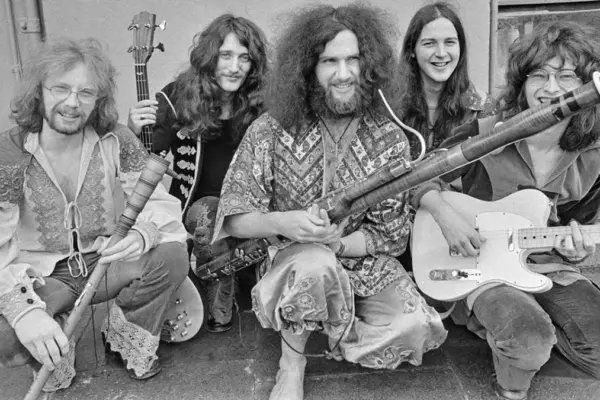
The ecosystem continued to expand in 2023 with the rollout of V2.1, which introduced more compact "Mini Elements" alongside specialized production-focused models like the LIVE15 and TR4MIX. During this era, Yaeltex cemented its reputation as a trusted partner for elite artists operating at the bleeding edge of hardware and software integration. The brand’s roster grew to include legendary techno innovator Richie Hawtin, boundary-pushing producer Arca, live performance sensation Fred again.., psych-rock mainstays King Gizzard and the Lizard Wizard, French electronica act Thylacine, melodic techno titan Anyma, Chemical Brothers member Tom Rowlands, and ambient practitioner Sebastian Mullaert.
The Dawn of V3 (Present)
With the launch of the V3 platform, Yaeltex has effectively retired the foundational architecture built in 2020. By rebuilding the mainboard, software environment, and core physical modules from scratch, the company has addressed the architectural ceilings of V2, opening the door to advanced telemetry, deeper software integration, and vastly expanded control limits.
Supporting Context & Technical Metrics: What’s New in V3?
The transition from V2 to V3 is far more than a cosmetic update. Under the hood, every layer of the hardware and software stack has been re-engineered to deliver greater processing headroom, superior routing flexibility, and—most importantly—vital visual feedback.
The Addition of Full-Colour Displays
In modern electronic music production and live performance, context switching is a major cognitive load. Staring at a computer screen while manipulating a hardware controller often breaks the immersive flow state. While V2 relied entirely on static labelling or external software monitoring, V3 introduces up to 16 full-colour, 0.96-inch screens per unit.
These displays are entirely modular in placement; users can position them anywhere on the controller chassis alongside pots, faders, and encoders. Crucially, they are fully user-configurable, capable of displaying real-time parameter feedback, dynamic labels that update depending on the active software bank, and accurate VU meters. This transforms the Yaeltex controller from a blind input device into an intelligent, two-way interactive dashboard.
Hardware Expansion: Kilomux Mainboards
Performance rigs have grown increasingly complex, requiring massive control matrices to manage modular synthesizers, digital audio workstations (DAWs), and live visual software simultaneously. The V3 introduces new Kilomux mainboards, which dramatically scale the hardware’s capacity:
- Endless Encoder Capacity: Doubled from a maximum of 32 on previous models to 64 on V3.
- Analogue Capacity: Pots, faders, and joysticks have been doubled from 64 to 128.
This surge in capacity means a single V3 chassis can now host expansive, stadium-ready control layouts that previously would have required multiple interconnected units.
Connectivity and Retro-Compatibility
Modern studio and live environments demand flexible routing. V3 addresses this by incorporating upgraded main and auxiliary microcontrollers, alongside dual USB-C ports dedicated to advanced MIDI routing. Despite the total overhaul of the internal architecture, Yaeltex has engineered V3 to maintain retro-compatibility with V2 controllers, ensuring that existing users who choose to upgrade or expand their rigs can integrate legacy modules without losing their investment.
Kilowhat V3 Software Suite
Hardware is only as good as the software used to configure it. Yaeltex has completely rebuilt its companion application, Kilowhat V3, from the ground up as a robust standalone app for both macOS and Windows.

The new software introduces several workflow enhancements:
- Granular Control Assignment: Every individual control can be precisely set for specific MIDI messages, channels, ports, feedback curves, and advanced operational parameters.
- Bulk Editing and Bank Copying: Settings can now be edited across multiple parameters simultaneously and easily copied across different operational banks.
- Virtual Model View: The app features an accurate on-screen model of the user’s custom controller. This allows musicians to begin configuring mappings and presets before the hardware is even plugged in—or even before it has shipped from the workshop.
- Hardware-Software Synergy: Touching a physical control on the hardware instantly prompts the Kilowhat app to jump directly to that parameter’s configuration page on screen.
- Ableton Live Integration: Dedicated Ableton Live control surface scripts can now be developed directly inside the app, streamlining the process of mapping complex session view parameters. (Note: While Kilowhat V3 launches with exclusive support for V3 hardware, Yaeltex has confirmed that support for legacy V2 devices will be introduced in a subsequent software update).
Official Statements and Industry Insights
The philosophy behind the V3 platform centers on a delicate balance: providing advanced, highly technical features while preserving the tactile, intuitive nature of physical hardware.
Reflecting on the development process, Yaeltex co-founder Mateo Ferley Yael highlighted that incorporating displays was not merely a matter of dropping screens onto a circuit board, but an engineering challenge of ecosystem integration.
"Displays were by far the most requested element since V2 came out," Ferley Yael explains.
However, he points out that consumer demand masked the true complexity of the engineering task: "The hard part isn’t adding a display. It’s making it part of a flexible modular system that works for many purposes in professional environments."
Achieving this required Yaeltex to rethink how data travels through the controller. In a custom-built modular system where a user can arbitrarily mix faders, arcade buttons, endless encoders, and now full-colour screens in any physical arrangement, the underlying firmware must dynamically map telemetry data back to the correct display module without introducing latency. The Kilomux mainboard and upgraded microcontrollers were specifically engineered to solve this routing bottleneck, ensuring that visual feedback remains instantaneous and rock-solid even under heavy MIDI traffic.
Future Outlook: The Next Chapter in Bespoke Control
As the line between hardware instruments and software environments continues to blur, the demand for adaptable, high-performance control interfaces is higher than ever. With the introduction of the V3 platform, Yaeltex has successfully transitioned from a clever boutique builder into a formidable force in professional music technology.
By listening closely to an elite roster of artists—ranging from underground techno architects to mainstream festival headliners—the company has systematically eliminated the historical compromises of custom hardware. No longer do musicians have to choose between the tactile layout of their dreams and the visual feedback of modern smart controllers.
As the Kilowhat V3 software ecosystem matures—with legacy V2 support slated for upcoming patches and deeper DAW integrations on the horizon—Yaeltex V3 is well-equipped to remain the nerve center for the world’s most demanding electronic music setups for years to come. For producers and performers looking to take absolute command of their digital and analogue domains, the future of custom control has officially arrived.