Executive Overview
While British culture increasingly embraces the macabre—evident in the ballooning month-long celebrations of Halloween, a voracious appetite for horror cinema, and a burgeoning fascination with the uncanny—scholars and cultural critics point out that hauntings extend far beyond the supernatural. Far from being confined to ghost stories and haunted houses, the phenomenon of the "spooky" permeates contemporary literature, political discourse, architecture, media, and everyday psychology.
At the forefront of this intellectual exploration is the Hauntology and Spectrality Research Group at York St John University. Operating across an interdisciplinary matrix that includes philosophy, cultural theory, media studies, sociology, and healthcare, the group investigates how the past persistently shapes contemporary existence. Rather than studying ghosts in the traditional, paranormal sense, researchers focus on a broader, more profound question: how can an absence exert a powerful, palpable presence?
Central to this inquiry is hauntology, a critical framework introduced by French philosopher Jacques Derrida in his seminal 1993 work, Specters of Marx. Hauntology challenges the linear progression of time, arguing that the past can never be fully left behind. Instead, histories, cultural memories, abandoned ideas, and unrealised futures linger within the present day, quietly dictating modern experiences. Closely allied is the concept of spectrality, which explores how absent people, places, and cultures continue to make themselves felt—what sociologist Avery Gordon famously termed "ghostly matters."
Over the past two decades, these academic frameworks have transitioned from niche theoretical discourses into mainstream cultural touchstones. As society grapples with widespread anxieties surrounding heritage, cultural loss, and technological change, hauntology provides a vital lens through which to decode our modern obsession with nostalgia, folk horror, and lost futures.
Detailed Chronology: The Evolution of Hauntology
To fully understand why contemporary culture feels so heavily haunted, one must trace the intellectual and cultural milestones that brought hauntology and spectrality into mainstream prominence.
1. The Philosophical Roots (1993)
The terminology of hauntology was born out of post-Marxist critique. In Specters of Marx (1993), Jacques Derrida utilized the metaphor of the ghost to describe the persistent, lingering influence of Marxism and political ideology after the fall of the Berlin Wall and the declared "end of history." Derrida posited a non-linear ontology—hantologie (a deliberate homophone in French for ontologie, or ontology)—suggesting that being is always contaminated by the ghosts of the past. The past, he argued, is neither dead nor fully present; it haunts us.
2. Sociological Dimensions of the Ghostly (1997)
Four years later, sociologist Avery Gordon expanded the discourse into the realm of everyday social life with her landmark book, Ghostly Matters: Haunting and the Sociological Imagination (1997). Gordon argued that hauntings are not psychological delusions, but rather social phenomena. Haunting, in her view, is the mechanism through which marginalized histories, repressed violence, and unresolved social injustices make themselves known in the present.
3. Cultural Critiques and "Lost Futures" (2000s–2010s)
As the 21st century progressed, cultural theorist Mark Fisher became one of the most prominent champions of hauntology, applying it to popular music, media, and late-capitalist culture. In works like The Weird and the Eerie (2016), Fisher diagnosed a pervasive cultural malaise: a sense that culture had stopped moving forward, trapped in a loop of recycling past aesthetics. Fisher famously described this as "the slow cancellation of the future," where the present is haunted by the unfulfilled promises of mid-to-late 20th-century modernism—what hauntologists term "lost futures."
4. The Digital Age and the "Haunted Generation" (2010s–Present)
In recent years, hauntological thinking has expanded into popular media analysis. Cultural commentators like Bob Fischer coined the term "the haunted generation" to describe children who grew up in Britain during the 1970s and 1980s. This demographic was uniquely marked by the esoteric, often unsettling aesthetic of public information films, gritty children’s television, and public service broadcasting.
This resurgence culminated in academic projects such as the 2024 anthology Horrifying Children: Hauntology and the Legacy of Children’s Television (co-edited and co-authored by Dr. John Marland). Scholars demonstrated that revisiting these archaic media texts is far from simple, cosy nostalgia; rather, it functions as a modern-day seance where adults attempt to commune with their past selves.
Supporting Context & Metrics: Britain as a Haunted Land
While hauntology is a global phenomenon, Britain provides a uniquely fertile landscape for spectral inquiry. The nation is characterized by dense layers of history where Roman roads, medieval churches, industrial-era ruins, and sleek contemporary developments exist in immediate spatial proximity. In Britain, the past is not a distant country; it is embedded in the pavement, the architecture, and the collective psyche.
Cultural Manifestations and Public Engagement
The appetite for the uncanny in British culture is measurable across multiple sectors:
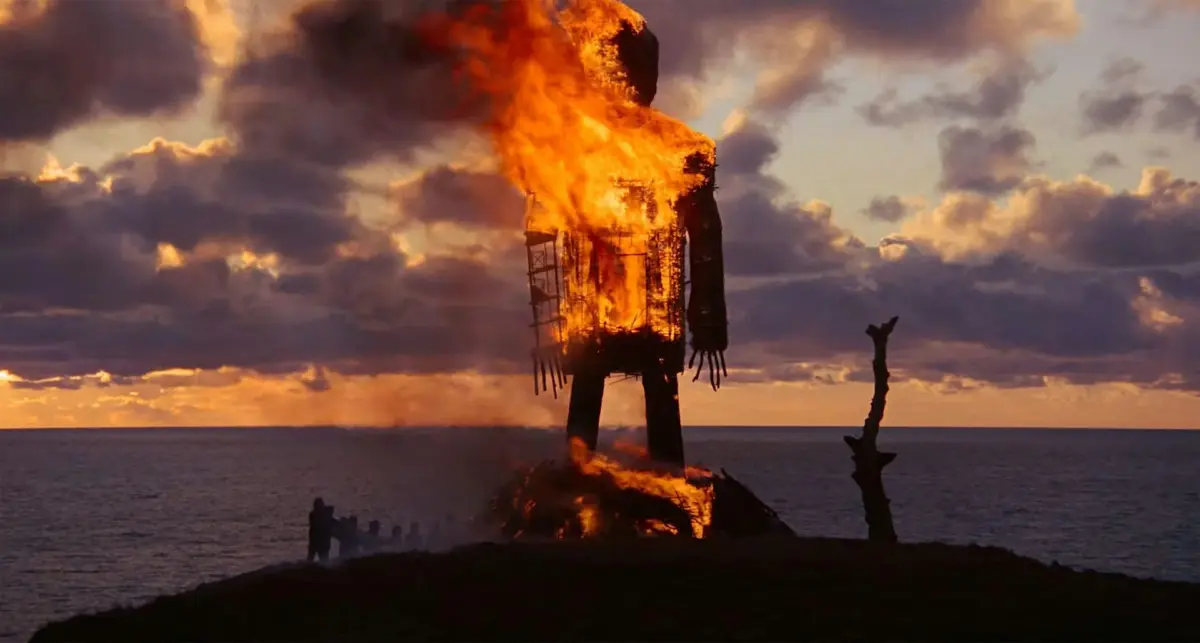
- The Folk Horror Revival: Contemporary audiences have shown an insatiable appetite for folk horror, a genre that explores the terrifying persistence of ancient, pre-Christian landscapes and rituals within modern Britain.
- Podcasting and Popular Media: Programs such as Danny Robins’ widely acclaimed BBC podcast Uncanny tap into the public’s enduring fascination with unexplained phenomena, collecting and analyzing listeners’ real-world encounters with the uncanny.
- Grassroots Communities: Organizations like the York Society of Hauntologists and regional reading groups demonstrate a growing public desire to engage with the theory of ghosts, cultural memory, and loss.
- The "Singing Ringing Tree" Effect: The creeping psychological dread instilled in British children during the 1970s by imported Eastern European television programs—such as the 1957 East German production The Singing Ringing Tree—serves as a cornerstone for modern explorations of childhood trauma and mediated hauntings.
Official Statements and Research Horizons
The work of the Hauntology and Spectrality Research Group at York St John University extends far beyond literary critique, bleeding into practical fields and international collaborations.
Interdisciplinary Reach
Members of the research group emphasize that hauntological frameworks provide crucial diagnostic tools across a staggering array of disciplines, including architecture, criminology, landscape photography, and heritage studies. By asking how landscapes retain traces of previous lives and how communities remember lost futures, researchers bridge the gap between abstract philosophy and lived human experience.
Medical Hauntology: A Novel Frontier
One of the most innovative developments within the York St John group is the establishment of a Medical Hauntology sub-group. This initiative explores how hauntological concepts can be applied within healthcare settings for both practitioners and patients. By viewing medical spaces, trauma, chronic illness, and the memories of bodily loss through a spectral lens, researchers and clinicians are discovering new ways to understand psychological pain, healing, and the lingering traces of medical interventions.
International Collaboration
Although rooted in British cultural landscapes, the scope of spectrality research is profoundly international. Scholars from across the globe contribute to the discourse, examining how different cultures experience historical trauma, political displacement, and cultural loss. This international collaboration is prominently featured in academic literature, including the Spectres, Hauntings and Horrors book series, which investigates storytelling on the borders of fiction and nonfiction.
Future Outlook: Living with Our Ghosts
As society navigates an era defined by rapid technological disruption, political instability, and ecological anxiety, the relevance of hauntology and spectrality has never been more urgent.
The future of hauntological research lies in its capacity to help us navigate what failed to happen. By analyzing "lost futures"—the alternative trajectories promised by past decades that were abandoned in favor of our current reality—scholars can better diagnose contemporary cultural stagnation.
Furthermore, as digital technologies create synthetic ghosts through AI, deepfakes, and hyper-archived internet histories, the boundary between presence and absence grows increasingly porous. We no longer just remember the past; we curate, resurrect, and interact with digital phantoms on a daily basis.
Ultimately, the insights championed by the Hauntology and Spectrality Research Group serve as a powerful reminder of human continuity. Memories endure, histories resurface, physical spaces retain the echoes of former lives, and forgotten possibilities continue to silently steer our world. So while seasonal celebrations of the spooky remain a popular cultural fixture, the broader academic consensus points to a deeper truth: we are, in one form or another, haunted all year round.