Executive Overview
For journalists, legal commentators, and ardent pop-culture observers who track the messy, high-stakes theater of modern music copyright litigation, the holiday season usually brings with it a quiet sigh of relief. As record labels wind down operations for the year, the courts empty out, and the stream of multi-million-dollar copyright lawsuits dries up.
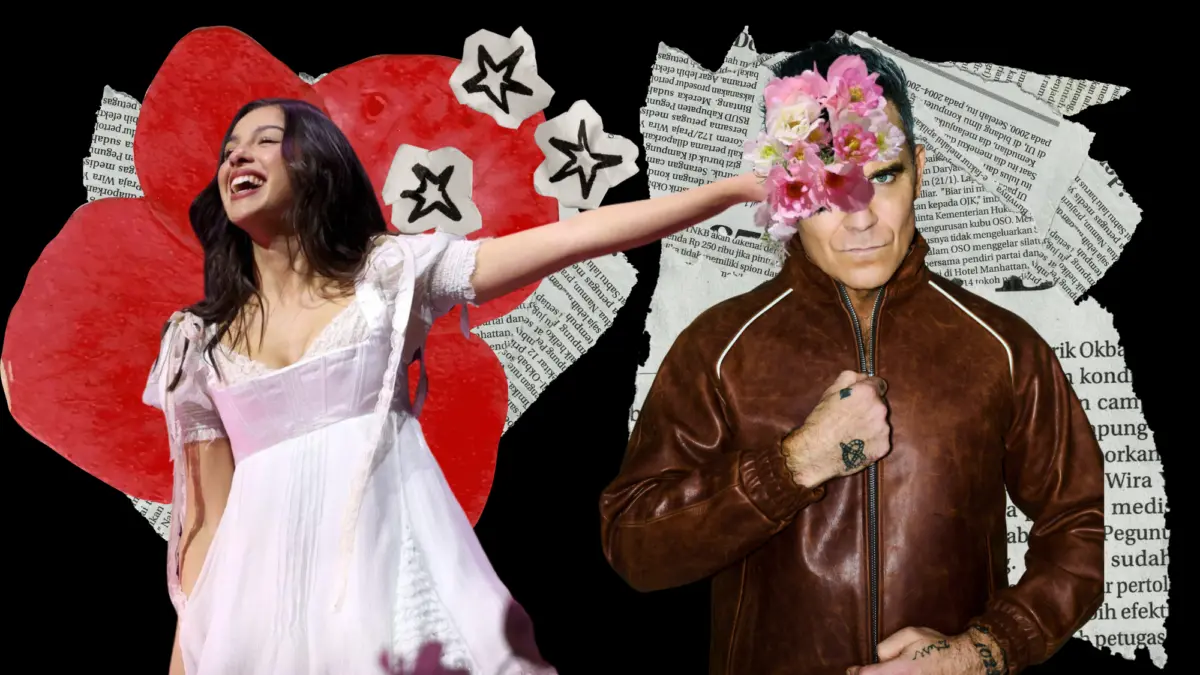
When pop powerhouse Olivia Rodrigo dropped her debut Christmas single, "Take Me Home (4 Christmas)," late last year, a predictable flurry of activity erupted across internet forums, Reddit threads, and YouTube comment sections. Within hours of the track’s release—co-written by Rodrigo alongside Amy Allen and producer Dan Nigro—sharp-eared online commentators and self-appointed musicologists began drawing immediate parallels between the new festive tune and two established pop-rock cuts: The Waitresses’ 1981 new-wave classic "Christmas Wrapping" and Robbie Williams’ 2012 radio hit "Candy."
In a climate where contemporary pop releases are routinely greeted with immediate legal posturing, preemptive songwriting settlements, and threats of courtroom intervention, the stage was set for a classic modern music-theft dispute. Yet, in a twist that left legal pundits and "grinch" commentators empty-handed, the original creators of both referenced tracks swiftly stepped forward to defuse the tension.
Rather than mobilizing legal teams or demanding lucrative percentages of future publishing royalties, Christopher Butler of The Waitresses and British pop icon Robbie Williams offered praise, contextualized the inevitable overlaps of popular music, and delivered a scathing critique of modern copyright litigation. This article examines the anatomy of this non-scandal, the broader chilling effect of high-profile copyright rulings like Blurred Lines, Rodrigo’s own complex history with interpolation and attribution, and the growing industry fatigue over "ambulance-chasing" litigation.
Detailed Chronology: The Drop, the Comparisons, and the Defusal
The timeline of "Take Me Home (4 Christmas)" offers a fascinating
case study in proactive transparency and the refreshing preservation of artistic camaraderie within a notoriously litigious industry.
The Pre-Release Outreach
Long before the internet caught wind of structural or thematic similarities between Rodrigo’s new track and The Waitresses’ 1981 holiday staple, the pop star herself took a preemptive step. Christopher Butler, the creative force and founder behind The Waitresses, revealed in a detailed and lighthearted Facebook post that he received an unexpected email directly from the young pop artist prior to the single’s official drop.
Butler admitted that, initially, he had no idea who Rodrigo was. Even after conducting a quick digital audit of her meteoric career, he remained slightly skeptical that the correspondence was genuine. However, upon opening the message, he found it overflowing with genuine appreciation for his band’s legacy—what he fondly described as "Waitresses gush." The email also included an exclusive early preview of the unreleased track, allowing Butler to evaluate the similarities firsthand.
Far from feeling aggrieved, Butler responded in kind, praising Rodrigo’s musical output and predicting that the new track would become an instant smash. He even jokingly mused that the song had a fighting chance at capturing the UK’s coveted Christmas number-one spot—though acknowledged that die-hard fans of Wham! might have something to say about that.
The Internet Debate and Butler’s Verdict
Once "Take Me Home (4 Christmas)" officially landed on streaming platforms, online commentators immediately zeroed in on the structural bounce and festive lyrical delivery reminiscent of "Christmas Wrapping."
Rather than hiding from the discourse, Butler waded directly into a YouTube comment thread discussing the similarities. He cut through the speculation decisively: "The vibe is there, but no plagiarism—and this is from the guy who wrote ‘CW’." He later agreed with a fellow commentator that Rodrigo’s track was a respectful "homage" rather than a malicious rip-off or legal infringement.
Robbie Williams Steps In
Meanwhile, comparisons to Robbie Williams’ 2012 hit "Candy" were also being batted around social media. Williams, responding to the discourse, displayed an equally relaxed demeanor.
In a public statement, Williams noted that it sounded as though Rodrigo had "accidentally stumbled across a musical echo of mine in one of her new songs," before confirming unequivocally: "I couldn’t care less."
Williams added that he was unconcerned with whether there was technically a publishing issue, a copyright issue, or no issue at all. "I don’t want to know—I’m not going after her—because I think at some point, some fucking sanity has to prevail."
Supporting Context & Metrics: The Mechanics of Modern Song Theft
To understand why the reactions of Butler and Williams are so remarkable—and frankly, counter-cultural within the modern music industry—one must examine the hyper-litigious environment that has defined pop music over the last decade.
The Anatomy of a Music Copyright Claim
When song-theft disputes actually reach a court of law, legal barriers for plaintiffs are historically high, yet the psychological and financial toll on defendants is staggering. To win a copyright infringement suit, a plaintiff must prove two core elements:
- Access: That the writers of the newer work actually heard the earlier work before composing their own song.
- Substantial Similarity: That the specific, protectable elements of the composition were unlawfully copied.
When dealing with obscure or older tracks, proving access can be exceptionally difficult. Conversely, when dealing with global hits, access is presumed, but the plaintiffs must clear the hurdle of proving that the similarities extend beyond basic musical building blocks.
Music is fundamentally finite. As Robbie Williams pointed out in his commentary, there are only twelve notes in the Western musical scale, a limited number of chord progressions, and an finite number of ways to arrange them. "There are only so many notes, only so many chords, only so many ways of putting them together before you inevitably find yourself somewhere somebody else has been," Williams observed. Because music has existed for centuries, modern creators are bound to "bump into each other eventually."
The Blurred Lines Precedent and Industry Caution
The current climate of fear and hyper-caution among publishers and record labels can be traced directly back to the watershed 2015 legal verdict in the Blurred Lines case. In that trial, a US federal jury ruled that Robin Thicke and Pharrell Williams had infringed upon the copyright of Marvin Gaye’s 1977 soul classic "Got To Give It Up."
The verdict sent shockwaves through the global music community. Unlike traditional copyright cases where direct melody or lyric theft was alleged, the Blurred Lines judgment penalized the artists for capturing the "feel" or "groove" of Gaye’s track. Legal scholars warned that the ruling essentially copyrighted a genre’s stylistic vibe rather than a specific musical composition.
In the wake of this ruling, the music industry experienced a dramatic shift in risk management:
- Preemptive Settlements: Major labels began advising artists to proactively offer songwriting credits and publishing shares to the writers of older, similarly structured songs before the tracks were even released, effectively buying insurance against potential lawsuits.
- The Rise of Interpolations: Interpolating past melodies became standard industry practice, but often under legal duress rather than pure artistic choice.
- Ambulance Chasing: A cottage industry of opportunistic musicologists and litigious claimants emerged, treating every vaguely familiar sequence of notes as a winning lottery ticket.
Official Statements & Industry Perspectives
The unified front presented by Butler, Williams, and earlier pop figures points toward a much-needed pushback against aggressive litigation. Below is a comparative look at how veteran songwriters view the modern landscape of pop music borrowing:
| Artist / Songwriter | Reference Track | New Olivia Rodrigo Track | Stance on Similarities | Key Quote / Sentiment |
|---|---|---|---|---|
| Christopher Butler (The Waitresses) | "Christmas Wrapping" (1981) | "Take Me Home (4 Christmas)" | Homage / No Plagiarism | "The vibe is there, but no plagiarism—and this is from the guy who wrote ‘CW’." |
| Robbie Williams | "Candy" (2012) | "Take Me Home (4 Christmas)" | Indifferent / Supportive | "I think at some point, some fucking sanity has to prevail." |
| Elvis Costello | "Pump It Up" (1978) | "Brutal" (2021) | Supportive / Historical Context | "It’s how rock and roll works. You take the broken pieces of another thrill and make a brand new toy." |
Rodrigo’s Precedent with Borrowing
It is worth noting that Olivia Rodrigo is no stranger to the fine line between creative homage and copyright scrutiny. Early in her career, she faced high-profile instances where musical similarities resulted in retroactive songwriting credits:
- "Deja Vu" (2021): Critics and fans noted structural similarities to Taylor Swift’s 2019 hit "Cruel Summer," leading to Taylor Swift, Jack Antonoff, and St. Vincent receiving retroactive co-writer credits.
- "Good 4 U" (2021): Parallels drawn to Paramore’s 2007 pop-punk staple "Misery Business" resulted in Hayley Williams and Josh Farro being added to the songwriting credits.
However, when her 2021 track "Brutal" drew online comparisons to Elvis Costello’s 1978 hit "Pump It Up," Costello mirrored the gracious attitude exhibited by Butler and Williams. Dismissing any notion of legal action as "ludicrous," Costello famously remarked on social media: "It’s how rock and roll works. You take the broken pieces of another thrill and make a brand new toy. That’s what I did." In a subsequent interview with Vanity Fair, he reinforced that music operates on a "shared language," making legal retaliation entirely counter-productive to artistic evolution.
Future Outlook: Will Sanity Prevail in Pop Music?
The overwhelmingly positive reception of Olivia Rodrigo’s "Take Me Home (4 Christmas)" by the very artists she ostensibly echoed serves as an encouraging counter-narrative to years of escalating copyright paranoia.
As the music industry navigates the back half of the decade, several critical questions remain regarding the future of copyright enforcement:
- Will Courts Refine the "Vibe" Standard? Legal experts continue to advocate for tighter judicial definitions of copyright infringement, hoping future courts will reject expansive interpretations that protect generic musical tropes, syncopations, and production styles.
- Will Proactive Sharing Become the Norm? While preemptive publishing splits shield labels from costly litigation, they also risk encouraging speculative claims from legacy artists who spot minor coincidences in modern charts.
- A Cultural Shift Toward Collaboration: The grace shown by Christopher Butler, Robbie Williams, and Elvis Costello demonstrates that veteran creators can champion younger generations. By viewing stylistic echoes as flattering homages rather than financial threats, these legacy artists help preserve the collaborative, conversational spirit of popular music.
For now, the pop world can breathe a collective sigh of relief. The lawyers may have been denied a juicy festive showdown, but music fans and creators alike have been treated to a masterclass in professional generosity. As the industry looks ahead, the hope is that the sanity championed by Williams, Butler, and Costello takes permanent root—ensuring that the shared language of music remains a playground for innovation rather than a minefield for litigation.