Executive Overview
In an era where modern music is increasingly hyper-digitized and globally homogenized, transnational musical collaborations that honor ancestral roots remain rare and vital cultural artifacts. Enter Abaraz, the deeply evocative new album from the Portland-based global fusion outfit Seffarine. Spearheaded by vocalist Lamiae Naki and multi-instrumentalist Nat Hulskamp, the record serves as both a sonic map of ancient trade routes and a poignant elegy for a changing world.
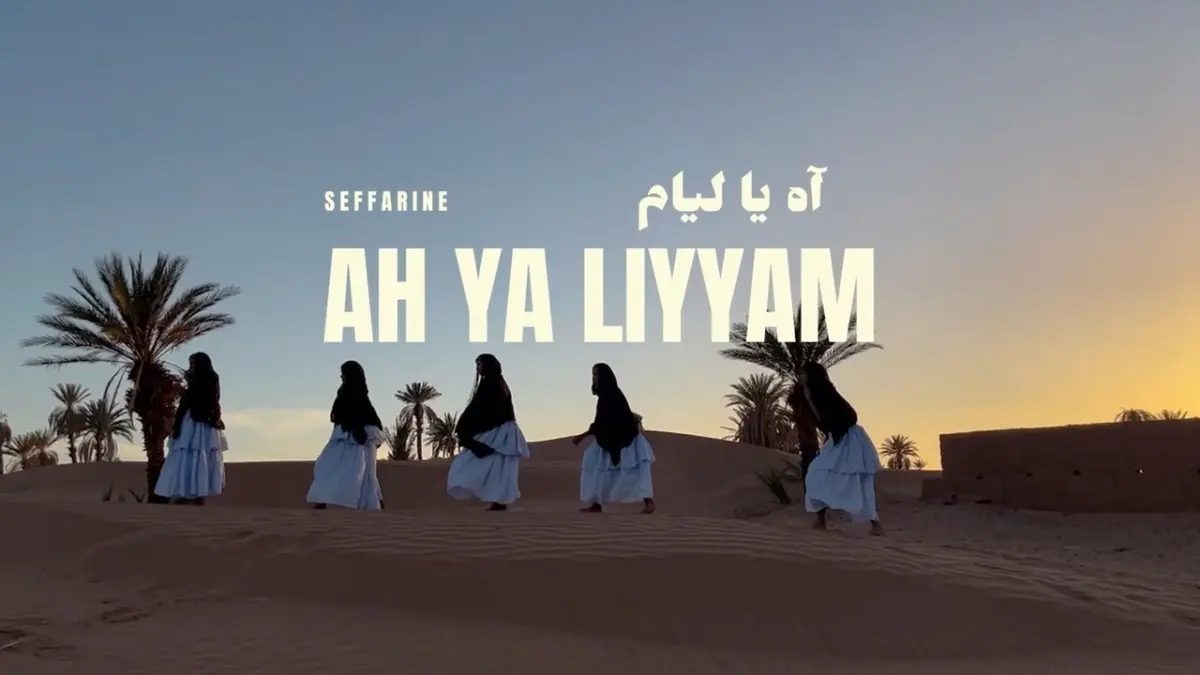
At the pulsating heart of this project lies its lead single and opening track, “Ah Ya Liyyam.” The song represents a breathtaking convergence of disparate yet historically intertwined musical traditions: it pairs the djeli ngoni—the wood-and-stringed lute of Mali’s esteemed griots—with the resonant iron qraqeb castanets of the Gnawa, the Moroccan ritual musicians who are direct descendants of West Africans historically brought north across the Sahara Desert.
More than just an artistic exercise in cross-cultural composition, “Ah Ya Liyyam” (which translates roughly to "Oh, Those Days") retraces the forgotten caravan roads that once linked Timbuktu to M’Hamid El Ghizlane. This remote oasis in southern Morocco marks the exact geographical point where the ancient trade routes from Marrakech dissolve into the unrelenting sands of the Sahara—and it is precisely where Seffarine conceptualized and initially worked on the track.
However, the creation of Abaraz (named after a historic trading crossroads near M’Hamid) occurred against a backdrop of profound socio-ecological transformation. The Drâa Valley, Morocco’s longest river system, has run dry. The indigenous palm groves are dying, encroaching desert sands are actively swallowing residential neighborhoods, and economic migration has stripped the oasis of its working-age demographic. By collaborating directly with local elders, youth, and international virtuosos, Seffarine has crafted an album that functions not only as an artistic masterpiece, but also as an urgent sonic documentation of a vanishing ecosystem and an endangered cultural lineage.
Detailed Chronology: From the Medinas of Fes to the Sands of M’Hamid
To truly understand the sonic architecture of Abaraz, one must trace the biographical and geographical trajectories of its founders, Lamiae Naki and Nat Hulskamp. Their personal partnership mirrors the very bridges their music builds between North Africa, Europe, and the Americas.
Roots and Resonance: The Formation of Seffarine
Lamiae Naki was born and raised in the ancient imperial city of Fes, Morocco. There, she immersed herself in rigorous classical training, mastering Andalusi and traditional classical Arabic vocal repertoires. Yet, her familial roots run deep in the rugged terrain of southern Morocco, embedding an innate familiarity with the folk idioms of the desert and the Atlas foothills into her artistic DNA.
Nat Hulskamp, a talented guitarist and oud player hailing from Portland, Oregon, first encountered Morocco as a teenage student during the 1990s. Captivated by the complex modalities and hypnotic rhythms of North African music, Hulskamp stayed to study the intricate Andalusi musical heritage of northern Morocco. Armed with a portable DAT recorder, he spent months traversing the country, archiving the performances of traditional musicians he encountered along the way.
The paths of Naki and Hulskamp eventually crossed in Fes. Recognizing a shared reverence for traditional Mediterranean and North African melodies coupled with an appetite for contemporary cross-cultural dialogue, they decided to form a band. They chose the name Seffarine in honor of Seffarine Square, a historic plaza in the heart of the Fes medina where traditional coppersmiths still labor daily, hammering out intricate brass pots and trays with rhythms that echo the pulse of the city itself.
The Evolution of a Sound: From De Fez a Jerez to Abaraz
Seffarine’s artistic progression has been defined by a meticulous exploration of historical trade and cultural exchange. Their critically acclaimed 2015 debut album, De Fez a Jerez, mapped the profound historical and musical conduits connecting Morocco to the fiery traditions of Spanish flamenco.
With their sophomore full-length release, Abaraz—officially unleashed to the public on October 16—the ensemble shifts its geographical and emotional focus southward, plunging directly into the Sahara. The album’s title references an ancient trading crossroads near M’Hamid El Ghizlane, symbolizing a meeting place where diverse cultures, languages, and philosophies historically converged to trade goods, stories, and songs.
"Ah Ya Liyyam" serves as the ideological and musical gateway to this sophomore release. The track was brought to life during a multi-week artistic residency at Joudour Sahara, a specialized music school situated in M’Hamid. Operating under the auspices of the local community, the school is dedicated to teaching the endangered musical traditions of the Drâa Valley to the younger generation of local children, ensuring that ancestral knowledge is not lost to the sands of time.
Supporting Context & Metrics: Ecological Crisis and Musical Preservation
The genesis of Abaraz cannot be separated from the stark environmental and socio-economic realities confronting rural southern Morocco today. The region where the album was conceived is on the frontline of global climate change and rural depopulation.
The Vanishing Oasis of M’Hamid El Ghizlane
M’Hamid El Ghizlane sits at a precarious ecological tipping point. For generations, the Drâa River sustained a lush, thriving ribbon of green life through the arid wastes, nurturing vast palm groves and enabling settled agricultural communities to flourish alongside nomadic routes. Today, however, the Drâa has run dry, starved of consistent upstream glacial melt and rainfall, and exacerbated by intensive agricultural extraction and prolonged droughts.
The consequences are devastating and visible to the naked eye:
- Desertification: Dying palm trees stand like skeletal monuments as encroaching dunes steadily swallow local homes and infrastructure.
- Economic Migration: With traditional agriculture no longer viable, a significant portion of M’Hamid’s working-age population has abandoned the oasis, migrating north to industrial and economic hubs like Marrakech and Casablanca.
- The Interrupted Transmission of Culture: Historically, folk songs, historical narratives, and artistic repertoires were passed down organically within families from parents to children. Due to the exodus of adults, this vital generational chain of custody has been severely disrupted, leaving a vacuum where traditional knowledge risks disappearing entirely.
The Pedagogical Role of Joudour Sahara
It is within this precarious socio-ecological landscape that institutions like Joudour Sahara assume monumental cultural importance. By embedding themselves within the school during their residency, Naki and Hulskamp witnessed firsthand how music education functions as an act of community resilience.
At Joudour Sahara, children bypass the fractured domestic transmission line by learning regional musical repertoires directly from the cultural elders who chose to remain in the oasis. This intergenerational bridge proved foundational for "Ah Ya Liyyam." During the recording process, local children from the school joined Lamiae Naki in the studio, lending their voices to the vibrant call-and-response chorus of the track—a poignant vocalization about the relentless passage of time and the preservation of memories tied to days gone by.
Musical Architecture: Anatomy of a Trans-Saharan Masterpiece
Musically, "Ah Ya Liyyam" is an intricate tapestry of polyrhythms, modal exploration, and cross-continental instrumentation. It dissolves geographic borders by layering diverse sonic textures into a cohesive, driving arrangement.
[Malian Djeli Ngoni]  +  [Moroccan Iron Qraqeb]  ->  Foundational Rhythmic/Melodic Interlock
         │
         ├──> [Percussion Layer]: Calabash, Darbuka, Bendir Frame Drum (Ahwach Rhythms)
         ├──> [Harmonic Layer]: Acoustic Guitar, Electric Bass, Oud
         └──> [Vocal Layer]: Lamiae Naki (Darija) + Joudour Sahara Youth Chorus (Call-and-Response)
Instrumentation and Arrangement
The track’s rhythmic foundation is established by pairing the percussive chime of the Gnawa iron qraqeb with the woody, plucking cadence of the djeli ngoni—the traditional lute of Malian griots that traces the ancient ties between West African empires and North Africa.
This rhythmic interplay is further enriched by an expansive percussion section featuring:
- The Calabash: Providing a deep, earthy low-end acoustic thump.
- The Darbuka: Delivering crisp, rolling middle frequencies.
- The Bendir Frame Drum: Tying the arrangement together with the rapid, communal polyrhythms characteristic of ahwach, the traditional Amazigh song-and-dance performance art native to southern Morocco.
Above this dense percussive bedrock, the melody is propelled by the ngoni, acoustic guitar, and electric bass, leaving ample room for spontaneous, off-the-cuff instrumental solos recorded live in the studio.
Production and Global Collaboration
The realization of Abaraz was a truly multinational cooperative effort. Much of the tracking and audio engineering for the album took place at Aziz Ozouss’s state-of-the-art AZ-OZ-REC studio located in Biougra, a town situated south of Agadir. Here, Naki and Hulskamp collaborated seamlessly with virtuosic regional musicians they met during their travels across Morocco.
To further cement the trans-Saharan and global scope of the project, Seffarine enlisted stellar international talent:
- Daouda Mangara: The esteemed Malian ngoni player, whose mastery of West African string traditions weaves seamlessly through the North African arrangements.
- Yosmel Montejo: The Los Angeles-based, Cuban-born bassist, who brings an exceptional harmonic intuition and rhythmic depth to the bottom end of the ensemble.
Visual Storytelling: Documenting the Journey
To accompany the release of "Ah Ya Liyyam," Seffarine partnered with Málaga-based documentary filmmakers Pablo Macías and Soledad Villalba, who accompanied the musical duo throughout their expedition in Morocco.
The resulting music video—and the broader visual collateral accompanying the album release—was shot on location across three distinct, culturally significant sites:
- Joudour Sahara: Capturing the vital educational work and the youthful energy of the chorus collaborators.
- AZ-OZ-REC Studio in Biougra: Documenting the dynamic, collaborative creative sessions between local Moroccan instrumentalists and the core band members.
- The 7 Kasbah Museum in M’Hamid: Providing a dramatic, historically resonant architectural backdrop that underscores the ancient heritage of the desert town.
This cinematic footage serves a dual purpose. In addition to standalone video releases for tracks like "Ah Ya Liyyam," the stunning visual media is projected dynamically as an immersive backdrop during Seffarine’s live, multimedia concert performances—also titled Abaraz. This multidisciplinary approach transforms standard musical concerts into powerful, educational cultural events that transport audiences directly into the heart of the Moroccan desert.
Future Outlook: The Legacy of Abaraz
As Abaraz makes its way into the global music ecosystem, its impact extends far beyond commercial streaming numbers or critical acclaim. The album represents a blueprint for how contemporary artists can engage with traditional heritage responsibly, ethically, and collaboratively.
In an interconnected world frequently threatened by cultural homogenization, Seffarine demonstrates that music can act as a restorative justice mechanism for communities grappling with climate displacement and economic shifts. By channeling the voices of the youth of M’Hamid El Ghizlane, elevating the artistry of regional Moroccan and Malian masters, and translating these localized struggles into a universally resonant artistic statement, Abaraz secures a permanent place for these transient desert traditions in the global consciousness.
Listeners wishing to experience the sonic journey firsthand can stream "Ah Ya Liyyam" directly via Bandcamp, and explore the full thematic and sonic landscape of Abaraz through the official Seffarine Bandcamp Release Page. As Seffarine takes Abaraz on the road through their immersive multimedia live show, audiences worldwide will have the rare opportunity to walk the ancient caravan routes of the Sahara—guided by the timeless interplay of the ngoni, the qraqeb, and the unwavering human voice.