Executive Overview
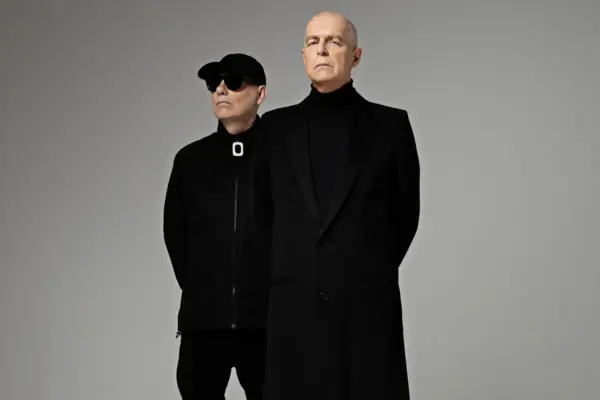
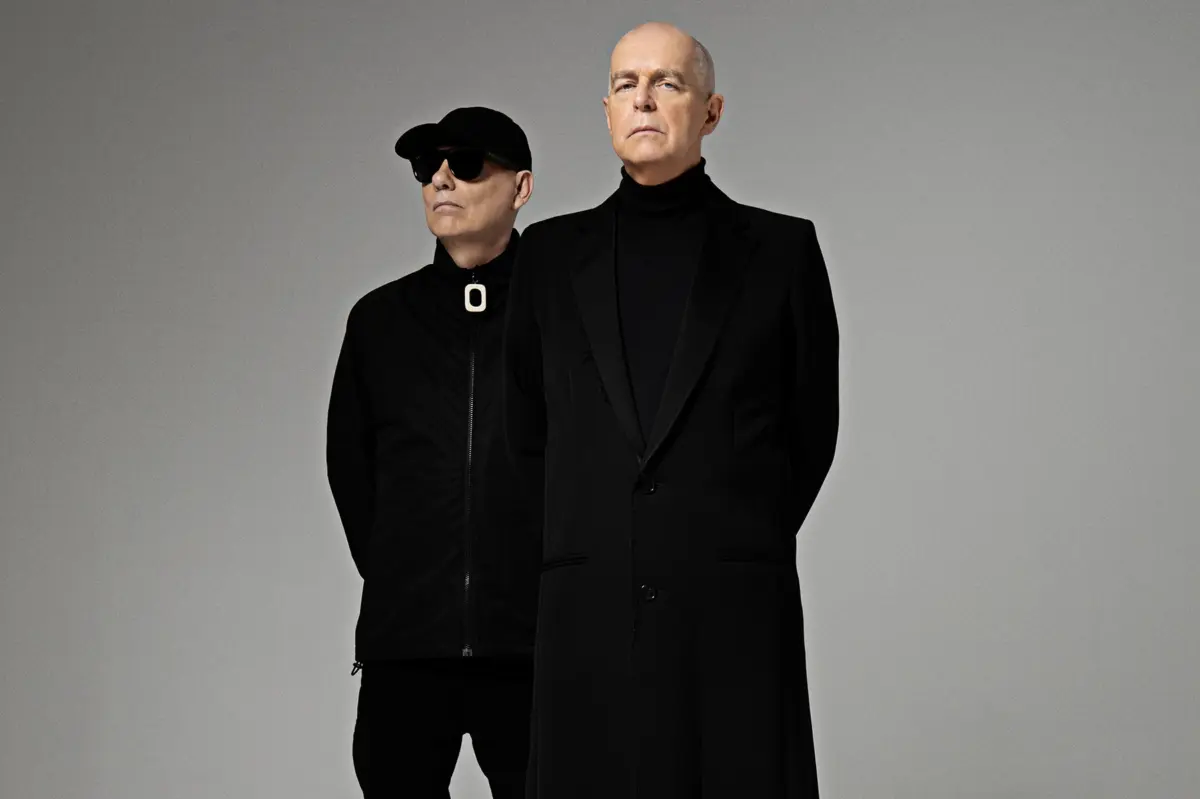
In a bold departure from traditional pop fare, the legendary British electro-pop duo Pet Shop Boys has returned with A Man from the Future, a sweeping, emotionally resonant concept album that bridges more than a decade of artistic evolution. Released at midnight via Parlophone Records, the project explores eight critical, transformative chapters in the extraordinary life and tragic death of Alan Turing—the brilliant English mathematician, logician, and cryptanalyst widely celebrated as the founding father of modern computing.
Produced in tandem by Pet Shop Boys (Neil Tennant and Chris Lowe) and composer Sven Helbig, the album is a meticulous synthesis of cutting-edge electronic soundscapes and lush, emotive string arrangements performed by the Manchester Camerata Octet. Adding a profound layer of historical gravity, celebrated actress Juliet Stevenson delivers spoken-word passages adapted directly from Andrew Hodges’ definitive biographical work, Alan Turing: The Enigma.
Coming on the heels of their critically acclaimed 2024 LP Nonetheless—which peaked at No. 2 on the Official U.K. Albums Chart—A Man from the Future represents both a retrospective deep-dive and a forward-looking artistic statement. By transforming Turing’s trials, triumphs, and tribulations into an accessible electronic-orchestral suite, Tennant and Lowe have crafted a vital musical memorial that speaks as powerfully to contemporary anxieties surrounding artificial intelligence and civil liberties as it does to the mid-20th-century history of computing and government persecution.
Detailed Chronology: Tracing the Life and Legacy of Alan Turing
A Man from the Future is structured to unfold chronologically, charting Turing’s life from his formative years as an intellectually precocious child to his pioneering work, persecution, and eventual untimely death. Through electronic pulses, soaring orchestrations, and stark spoken-word narratives, the LP takes listeners on an immersive biographical journey across eight distinct phases:
1. Formative Years: School Days and Awakening
The album opens by casting light on Turing’s early education, capturing a young mind intoxicated by the structural elegance of mathematics and natural sciences. These tracks evoke the solitary curiosity of a boy who felt out of step with traditional schooling, yet was already beginning to perceive the underlying computational patterns of the physical universe. Concurrently, the music hints at the quiet, isolating realization of his own sexuality during an era when queer identities were systematically suppressed and criminalized.
2. The Cambridge Crucible
Moving into Turing’s university years at Cambridge, the sonic landscape shifts to reflect intellectual expansion, academic rigor, and the collaborative friction of brilliant minds. It was during this period that Turing laid the theoretical groundwork for what would become modern computational science, conceptualizing the universal machine that could theoretically compute any computable problem.
3. Bletchley Park and the Enigma
Perhaps the most historically pivotal chapter of Turing’s life is his clandestine service during World War II at Bletchley Park. Tasked with breaking the supposedly unbreakable German Enigma machine code, Turing and his team designed the electromechanical "Bombe." The music here grows tense, urgent, and rhythmic, mirroring the relentless race against time to decrypt Nazi communications—an effort credited with shortening the war by years and saving millions of lives.
4. The Birth of the Digital Computer
With the war won, Turing turned his visionary gaze toward the future of technology, playing a foundational role in the engineering of early digital computers. The compositions in this section blend crisp, forward-looking electronic sequences with organic strings, symbolizing the marriage of human intellect and machine processing power.
5. Prophesying Artificial Intelligence
Long before silicon chips dominated everyday life, Turing was theorizing about machine consciousness. The album captures his bold, speculative predictions regarding artificial intelligence—a prescient look ahead at a world populated by thinking machines, raising philosophical questions about sentience and humanity that continue to define the 21st century.
6. Trial, Persecution, and Conviction
The emotional nadir of the concept album arrives with Turing’s 1952 arrest and subsequent criminal prosecution for his homosexual relationship, which was then illegal in the United Kingdom. Stripped of his security clearance and subjected to a degrading hormonal "treatment" (chemical castration) as an alternative to imprisonment, Turing’s life was systematically dismantled by the very government he had helped save less than a decade prior. The orchestrations turn melancholy, heavy, and oppressive, reflecting a profound societal injustice.
7. The Final Silence: 1954 Suicide
The narrative reaches its tragic denouement with Turing’s death by cyanide poisoning in June 1954 at the age of 41. The music strips away its intricate electronic scaffolding, leaving a stark, haunting memorial space that honors a brilliant life cut devastatingly short by prejudice and cruelty.

Supporting Context & Metrics: A Decade in the Making
The genesis of A Man from the Future dates back to 2012 and 2013, when Neil Tennant and Chris Lowe first collaborated with biographer Andrew Hodges to conceptualize a musical tribute. This creative window preceded the theatrical release of The Imitation Game (2014), the Oscar-winning film starring Benedict Cumberbatch as Turing, demonstrating Pet Shop Boys’ early recognition of the mathematician’s cultural significance.
In July 2014, the duo offered a tantalizing preview of the project by performing selected pieces during a prestigious BBC Prom at London’s iconic Royal Albert Hall. However, rather than rushing a recording, the project underwent more than a decade of quiet incubation. Tennant, Lowe, and co-producer Sven Helbig systematically updated, reworked, and rearranged the material, integrating modern electronic production techniques, fresh lyricism, and expansive new orchestrations.
Commercial Standing and Chart Metrics
Pet Shop Boys remain one of the most enduringly successful acts in British pop history. Their commercial resume underscores their cultural footprint:
- United Kingdom:
- Albums: 10 top 10 charting albums, highlighted by a No. 1 peak with 1993’s Very. Their previous studio album, Nonetheless (2024), achieved critical acclaim and a No. 2 peak on the Official U.K. Albums Chart.
- Singles: 22 top 10 hit singles, including four chart-topping No. 1s.
- United States:
- Billboard Hot 100: 12 chart entries, including five top 10 hits and a legendary No. 1 single with 1986’s "West End Girls."
Official Statements and Artistic Vision
The motivation behind A Man from the Future is deeply rooted in historical accountability, justice, and respect. In an official joint statement released alongside the album, Pet Shop Boys articulated the moral imperative driving their work:
"Our motive in creating this work was to make a musical memorial to Alan Turing who gave so much to his country and the world and was rewarded for it by being prosecuted for his sexuality."
Elaborating on Turing’s enduring impact on both technology and society, the duo added:
"Alan made a massive contribution to the defeat of Germany in World War II and was a pioneer of computing, imagining a world with intelligent computers. He also looked forward to a time when being gay would be accepted as normal. In both his professional and private lives, he was ahead of his time."
By pairing these sentiments with Sven Helbig’s string arrangements and Juliet Stevenson’s authoritative readings of Andrew Hodges’ prose, the album transcends standard pop-music boundaries, functioning simultaneously as a historical documentary, a classical-electronic hybrid, and a passionate plea for human rights and inclusivity.
Future Outlook: Legacy and Cultural Resonance
The release of A Man from the Future arrives at a fascinating intersection of technological anxiety and social reflection. As society grapples with the rapid ascent of generative artificial intelligence, autonomous systems, and ethical dilemmas surrounding digital privacy, Turing’s early prophecies feel increasingly urgent. Furthermore, ongoing global discussions regarding civil rights and historical reparations make the musical memorial acutely relevant.
For Pet Shop Boys, this conceptual project demonstrates a fearless refusal to rest on their laurels as 1980s synth-pop icons. By continually pushing their compositional boundaries—collaborating with classical ensembles like the Manchester Camerata Octet and tackling weighty, biographical subject matter—Tennant and Lowe have ensured that their artistic output remains vibrant, intellectually stimulating, and profoundly relevant.
As fans and critics stream A Man from the Future in full, the album stands as a towering achievement in the duo’s catalog: a glittering, melancholic, and ultimately triumphant monument to a man who literally engineered the modern world, only to be failed by the society he protected. Through electronic beats and classical strings, Alan Turing’s voice—and his visionary brilliance—echoes clearly into the 21st century and beyond.