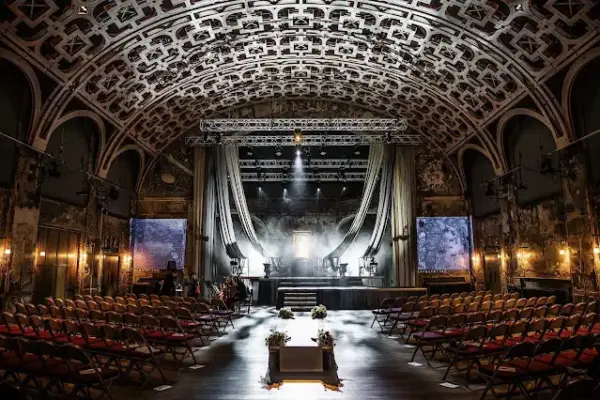
In an ambitious summer season showcase that challenged conventional operatic boundaries, the Scherzo Ensemble delivered a captivating, streamlined rendition of Wolfgang Amadeus Mozart’s Così fan tutte. Staged on August 17, 2026, at London’s prestigious Smith Square Hall (formerly Sinfonia Smith Square), the performance represented the culmination of a rigorous touring cycle that originated earlier that July at the Longhope Opera festival in Hampshire.
Conducted by Matthew O’Keeffe and directed by Bobbie-Jean Henning, this production—billed intriguingly as "The Essential Cut"—was designed not merely as a scaled-down version of a masterwork, but as a reimagined theatrical experience. Forced to pivot due to a mix of logistical constraints and late-breaking cast alterations, the creative team made the daring artistic choice to excise the traditional recitatives entirely. In their place, they substituted a spoken comic narrative delivered by an audience surrogate, injecting a contemporary, self-aware meta-theatricality into Da Ponte’s classic libretto.
Despite the structural risks inherent in discarding recitatives, the production triumphed through the sheer vitality of its youthful cast. Anchored by the breathtaking, opera seria-inflected vocalism of Korean soprano Soyeon Shin as Fiordiligi, the ensemble demonstrated remarkable technical resilience, stylish phrasing, and vibrant stagecraft. Supported by a lean, nine-piece instrumental chamber ensemble, O’Keeffe’s brisk tempos and lithe arrangements ensured that Mozart’s score lost none of its psychological complexity or effervescent charm. Far from a mere concert-in-costume, the Smith Square Hall performance proved to be a masterclass in ensemble adaptability and young-artist talent incubation.
Detailed Chronology: From Hampshire Estates to London Halls
The developmental arc of this Così fan tutte production offers a compelling window into the realities of modern fringe and chamber opera production. The project first materialized in early July 2026, when the Scherzo Ensemble—under the artistic leadership of Matthew O’Keeffe—mounted full-scale performances at the idyllic Longhope Opera festival nestled in the Hampshire countryside. Garnering critical praise for its freshness and energy, the initial staging featured a cohesive young ensemble that quickly established a strong rapport with rural audiences.
However, the transition from the pastoral expanses of Hampshire to the urban acoustic of London’s Smith Square Hall was not without friction. As is frequently the case in the high-wire act of summer opera touring, the production faced unexpected logistical hurdles. Most notably, the company experienced last-minute cast rotations: while Soyeon Shin anchored the production as Fiordiligi, the run required fresh talent to step into the roles of Dorabella, Ferrando, and Guglielmo.
Rehearsed under tight deadlines, the company opted to reconceive the structural pacing of the opera. On the evening of August 17, 2026, the curtain rose on a production that had consciously pruned away the musical fat. By dropping the recitatives, Henning and O’Keeffe condensed the narrative flow, relying on a spoken-word narrator to bridge the musical numbers. This dramaturgical gamble transformed the evening into an experimental collision between 18th-century classical art and 21st-century cabaret-style presentation. Following its London outing, the production’s secondary mission involved returning to Hampshire for special benefit performances dedicated to supporting Hammersley Homes, underscoring the ensemble’s commitment to community outreach alongside artistic innovation.

Supporting Context & Metrics: Production Anatomy and Musical Forces
To fully appreciate the scope of the Scherzo Ensemble’s Così fan tutte, one must examine the specific parameters of its execution. Performing Mozart with a stripped-down chamber orchestra requires immense precision from both pit and stage.
The Musical Forces
- Conductor: Matthew O’Keeffe
- Instrumental Ensemble: 9 players total (5 strings, 4 woodwinds)
- Acoustic Environment: Smith Square Hall, London (noted for its warm, intimate resonance)
Production and Design Team
- Director: Bobbie-Jean Henning
- Designer: Anna Dell Bradford
- Core Design Concept: Modern-dress aesthetic utilizing minimalist sliding screens and deliberately exaggerated, low-fi disguises (including comically unconvincing false facial hair and wigs).
The Cast Roster
- Fiordiligi: Soyeon Shin (Korean soprano)
- Dorabella: Aina Magnell
- Ferrando: Max Robbins
- Guglielmo: Samuel Pantcheff
- Don Alfonso: Michal Karski
- Despina: Anna Gregg
Operating with an orchestra of merely nine instruments placed severe demands on the woodwinds and strings. O’Keeffe’s stylistic choices leaned heavily into brisk, forward-moving tempos. While a sultry summer evening in London occasionally tested intonation during exposed passages, the instrumental texture remained admirably lithe and buoyant. The faster ensembles bounded forward with a rhythmic crispness that prevented the trimmed score from feeling rushed, maintaining an equilibrium between comedic high jinks and moments of genuine emotional gravity.
Official Statements and Critical Reception
The critical reception of the performance highlights a fascinating tension between traditional operatic expectations and innovative fringe staging. Reviewers and audience members alike grappled with the bold dramaturgical cuts, yet consensus quickly emerged around the exceptional quality of the vocal performances.
Vocal Triumphs and Characterizations
At the center of the critical acclaim was Soyeon Shin. Her portrayal of Fiordiligi was universally praised for bringing a serious, opera seria gravity to the proceedings. Her delivery of the opera’s demanding arias—particularly "Come scoglio"—drew comparisons to the vocal demands of Mozart’s late-period masterworks like La clemenza di Tito, showcasing a dramatic soprano weight and stylistic agility that anchored the production’s emotional core.
Paired with Aina Magnell’s warm, bright-toned Dorabella, the sisters formed an engaging, thoroughly modern double-act. Their onstage chemistry was a noted highlight, rendering their eventual emotional confusion all the more poignant.
In the male lead roles, Max Robbins and Samuel Pantcheff provided striking contrasts. Robbins deployed a suave, lyric tenor tone, delivering a polished "Un’aura amorosa" in Act I, though critics noted room for a darker psychological excavation in Act II. Conversely, Pantcheff’s Guglielmo swaggered with robust, physical charm. Their comedic interplay was enhanced by Henning’s unconventional decision to incorporate choreographed movement into the Mozartian ensembles—a rare sight in traditional stagings.

Anna Gregg’s Despina injected a fierce, independent streak into the production. Portraying a maid who refuses to passively take orders, Gregg navigated her dual characters (the doctor and the notary) with sharp vocal characterization, even if her stylized comedic vocal choices required some initial audience adjustment. Michal Karski rounded out the principal cast as a youthful, highly engaged Don Alfonso, manipulating the emotional chess pieces with gleeful detachment despite the absence of recitative-driven chemistry with Despina.
The Spoken Narrative Debate
The production’s most polarizing element proved to be its spoken narrative framework. Delivered by a character positioned as a random audience member, the comic narration successfully kept the audience informed of the plot twists without the drag of traditional secco recitatives. However, critics observed that the device occasionally overstayed its welcome, threatening to eclipse the musical numbers it was meant to service.
Future Outlook: The Evolution of Chamber Opera and Youth Ensembles
The success of the Scherzo Ensemble’s Così fan tutte points to vital emerging trends within the contemporary classical music landscape. As major opera houses grapple with rising production costs and shifting audience demographics, agile chamber ensembles like Scherzo are demonstrating how classic repertoire can be reimagined for modern consumption without losing its core artistic integrity.
By blending the rigorous training ground of young artist programs with daring conceptual choices—such as structural editing and meta-theatrical narration—performances like the one at Smith Square Hall prove that classical opera can remain malleable, relevant, and deeply engaging. The production model successfully balances high-level musical execution with accessible, stripped-down staging aesthetics.
Looking ahead, the momentum generated by artists like Soyeon Shin, Max Robbins, and Samuel Pantcheff signals a bright horizon for the next generation of operatic talent. If the Scherzo Ensemble’s summer 2026 tour is any indication, the future of opera lies not in the replication of antiquated museum pieces, but in fearless, imaginative reinvention that respects the music while daring the audience to see the drama through a fresh lens.