Executive Overview
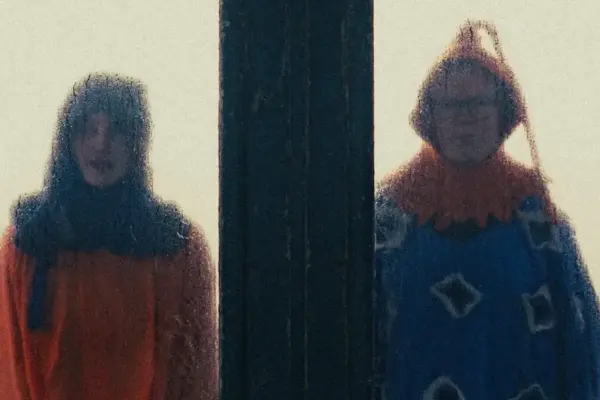
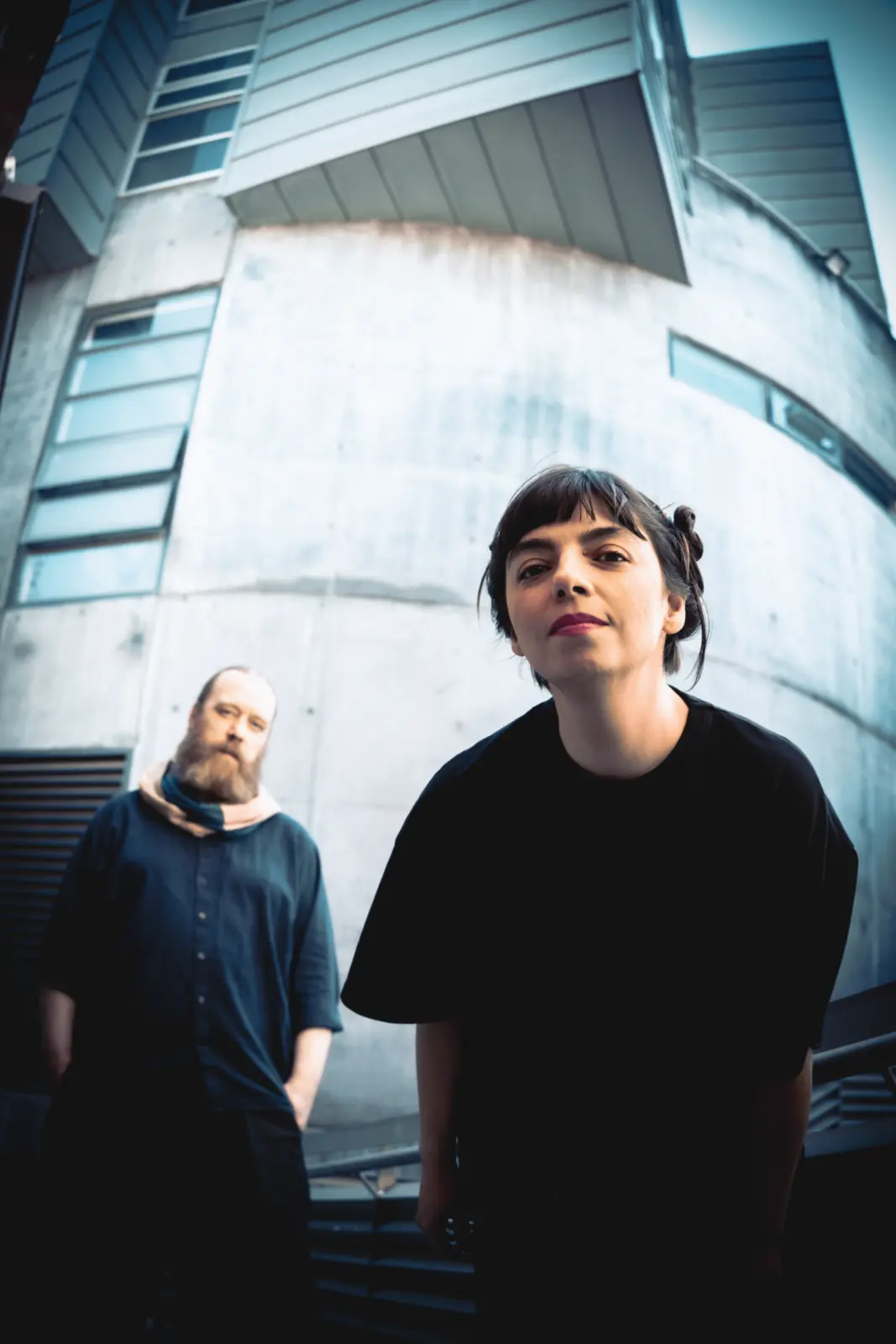
In an era saturated by heavily produced, meticulously pre-programmed, and algorithmic soundscapes, the transcontinental experimental duo ZōJ stands as a radical counter-cultural monument to the power of the present moment. Comprising Iranian-born vocalist and kamancheh virtuoso Gelareh Pour and Australian percussionist Brian O’Dwyer, ZōJ builds every single show live, on the spot, using nothing more than a spike fiddle, a human voice, and a drum kit.
Nine years into an uncompromising collaborative journey, the duo has mastered an idiom where no two performances are alike, rendering them wonderfully unpredictable even to themselves. Their work has earned critical acclaim, including the prestigious 2024 Art Music Award for Excellence in Experimental Practice, and international recognition, such as recording their third album in a single, unedited live pass at the historic Banff Centre for Arts and Creativity in Canada. Titled May The Devil’s Ear Be Deaf—a direct nod to an ancient Persian prophylactic phrase meant to ward off envy from something fragile and precious—the album encapsulates the raw vulnerability that pulses through their entire catalog.
As ZōJ prepares to open the Musical Road to WOMEX series ahead of their official showcase selection appearance at WOMEX 2026 in Las Palmas de Gran Canaria (October 21–25), their art serves as a masterclass in deep listening. This feature-length profile explores the genesis of their sound, the weight of Gelareh Pour’s personal migration, the geopolitical and cultural resonance of mixed identities on volcanic Atlantic islands, and the philosophy of an ensemble where the audience is not merely a passive recipient, but the crucial third pillar of a living, breathing musical dialogue.
Detailed Chronology: From the Restricted Lanes of Iran to the Open Horizons of Australia
To understand the sonic architecture of ZōJ, one must trace the winding, often arduous personal and geographical trajectories that brought its members together.
The Early Years and Constraints in Iran
Growing up as a young girl in Iran, Gelareh Pour was immersed in a rich sensory world of classical music, public concerts, and deeply ingrained artistic traditions. However, the socio-political realities of her environment imposed severe restrictions on her creative ambitions. For women in Iran, pursuing a professional career in music—particularly singing in public—navigated through extraordinarily narrow, tightly regulated lanes.
Rather than extinguishing her passion, these systemic limitations fundamentally forged her relationship with art. Music was not treated as a casual commodity, but as something delicate, precious, and fiercely defended. It had to be pursued with unwavering determination and protected from external erasure.
Migration and the Transcontinental Collision
The turning point arrived when Pour migrated to Australia. This relocation unlocked a landscape of creative freedom, stripping away the institutional constraints of her upbringing while allowing her to carry the historical weight, emotional depth, and traditional rigor of Persian music across hemispheres.
In Australia, she crossed paths with Brian O’Dwyer, a percussionist possessing an acute ear for avant-garde improvisation and a profound curiosity about how ancient Persian traditions could interface with contemporary Western experimental idioms. O’Dwyer brought a deep understanding of texture, space, and rhythmic elasticity, creating an immediate creative synergy. Together, they founded ZōJ—a Persian word translating simply to "pair."
Milestones of Experimental Excellence
Over nearly a decade of collaboration, ZōJ has steadily pushed the boundaries of contemporary avant-garde and world music:
- The Banff Residency: Seeking to capture their ephemeral live chemistry on physical media, the duo traveled to the world-renowned Banff Centre for Arts and Creativity in the Canadian Rockies. There, they recorded their third studio album, May The Devil’s Ear Be Deaf, in a single, uninterrupted live pass—committing every raw take directly to tape without post-production safety nets.
- The 2024 Art Music Award: In recognition of their uncompromising dedication to live-composition and cross-cultural dialogue, ZōJ was awarded the prestigious Art Music Award for Excellence in Experimental Practice in Australia.
- WOMEX 2026 Showcase Selection: Cementing their status as global ambassadors of innovative acoustic exploration, the duo secured an official showcase slot at WOMEX 2026 in Las Palmas de Gran Canaria.
Supporting Context & Metrics: The Anatomy of ZōJ’s Sound
ZōJ’s artistic profile is best understood through the unique metrics of their instrumentation, methodology, and geographic footprint.
| Feature / Metric | Description & Context |
|---|---|
| Core Instrumentation | Kamancheh (Persian bowed spike fiddle), Human Voice, Drum Kit. |
| Methodology | 100% Improvised; zero pre-arranged scripts, backing tracks, or post-production overdubbing. |
| Key Release | May The Devil’s Ear Be Deaf (Recorded live-to-tape in a single pass at the Banff Centre). |
| Accolades | 2024 Art Music Award for Excellence in Experimental Practice (Australia). |
| Major Festival Milestone | Official Showcase Selection at WOMEX 2026, Las Palmas de Gran Canaria (Oct 21–25). |
| Diaspora Focus | Exploration of Iranian women’s voices, memory, historical resilience, and trans-cultural synthesis. |
The Philosophy of the Triangle: Kamancheh, Voice, and Drums
For a first-time listener, a ZōJ performance can be disorienting in the best possible way. There is no rhythm section providing a predictable pulse behind a melodic lead. Instead, the kamancheh, the voice, and the drum kit operate as independent voices in an active, unscripted seminar.
[ THE ZōJ TRIANGLE ]

       Kamancheh (Pour)
            /
           /
          /
         /
        /
   Voice (Pour) --- Drums (O'Dwyer)
                /
               /
              /
             /
            /
     [ THE AUDIENCE ]
 (The Third Point of the Triangle)
As the duo explains:
"Every ZōJ performance begins with listening. Before there is sound, there is attention—to each other, to the room, to the audience, to the things that cannot be planned. We don’t approach the stage with a fixed script; we bring our shared musical language and trust. Then we allow the music to reveal itself in the moment."
Rather than accompanying one another, the instruments challenge, whisper, and carve out vast expanses of silence. This absolute reliance on improvisation transforms the audience from passive spectators into active collaborators. Because no two gatherings of human beings are identical, no two ZōJ concerts can ever be repeated.
Official Statements & In-Depth Interviews
In a series of exclusive insights, Gelareh Pour and Brian O’Dwyer unpack the deeper philosophical, political, and artistic implications of their work as they approach their debut at WOMEX 2026.
On the Weight of Diaspora and Mixed Identities
Addressing the symbolic resonance of performing in the Canary Islands—a historic maritime crossroads boasting Berber indigenous roots, Spanish colonial layers, and centuries of Latin American migration—the duo reflects on the modern condition of mixed identities:
"Most of us carry multiple histories, languages, and homes within us. Those intersections aren’t something fragmented; they’re places of creativity and possibility. Music has always travelled more freely than borders allow, and it reminds us that cultures have always been shaped through exchange… At a time when the world often asks us to choose one identity over another, we’re interested in making music that embraces complexity and connection."
Pour expands on how her personal migration from Iran continues to shape the soul of the project:
"Growing up in Iran, I was surrounded by music… But as a girl, I also understood from an early age that there were limits on what a musical future could look like for me. Singing publicly as a woman wasn’t a path that was open to me… Migrating to Australia gave me the freedom to explore music without those constraints, while carrying with me everything I had learned in Iran. ZōJ lives in the conversation between them."
On Amplifying Unheard Voices and Activating Space
Pour’s academic research and artistic practice heavily center on the suppressed and resilient voices of Iranian women across the diaspora. Asked about the message she carries into global showcases, she notes:
"My work has always been about making space for voices that have too often been unheard. Iranian women have shown extraordinary courage, resilience, and creativity, both inside Iran and across the diaspora. Rather than speaking for them, I hope our music creates space where their strength, complexity, and humanity can be felt. At a time when many people are displaced by conflict, oppression, or circumstance, I hope this showcase reminds us that every migration carries stories, knowledge, and beauty, not only pain. Listening deeply to those stories is an act of solidarity."
When stepping into unfamiliar acoustic environments—such as a convention hall filled with international delegates at WOMEX—the duo refuses to flatten the venue’s unique characteristics. Instead, they weaponize acoustics as an active compositional tool:
"An unfamiliar space sharpens our listening. We don’t try to make every venue feel the same. We’d rather allow the room to become part of the instrument. The acoustics, the atmosphere, the attention of the audience—all of these influence the music."
Future Outlook: The Ongoing Evolution of ZōJ
As May The Devil’s Ear Be Deaf continues to find receptive audiences across the globe, ZōJ shows no signs of slowing down or resting on its laurels. The duo’s trajectory points toward an exciting intersection of intense touring, cross-cultural experimentation, and ongoing documentation of their live methodologies.
- Global Touring and Festival Engagement: Building on their selection for WOMEX 2026 in Las Palmas de Gran Canaria, ZōJ aims to bring their high-stakes, unscripted performance model to international art spaces, contemporary music festivals, and intimate listening rooms where deep acoustic focus is prized.
- Continued Live-to-Tape Recording: Eschewing the sterile perfection of modern multi-track digital editing, the duo plans to continue recording new material that captures the raw, unfiltered lightning-in-a-bottle energy of spontaneous composition.
- Cross-Disciplinary Collaborations: With a stated openness to dialogue, Pour and O’Dwyer are actively seeking out artists from diverse cultural, theatrical, and sonic backgrounds who share an authentic curiosity in boundary-pushing communication.
- Advocacy Through Sound: By continuing to champion the nuanced realities of diasporic identity, ZōJ will maintain its dual role as both an avant-garde musical laboratory and an acoustic vessel for stories of historical endurance and cultural richness.
A Personal Invitation from ZōJ to Las Palmas
As the curtain rises on the 2026 Musical Road to WOMEX, Gelareh Pour and Brian O’Dwyer offer a heartfelt, welcoming dispatch to anyone fortunate enough to cross their path in the Canary Islands:
"Dear friends,
We would love to meet you through music.
If you come to our concert, you won’t hear a performance that has been repeated many times before. You’ll hear something that exists only in that room, on that evening, created together with everyone present.
Bring your curiosity. Bring your imagination. Bring your silence as well as your applause.
Let’s discover what becomes possible when we truly listen to one another.
See you in Las Palmas."
ZōJ performs as part of the official WOMEX 2026 Showcase Selection in Las Palmas de Gran Canaria, running from October 21 to 25. For more information, visit the official WOMEX portals and explore the duo’s live recordings via their Bandcamp and artist pages.