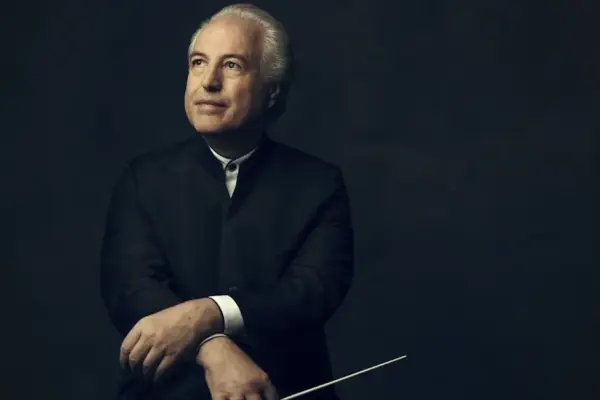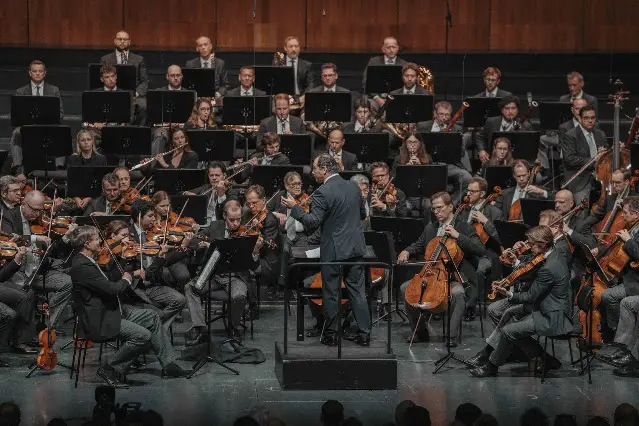
On August 8, 2026, the venerable Grosses Festspielhaus at the Salzburg Festival bore witness to a masterclass in orchestral synergy and stylistic friction. The Vienna Philharmonic (Wiener Philharmoniker), under the incisive baton of Tugan Sokhiev, delivered a high-profile matinee program that balanced the delicate, impressionistic colors of early 20th-century French masterworks with the visceral, narrative-driven fury of Soviet ballet music. Featuring superstar pianist Lang Lang as the soloist in Maurice Ravel’s Piano Concerto in G Major, alongside Claude Debussy’s La Mer and a bespoke suite of excerpts from Sergei Prokofiev’s Romeo and Juliet, the concert offered a compelling study in contrasting artistic temperaments.
While the partnership between Sokhiev and the Vienna Philharmonic—forged through years of international touring and monumental collaborative milestones, such as Johann Strauss’s 200th-birthday gala—demonstrated a telepathic level of mutual understanding, the afternoon was defined by its dichotomies. Lang Lang’s interpretation of Ravel polarized listeners with its self-indulgent rubato and retrospective grandeur; Sokhiev’s architectural exploration of Debussy prioritized micro-detail over sweeping oceanic tides; and, finally, the second-half performance of Prokofiev revealed an ensemble utterly transformed, injecting raw theatricality and visceral dance-drama into the Salzburg atmosphere. This review explores the structural anatomy of a concert that challenged preconceptions and reaffirmed the interpretive depth of one of the world’s most storied orchestras.
Detailed Chronology
Part I: Ravel’s Piano Concerto in G Major with Lang Lang
The matinee opened in an unconventional manner with Maurice Ravel’s effervescent Piano Concerto in G Major, a piece heavily indebted to the jazz idioms the composer encountered during his 1928 American tour. Superstar pianist Lang Lang took the stage, met with immediate and palpable enthusiasm from the Salzburg audience.
From the opening whip-crack, the performance established an immediate aesthetic tension. Lang Lang initially approached the first movement with a light, almost reticent touch. Rather than delivering immediate, blinding dazzle, his opening statements offered a subtle twinkle that contrasted intriguingly with the crisp, punchy jazz inflections injected by the Vienna Philharmonic woodwinds and brass. However, as the movement unfolded into its second subject, the pianist pivoted toward an overtly self-indulgent style. He adopted an exceptionally laid-back, intimate approach characterized by heavy rubato that routinely threatened to unmoor the piece from its underlying jazz pulse. The constant tug-of-war between tempo and mood left some corners of the audience questioning the cohesion of the interpretation.
The second movement (Adagio assai) began in a state of exquisite suspension—quiet, remarkably slow, and profoundly thoughtful. Sustaining absolute intensity at such a sluggish tempo is a formidable technical and interpretive hurdle, yet Lang Lang and Sokhiev managed it through sheer atmospheric concentration. As the orchestra gradually wove its textures around the solo line, the emotional temperature rose steadily.
The third movement (Presto) brought the expected pyrotechnics. Here, Lang Lang unleashed a flurry of fast, vivid dazzle, supported by the stellar personality of the orchestral sections, particularly standout woodwind contributions. Yet, the breathtaking velocity of the coda felt less like an organic conclusion to Ravel’s structural design and more like a theatrical valediction—a stylistic "look at me" moment that epitomized the soloist’s evening.
Part II: Debussy’s La Mer
Claude Debussy’s symphonic sketches, La Mer, followed, demonstrating Tugan Sokhiev’s preference for structural clarity and hyper-articulated detail over hazy, impressionistic wash.
The first movement (De l’aube à midi sur la mer) seemed to materialize out of total silence. Sokhiev coaxed magical, gossamer sounds from the Vienna Philharmonic that were barely audible, gradually building a richly layered, watery flow. The orchestra’s cellos provided a fabulous, resonant anchor, allowing the music to ebb and flow organically. Yet, as the movement progressed, moments of stasis occasionally emerged; Sokhiev’s relentless fascination with micro-detail occasionally risked making the musical tide feel becalmed.

The second movement (Jeux de vagues) was characterized by rapid fragments of shimmering textures, dispatched with swift, delicate precision. Once again, Sokhiev prioritized localized detail over macro-architecture. The movement featured volatile contrasts: micro-moments of near-total silence abruptly giving way to fast, vivid, thunderous climaxes, culminating in a shimmering, magical cadence.
The final movement (Dialogue du vent et de la mer) surged forth with palpable anxiety and tightly controlled urgency. An exquisite, poignant oboe solo pierced the dense orchestral fabric, complemented by the breathtakingly crisp tongue-work of the trumpet section. Despite these localized masterclasses in instrumental execution, the ultimate oceanic climax—when it finally broke over the hall—felt slightly anti-climactic: urgent, yes, but burdened by the sense that the grand architectural wave had arrived too late.
Part III: Prokofiev’s Romeo and Juliet (Excerpts)
Following the intermission, the artistic climate shifted decisively. Sokhiev and the Vienna Philharmonic returned to the stage appearing utterly transformed, executing a curated sequence of movements from Prokofiev’s Romeo and Juliet that felt less like a standard orchestral suite and more like a fully realized, danced drama.
Sokhiev’s overarching selection cleverly combined the entire Second Suite with two crucial movements from the First Suite. The sequence commenced with Montagues and Capulets, featuring brutal, intense brass statements that stood in stark contrast to quietly sustained, eerie strings. This paved the way for the iconic Dance of the Knights, driven by a remarkably deep, muscular bass foundation from the orchestra.
Juliet as a Young Girl was rendered with skittering lightness and mercurial shifts in mood, perfectly capturing the impulsive volatility of Shakespeare’s heroine. This lightness transitioned into the rich, ecclesiastical darkness of Friar Laurence, which preceded a blistering, vivid rendition of Dance, notable for its sharp soloist interventions and razor-sharp rhythmic precision.
The emotional core of the suite arrived with Romeo and Juliet Before Parting (the balcony scene). Opening with an atmospheric, elegant flute solo, Sokhiev initially maintained a classical detachment. The music lacked a sweeping, unbridled romanticism until the full weight of the orchestra finally flooded the hall, grounding the emotional narrative. Dance of the Girls with Lilies followed, characterized by an exquisite, almost chamber-music fragility—even the tambourine part was played with delicate poise—anchored by a breathtaking violin solo.
The tragedy deepened with Romeo at Juliet’s Tomb, driven by an intense, urgent, and unyielding orchestral tread that carried immense physical weight before dissolving into pure, haunting magic. Finally, drawing from the First Suite, the ensemble delivered the brittle, controlled excitement of Masks, concluding with the relentless, kinetic fury of Tybalt’s Death, which deliberately decelerated into a heavy, terrifying posture of pure orchestral anger.
Supporting Context & Metrics
The pairing of Tugan Sokhiev and the Vienna Philharmonic at the Salzburg Festival is one of the most creatively fertile relationships in contemporary classical music. Sokhiev, known for his rigorous intellectual approach to the Slavic and Franco-Russian repertoires, has established a profound rapport with Vienna’s premier ensemble. This performance occurred against the backdrop of an extensive European tour and followed closely on the heels of their high-profile collaboration celebrating the bicentennial of Johann Strauss.

| Performance Metric / Parameter | Detail / Observation |
|---|---|
| Venue | Grosses Festspielhaus, Salzburg Festival |
| Date of Review | August 8, 2026 |
| Orchestra | Vienna Philharmonic (Wiener Philharmoniker) |
| Conductor | Tugan Sokhiev |
| Featured Soloist | Lang Lang (Piano) |
| Core Repertoire | Ravel (Concerto in G), Debussy (La Mer), Prokofiev (Romeo & Juliet excerpts) |
| Aesthetic Focus | Stylistic contrast between French impressionism/jazz and Soviet dramatic narrative |
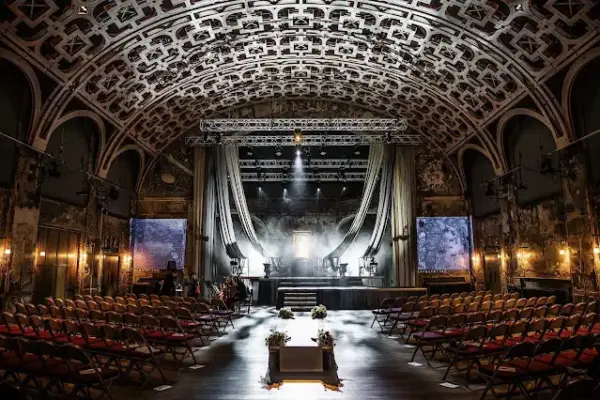
The physical scale of the Grosses Festspielhaus—one of the largest indoor stages in the world—demands absolute sonic projection and architectural control from any conductor. While Sokhiev’s micro-detailed approach occasionally risked diffusion in Debussy, the cavernous acoustic environment proved ideal for the stark dynamic contrasts of Prokofiev and the transparent jazz textures of Ravel.
Official Statements & Artistic Insights
While formal institutional press releases for the concert focused primarily on the prestige of the collaboration, critical commentary surrounding the event highlighted the distinct interpretive choices made by both soloist and conductor.
Reflecting on the collaborative dynamic, administrative representatives of the Salzburg Festival noted that Sokhiev’s ability to seamlessly traverse disparate musical languages—from the sophisticated French modernism of the first half to the brutal theatricality of Soviet realism in the second—underscores the unique versatility of the Vienna Philharmonic.
Furthermore, Lang Lang’s engagement with Ravel’s Piano Concerto in G Major sparked significant debate among musicologists in attendance. The pianist’s deployment of extensive rubato in the outer movements was defended by supporters as a bold, romantic reclamation of a score too often treated as clinical neo-classical pastiche. Conversely, traditionalists argued that such interpretive liberties compromised Ravel’s explicit instructions regarding rhythm and tempo consistency.
Sokhiev’s philosophy regarding Prokofiev’s ballet suites, meanwhile, received universal acclaim. By treating the music as an inherent narrative vehicle—one inextricably linked to the physical realities of choreography—Sokhiev managed to evoke deep theatrical memories among the audience. For many veteran concertgoers, the performance inevitably conjured ghosts of landmark choreographic interpretations, most notably Kenneth MacMillan’s legendary 1970/1971 Royal Ballet production featuring Natalia Makarova.
Future Outlook
The success of the Salzburg Festival matinee cements Tugan Sokhiev’s status as an essential visionary voice with the Vienna Philharmonic. As the ensemble continues its ongoing European tour, the lessons learned from balancing the hyper-detailed impressionism of Debussy with the monumental theatrical demands of Prokofiev will undoubtedly inform their upcoming engagements in major international cultural capitals.
For Lang Lang, this performance serves as another chapter in his ongoing exploration of standard 20th-century concerto literature, prompting continued discussion regarding the boundaries of interpretive freedom versus stylistic fidelity. Meanwhile, the Vienna Philharmonic demonstrates once more that its elastic stylistic capabilities—capable of morphing from the crisp, jazz-infused articulation of Ravel to the terrifying, brass-heavy wrath of Prokofiev’s Capulets—ensure its enduring dominance at the pinnacle of the global classical music landscape. Future tour dates promise further refinements of this program, offering audiences across the continent an opportunity to experience firsthand the fiery, unpredictable chemistry between Sokhiev and Vienna’s finest musicians.