Executive Overview
In the digital age, the boundary between whimsical fiction and visceral reality has grown increasingly porous. For millions of teenagers across the United Kingdom and Ireland, this phenomenon materialized recently in the form of an unexpected, towering, and deeply unsettling antagonist: the Cat in the Hat.
What began as an eccentric auction listing for an original 2003 film costume rapidly morphed into a digital urban legend. Powered by artificial intelligence, TikTok algorithms, and late-night adolescent sleepover paranoia, viral posts convinced thousands of young people that a life-sized, malicious version of Dr. Seuss’s iconic mischievous feline was roaming suburban streets after dark.
As the myth spiraled out of control, it triggered profound psychological distress among children, forced emergency interventions from law enforcement agencies, and sparked alarming invitations to isolated areas in the dead of night. This comprehensive investigation explores the anatomy of a modern internet panic. It examines how a cocktail of generative AI, social media gamification, and unverified rumors transformed a beloved children’s book character into a figure of suburban dread—and highlights the very real dangers that emerge when viral fiction bleeds into the physical world.
Detailed Chronology: From Prop Auction to Pan-Continental Panic
The Genesis: The 2003 Prop Re-emerges
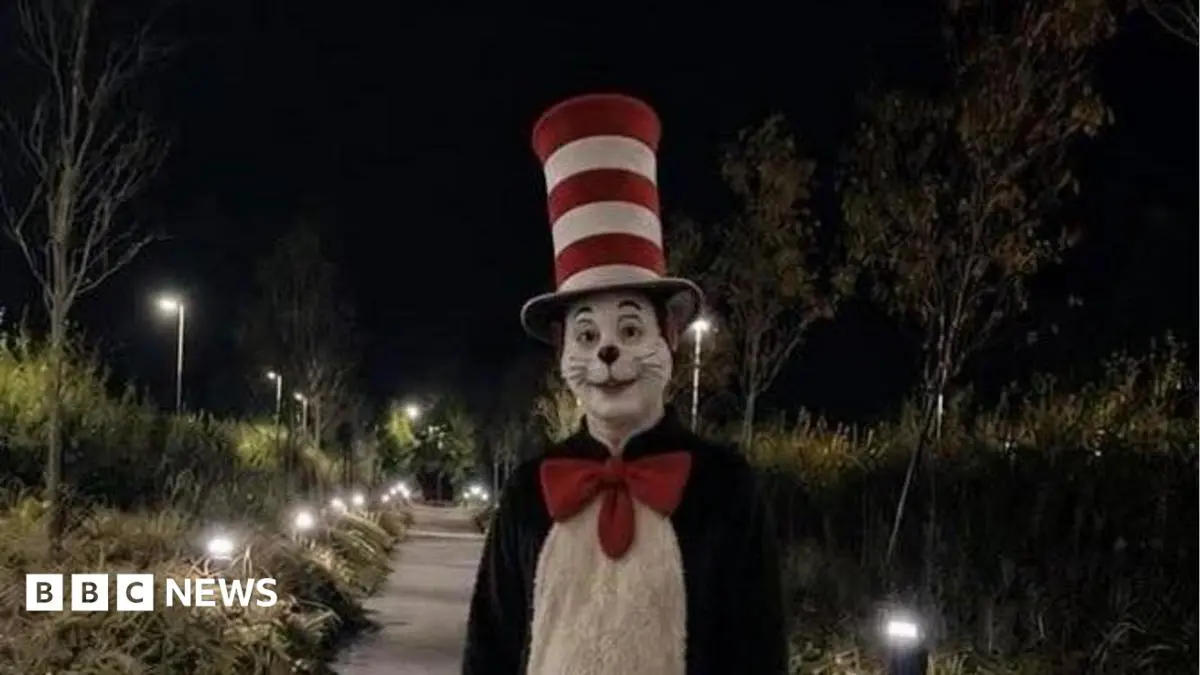
The modern mythos of the "Killer Cat in the Hat" did not materialize out of a digital vacuum. Its physical anchor point can be traced back to the public resurgences of movie memorabilia. When images of the original, somewhat uncanny animatronic and wearable costume from the 2003 cinematic adaptation starring Mike Myers began circulating online, they struck a nerve.
Unlike the whimsical, illustrated line drawings of Dr. Seuss’s 1957 children’s book, the live-action costume possessed a taxidermied, glossy-eyed surrealism that had haunted millennials during their childhoods. Paired with captions asking, "Help, what do I do?", the initial posts quickly amassed millions of views. Within weeks, the seed of unease had been planted.
The AI Infusion and the Irish Sightings
As engagement metrics surged, creative and malicious actors alike seized upon the momentum. Utilizing readily available generative artificial intelligence tools, creators began producing synthetic images and shaky, low-resolution video footage depicting the iconic black-and-white cat wandering down deserted suburban streets.
The epicenter of these AI-generated sightings quickly settled in the Irish counties of Limerick and Wexford. Grainy clips showed the towering figure peering around corners or lurking near residential driveways. Shared widely across TikTok and Snapchat group chats, these assets bypassed critical scrutiny, particularly when viewed by tired teenagers scrolling through their feeds in the small hours of the morning.
For 16-year-old Skye, the tipping point occurred at 3:00 AM during a weekend sleepover.
"I was having a sleepover, but everyone started watching Cat in the Hat videos," Skye recalls, recounting the palpable dread that gripped the room. "It was 3am. I wanted to go home. When I started walking down my friends’ driveway, I got totally freaked out that the Cat in the Hat was going to jump out. I had to call my mum to pick me up."
The Escalation to Real-World Luring
What started as passive digital consumption soon escalated into active behavioral threats. Real-world copycats began donning physical replica costumes, filming themselves dancing near street signs, and uploading clips with ominous, localized threats such as: "Kent, I’m coming. Lock your doors."
The transition from passive viewing to active danger materialized in towns like Galashiels, a small settlement in the Scottish Borders. Rumors began circulating on TikTok that the Cat in the Hat had organized an after-dark "meet and greet," urging local teenagers to assemble in a secluded patch of local woods.
While savvy adults intervened—such as one horrified mother who flatly told her 14-year-old daughter, "You are not going to meet anyone in the woods in the middle of the night!"—the invitation exposed a sinister undercurrent. The prank had evolved past digital jump scares into a potential vector for real-world predatory luring.
Supporting Context & Metrics: The Mechanics of Modern Viral Fear
To understand how a fictional children’s character captured the anxious attention of an entire generation across two nations, one must examine the quantitative footprint of the trend and the psychological architecture underpinning it.
Digital Footprint and Virality Metrics
The scale of the Cat in the Hat panic is staggering, driven entirely by platform algorithms optimized for high-arousal emotions like fear, confusion, and dark humor:
- View Counts: Individual TikTok posts featuring the initial costume and asking for advice surpassed 14.6 million views within a three-week window.
- Geographic Spread: Verified reports of panic, AI-generated imagery, and subsequent police refutations spanned regions from County Wexford and Limerick in Ireland to South Yorkshire in England and the Scottish Borders.
- Commentary Loops: Comment sections became self-sustaining echo chambers. Users fixated on bizarre conspiracy theories, with thousands debating whether comedian Mike Myers was genuinely "trapped inside" the physical suit or speculating on the biological nature of the "taxidermied" feline.
Psychological Comparisons: The Ghost of the "Momo Challenge"
Child psychologists and concerned parents have justifiably drawn parallels between this phenomenon and previous digital urban legends, most notably the infamous "Momo Challenge" of several years ago.
Emily, a mother based in Scotland, noted the striking structural similarities between the two panics.
"I’m not worried about my daughters," Emily reflects, "but there could be people with bad intentions who might take advantage of this trend to manipulate teenagers."
While fact-checkers and digital safety organizations ultimately found no verified empirical evidence linking the Momo meme to direct instances of self-harm among children, the psychological distress it caused was authentic and widespread. Similarly, while no physical "Killer Cat" exists, the baseline anxiety induced in vulnerable adolescents—such as 16-year-old Ellie from the Scottish Borders, who confessed, "I was so scared of him when I was little… Now it’s like he’s actually come to life to haunt me"—demonstrates the tangible emotional toll of digital folklore.
Official Statements and Law Enforcement Responses
As unverified claims mutated into dangerous urban legends—including entirely fabricated stories of violent assaults committed by the character—local police forces across the UK and Ireland were forced to divert public relations resources to address the panic.
The Irish Response: Gardaí Step In
In the Republic of Ireland, local detachments of An Garda Síochána in Wexford and Limerick were inundated with concerned inquiries from residents and parents. The force issued swift, authoritative statements dismissing the sightings entirely. Investigators confirmed that the circulating media assets were definitively manufactured using generative artificial intelligence tools designed to manipulate perspective and lighting.
The UK Response: South Yorkshire and Fake Press Releases
The situation grew even more complex in England, where South Yorkshire Police faced an unprecedented wave of public inquiries regarding a rumored "killer Cat in the Hat" stalking northern towns.
Adding to the confusion, bad actors fabricated a fraudulent Facebook press release attributed to a non-existent entity styled as "Yorkshire Police," falsely claiming that law enforcement was treating the sightings as a high-priority public safety threat.
A spokesperson for South Yorkshire Police issued a firm, unequivocal rebuke to the digital rumors:
"If you do see posts online providing policing updates and advice, please check that they are from an official policing account. The cat is not out of the hat on this one… Please don’t believe everything you read on social media."
Future Outlook: Satire, Safety, and the Algorithmic Echo Chamber
As is customary with the fickle life cycle of TikTok trends, the initial wave of genuine terror has gradually been met by an overwhelming counter-wave of satire, spoofing, and dark humor.
The Counter-Culture of the "For You" Page
Depending entirely on how an individual user’s algorithmic profile has been trained, the contemporary For You page presents a surrealist pastiche. Alongside genuine scares and AI-generated fabrications, feeds are now flooded with users in cheap feline costumes enthusiastically dancing to Beyoncé tracks. Other viral videos playfully depict bewildered British and Irish police officers chasing human-sized cats down suburban high streets.
Prominent public figures and creators have also stepped in to puncture the balloon of fear. Scottish drag performer Ellie Diamond published a direct video message assuring followers that she was categorically not the Cat in the Hat killer. Meanwhile, Irish TikTok star Garron Noone offered a characteristically dry appraisal of the Limerick and Wexford sightings: he noted that the hoax should have been instantly recognized as false "because even the most soulless, evil, vicious monster" would be "traumatised looking in the window of a Wexford person."
Lessons for the Digital Age
Despite the eventual pivot toward comedy, the Cat in the Hat panic serves as a sobering case study in contemporary media literacy. It underscores the vulnerabilities inherent in a society where generative AI can fabricate hyper-realistic threats within minutes, and where recommendation engines reward sensationalism over verification.
Security experts, educators, and law enforcement agencies have distilled a series of critical takeaways for parents, educators, and teenagers navigating the digital landscape:
- Verify the Source: Never accept a piece of local news, a police statement, or a dramatic video at face value without checking for validation from established, official institutional channels.
- Scrutinize the Metadata: Look closely at creation dates, account histories, and visual artifacts (such as AI warping or audio mismatches) that frequently betray synthetic media.
- Treat Luring Tactics as Red Flags: Any online invitation instructing minors to meet unknown entities or individuals in isolated settings—particularly after dark—must be treated as an immediate, severe security risk.
- Pause Before Sharing: The velocity of panic is driven by reactive engagement. By pausing to critically evaluate content before hitting the "share" or "repost" button, users can stem the tide of digital contagion.
Ultimately, the phenomenon of the rogue Dr. Seuss character demonstrates that online fear does not remain neatly quarantined behind glass screens; it bleeds directly into real-world anxieties, sleep disturbances, and physical spaces. As artificial intelligence tools become increasingly sophisticated, the "Cat in the Hat" will not be the last fictional icon to escape the page and terrorize the modern digital imagination.