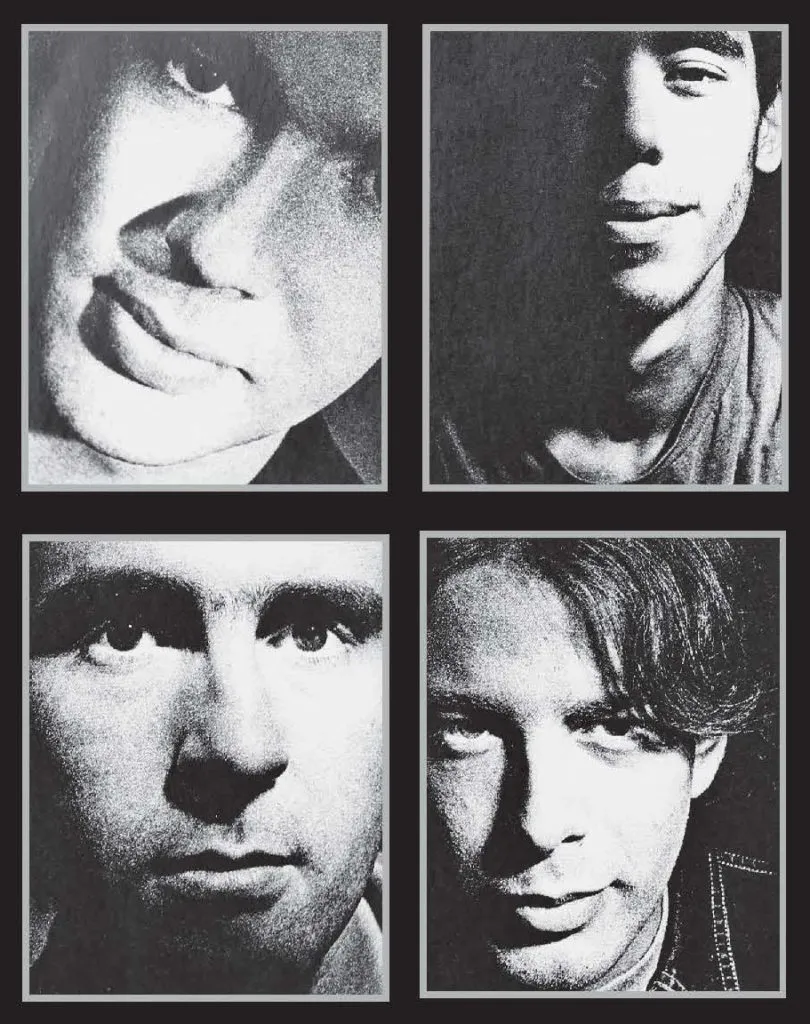
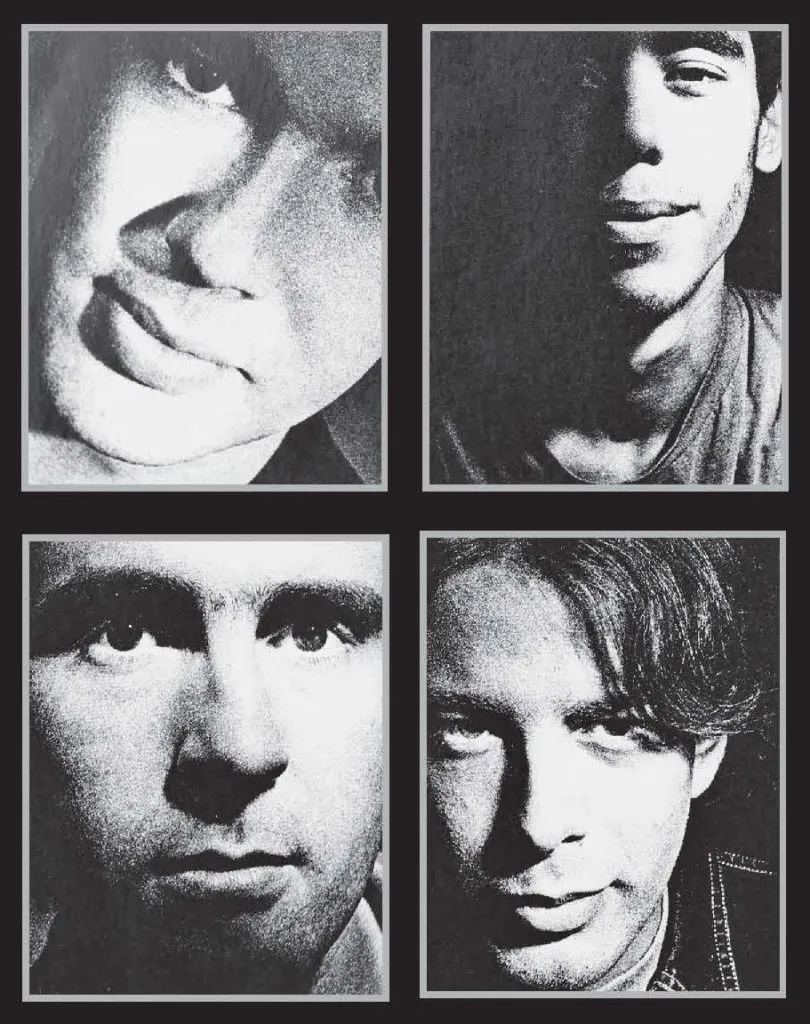
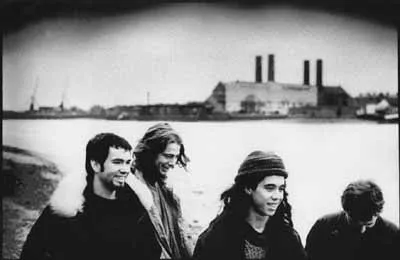
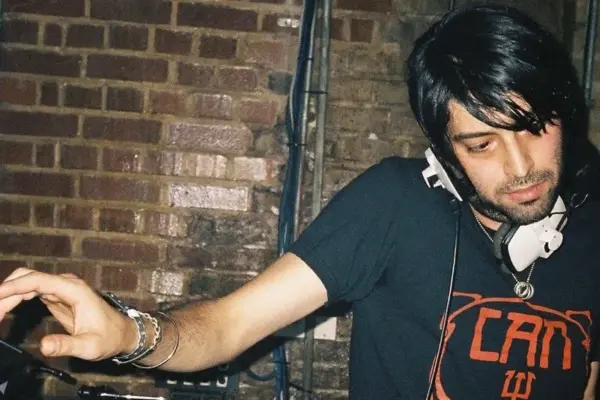
Forty years after its inception in the underground venues of London, post-rock pioneer Bark Psychosis remains one of modern alternative music’s most enigmatic and influential entities. Formed in 1986 by schoolfriends Graham Sutton and John Ling when they were just 14 years old, the group helped lay the foundational blueprints for a genre that rejected traditional rock structures in favor of atmospheric texturing, ambient introspection, and sprawling, cinematic dynamics.
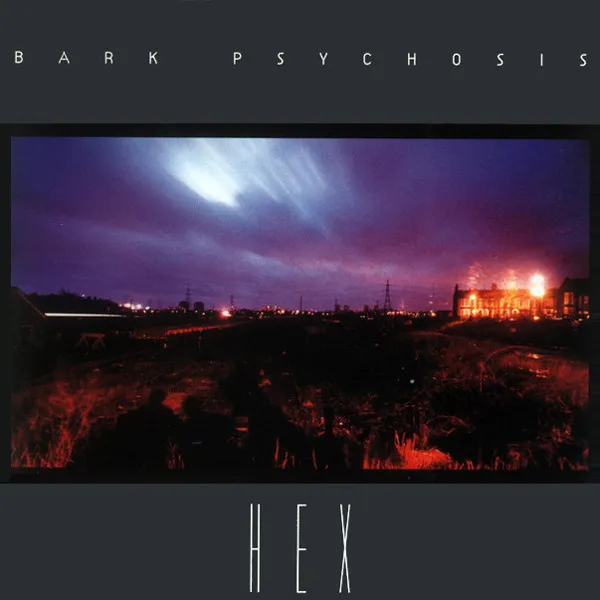
Their seminal 1994 debut LP, Hex, stands as a masterclass in tension and release—a gloomy yet glimmering journey that shifted effortlessly between ambient quietude and intricately detailed sonic power. Yet, the creation of Hex came at a devastating personal and professional cost, effectively fracturing the band in its wake. It would take an astonishing two decades for a follow-up—///CODENAME: dustsucker—to materialize in 2004, with founding visionary Graham Sutton remaining the sole constant anchor through decades of evolution, label disputes, and artistic rebirth.
In a rare and candid retrospective interview conducted by Chris Wheatley, Sutton reflects on a four-decade musical journey guided by a singular, unyielding philosophy: a pure, uncompromised drive to create art driven entirely by visceral feeling rather than careerism. From squatting in Leyton and recording ambient epics inside Stratford churches to defining the cutting edge of modern music production, this is the definitive chronicle of Bark Psychosis.
Detailed Chronology: From Schoolboy Mania to Post-Rock Pioneers
The Genesis in East London (1986–1989)
Music was woven into the very fabric of Graham Sutton’s childhood. Growing up surrounded by sound, his early sonic diet consisted of his mother’s copy of The Beatles’ Rubber Soul—which he claims to have "played to death"—and falling asleep to the hypnotic soundscapes of Sgt. Pepper’s Lonely Hearts Club Band.
"Music has been this thread that’s pulled me through life," Sutton reflects.
By 1986, that affinity blossomed into obsession. Teaming up with schoolfriend John Ling at the tender age of 14, Sutton experienced an epiphany: "It was like this mania. I thought: this is what I’m here to do."
Equipped with little more than a rudimentary tape recorder and a drum machine, the duo began experimenting. Their live debut came via a Campaign for Nuclear Disarmament (CND) benefit gig at the Sir George Robey pub in Finsbury Park. Driven by absolute conviction, Sutton made a life-altering decision after finishing his GCSEs: he left school and persuaded Ling to commit fully to the project.
Sutton relocated from East London to Edgware in North London to strategize. Their immediate objective was securing a drummer. An advertisement placed in a local music shop answered their prayers, introducing Mark Simnett to the fold. Recognizing that the daily commute was unsustainable, Sutton began squatting with Ling, eventually settling into a notorious artist squat on Claremont Road in Leyton. It was within this bohemian crucible that the band encountered singer Sue Page, whose haunting vocals would grace their earliest singles.
The Cheree Years and Industry Friction (1990–1992)
Bark Psychosis’s entry into the recorded music world was catalyzed by a quintessential indie-music chance encounter. While standing on the platform of South Woodford station, Sutton struck up a casual conversation with a couple named Nick Allport and Vinita Joshi, who operated a local fanzine and an independent imprint called Cheree Records. Intrigued by the young musicians, the couple essentially adopted the band into their artistic circle.
In 1990, Cheree released Bark Psychosis’s debut 12-inch records, All Different Things and Feelings. These releases crystalized the group’s nascent trademark sound: drifting, hypnotic, atmospheric rock that ignored contemporary Madchester and shoegaze trends in favor of something colder, sparser, and infinitely more spacious.
While Cheree sought to capitalize on this momentum by pushing the band toward a full-length album, creative friction mounted. The label brought in outside backers whom Sutton and his bandmates fundamentally distrusted. Salvation arrived via Gerald Palmer, former manager of drone-rock legends Spaceman 3. Palmer successfully negotiated the band out of their Cheree contract, paving the way for a signing with 3rd Stone Records in 1992, bolstered by the addition of keyboardist Daniel Gish.
This new partnership birthed the Manman EP and the extraordinary 21-minute single Scum, an uncompromising monolith of experimental noise-rock and jazzy, fractured soundscapes.
"A lot of it came from being quite wilful," Sutton explains, looking back at the era. "Wanting to do something that was our own and nobody else’s. Nothing was guided by any sort of idea of a career; it was just, How does this feel? Do we feel good doing this? For better or worse, it was done with the purest of motives."
The Masterpiece and the Meltdown: Hex (1994)
For their debut album, Bark Psychosis signed to Circa, a subsidiary of Virgin Records. Buoyant from the organic success of Scum—which had been recorded live inside the cavernous acoustics of St John’s Church in Stratford—Sutton envisioned a radically layered, architectural recording process for the LP.
"I came up with the idea that we’d lay down some frameworks, then there’d be a stage of overdubbing in the church," Sutton details. "Then there’d be a further process of sequencing. Finally, there would be touch-ups and vocals, then we’d mix it."
Fueling this complex methodology was Sutton’s burgeoning fascination with newly affordable sampling technology, a tool he eagerly integrated to expand the group’s sonic palette beyond traditional guitar-band instrumentation.
Released in 1994, Hex was met with critical reverence, hailed as a foundational pillar of what music journalists would soon dub "post-rock." Yet, despite its artistic triumph, the album peaked at a modest number 48 on the UK Independent Albums chart, failing to capture mainstream commercial waves.
Worse still, the psychological and physical toll of crafting the record proved fatal to the band’s internal ecosystem.
"It took such a lot out of us," Sutton recalls somberly. "I felt very strongly that this might be our only shot at this, so I’m going to give it my absolute everything. The process of making it destroyed the band."
Daniel Gish departed during the sessions, and John Ling followed shortly after the album’s completion. Though Sutton and Simnett attempted to keep the live entity breathing for a brief period, the creative engine had seized up.
Electronic Divergence and ///CODENAME: dustsucker (1997–2004)
Exhausted by the wreckage of guitar-based indie rock, Sutton found himself irresistibly drawn to the frantic, subterranean rhythms of the burgeoning UK drum ‘n’ bass movement. Shedding the Bark Psychosis mantle entirely, he adopted the moniker Boymerang and released the critically acclaimed electronic album Balance Of The Force through Parlophone in 1997.
True to his mercurial artistic instincts, Sutton’s tenure in electronic music proved transient. "Almost overnight, something was telling me, I’ve got to do something else now," he explains.
That "something else" was the resurrection of Bark Psychosis. Sutton began writing material for a second album, a decision that did not sit well with his major-label home. "Parlophone weren’t very happy, but I felt like I didn’t have any choice. If it doesn’t feel right, I can’t do it."
Refusing to issue the recordings, Parlophone trapped the material in legal limbo. It took Sutton years of arduous negotiation to reclaim the masters. Eventually, ///CODENAME: dustsucker saw the light of day in 2004 via Fire Records, proving that Sutton’s uncompromising, sophisticated experimentalism had lost none of its chilling potency.
Supporting Context & Metrics: The Architecture of an Indie Legacy
To fully contextualize the trajectory of Bark Psychosis, one must analyze the commercial metrics and industry realities that governed British alternative music in the 1990s and 2000s:
The 20-Year Gap: The two-decade chasm between Hex (1994) and ///CODENAME: dustsucker (2004) remains one of the longest hiatuses between a debut and sophomore album by a critically acclaimed alternative act.
Chart Realities vs. Critical Adulation: While Hex is retrospectively cited by publications like Pitchfork, The Wire, and Record Collector as one of the most important albums of the 1994 alt-rock landscape, its initial chart peak of No. 48 on the UK Independent Albums Chart underscores the commercial disconnect between avant-garde artistry and mainstream consumer habits of the Britpop era.
The Birth of a Genre: Along with groups like Talk Talk (whose later albums Spirit of Eden and Laughing Stock heavily informed the post-rock ethos) and Slint, Bark Psychosis are widely credited by musicologists with cementing the term "post-rock"—a descriptor initially coined by critic Simon Reynolds to define music that utilized rock instrumentation for non-rock purposes, prioritizing texture, timbre, and space over verse-chorus-verse structures.
Official Statements & Direct Quotations
The integrity of Bark Psychosis’s catalog rests entirely on Sutton’s philosophy of radical artistic autonomy. Below are key statements captured during Chris Wheatley’s interview:
"There was always music in my house. My mum had a copy of Rubber Soul, which I played to death. I used to fall asleep listening to Sgt Pepper’s… Music has been this thread that’s pulled me through life." — Graham Sutton
"It was like this mania. I thought: this is what I’m here to do." — Graham Sutton on forming the band at age 14
"A lot of it came from being quite wilful, wanting to do something that was our own and nobody else’s. Nothing was guided by any sort of idea of a career; it was just, ‘How does this feel? Do we feel good doing this?’ For better or worse, it was done with the purest of motives." — Graham Sutton on the recording philosophy behind Scum
"It took such a lot out of us. I felt very strongly that this might be our only shot at this, so I’m going to give it my absolute everything. The process of making it destroyed the band." — Graham Sutton on the exhaustive creation of Hex
The Transition to Production and Industry Respect
While Bark Psychosis operated on its own erratic timeline, Sutton’s acute sonic engineering and arrangement skills did not go unnoticed by the wider music industry. His transition into full-time record production began with a characteristically eccentric overture.
Geoff Travis, founder of legendary independent label Rough Trade Records, mailed Sutton a postcard emblazoned with a blunt, handwritten challenge: "CAN YOU MAKE ME A HIT?"
"It seemed like the most ridiculous, bizarre request," Sutton laughs.
Despite the absurdity of the prompt, Sutton accepted the challenge, signing on to produce Southampton indie-pop outfit The Delays for their 2004 debut LP, Faded Seaside Glamour. The results spoke for themselves. The album was well-received, and the success opened the floodgates.
Driven entirely by word-of-mouth recommendations, Sutton’s production credits swiftly expanded to encompass some of the most adventurous guitar acts of the 21st century, including These New Puritans (producing works such as the critically lauded Crooked Wing via Domino) and British Sea Power, among others.
Future Outlook: Will Bark Psychosis Return?
Decades removed from the damp rehearsal rooms of East London and the tense church recordings of Stratford, Graham Sutton has made peace with his past. Though he is famously disinclined to wallow in nostalgia, he acknowledges the emotional resonance that Hex continues to hold for music enthusiasts worldwide.
"It’s enormously gratifying that people still ask me about Hex, because I know how much went into it," he admits. "And it was done for no other reason, no other purpose, than to try and do something as good as we could make it. So, the fact that people get something out of it, well, that’s nice."
As for the prospect of a third Bark Psychosis record breaking the silence, fans should temper their expectations. Sutton remains thoroughly consumed by his thriving career as a producer and collaborator.
When pressed on whether a reunion album is on the horizon, he offers a warm smile and a definitive reality check:
"I don’t know. I’m just enjoying doing what I’m doing… I haven’t got the time!"