Executive Overview
In the modern real estate market, browsing for a new home or examining the properties of a neighborhood is frictionless. Prospective buyers and curious onlookers alike open platforms like Rightmove or Zoopla in the United Kingdom, Zillow in the United States, or Magic Bricks in India, expecting high-definition video walkthroughs, interactive floor plans, and immersive 3D renderings. This digital-first approach to real estate seems entirely cutting-edge, born from the marriage of high-speed broadband, sophisticated computer-generated imagery, and modern camera technology.
Yet, historical research reveals a surprising truth: the foundational desire to offer clients remote, immersive, stereoscopic walkthroughs of properties is nearly two centuries old. Long before commercial photography existed—and nearly fifty years before cameras were widely utilized to advertise real estate—pioneering London property agents were already leveraging cutting-edge optical technology to transport wealthy prospective buyers into virtual previews of luxury estates.
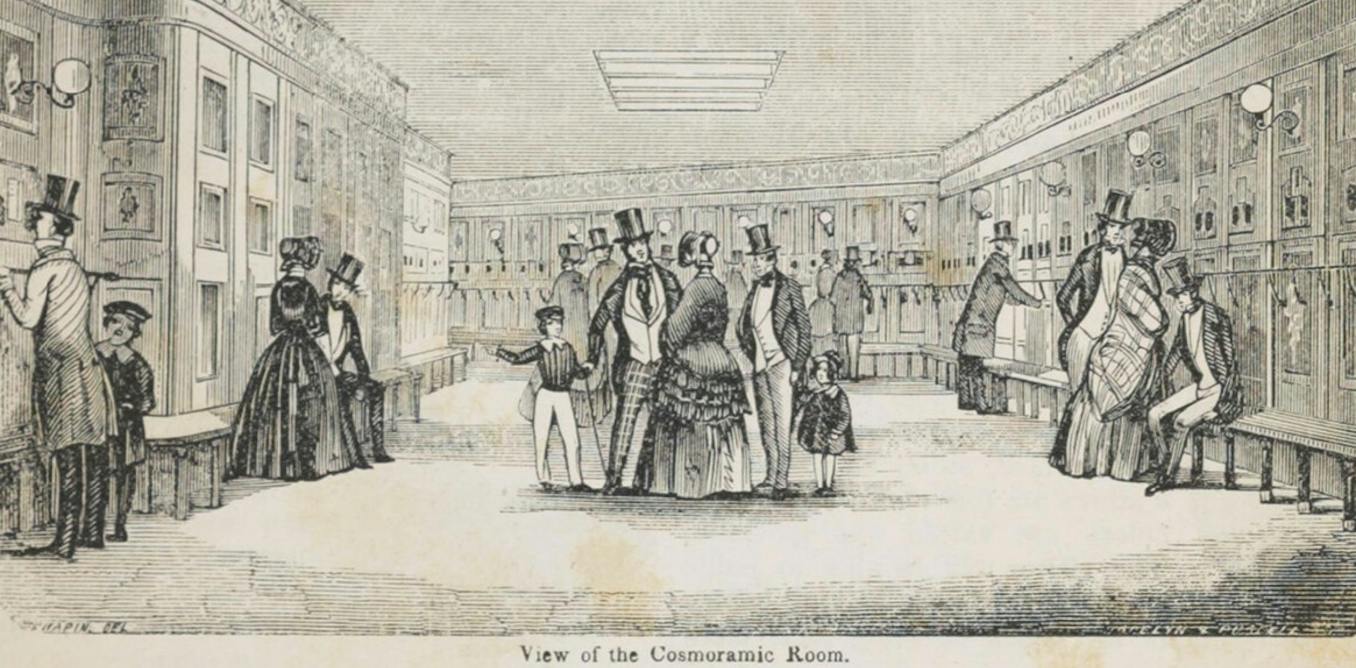
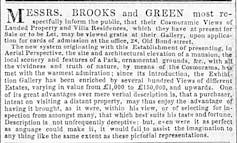
In 1838, the historic year of Queen Victoria’s coronation, an elite estate agency on Old Bond Street known as Brooks & Green began advertising an early form of immersive visual technology called a "cosmorama." Rather than relying solely on dry architectural prospectuses or forcing wealthy clients to undertake grueling, multi-day carriage journeys across the English countryside to inspect remote mansions, Brooks & Green invited prospective buyers into a dedicated "cosmoramic gallery." Within this space, high-society clients could examine detailed, magnified, three-dimensional views of grand architectural elevations, sprawling parklands, and local scenery.
This fascinating historical intersection of real estate marketing, Victorian entertainment technology, and consumer culture demonstrates that humanity’s obsession with virtual reality and simulated environments is not a byproduct of the digital age. Instead, it is the continuation of a centuries-old quest to transcend physical limitations and experience distant spaces from the comfort of an urban parlor or office.
Detailed Chronology
To understand how Victorian estate agents managed to offer virtual property tours in an era defined by oil lamps, horse-drawn carriages, and hand-drawn illustrations, it is necessary to trace the convergence of urbanization, mass entertainment, and commercial innovation across the early 19th century.
1808: The Birth of the Cosmorama in Paris
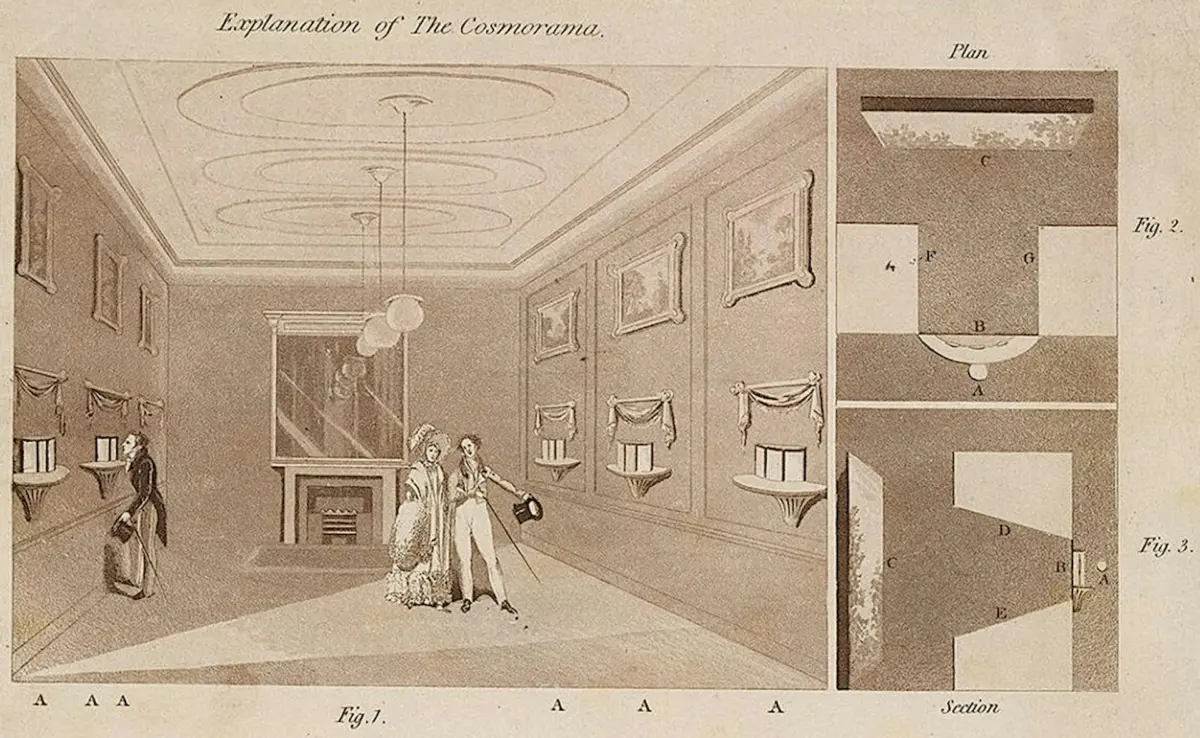
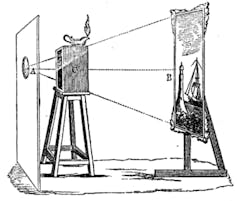
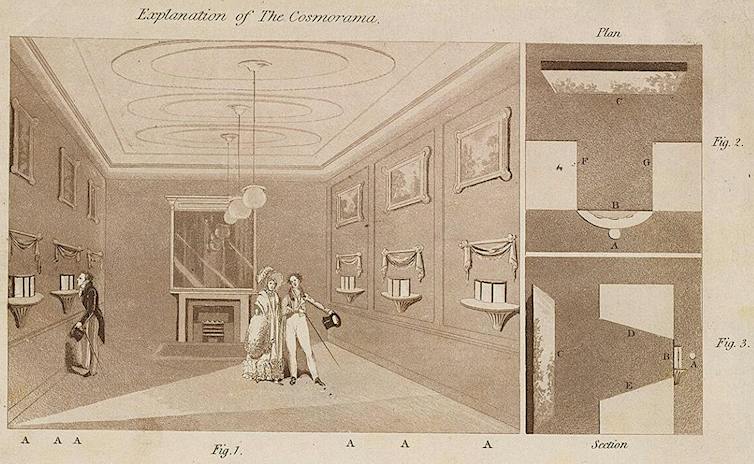
The technology behind the cosmorama—which translates from Greek as "views of the world"—was first introduced to the public in Paris in 1808 by a French showman and clergyman, Abbot Constant Gazzera. Originally designed as a popular form of visual exhibition rather than a commercial tool, the cosmorama relied on an ingenious optical setup.
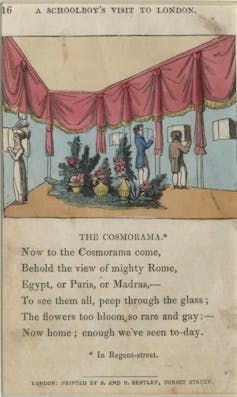
Viewers peered through a large convex lens that magnified paintings or finely detailed artist’s prints. This lens enhanced perspectival depth, creating a striking illusion of three-dimensional space. A blackened square frame positioned between the lens and the picture effectively masked the edges of the artwork, tricking the human eye into believing it was gazing out through an open window at a vast, panoramic scene. Coupled with carefully manipulated lighting effects that simulated different times of day or weather conditions, the cosmorama offered an astonishingly realistic window into distant worlds.
1821–1823: The Craze Sweeps London
Following Gazzera’s success in France, the technology rapidly migrated across the English Channel. In 1821, the Cosmorama Rooms opened at 29 St James’s Street in London, relocating to the more fashionable Regent Street in 1823. For more than three decades, this gallery remained one of the capital’s premier tourist and cultural attractions.
Operating within pleasure gardens, retail bazaars, and scientific institutions, the cosmorama capitalized on a massive demographic shift. The rapid urbanisation and population growth of the Industrial Revolution had created a burgeoning middle class with disposable income, a hunger for self-improvement, and a deep curiosity about the wider world. Shows typically featured picturesque landscapes, renowned European monuments, and striking architectural interiors, ranging from the canals of Venice to the fiery eruption of Mount Vesuvius.
1838: Brooks & Green Innovates Property Marketing
By the late 1830s, the booming British economy had minted a new class of wealthy industrialists, merchants, and traders who sought to convert their commercial gains into country estates and London townhouses. Estate agency had emerged as a formalized, specialized profession in the mid-19th century to cope with this soaring demand.
Sensing an opportunity to stand out in a competitive market, the Old Bond Street agency Brooks & Green made a visionary leap. Recognizing the cultural familiarity and psychological impact of the cosmorama, the firm established its own "cosmoramic gallery" to market high-end real estate. Instead of depicting foreign volcanoes or ancient Roman basilicas, Brooks & Green commissioned skilled artists to travel to elite properties, sketch the grounds, and paint bespoke cosmoramic slides of country mansions, ornamental gardens, and sweeping parklands.
1842: Expanding the Portfolio
By April 1842, newspaper advertisements in publications such as The Patriot confirmed that the Brooks & Green property gallery had expanded significantly. Promos boasted an inventory of "several hundred views of different estates." For a select clientele, an appointment at the Bond Street office offered an unprecedented preview of properties across the British Isles, blending high-stakes commerce with the popular entertainment technology of the era.
Supporting Context & Metrics
The scale of the historical phenomenon surrounding cosmoramas and early immersive media is only now being fully mapped by contemporary academic initiatives.
The Curiositas Project and Global Reach
Modern historical investigations, notably a project led by the Universidade Lusófona in Lisbon titled Curiositas: Peeping Before Virtual Reality, have shed new light on the ubiquity of these optical devices. Researchers have meticulously cataloged more than 650 individual cosmorama installations across Portugal, Spain, and the United Kingdom alone.
Furthermore, archival data indicates that cosmoramas were operational across North America, Cuba, Brazil, and Australia. Most famously, the legendary American showman P.T. Barnum installed a dedicated cosmoramic gallery inside his sprawling American Museum in New York City, capitalizing on the public’s insatiable appetite for visual spectacles.
Metrics of the Brooks & Green Experience
- Timeframe: Active for approximately two decades, spanning from 1838 into the late 1850s.
- Geographic Scope: Centered in Mayfair, London (Old Bond Street), marketing elite estates across the United Kingdom.
- Catalog Size: Advertised as housing "several hundred views of different estates" simultaneously by 1842.
- Target Demographic: High-net-worth individuals, wealthy industrialists, and landed gentry; access was strictly curated via admission cards rather than open public ticketing.
- Technological Precedence: Utilized roughly 50 years before the widespread adoption of photography in property marketing brochures.
The Social Divide in Real Estate Marketing
It is crucial to note that the cosmoramic property tour was strictly an upper-crust luxury. While public entertainment venues allowed working-class and middle-class citizens to view Mount Vesuvius for a few pence, the Brooks & Green gallery was tailored exclusively to serious investors with immense capital. Although entry to the gallery was technically advertised as free, access required an admission card—a gatekeeping mechanism designed to ensure that only individuals possessing "suitably deep pockets" occupied the time of the gallery’s staff and artists.
Official Statements & Historical Perspectives
Historians and museum curators specializing in early visual culture have emphasized the profound psychological connection between 19th-century optical toys and modern virtual reality headsets.
Dr. John Plunkett, an expert in Victorian literature and culture at the University of Exeter and a contributor to research concerning the Bill Douglas Cinema Museum, notes that the urge to immerse oneself in simulated environments is a defining characteristic of modern media history.
"The cosmorama and kindred technologies like dioramas, panoramas, and peepshows satisfied an intense Victorian appetite for virtual travel," explains Dr. Plunkett. "When estate agents like Brooks & Green harnessed this technology, they were tapping into a profound human desire: the wish to collapse distance and inhabit a space mentally before committing to it physically. They were engaging in a very early form of experiential marketing."
Cultural historians observing the evolution of real estate advertising point out that the transition from written prospectuses to visual media fundamentally changed buyer behavior. In an era when a journey from London to a remote northern estate could take days of arduous travel, a verified, magnified perspective of a mansion’s architectural elevation and surrounding parklands provided essential risk mitigation for wealthy buyers.
Moreover, architectural historians writing in academic journals such as Early Popular Visual Culture have emphasized that the artistic license required to paint a cosmorama slide also introduced early forms of digital touch-ups or architectural rendering idealization—a tradition that persists today in hyper-polished CGI real estate advertisements.
Future Outlook
As the real estate sector hurtles forward into an era dominated by artificial intelligence, metaverse property viewings, and photorealistic spatial computing, looking back at the Victorian era offers a humbling and grounding perspective.
The evolution of property marketing is a continuous loop of technological adaptation driven by a singular, unchanging human imperative: to see, explore, and evaluate spaces beyond our immediate physical reach. From the convex lenses and painted glass slides of Brooks & Green’s Old Bond Street gallery in 1838, to the stereoscopes of the late 19th century, the cinematic walk-throughs of the 20th century, and the immersive VR headsets of the 21st century, the core mission has remained identical.
As artificial intelligence begins to generate automated interior designs and spatial computing allows buyers to tour unbuilt properties anywhere on Earth in real-time, real estate professionals continue a tradition pioneered nearly two hundred years ago. The tools have evolved from hand-painted canvases illuminated by oil lamps to complex algorithms and ray-traced graphics, but the fundamental magic of the virtual tour remains as captivating today as it was to the newly monied elites of Victorian London.