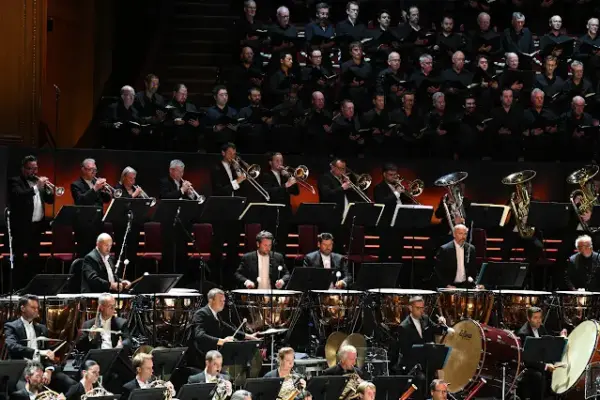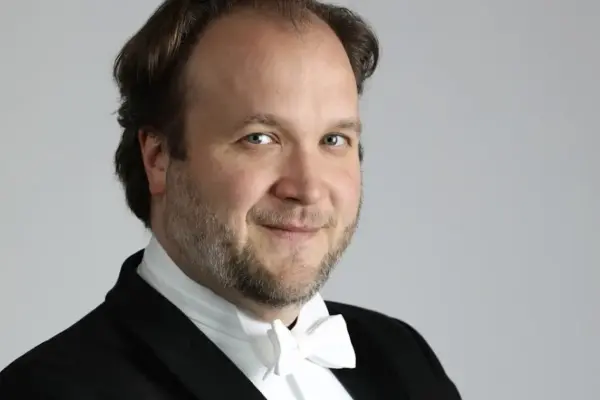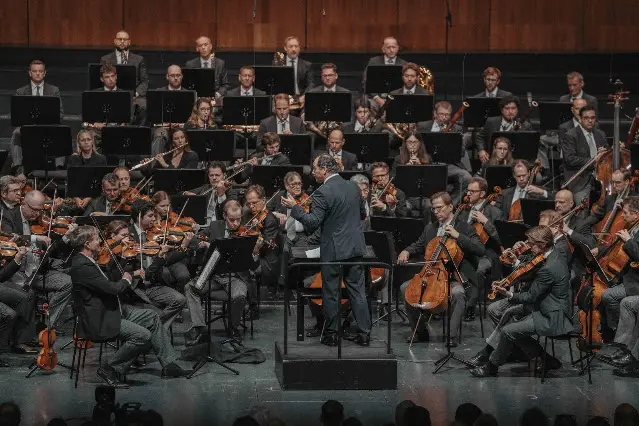
The prestigious Grosses Festspielhaus at the Salzburg Festival played host to a masterclass in symphonic juxtaposition on Saturday, August 8, 2026. The world-renowned Vienna Philharmonic (Wiener Philharmoniker), operating under the visionary baton of conductor Tugan Sokhiev, delivered a matinee performance that challenged traditional concert programming and pushed stylistic boundaries. Featuring a star-studded lineup—including global piano icon Lang Lang—the program bridged the impressionistic, jazz-inflected French modernism of Maurice Ravel and Claude Debussy with the visceral, theatrical depths of Sergei Prokofiev’s theatrical ballet music.
This collaboration marks another high-water mark in the enduring musical partnership between Sokhiev and the Vienna Philharmonic. Having shared the stage across numerous international tours—most notably steering the ensemble through the gala celebrations marking Johann Strauss’s bicentennial—Sokhiev has cultivated an acute, telepathic rapport with the legendary Austrian orchestra.
Yet, for all the institutional polish and technical mastery on display, the afternoon was defined by artistic friction. Lang Lang’s deeply idiosyncratic interpretation of Ravel’s Piano Concerto in G Major polarized listeners with its indulgent, rubato-heavy introspection. Meanwhile, Sokhiev’s granular, textural approach to Debussy’s La Mer traded broad impressionistic washes for microscopic clarity, yielding mixed structural results. However, it was the second-half journey through Prokofiev’s Romeo and Juliet that silenced any lingering reservations. Sokhiev transformed the orchestra into a kinetic, breathing theatrical machine, delivering a masterclass in danced drama that elevated the afternoon from a standard orchestral showcase into an unforgettable artistic statement.
Detailed Chronology: A Program of Contrasts
Part I: The Ravel Paradox and Lang Lang’s Introspective G Major
Breaking with traditional concert structures that traditionally build toward a concerto, Sokhiev and the Vienna Philharmonic opened the matinee with Maurice Ravel’s effervescent Piano Concerto in G major. Composed between 1929 and 1931, the piece is famously steeped in the syncopated rhythms of American jazz and the polished elegance of classical form.
Lang Lang’s entrance, however, immediately signaled a departure from standard expectations. Rather than unleashing the glittering, percussive pyrotechnics frequently associated with the opening movement, the soloist approached the score with a disarming lightness and calculated reticence. A gentle twinkle in the upper registers countered the crisp, biting jazz idioms thrown down by the Vienna Philharmonic’s brass and winds.
As the movement progressed into its second subject, Lang Lang shifted gears entirely. Eschewing the driving, relentless pulse of the early 20th-century urban landscape, he opted for a deeply laid-back, highly intimate posture. Drenched in liberal rubato, his reading pushed the blues and jazz influences into the background, prioritizing a localized, almost chamber-like subjectivity. This persistent tug-of-war between tempo and mood proved divisive. While moments of exquisite pianissimo demonstrated undeniable poetry, the overall impression leaned toward self-indulgence, occasionally fracturing the architectural unity Ravel meticulously engineered.
The iconic second movement—an extended exercise in sustained cantabile elegance that Ravel noted he labored over measure by measure—began in profound stillness. Played at an agonizingly slow tempo, Lang Lang sustained a fragile atmosphere of quiet reflection. The intensity steadily compounded only as the Vienna Philharmonic’s strings and woodwinds gently locked arms with the soloist. Maintaining absolute structural integrity at such a glacial tempo is a monumental test of endurance; while the duo successfully walked this tightrope, it demanded immense patience from the audience.
Any lingering atmospheric restraint was promptly shattered by the third movement. A storm of kinetic energy, the finale rushed forward with blistering velocity. The Vienna Philharmonic showcased its peerless instrumental personality, anchored by luminous woodwind solos that cut through the thunderous texture. The work culminated in an explosive, breakneck dash to the finish line—a breathless display of virtuosity that left no doubt about the soloist’s intent to command the spotlight.
Part II: La Mer and the Microscopic View of the Sea
Following the concerto, Claude Debussy’s symphonic sketches La Mer (The Sea) offered a different kind of sonic topography. Rather than utilizing massive, impressionistic washes of color to evoke the vast, churning power of the ocean, Sokhiev approached the score with an almost surgical precision.

The opening movement, De l’aube à midi sur la mer ("From dawn to midday on the sea"), seemed to materialize out of total silence. Microscopic, shimmering textures conjured a sense of nascent creation. Sokhiev coaxed a richly layered watery flow from the ensemble, prioritizing granular detail over grand narrative arcs. The Vienna Philharmonic’s magnificent cello section anchored the ebb and flow of the musical tide. Yet, at times, this obsession with micro-detail threatened to stall the music’s momentum, leaving sections feeling becalmed as the conductor lingered over inner voices.
The second movement, Jeux de vagues ("Play of the waves"), unfolded as a rapid-fire succession of delicate, sparkling fragments. Sokhiev’s architectural philosophy continued to favor microscopic articulation over macro-structural cohesion. Swift, vivid climaxes dissolved instantly into near-silence, creating pockets of breathtaking sonic magic, particularly in the movement’s ethereal coda.
The final movement, Dialogue du vent et de la mer ("Dialogue of the wind and the sea"), erupted with an undercurrent of anxiety and controlled urgency. Here, the orchestral execution was nothing short of miraculous: a deeply poignant, soulful oboe solo cut through the thickening atmosphere, complemented by the dazzling, pinpoint-accurate trumpet tonguing of the brass section. Yet, when the ultimate musical storm finally broke, the grand climax, though urgent and forceful, felt somewhat like an arrival too late to fully redeem the structural hesitation of the earlier movements.
Part III: Prokofiev’s Romeo and Juliet – Kinetic Drama and Danced Tragedy
If the first half of the concert was defined by stylistic debate, the post-intermission programming eradicated any doubt regarding the artistic synergy between Sokhiev and the Vienna Philharmonic. Transitioning to his own meticulously curated selection of movements from Sergei Prokofiev’s monumental ballet Romeo and Juliet (drawing primarily from Suite No. 2 alongside key excerpts from Suite No. 1), Sokhiev achieved a complete transformation.
Operating without the physical constraints of dancers on a stage, Sokhiev managed to convey the visceral reality of danced drama entirely through sound. Every movement was vividly etched, highlighting the peerless color palette of the Vienna Philharmonic while driving a relentless narrative forward.
The suite commenced with Montagues and Capulets. The movement opened with forbidding, heavyweight brass chords that dramatically contrasted against sustained, icy string textures. When the infamous Dance of the Knights arrived, it did so with a terrifying, rhythmic inevitability, underscored by a remarkably deep, resonant bass foundation.
The psychological portraiture continued with Juliet as a young girl, captured through skittering, mercurial woodwinds that brimmed with youthful volatility. This playful innocence gave way to the ecclesiastical gravity of Friar Laurence, characterized by rich, dark lower-register textures. A subsequent Dance re-established a breathless, athletic momentum, showcasing crisp articulation and razor-sharp solo turns from across the orchestra.
The emotional core of the suite arrived with Romeo and Juliet before parting (the balcony scene). Sokhiev initiated the scene atmospherically, introducing an elegant, soaring flute line. Eschewing immediate emotional excess, Sokhiev imposed a classical restraint upon the music, intentionally withholding unbridled romantic sweep until the full force of the orchestra flooded the acoustic space, creating a breathtaking emotional release.
Delicate lyricism defined the Dance of the girls with lilies, where even the tambourine was treated with refined elegance. A gorgeous violin solo infused the passage with the intimate, communicative warmth of chamber music. This fragile beauty was brutally upended by Romeo at Juliet’s tomb, an intensely urgent movement marked by a steady, crushing orchestral tread that possessed genuine physical weight before dissolving into hushed, tragic magic.

Drawing from the First Suite, Sokhiev selected Masks, which crackled with controlled, aristocratic excitement, before hurtling into the explosive momentum of Tybalt’s death. The latter movement raged forward with apocalyptic fury before grinding down into a heavy, suffocating silence of profound anger and grief.
Supporting Context & Metrics
| Performance Parameter | Detail / Observation |
|---|---|
| Event Date | Saturday, August 8, 2026 |
| Venue | Grosses Festspielhaus, Salzburg Festival |
| Orchestra | Vienna Philharmonic Orchestra (Wiener Philharmoniker) |
| Conductor | Tugan Sokhiev |
| Featured Soloist | Lang Lang (Piano) |
| Repertoire | Maurice Ravel: Piano Concerto in G Major Claude Debussy: La Mer Sergei Prokofiev: Romeo & Juliet (Excerpts from Suites 1 & 2) |
| Historical Partnership | Sokhiev and the Vienna Philharmonic have collaborated extensively across global tours and high-profile institutional events, including Johann Strauss’s 200th birthday gala. |
The choice to program Prokofiev’s ballet music in concert form inevitably invites comparisons to its theatrical roots. For many in attendance, the performance served as a living archive of theatrical memory. Hearing the score executed with such kinetic theatricality evokes legendary choreography—such as Kenneth MacMillan’s landmark 1965 production for The Royal Ballet, which famously cemented Natalia Makarova’s dramatic legacy. Sokhiev’s ability to conjure these vivid, physical stage images purely through the phrasing and articulation of a symphonic ensemble is the hallmark of a master conductor.
Official Statements & Institutional Perspectives
While formal press statements from the Salzburg Festival administration and the Vienna Philharmonic focused largely on the triumphal nature of the European tour and the ongoing artistic collaboration between Sokhiev and the ensemble, internal critical reception has highlighted the nuanced friction of the partnership.
In recent commentary surrounding his appointment and ongoing guest-conducting engagements, Tugan Sokhiev has consistently emphasized the necessity of treating orchestral musicians as chamber partners. "When you conduct an orchestra of the caliber of the Vienna Philharmonic," Sokhiev has noted in past institutional interviews, "your role is not to impose a dictatorship of tempo, but to curate an organic dialogue where every instrumental section breathes as an independent voice within a unified theatrical body."
Festival organizers also reiterated the cultural significance of the Grosses Festspielhaus matinee series, which continues to serve as a crucible where historic European traditions encounter modern interpretive risks. The pairing of Lang Lang’s globalized star power with Sokhiev’s rigorous, structural discipline embodied the festival’s ongoing commitment to balancing popular appeal with uncompromising artistic exploration.
Future Outlook
As Tugan Sokhiev and the Vienna Philharmonic conclude their extensive European tour cycle, the resounding success of their Prokofiev interpretations—coupled with the fiery debate sparked by their Ravel collaboration—cements their status as one of the most compelling artistic pairings on the international classical music circuit.
Looking ahead, Sokhiev’s burgeoning catalog of performances with the Vienna Philharmonic points toward a deeper exploration of early-to-mid 20th-century Russian and French masterworks. The meticulous structural clarity he brings to impressionistic scores, paired with his unrivaled kinetic command of narrative ballet music, positions him as a vital bridge-builder between the grand, romantic orchestral traditions of the past and the analytical precision demanded by contemporary audiences.
For the Salzburg Festival, this matinee will be remembered not merely as a star-studded afternoon of classical favorites, but as a complex, multifaceted study in contrasts—proving that even the world’s most elite orchestras remain fertile ground for bold, provocative artistic experimentation.