Executive Overview
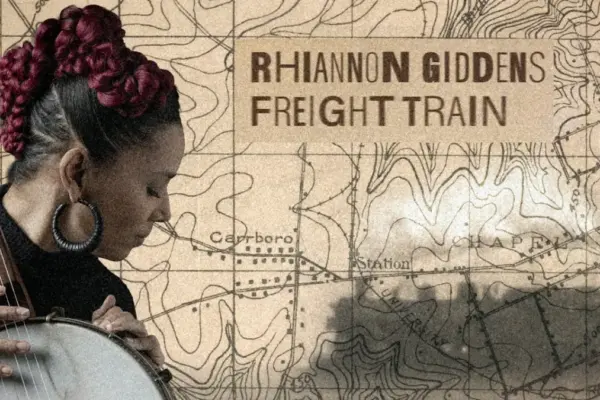
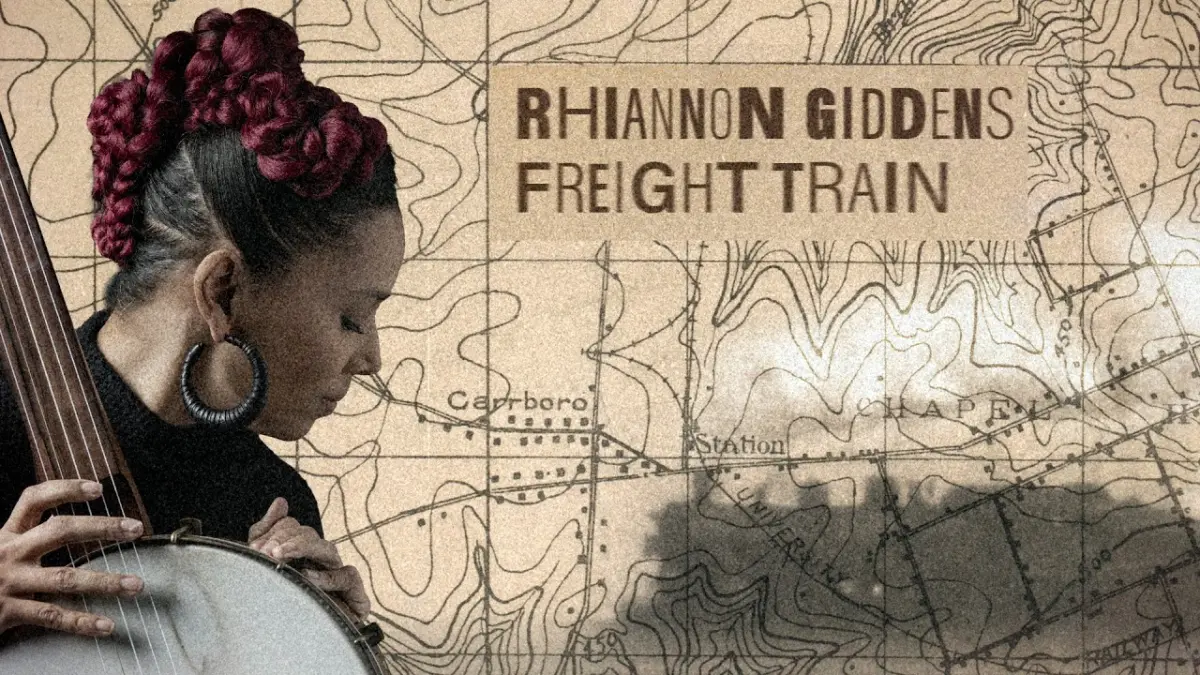
In the rich, often unheralded annals of American roots music, few creations possess the enduring simplicity and profound emotional resonance of Elizabeth Cotten’s "Freight Train." Written when its author was merely a child growing up near the red-clay outskirts of Chapel Hill, North Carolina, the song has transcended its humble origins to become a foundational pillar of the American folk lexicon. Now, nearly a century after its inception, the legendary multi-instrumentalist, vocalist, and cultural historian Rhiannon Giddens has breathed new life into the classic. Giddens’ poignant interpretation serves as the lead single and emotional anchor for her eagerly anticipated upcoming studio album, Hope Is the Thing with Feathers, slated for commercial release on September 18 via Nonesuch Records.
Recorded with an arresting, austere intimacy that mirrors Cotten’s own historic 1958 recording, Giddens’ version strips the arrangement down to its barest essentials: her soaring, evocative vocals interwoven with the evocative acoustic guitar work of longtime collaborator Dirk Powell. This release is more than a simple cover; it represents a profound genealogical and artistic passing of the torch. Giddens, who grew up in Greensboro, North Carolina—just a short journey from Cotten’s childhood home—has long championed the marginalized architects of American music. With Hope Is the Thing with Feathers, she continues her vital mission of unearthing, preserving, and revitalizing the foundational sounds that built the nation’s musical identity.
This comprehensive report explores the origins of "Freight Train," the unique mechanics of the pioneering "Cotten picking" style, the intimate production methodologies behind Giddens’ new album, and the broader cultural implications of keeping these historic American narratives alive in the modern era.
Detailed Chronology: From the Rails of North Carolina to Global Acclaim
To fully appreciate the weight of Rhiannon Giddens’ recent recording, one must trace the extraordinary, improbable timeline of Elizabeth "Libba" Cotten, whose life stands as one of the most remarkable narratives in the history of American folk music.
The Childhood Genesis (c. 1905–1910)
Elizabeth Cotten was born into a musical family in or around 1893, though the exact year remains a subject of historical debate. Growing up near the train tracks on the edge of Chapel Hill, North Carolina, the rhythmic pounding of locomotives served as the soundtrack to her early life. By the time she was eleven or twelve years old, Cotten had composed "Freight Train," an original composition born from the hypnotic, mechanical cadence of the trains she watched roll past her family’s home.
Born naturally left-handed in an era and environment with zero specialized resources or instruction, Cotten forged her own path. With no one around to tell her it was "wrong," she acquired a standard, right-handed acoustic guitar, strung it for a right-handed player, and simply flipped it completely upside down. This unorthodox physical configuration meant that her thumb picked the high treble strings while her fingers handled the lower bass lines—a complete inversion of traditional guitar technique. This revolutionary approach yielded a syncopated, rolling bass-and-melody style that would eventually be christened by musicologists and fellow pickers alike as "Cotten picking."
Domestic Silence and the Folk Revival (1910–1950s)
Despite her prodigious talent as both a songwriter and instrumentalist, Cotten’s musical career was effectively paused for decades. As she grew into adulthood, marriage, motherhood, and domestic labor took precedence. For decades, the guitar sat silent, and "Freight Train" remained a private creation, known only to family members and neighbors.
It was not until the mid-1950s, while Cotten was working as a domestic helper in the Washington, D.C., home of the renowned folklorist and composer Ruth Crawford Seeger, that her hidden genius was accidentally uncovered. While tending to the Seeger household, Cotten picked up a guitar and began to play. The Seeger family—deeply embedded in the burgeoning American folk music revival—was utterly astounded by her sophisticated, self-taught technique and the timeless quality of her compositions.
Rediscovery, Recording, and Canonization (1958–1987)
With the encouragement of the Seeger family, Cotten re-entered the musical sphere, performing publicly for the first time in her sixties and recording her seminal work for Folkways Records. Her 1958 self-titled debut album featured the definitive recording of "Freight Train," capturing her warm, unhurried vocal delivery and her mesmerizing, rolling guitar accompaniment.
The song quickly caught fire within the folk revival movement. It was subsequently covered, adapted, and popularized by titans of the era such as Pete Seeger, Joan Baez, Peter, Paul and Mary, and Taj Mahal. However, despite the song becoming a ubiquitous jam-session standard across the globe, Cotten’s original authorship was frequently overlooked in the early days, a common injustice faced by Black traditional artists of her generation. Thankfully, Cotten lived to reclaim her legacy, touring extensively, performing at major folk festivals, and ultimately receiving a Grammy Award in 1985 for Best Traditional Folk Recording at the remarkable age of 90, just two years before her passing in 1987.
The Modern Torchbearer: Rhiannon Giddens (Present Day)
Fast forward to the 21st century, where Rhiannon Giddens has emerged as one of the most vital cultural preservationists and celebrated artists in contemporary music. Having first risen to prominence as a founding member of the Grammy-winning string band the Carolina Chocolate Drops—an ensemble dedicated to unearthing the heavily Black history of traditional old-time string band music—Giddens has consistently used her platform to honor foundational artists like Cotten.
Now, with her upcoming Nonesuch Records release, Hope Is the Thing with Feathers, Giddens brings the timeline full circle. Having grown up in Greensboro, North Carolina, a mere stone’s throw from Cotten’s birthplace, Giddens views the interpretation of "Freight Train" not merely as a cover song, but as a deeply personal act of geographic and cultural lineage.
Supporting Context & Production Metrics: Capturing the Sound of the Room
The creation of Hope Is the Thing with Feathers represents a deliberate departure from the heavily produced, highly polished aesthetics that dominate much of modern popular music. Instead, Giddens and her creative team opted for an organic, raw documentation process that prioritizes atmosphere, performance dynamics, and historical authenticity.
The Recording Environment: The Cypress House
The entirety of the album was tracked live at The Cypress House, a historic and acoustically resonant recording space located in Breaux Bridge, Louisiana. Situated deep within the cultural heart of Acadiana, The Cypress House provided an environment far removed from the sterile confines of a traditional corporate recording studio.
+------------------------------------------------------------+
|                THE CYPRESS HOUSE PRODUCTION METRICS         |
+------------------------------------------------------------+
| Location:          Breaux Bridge, Louisiana                |
| Primary Format:    Live-to-Room Tracking                   |
| Overdubs:          Minimal / Sparse                        |
| Acoustic Focus:    Natural Room Ambience Preserved         |
| Instrumentation:   Vocals, Acoustic Guitar (Dirk Powell)   |
+------------------------------------------------------------+
As detailed in production notes, Giddens and her core collaborators made a conscious artistic decision to keep the raw, ambient sound of the room intact within the final mix. Rather than editing out the human elements that often plague modern recordings, the production embraces them. Listeners to the album—and to the "Freight Train" single—will note the inclusion of unvarnished studio artifacts: the faint sound of casual conversation between takes, the shuffle of feet on wooden floors, and the natural resonance of wooden instruments vibrating within a physical space.
The "Freight Train" Arrangement
For her rendition of Cotten’s masterwork, Giddens deliberately mirrored the starkness of Cotten’s original 1958 recording. The track features zero percussion, orchestral swelling, or modern electronic manipulation. Instead, it relies entirely on:
- Rhiannon Giddens’ Lead Vocals: Delivered with a haunting clarity and profound emotional depth, honoring the plainspoken sorrow and longing embedded in Cotten’s original lyrical themes.
- Dirk Powell’s Acoustic Guitar: Providing a steady, hypnotic rhythmic foundation that evokes the relentless forward motion of the steam locomotives Cotten watched as a child.
Thematic Resonance: "Old Number Nine"
The enduring power of "Freight Train" lies in its striking juxtaposition of youthful innocence and mortality. Cotten wrote the song as an eleven-year-old child, yet the lyrics grapple with the ultimate finality of death with chilling composure. The song famously implores listeners:
"Freight train, freight train, run so fast,
Freight train, freight train, run so fast,
Please don’t tell what station I’m at,
‘Cause they won’t know what route I took."
Furthermore, the song’s most poignant refrain explicitly asks to be laid to rest near the tracks, ensuring that the singer can continue to hear the familiar, comforting sound of "old Number Nine" rolling past long after life has ceased. Giddens’ vocal delivery captures this eerie, beautiful acceptance, transforming a simple folk tune into an existential meditation on memory, place, and passing time.
Official Statements and Artistic Vision
The announcement of Hope Is the Thing with Feathers and the release of "Freight Train" have been accompanied by widespread critical acclaim and profound reflections from the artists involved.
Rhiannon Giddens, whose career has been defined by a tireless commitment to expanding the historical narrative of American roots music, views projects of this nature as essential cultural work. In statements accompanying the album rollout, Giddens has frequently emphasized the importance of acknowledging the Black roots of traditional American genres—including country, blues, and old-time folk music—that were whitewashed during the mid-20th-century commercial recording booms.
While Elizabeth Cotten is no longer here to witness the ongoing evolution of her song—having passed away in 1987—her legacy continues to be fiercely protected and celebrated by cultural historians and modern artists alike. Musicologists at institutions such as the Smithsonian Folkways (which preserves her original recordings) have consistently lauded artists like Giddens for keeping Cotten’s innovative spirit alive for generations of listeners who might otherwise have lost touch with these foundational threads.
Representatives from Nonesuch Records have expressed immense pride in spearheading the release of Hope Is the Thing with Feathers, noting that the album represents a high watermark in Giddens’ already stellar discography. By pairing Giddens’ peerless vocal talent and historical acumen with the intimate production style captured at The Cypress House, Nonesuch has positioned the album as a landmark cultural release for the autumn season.
Future Outlook: The Legacy of Hope Is the Thing with Feathers
As the music industry prepares for the full commercial release of Hope Is the Thing with Feathers on September 18, industry analysts and roots music enthusiasts alike are looking closely at the broader cultural impact of Giddens’ latest endeavor.
The Expanding Revival of American Roots Music
In an era dominated by hyper-processed digital pop and algorithmic music creation, projects rooted in organic, live-room performance are experiencing a powerful renaissance. Artists like Rhiannon Giddens, Tyler Childers, Allison Russell, and Christone "Kingfish" Ingram are proving that modern audiences possess a deep, unsatisfied appetite for authenticity, history, and narrative depth in their music.
Giddens’ version of "Freight Train" acts as a vital bridge across generations. It demonstrates to contemporary listeners that the songs written a century ago by marginalized working-class Americans—such as a young Black girl sitting by the railroad tracks in North Carolina—still hold the power to move, challenge, and inspire today.
Upcoming Tour Dates and Live Performances
Following the release of Hope Is the Thing with Feathers via Nonesuch Records, Giddens is slated to embark on an extensive international touring schedule. Critics anticipate that her live performances of "Freight Train" will serve as emotional centerpieces of her concert sets, offering audiences a rare chance to witness a master interpreter breathing living history into a timeless American standard.
Fans eager to experience the music immediately can stream "Freight Train" across all major digital platforms via this official link, and pre-order physical and digital copies of Hope Is the Thing with Feathers by visiting the Nonesuch Records official store.
As the train rolls on into the future, carried forward by the capable hands of artists like Rhiannon Giddens, the legacy of Elizabeth Cotten remains securely on track—vibrant, haunting, and eternal.