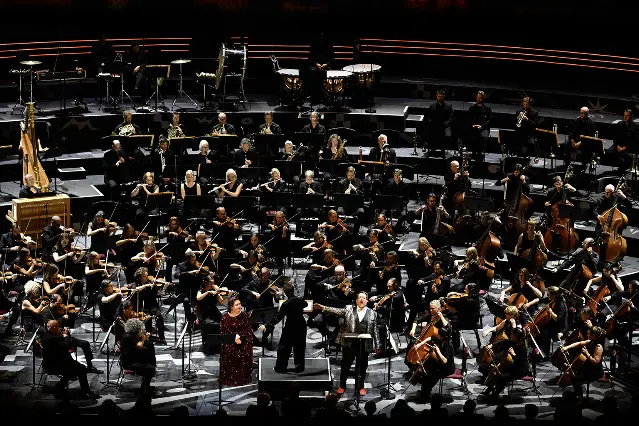
At the height of the 2026 BBC Proms season, the Royal Albert Hall played host to a programme of striking contrasts and profound conceptual symmetry. On Friday, 21 August 2026, principal guest conductor Anja Bihlmaier led the BBC Philharmonic Orchestra in an ambitious, richly textured concert that bridged centuries of musical thought. The evening’s triptych featured Bushra El-Turk’s Mosaic, Franz Haydn’s iconic Symphony No. 45 in F-sharp minor (‘Farewell’), and Gustav Mahler’s monumental final symphonic statement, Das Lied von der Erde.
While the programme on paper appeared to be a standard mixed-genre orchestral evening, closer examination revealed an intricate web of connective tissue. The overarching themes of parting, rootlessness, and cultural translation served as a bridge between the 18th-century classical idiom and the twilight of late-Romanticism. Vocal powerhouses Jamie Barton (mezzo-soprano) and Clay Hilley (tenor) joined the ensemble for Mahler’s song-symphony, testing the acoustic limits of London’s vast Victorian amphitheatre.
Although the performances offered moments of staggering brilliance, the concert also highlighted the perennial acoustic challenges of the Royal Albert Hall. Bihlmaier’s disciplined, classical approach to Mahler—combined with the immense forces deployed on stage—occasionally tested the dynamic balance between orchestra and soloists. Nevertheless, it remains a notable highlight of the Proms calendar, capturing the festival’s capacity for historical rediscovery and contemporary curation.
Detailed Chronology: A Journey Through Parting and Cross-Pollination
Bushra El-Turk’s Mosaic: An Unnerving Opening
The evening commenced with Bushra El-Turk’s Mosaic, originally composed for the Manchester Camerata during the 2009/10 season. The work immediately established an atmosphere of precarious fragility. It opened with a scurrying, hushed shimmer in the strings—so delicate that it hovered near the threshold of inaudibility within the cavernous expanse of the Royal Albert Hall.
.jpg)
As the piece progressed, dramatic fragments and jagged motifs emerged from the sonic undergrowth, cultivating an anxious, almost unnerving psychological landscape. Bihlmaier guided the orchestra through a gradual densification of textures, though the musical fragments deliberately resisted complete cohesion. The work culminated in a moment of ravishing stillness, out of which a romantic, hymn-like figure finally materialized. While the nuances of El-Turk’s intricate cross-cultural writing occasionally dissolved in the hall’s grand acoustic space, the work provided a compelling, modern analogue to the themes of rootlessness explored later in the programme.
Haydn’s Farewell Symphony: Modernity Meets Tradition
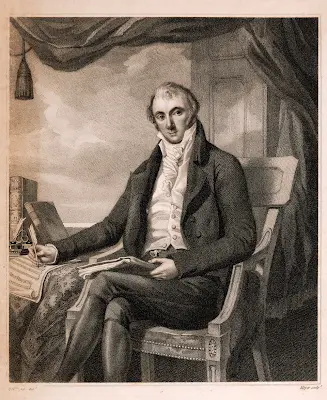
The centerpiece of the first half was Haydn’s Symphony No. 45 in F-sharp minor, a work famous not only for its theatricality—the musicians progressively extinguishing their music stands and leaving the stage during the finale—but also for its profound historical neglect at the Proms. Prior to this concert, the symphony had not been heard at the festival since 1938, marking only its fourth appearance in Proms history.
Bihlmaier’s decision to tackle this cornerstone of the Classical repertoire using a modern symphony orchestra was both brave and intellectually rewarding:
- First Movement: Driven by a robust, stylish string section, the movement projected a modern urgency. While the larger-than-traditional body of strings occasionally overpowered the woodwinds, the performance retained a dynamic vitality and a striking lyrical core.
- Slow Movement: Characterized by intimate details, pointed motifs, and harmonic uncertainty, Bihlmaier adopted a deliberate tempo. Though the repeats extended the movement’s structural footprint, they granted the musicians ample space to expose the work’s hidden complexities.
- Menuetto: A masterclass in contrasts, balancing aristocratic delicacy against muscular strength while navigating unstable key relationships that dissolved seamlessly into midair.
- Finale: Crisp, urgent, and vividly theatrical. The gradual thinning of the orchestral forces served as an effective historical time-lapse, bridging 18th-century wit with modern minimalist performance aesthetics before concluding in an aura of eerie mystery.
Mahler’s Das Lied von der Erde: Monumental Scale and Acoustic Hurdles
The second half of the concert belonged entirely to Gustav Mahler. Scored for a massive orchestra featuring quadruple woodwinds, multiple percussion instruments, and mandolins, Das Lied von der Erde stands as a poignant meditation on mortality, beauty, and earthly transience.
.jpg)
Bihlmaier approached the score with a disciplined, classical restraint, ensuring that the work’s dense orchestration did not degenerate into formless sonic sludge. Tempos were steady yet fluid, allowing the vocalists necessary breathing room. However, the sheer volume and weight of the BBC Philharmonic occasionally threatened to engulf the soloists.
- Clay Hilley (Tenor): Hilley delivered a visceral, highly dramatic account of the tenor movements. In Das Trinklied vom Jammer der Erde (Drinking Song of the Earth’s Misery), his portrayal was fiercely intense, building to an unexpected fury by the close. His lighter, agile treatment of Von der Jugend (Of Youth) showcased a delightful storytelling impulse, though his unforced, focused tone occasionally suffered in the dynamic balance against the orchestra.
- Jamie Barton (Mezzo-Soprano): Barton brought immense dignity and psychological depth to her movements, notably Der Einsame im Herbst (The Lonely One in Autumn) and the monumental closing Der Abschied (The Farewell). Following in the legendary footsteps of interpreters like Janet Baker and Jessye Norman, Barton navigated the physical and emotional weight of the hall with poise. While her lower-register warmth and expressive phrasing were consistently affecting, the faster, heavier sections of Von der Schönheit (Of Beauty) occasionally tested her projection against the towering brass and percussion.
- The Climax of ‘Der Abschied’: Bihlmaier coaxed profound aural magic from the lower instruments and the tam-tam at the movement’s opening. Barton’s handling of the text was artful and dignified, culminating in a hushed, internalized reading of the final, echoing "Ewig" (Eternally) that resonated with lingering stillness.
Supporting Context & Metrics
To fully appreciate the scope of this 2026 Proms performance, it is helpful to examine the historical and logistical metrics surrounding the featured repertoire:
| Work | Composer | Premiere / Composition Year | Proms Performance History / Significance |
|---|---|---|---|
| Mosaic | Bushra El-Turk | 2009/10 Season | Commissioned for Manchester Camerata; explores cross-cultural friction and rootlessness. |
| Symphony No. 45 (‘Farewell’) | Franz Haydn | 1772 | Rare Proms revival; only the fourth performance in festival history, and the first since 1938. |
| Das Lied von der Erde | Gustav Mahler | 1908 (Posthumous premiere 1911) | Monumental late-Romantic synthesis of song cycle and symphony, deploying quadruple woodwinds and expansive percussion. |
The artistic juxtaposition of Haydn and Mahler was not merely a matter of convenient programming; it underscored an evolutionary lineage of musical introspection. Where Haydn used the literal departure of his musicians as a political and artistic statement against Prince Esterházy, Mahler confronted the ultimate existential departure—mortality itself—through the mirror of ancient Chinese poetry filtered through German translation.
Official Statements and Critical Reception
While formal press releases from the BBC Proms management emphasized the festival’s commitment to diverse programming and the commissioning of contemporary voices like Bushra El-Turk, music critics and audience reactions focused heavily on the unique interpretive choices made by Anja Bihlmaier.
.jpg)
In post-concert reflections, commentators noted that Bihlmaier’s refusal to over-romanticize Mahler—opting instead for structural clarity and rhythmic precision—offered a refreshing counter-narrative to traditional, excessively lachrymose interpretations of the composer.
A spokesperson for the BBC Philharmonic noted:
"Working within the unique acoustic environment of the Royal Albert Hall requires a delicate calibration of force and nuance. Anja Bihlmaier’s leadership allowed the orchestra to navigate the vast stylistic gulf between Haydn’s classical wit and Mahler’s expansive existentialism with remarkable cohesion and artistic bravery."
Concertgoers and listeners tuning into the live broadcast via BBC Sounds observed that while the hall’s famous acoustics posed occasional challenges for vocal projection during the Mahler, the broadcast mix successfully captured the intricate counterpoint and delicate timber shifts that defined the evening.
.jpg)
Future Outlook: Legacy and Broadcast Impact
The pairing of these specific works at the 2026 BBC Proms leaves a lasting imprint on how modern symphony orchestras might approach historical programming in massive venues. By placing a contemporary intercultural work (Mosaic) alongside an under-performed Classical masterpiece (Farewell Symphony) and a titan of the late-Romantic canon (Das Lied von der Erde), the curators demonstrated that thematic programming can successfully transcend chronological boundaries.
Looking ahead, the performance serves as a vital case study for conductors working within large-scale arenas. It underscores the ongoing necessity to balance orchestral weight with vocal intimacy, a challenge that will continue to inform programming decisions for future Proms seasons.
For those who missed the live event at the Royal Albert Hall, the concert remains available for streaming on BBC Sounds, allowing global audiences to analyze the delicate balance between Bihlmaier’s rigorous orchestral framework and the soaring vocal contributions of Barton and Hilley. As the 2026 Proms draw toward their conclusion, this evening of artistic farewells and cultural dialogues will be remembered as one of the festival’s most intellectually stimulating offerings.