Executive Overview
For nearly two decades, the acclaimed Polish-Ukrainian musical collective DAGADANA has functioned as a cultural bridge, weaving traditional Slavic folkways with contemporary jazz, electronic soundscapes, and global rhythms. Now, the band returns with a profound sense of catharsis and renewal in their latest single, "Będę Szczęśliwa" ("I Will Be Happy"). Serving as the lead single from their eagerly anticipated sixth studio album, Lumen, the track marks a deliberate artistic evolution, steering the ensemble away from strictly traditional acoustic folk into expansive, groove-oriented, and introspective territories.
Born out of personal healing and creative solitude during difficult times, "Będę Szczęśliwa" was sparked by co-founder Dana Vynnytska’s experimentation with an Indian harmonium—a hand-pumped keyboard instrument whose organic, breathing dynamics set the tone for the entire composition. Enhanced by the rhythmic intuition of percussionist Bartosz Nazaruk, who lays down an afro-funk-inspired groove, and the grounding bass lines of multi-instrumentalist Mikołaj Pospieszalski, the single is a masterclass in cross-cultural collaboration. Sung in alternating Polish and Ukrainian verses by Vynnytska and co-founder Daga Gregorowicz, the song serves as a powerful metaphor for surrender, forgiveness, and emotional resilience.
As DAGADANA prepares for the wider rollout of Lumen—a Latin-derived title meaning "light"—this release underscores the band’s enduring relevance. From humble beginnings at a Kraków jazz workshop to international acclaim spanning 34 countries, prestigious festival stages like Glastonbury, and contributions to Oscar-nominated cinematic projects, DAGADANA continues to prove that music remains one of humanity’s most potent healing forces.
Detailed Chronology: From a Kraków Workshop to Global Stages
To fully appreciate the emotional gravity and sonic maturity of "Będę Szczęśliwa," it is essential to trace the trajectory of DAGADANA from its accidental inception to its status as a pillar of modern European world music.
2006–2009: The Accidental Partnership
The story of DAGADANA begins in Kraków in 2006, during a local jazz workshop. Daga Gregorowicz, a Polish vocalist and sound engineer, and Dana Vynnytska, a Ukrainian singer and pianist, found themselves gravitating toward one another. Despite having no formal plans to form a permanent ensemble, the chemistry between their vocal timbres and shared passion for Slavic folklore was immediately apparent.
Shortly thereafter, Mikołaj Pospieszalski and Bartosz Nazaruk joined the fold, solidifying a permanent four-piece lineup. The name "DAGADANA" was born—a portmanteau of their foundational identities—and the group set out to explore the intersections of Polish and Ukrainian musical traditions. Their early rehearsals were characterized by an organic exchange of regional songs, lullabies, and ritual chants, reinterpreted through a modern prism of jazz improvisation and contemporary electronica.
2010–2018: International Expansion and Critical Acclaim
As their catalog expanded, so did their geographic footprint. DAGADANA refused to be confined to regional borders. Their relentless touring schedule took them across 34 countries, breaking down cultural barriers in unexpected corners of the globe. Memorable tours included performances in the sweeping expanses of the Moroccan desert, energetic club dates across Europe, and high-profile performances in Asia, including a historic concert within Beijing’s Forbidden City.
During this period, the band earned widespread critical acclaim, culminating in prestigious industry accolades. Most notably, they received Poland’s highest music industry honor, the Fryderyk Award, cementing their status as innovators who could honor ancestral music without sounding antiquated. Their ability to seamlessly fuse Polish and Ukrainian languages on stage became a poignant symbol of cross-border solidarity long before geopolitical tensions made such cultural unity critically urgent.
2019–Present: Cinematic Collaborations and the Path to Lumen
As the 2020s unfolded, DAGADANA’s profile continued to rise through high-profile multimedia collaborations. A major milestone arrived when the band co-wrote and performed "Jesień, Tańczuj," a standout track for the Oscar-nominated animated feature film Chłopi (The Peasants). The cinematic work showcased the band’s innate capacity to evoke deep, historical landscapes through contemporary sonic storytelling.
However, the creative process behind their upcoming sixth studio album, Lumen, demanded a different kind of introspection. Following global disruptions and personal trials, the band members retreated inward. For Dana Vynnytska, the path forward began with an instrument shipped to her doorstep during a period of emotional recovery: an Indian harmonium.
Supporting Context & Metrics: The Anatomy of "Będę Szczęśliwa"
The Genesis of the Sound
The creation of "Będę Szczęśliwa" departed significantly from DAGADANA’s traditional songwriting methods. Vynnytska spent solitary hours with her newly acquired Indian harmonium—a keyboard driven by manual air-pumping bellows, giving every note an organic, respiratory quality. As she worked through personal grief and emotional exhaustion, melodies began to materialize organically from the instrument’s droning, warm acoustics.
Once the foundational chords were established, the rest of the ensemble injected new energy into the track. Bartosz Nazaruk introduced an unexpected rhythmic foundation, infusing the traditional Slavic vocal delivery with an intricate, afro-funk-inspired beat. This rhythmic juxtaposition breathes life into the song, preventing it from sliding into melancholic stasis. Underneath, Mikołaj Pospieszalski anchors the arrangement with a warm, pulsing bass line that drives the narrative forward.
Lyrical Themes: The Metaphor of the River
Lyrically, "Będę Szczęśliwa" ("I Will Be Happy") explores the psychological release that comes from abandoning control. Sung in alternating Polish and Ukrainian verses, the lyrics function as a dialogue between two voices answering one another. Both perspectives circle back to a central metaphor: a turbulent river, fraught with sudden currents and sharp bends, and a woman learning to navigate its waters by swimming with the current rather than fighting it.
At the psychological turning point of the song, Vynnytska delivers a striking vocal refrain:
"Gdy odpuszczam jestem kołem. Uratuj nas oboje,"
("When I let go, I become the wheel. I’ll save us both.")
According to the band, the line was born from a deeply personal breakthrough involving forgiveness—first forgiving oneself, and subsequently extending that grace to others in order to re-enter the light. Daga Gregorowicz summarizes the overarching philosophical message with characteristic conciseness: true happiness begins the precise moment an individual chooses to drop an old grudge rather than carry its heavy burden indefinitely.
Production, Personnel, and Visual Artistry
The realization of "Będę Szczęśliwa" relied on a meticulous collaborative effort, both in the recording studio and through visual accompaniment.
- Production and Engineering: Mikołaj Pospieszalski took the reins as producer for the single, ensuring that the acoustic warmth of the harmonium blended seamlessly with modern rhythmic elements. The mixing duties were handled by Mateusz Hulbój, while Rafał Smoleń provided the final mastering, ensuring a dynamic, immersive soundstage suitable for both high-end headphone listening and festival sound systems.
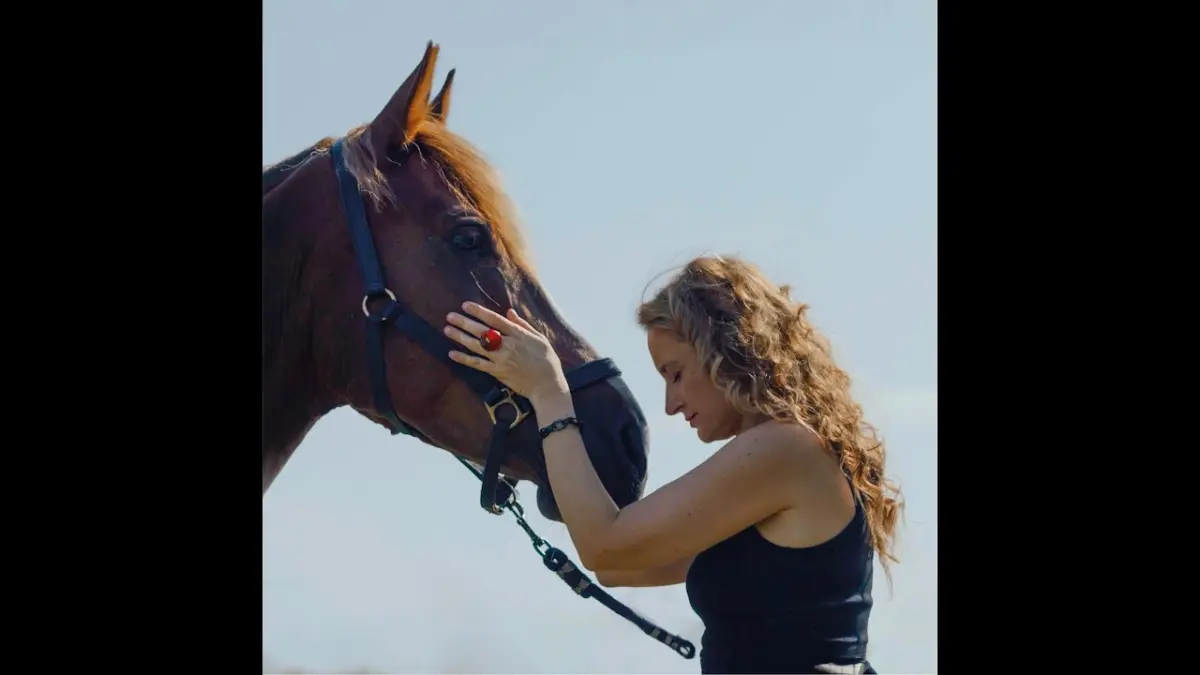
- The Visuals: To capture the earthy, contemplative spirit of the song, DAGADANA tapped director and cinematographer Sandra Matyszewska, who co-directed the accompanying music video alongside Daga Gregorowicz and Dana Vynnytska.
- Location: The video was filmed at Folwark Konny Hermanów, a picturesque historic horse farm situated along the banks of the Warta River in western Poland. The natural scenery—featuring flowing waters, wide pastures, and majestic horses—mirrors the lyrical themes of natural surrender, freedom, and grounded resilience.
Official Statements and Artistic Vision
Speaking on the conceptual transition behind their upcoming album, the members of DAGADANA have emphasized that Lumen represents a deliberate departure from the orthodox folk arrangements that initially defined their career.
"We have always honored the roots of the music we grew up with and studied, but art cannot remain stagnant," the band notes in production notes for the single. "With ‘Będę Szczęśliwa,’ and the broader framework of Lumen, we wanted to step away from expectations. The music needed to breathe, to reflect the actual emotional states we were navigating—darkness, healing, and ultimately, illumination."
The choice of Lumen—the Latin word for "light"—as the album title serves as a unifying beacon. While the world outside continues to face sociopolitical turbulence and personal trials, DAGADANA’s collective artistic output insists on finding agency through vulnerability. By transforming private struggles into universally resonant art, the duo of Vynnytska and Gregorowicz, supported by Pospieszalski and Nazaruk, reiterate that music remains an essential tool for emotional survival and cultural communion.
Future Outlook
As the music world awaits a confirmed release date for Lumen, "Będę Szczęśliwa" serves as an intoxicating preview of what is to come. DAGADANA is poised to embark on subsequent promotional tours, bringing their evolved sonic palette to both longstanding devotees and new listeners across international stages.
The single is currently available for streaming across all major digital platforms via FFM to Stream Link, and fans are encouraged to monitor DAGADANA’s Official Website for upcoming tour dates, visual releases, and formal announcements regarding the launch of Lumen.
In an era defined by rapid consumption and algorithmic predictability, DAGADANA continues to take the long, winding road—proving that true artistic longevity is forged through authenticity, cross-cultural empathy, and the courage to let go and swim with the current.