Executive Overview
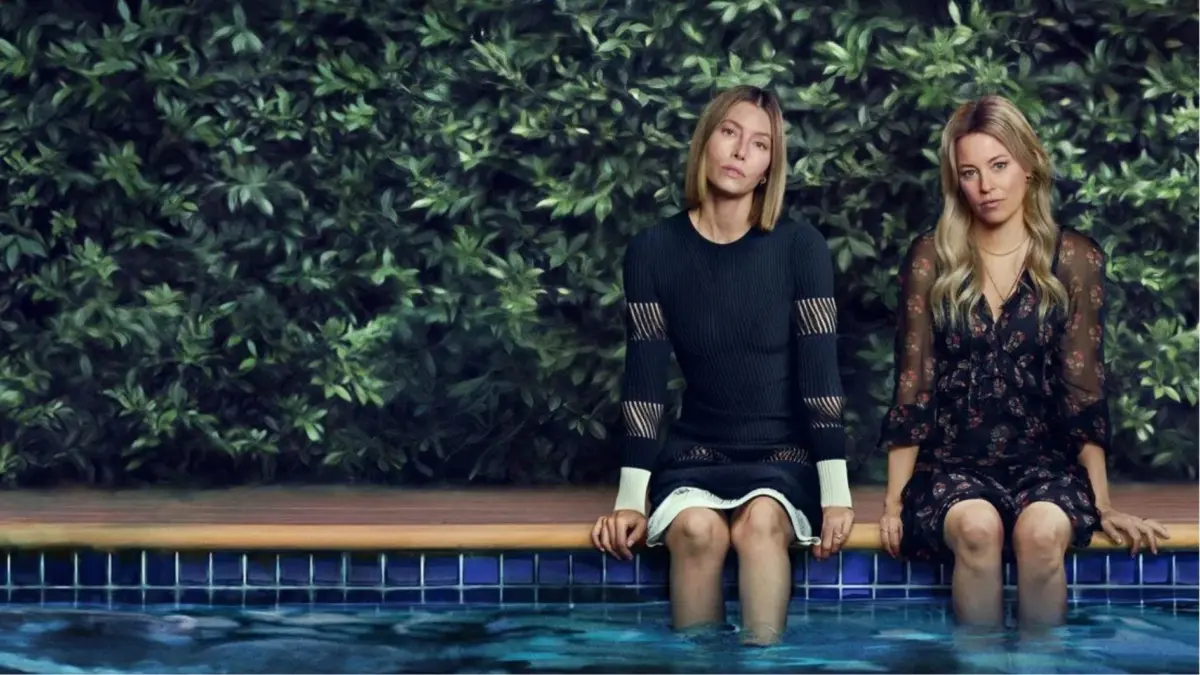
Prime Video’s psychological thriller The Better Sister has quickly established itself as one of the most talked-about streaming events of the television calendar. Blending the high-stakes intrigue of a classic murder mystery with the raw, emotional volatility of a character-driven family drama, the eight-episode limited series adapts its narrative focus away from procedural forensics and onto the fractured bond between two estranged sisters. At the center of the storm are A-list powerhouses Jessica Biel, who plays the controlled and image-conscious media executive Chloe Taylor, and Elizabeth Banks, who portrays her rough-around-the-edges, emotionally volatile sister Nicky Macintosh.
When Adam Macintosh—a man who was once married to Nicky and later wed Chloe—is brutally murdered, the ensuing police investigation shatters the meticulously curated veneer of Chloe’s high-society life. It forces the siblings back into each other’s orbits. While the show features all the trappings of a high-end prestige thriller—including shocking DNA revelations, courtroom showdowns, and a sprawling web of corporate and domestic secrets—critics and audiences agree that its true heartbeat lies in the toxic, complex terrain of sisterly love, resentment, and shared trauma.
Though the series has drawn mixed-to-positive reviews for its pacing dips and adherence to certain genre tropes, its standout performances, magnetic lead chemistry, and emotionally resonant finale have made it a must-watch binge. This deep-dive investigative review explores the narrative architecture of The Better Sister, dissects its critical reception, examines its standout cast, and weighs whether the series ultimately delivers on its high-concept promise.
Detailed Chronology & Narrative Breakdown
The Catalyst: A Murder Shatters a Double Life
The narrative engine of The Better Sister begins in high gear with the shocking murder of Adam Macintosh, played in flashbacks by Corey Stoll. Adam is a complex, deeply flawed figure whose charm masked a capacity for manipulation and violence. At the time of his death, he is married to Chloe Taylor (Jessica Biel), a successful, polished magazine editor who has spent years distancing herself from her working-class roots and her chaotic past with Nicky.
When Adam’s body is discovered, the investigation immediately upends Chloe’s structured world. Lead Detective Nancy Guidry (Kim Dickens) and her partner Matt Bowen (Bobby Naderi) launch a relentless inquiry that quickly casts suspicion on the immediate family. The murder investigation acts as a Trojan horse, dragging long-buried skeletons out of the closet and forcing Chloe and Nicky to cross a chasm of years-long estrangement.
The Mid-Season Shockwave: An Arrest in the Family
The plot thickens exponentially by the second episode, delivering a narrative twist that redefines the stakes for both women. DNA evidence collected from underneath the victim’s fingernails points directly to a chilling suspect: Ethan Macintosh (Maxwell Acee Donovan), the teenage son of Adam and Nicky, who was raised primarily within Chloe’s affluent household.
Ethan’s sudden arrest for his father’s murder shifts the series from a conventional whodunit into an agonizing legal and psychological drama. Gloria Reuben steps in as Michelle Sanders, Ethan’s fiercely protective attorney, while legal maneuverings involving figures like Jake Rodriguez (Gabriel Sloyer) and senior law firm partner Bill Braddock (Matthew Modine) complicate the defense.
As the trial looms, the pressure fractures the fragile detente between the sisters. Flashbacks meticulously piece together the past, revealing how Adam systematically manipulated both women, crossed boundaries, and built a legacy of psychological and physical abuse. The central mystery of "who killed Adam?" transforms into a far more devastating inquiry: How well did either sister truly know the man who defined their lives?
The Unravelling and the Confession
As the series reaches its climax, the truth behind Adam’s final moments is finally laid bare. In a twist that ties together the emotional and narrative threads of the eight-episode arc, it is revealed that Nicky Macintosh is the real killer.
Nicky struck the fatal blow after uncovering a horrifying truth: Adam had physically abused her estranged sister, Chloe. Driven by a desperate, protective instinct—and a lifetime of complicated guilt over how their lives intertwined—Nicky stepped in to eliminate the threat, trading her own freedom to shield Chloe from further trauma. The resolution of the murder mystery provides a definitive emotional and narrative conclusion, even as peripheral mysteries—such as Jake Rodriguez’s untimely and unexplained death—leave haunting question marks regarding the corrupt corporate networks tied to the Gentry Group.
Supporting Context, Cast Metrics, and Character Dynamics
To fully appreciate why The Better Sister resonates so deeply, one must examine the powerhouse ensemble assembled to bring the source material to life. The series succeeds largely because the supporting cast anchors the high-stakes melodrama in gritty, realistic performances.
The Complete Ensemble Cast
| Actor | Character | Professional Role / Narrative Significance |
|---|---|---|
| Jessica Biel | Chloe Taylor | Magazine editor and media executive; Adam’s second wife, fighting to preserve her reputation. |
| Elizabeth Banks | Nicky Macintosh | Chloe’s estranged sister; Adam’s first wife and biological mother to Ethan. |
| Corey Stoll | Adam Macintosh | The charismatic yet toxic murder victim whose dark secrets drive the plot. |
| Maxwell Acee Donovan | Ethan Macintosh | Adam and Nicky’s son, whose arrest for murder anchors the central conflict. |
| Kim Dickens | Nancy Guidry | The sharp, relentless lead detective heading the homicide investigation. |
| Bobby Naderi | Matt Bowen | Detective partner to Nancy Guidry, navigating the twists of the high-profile case. |
| Gloria Reuben | Michelle Sanders | Tenacious defense attorney fighting to clear Ethan’s name. |
| Gabriel Sloyer | Jake Rodriguez | Shady attorney whose mysterious death links back to corporate corruption. |
| Matthew Modine | Bill Braddock | Senior law firm figure wielding considerable behind-the-scenes power. |
| Lorraine Toussaint | Catherine Lancaster | Chloe’s influential mentor and publishing boss, representing the elite world Chloe joined. |
The Chemistry of Contrasts
The driving force of the series is the friction between Biel’s Chloe and Banks’s Nicky. Biel plays Chloe with an icy, defensive containment—every posture and micro-expression telegraphs a woman terrified that her carefully built house of cards will collapse. Conversely, Banks infuses Nicky with a gritty, unpolished emotional volatility. Nicky is blunt, defensive, and unapologetically raw.
This ideological and behavioral clash makes their scenes crackle with tension. Years of suppressed jealousy, differing paths in life, and competing maternal instincts toward Ethan manifest in arguments that feel intensely real. As critics have noted, the true thesis of the show is encapsulated in its Which woman is truly "the better sister?" The narrative refuses to offer an easy binary, instead showing how both women made harmful, desperate choices in the name of protection and survival.
Official Critical Reception & Audience Metrics
The Better Sister has generated a fascinating dialogue across major television review platforms, establishing a distinct divide between professional critics and streaming audiences.
Critical Consensus: Praise Tempered by Familiar Tropes
Review aggregates indicate a mixed-to-positive critical reception. Reviewers universally laud the masterclass performances given by Jessica Biel and Elizabeth Banks, singling out their on-screen chemistry as the primary anchor that elevates the series above standard genre fare. Critics have praised the show for using the murder mystery as a Trojan horse to explore complex themes of domestic abuse, generational trauma, and feminine solidarity.
However, the show has not escaped criticism. Reviewers frequently point out pacing issues, particularly a noticeable mid-season slowdown where the narrative treading water threatens to derail the momentum established in the pilot. Furthermore, seasoned mystery fans have noted that several of the show’s central twists rely heavily on well-worn thriller tropes—such as fragmented flashbacks, hidden corporate conspiracies, and last-minute exonerations—that can feel predictable to regular consumers of prestige crime dramas.
Audience Reception: Highly Bingeable Melodrama
Viewers have generally been warmer toward the series than professional critics. Streaming audiences have embraced The Better Sister as an ideal weekend binge, citing the addictive cliffhangers, high production values, and emotional payoff of the finale. While some viewers expressed frustration over mid-season narrative detours and the occasionally erratic choices made by characters, the overwhelming consensus is that the emotional weight of the sibling dynamic delivers a satisfying narrative journey.
Future Outlook: Will There Be a Season 2?
As audiences reach the emotional and narrative climax of the eight-episode arc, a natural question arises: Will Prime Video renew The Better Sister for a second season?
As of now, Prime Video has not confirmed a second season. The Better Sister was developed and marketed strictly as a limited series, and its core narrative engine—the murder of Adam Macintosh and the subsequent trial of his son—reaches a definitive, closed resolution in the finale. Nicky’s confession brings judicial and moral closure to the central homicide case, leaving little room for a direct continuation of the primary plot.
Nevertheless, modern television landscapes frequently find ways to extend limited series if ratings exceed expectations. The finale does leave a few structural loose ends dangling—most notably the mysterious, unexplained death of corporate attorney Jake Rodriguez and the broader institutional corruption tied to the Gentry Group and figures like Bill Braddock. While these threads offer theoretical avenues for an anthology-style continuation or a corporate-espionage spin-off, creators and network executives have signaled that viewers should treat The Better Sister as a complete, self-contained single-season thriller.
Conclusion: The Bottom Line
The Better Sister succeeds because it recognizes a fundamental truth of great storytelling: a murder mystery is only as compelling as the people left behind to mourn, accuse, and defend. While the series occasionally stumbles over familiar thriller conventions, uneven mid-season pacing, and predictable narrative twists, it easily transcends its pulpier elements through sheer force of performance.
Jessica Biel and Elizabeth Banks deliver career-best television work, anchoring a story that uses the crime genre to probe the messy, unbreakable bonds of sisterhood. For fans of psychological suspense, domestic noir, and high-stakes family dramas, The Better Sister is an engaging, emotionally satisfying watch. The investigation may be what draws viewers in through the front door, but it is the complicated, scarred, and ultimately resilient relationship between Chloe and Nicky that ensures they stay until the very last frame.