Executive Overview
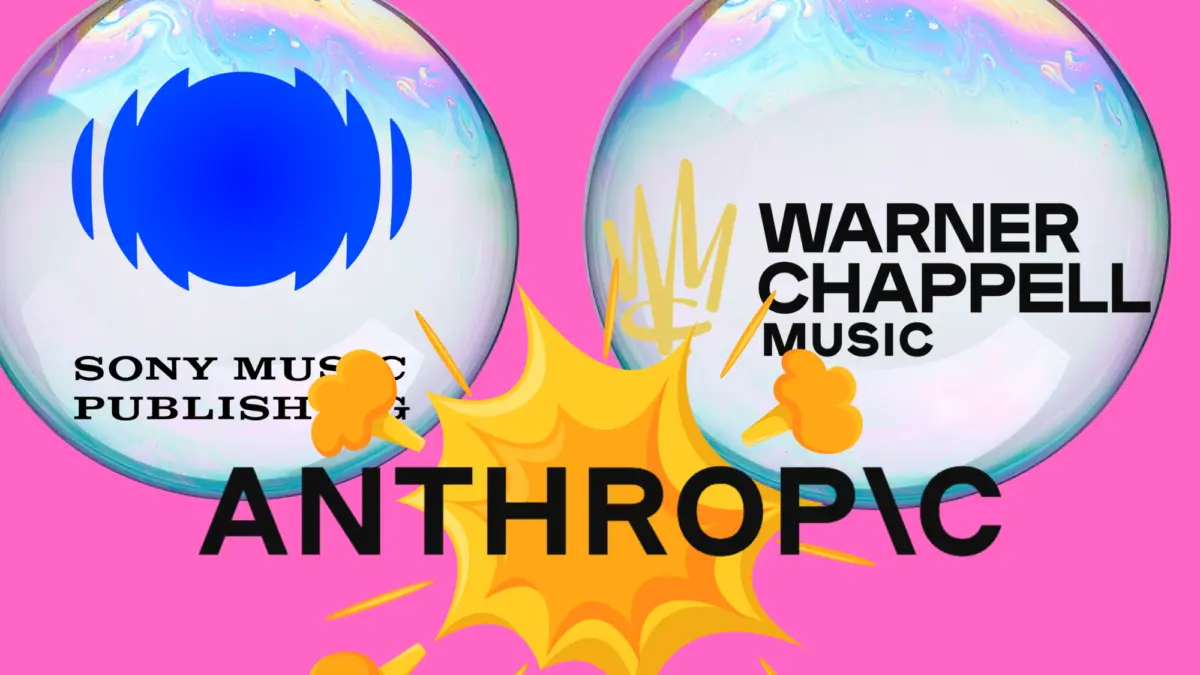
The legal battlegrounds separating the music industry from generative artificial intelligence developers have shifted from abstract policy debates to aggressive, high-stakes litigation targeting executive accountability. In a dramatic escalation last week, music publishing powerhouses Sony Music Publishing and Warner Chappell Music officially joined the ongoing litigation against artificial intelligence titan Anthropic. However, unlike previous complaints that cast a wide net solely over corporate entities, this new lawsuit takes a deeply personal approach. It directly names two of Anthropic’s high-profile co-founders—Ben Mann and Dario Amodei—as active participants in a systematic enterprise of intellectual property theft.
According to the explosive court filings, the executives did not merely oversee a corporate strategy; they allegedly acted as hands-on operators in the unlawful downloading of millions of pirated books, including texts containing copyrighted sheet music and lyrics. These stolen materials were purportedly harvested to construct the foundational training datasets for Anthropic’s flagship Claude AI model. The publishers characterize this enterprise as "one of the largest and most blatant ongoing thefts of intellectual property in history," raising the stakes for every technology firm that relies on scraped web data to train large language models.
This blockbuster legal maneuver arrives amid a swelling tide of copyright actions across the creative sectors. Record labels, music publishers, and independent creators are increasingly pushing back against the rapid, unchecked commercialization of generative AI. While companies like Suno, Udio, and Anthropic continue to invoke the legal shield of "fair use," evolving judicial interpretations and newly exposed methods of data acquisition are threatening to dismantle the tech industry’s foundational defense. As statutory damages soar into the billions and courts begin to scrutinize the provenance of training data more closely, the music industry’s crusade against unauthorized AI training has transformed into an existential struggle for the future of human authorship and commercial copyright protection.
Detailed Chronology of the Anthropic Litigation
To fully understand the gravity of the Sony and Warner Chappell lawsuit, it is necessary to examine the timeline of escalating hostilities between music publishers and Anthropic. The confrontation did not materialize overnight; rather, it represents the culmination of a multi-year campaign by copyright holders seeking accountability from Silicon Valley.
The Initial Salvo (October 2023)
The legal friction between the music publishing sector and Anthropic first erupted in October 2023. A coalition consisting of Universal Music Publishing, Concord, and ABKCO filed a landmark copyright infringement lawsuit against the AI company. At the time, the complaint focused primarily on the unauthorized reproduction of musical compositions and lyrics used to prompt Claude into generating rhyming text, poetry, and song lyrics. This initial filing established the blueprint for subsequent actions, highlighting how conversational AI models could reproduce copyrighted lyrical material nearly word-for-word upon request.
The Expanding Coalition (March – September 2024)
As the legal discovery phase loomed and industry awareness grew, other major players sought legal recourse. BMG launched its own independent legal action in March 2024, signaling that the initial October lawsuit was merely the tip of the iceberg. By September 2024, Round Hill Music entered the fray as another late-comer, filing its own comprehensive lawsuit against Anthropic. Each successive filing added pressure to the AI firm, forcing its legal team to defend its training methodologies across multiple fronts simultaneously.
The Personalization of Liability (Last Week)
The litigation entered a radically different phase when Sony Music Publishing and Warner Chappell Music filed their joint complaint. Moving beyond standard corporate liability, the publishers targeted co-founders Ben Mann and Dario Amodei directly. The lawsuit alleges that Mann and Amodei were not passive beneficiaries of corporate strategy, but active architects of the piracy operation.
According to the legal documents, Ben Mann personally utilized peer-to-peer BitTorrent networks to unlawfully download and upload millions of pirated books. Furthermore, the complaint asserts that both Mann and Amodei "expressly directed other Anthropic employees to do the same." The publishers argue that without the explicit "direction and approval" of these two founders, the extensive torrenting activity required to amass Anthropic’s early training datasets would never have occurred.
Supporting Context & Metrics: The Mechanics of AI Piracy and Evolving Legal Defenses
The legal arguments underpinning the Sony and Warner Chappell lawsuit reflect a sophisticated understanding of how AI models are built, as well as an acute awareness of recent judicial rulings regarding US copyright law.
The BitTorrent Pipeline and the "Fair Use" Battleground
For years, generative AI companies have leaned heavily on the legal doctrine of fair use under US copyright law. Under this defense, tech firms argue that copying vast corpuses of existing works to train transformative machine learning models constitutes a non-infringing, socially beneficial use of copyrighted material. Consequently, they contend they do not need to secure licenses or compensate copyright owners during the data-collection phase.
However, recent judicial scrutiny has introduced critical caveats to the fair use defense. Notably, when a group of book authors sued Anthropic over similar data-harvesting practices, the presiding judge acknowledged that fair use could theoretically apply to AI training—provided that the company began the process with legitimately sourced copies.
This distinction proved fatal to Anthropic’s defense in that specific action. Because Anthropic initially built its foundational training dataset by scraping and pirating millions of ebooks via torrent networks, the fair use shield fractured. This vulnerability ultimately forced Anthropic to agree to a staggering $1.5 billion settlement with the authors.
Sony and Warner Chappell have deliberately integrated this precedent into their new complaint. By leading with explicit piracy allegations—framing Anthropic’s data acquisition as a "brazen campaign of illegally torrenting, scraping and downloading copyrighted works on a massive scale"—the publishers aim to strip away the fair use defense entirely by proving the foundational data was tainted from day one.
The Meta Precedent and Market Dilution
The legal landscape shifted further in a parallel case involving book authors and Meta. In that instance, a federal judge accepted Meta’s fair use defense but noted that the plaintiffs might have defeated the argument had they successfully demonstrated that the AI model’s output actively diluted the commercial market for the original copyrighted works.
Sensing the strategic value of this ruling, Sony and Warner Chappell have dedicated a substantial portion of their lawsuit to the concept of market dilution. The complaint details how training Claude on copyrighted lyrics equips the model to generate vast quantities of ostensibly "new" AI-generated song lyrics. The publishers argue these outputs serve as direct, harmful market substitutes that compete unfairly with legitimate, human-authored works protected by copyright.
+-----------------------------------------------------------------------------------+
|                        THE AI TRAINING DATA PIPELINE                              |
+-----------------------------------------------------------------------------------+
|                                                                                   |
|  [1. Acquisition] ---------> [2. Processing] -----------> [3. Generation]         |
|   - Torrenting              - Tokenization               - LLM / Claude           |
|   - Web Scraping            - Vector Embeddings          - Market Substitution    |
|   - Pirated E-Books         - Model Training             - Direct Competition     |
|                                                                                   |
|   * LEGAL VULNERABILITY: Tainted sourcing destroys the "Fair Use" defense.       |
+-----------------------------------------------------------------------------------+
Broader Industry Metrics: A Multi-Front War
The conflict between the music industry and generative AI is far from isolated to Anthropic. It has expanded into a complex, multi-jurisdictional war spanning several prominent AI audio generation platforms:
- Suno and Udio: These text-to-music generation platforms have become primary targets for major record labels and independent publishers alike.
- Gerencia 360 Music: A prominent US-based company specializing in regional Mexican music recently filed a lawsuit against Suno. The firm argues that its copyrighted Spanish-language catalog was instrumental in training Suno’s model to generate Spanish-language songs, giving the platform an unfair competitive advantage in capturing Spanish-speaking user markets.
- Sony vs. Udio: Sony Music escalated its campaign against Udio by filing a secondary lawsuit in July targeting an additional 30,442 sound recordings. This tactical move drastically expanded potential statutory damages, putting the total financial exposure in the range of $4.5 billion if Sony prevails. Udio fired back in court last week, maintaining that its sampling and modeling constitute "quintessential fair use" while accusing Sony of anti-competitive behavior and invoking defenses of "copyright misuse and unclean hands."
Official Statements and Industry Perspectives
While official public relations statements from technology companies typically emphasize innovation, educational value, and cooperative future frameworks, the tone from creative industry trade bodies and legal representatives is uncompromising.
Representatives for the National Music Publishers’ Association (NMPA) and counsel for the major music publishers have repeatedly stressed that technological innovation cannot be built on a foundation of systemic theft. In statements accompanying the recent filings, publishing executives emphasized that treating copyrighted works as free raw materials for commercial tech products undermines the foundational economy of the global music business.
"By training its models with copies of music publishers’ lyrics," the Sony and Warner Chappell legal filing notes, "Anthropic teaches its Claude models how to generate vast quantities of purportedly ‘new’ AI-generated song lyrics, which compete with music publishers’ legitimate copyrighted works as harmful market substitutes."
Conversely, tech enterprises and their legal defenders argue that restricting access to public internet data for machine learning will stifle technological progress, entrench monopolistic incumbents, and disadvantage Western technological development relative to global competitors with more permissive regulatory environments. Yet, as settlement figures climb into the billions—exemplified by Anthropic’s prior payout to authors—the financial reality of unauthorized data collection is forcing a reevaluation of tech-sector optimism.
Future Outlook: What Lies Ahead for AI and Music Copyright
The convergence of personal founder liability, billions of dollars in potential damages, and evolving judicial interpretations of fair use marks a permanent turning point for the generative AI sector.
1. Piercing the Corporate Veil and Founder Liability
By naming Ben Mann and Dario Amodei personally in the lawsuit, Sony and Warner Chappell have introduced a high-risk precedent for tech executives. If the publishers succeed in holding founders personally accountable for directing copyright infringement during the startup phase, the traditional safety net of corporate limited liability will be severely compromised. Future AI entrepreneurs will face intense personal legal exposure, forcing rigorous compliance audits of training datasets before a single line of code is written.
2. The Mandate for Licensed Datasets
As courts continue to penalize platforms that rely on scraped, pirated, or illicitly acquired data, the "wild west" era of AI training is drawing to a close. To survive legally and commercially, generative AI companies are increasingly compelled to negotiate formal licensing agreements with copyright holders. While platforms like Udio and Suno have secured selective partnerships with entities like Warner Music and BMG, major holdouts like Sony continue to litigate aggressively, demanding retroactive compensation and prohibitive damages.
3. Judicial Consolidation and Supreme Court Horizons
Given the sheer volume of conflicting rulings across various US district courts—particularly concerning the boundaries of fair use in machine learning—it is increasingly likely that these disputes will ultimately wind their way to the Supreme Court of the United States. Until the nation’s highest court establishes a definitive standard governing AI training data, music publishers and tech developers will remain locked in an expensive, high-stakes war of attrition.
Ultimately, the outcome of these landmark cases will determine whether generative AI can evolve as a legitimate collaborative tool within a licensed creative ecosystem, or whether it remains structurally dependent on the unauthorized exploitation of human artistry.