Executive Overview
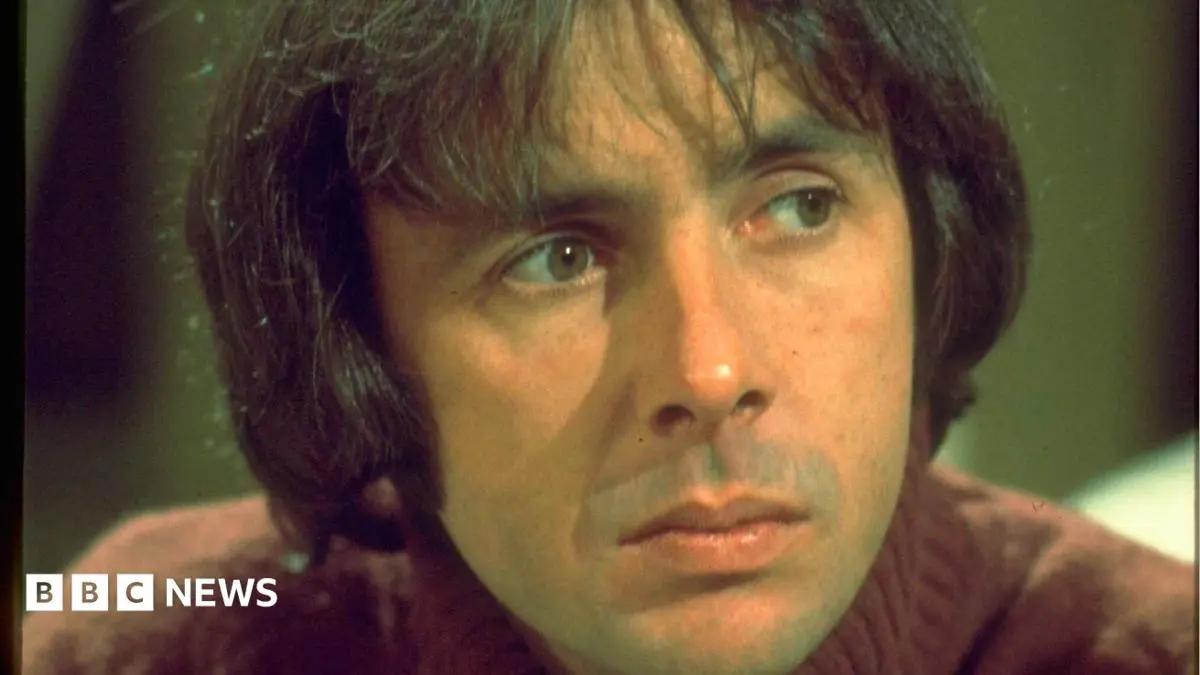
Richard O’Sullivan, one of the most recognizable and enduring faces of British television comedy during its golden era, has passed away at the age of 82. Famed for his effortless charm, immaculate physical comedy, and impeccable timing, O’Sullivan anchored some of the most-watched and culturally significant sitcoms of the 1970s and 1980s. Best remembered for his iconic portrayal of the lovable, aspiring chef Robin Tripp in Man About the House and its direct spin-off Robin’s Nest, he also captured the hearts of millions as the swashbuckling title character in Dick Turpin and as the bewildered, endearing father in the hit 1980s series Me and My Girl.
O’Sullivan died peacefully surrounded by his close family at Brinsworth House, the renowned west London residential care home operated by the Royal Variety Charity. He had resided at the facility for 23 years, finding a supportive and loving community among fellow entertainers in his later decades.
His passing marks the end of an era for British light entertainment. O’Sullivan’s career bridged two distinct phases of television history: he transitioned from a prolific child actor in the 1950s and 1960s—appearing in gritty social dramas and early children’s cinema serials—into a definitive pillar of prime-time comedy. At the height of his fame, he was a ubiquitous household presence, drawing millions of viewers to their living rooms with shows that pushed the boundaries of societal norms while maintaining a deeply reassuring, family-friendly appeal. Tributes have poured in from industry colleagues, charity officials, and his family, cementing his legacy as a true giant of British broadcasting.
Detailed Chronology: From Child Star to Prime-Time Titan
Early Life and The Child Actor Years (1944–1969)
Born in London in 1944, Richard O’Sullivan’s trajectory into the entertainment industry began at an unusually young age. Long before he became synonymous with prime-time laughter, he served a rigorous apprenticeship as a child actor throughout the 1950s and 1960s. His early credits reflect the hardworking landscape of mid-century British film and television, starting with uncredited roles in various dramatic productions as early as 1953.
Demonstrating a natural screen presence, O’Sullivan secured a role in the Children’s Film Foundation’s groundbreaking first serial production, Raiders of the River. This venture into specialized youth cinema helped establish him as a reliable juvenile talent. As he transitioned into adolescence, his acting range expanded into more challenging material. A major milestone in this early phase was his appearance in the 1961 social commentary drama Spare the Rod. Directed by Leslie Norman and starring screen veterans Max Bygraves and Donald Pleasence, the film tackled the complex and gritty realities of a teacher working in a deprived, tough urban school. O’Sullivan delivered a standout performance as a difficult, defiant student in his final year, proving that his capabilities extended far beyond innocent juvenile roles.
For over a decade, O’Sullivan maintained a steady flow of work in dramatic television and cinema. However, the late 1960s signaled a pivotal pivot toward comedy. He began securing parts in sophisticated sketch and comedy showcases, including The Ronnie Barker Playhouse in 1968 and The Galton and Simpson Comedy in 1969. Written by the legendary duo Ray Galton and Alan Simpson—architects of monumental sitcoms like Hancock’s Half Hour and Steptoe and Son—these appearances exposed O’Sullivan to the mechanics of elite comedy writing and performance, setting the stage for his subsequent superstardom.
The Breakthrough: Man About the House and the 1970s Zenith (1973–1979)
O’Sullivan’s career reached stratospheric heights in 1973 when he was cast in what would become his signature role: Robin Tripp in the groundbreaking ITV sitcom Man About the House. Created by Johnnie Mortimer and Brian Cooke, the series revolutionized British television comedy through a premise that was, for its time, remarkably daring.
Co-starring Paula Wilcox, Sally Thomsett, Yootha Joyce, and Brian Murphy across six successful series, the show revolved around a young man named Robin who shares a London apartment with two single women, Chrissy Plummer and Jo. In 1970s Britain, such a co-educational living arrangement was fraught with cultural anxiety. As historical analyses by bodies like British Comedy Classics have noted, the controversy was not merely about logistics, but about the sexual implications. For a man to share a flat with two unmarried women risked the series being instantly rejected by conservative broadcasters or dismissed as entirely inappropriate for family prime-time viewing.
To navigate this moral minefield—and to keep their perpetually suspicious landlords, George and Mildred Roper, placated—the women concoct a convenient alibi: they claim Robin is gay. O’Sullivan’s masterful navigation of this comedic tightrope was central to the show’s success. He played Robin with a disarming blend of innocence, sharp comedic timing, and genuine charm that rendered the character utterly non-threatening to pre-watershed audiences while generating endless narrative tension and farce.
The immense popularity of Man About the House birthed multiple trajectories. The Ropers (played brilliantly by Yootha Joyce and Brian Murphy) spun off into their own hit series, George and Mildred. Meanwhile, when Man About the House concluded, O’Sullivan’s character, Robin Tripp, transitioned smoothly into his own dedicated vehicle, Robin’s Nest (1977–1981), where he ran a restaurant alongside his fiancée, played by Tessa Wyatt, and his disapproving father-in-law, played by Tony Britton.
During this same decade, O’Sullivan showcased his versatility by stepping outside the traditional modern sitcom to star as the charismatic 18th-century highwayman in Dick Turpin (1979–1982). Combining action, historical adventure, and lighthearted charm, the series proved that O’Sullivan was not merely a flat-sharing sitcom star, but a genuine leading man capable of carrying an ambitious, action-driven family adventure series.
The 1980s and Me and My Girl (1980–1989)
As the television landscape shifted into the 1980s, O’Sullivan remained a dominant fixture of weekend and evening schedules. In 1984, he took on the lead role in the ITV sitcom Me and My Girl, starring alongside comedy legend Tim Brooke-Taylor, Joanne Ridley, and veteran actress Joan Sanderson.
In Me and My Girl, O’Sullivan played Simon Harper, an advertising executive and widower attempting to navigate the complexities of raising his adolescent daughter, Susan (played by Joanne Ridley), while dealing with his opinionated mother-in-law, Nell (Joan Sanderson). The series capitalized on O’Sullivan’s mature comedic persona—he had successfully transitioned from the cheeky young flatmate to the slightly stressed, well-meaning father figure. Running for eight series until 1988, Me and My Girl cemented his status as a ratings titan who could successfully anchor a multi-season sitcom across two distinct decades.
Following the conclusion of Me and My Girl and subsequent television appearances in the late 1980s and early 1990s, O’Sullivan gradually stepped back from the relentless pace of television production, eventually taking up permanent residence at Brinsworth House in west London, where he spent his final 23 years.
Supporting Context & Metrics
To fully understand Richard O’Sullivan’s impact, one must examine the quantitative and cultural metrics of British television during his peak years:
- Longevity at Brinsworth House: O’Sullivan lived at the Royal Variety Charity’s residential home for 23 years, reflecting the deep-rooted community and safety net provided by the entertainment industry for its retired veterans.
- Prime-Time Dominance: Across his major series—Man About the House (1973–1976), Robin’s Nest (1977–1981), Dick Turpin (1979–1982), and Me and My Girl (1984–1988)—O’Sullivan maintained a near-continuous presence on British television screens for nearly two decades without significant gaps in employment.
- Audience Reach: At their peak, flagship ITV sitcoms like Man About the House routinely commanded audiences of over 15 million viewers, placing O’Sullivan at the absolute center of national popular culture during an era when television viewing was a unified, mass-media experience.
- Child Stardom Span: Beginning his career in uncredited roles in 1953, O’Sullivan’s professional footprint in the entertainment industry spanned over four decades before his retirement from active screen work.
Official Statements
The passing of Richard O’Sullivan prompted heartfelt tributes from both institutional representatives and his immediate family, highlighting the warmth he projected both on and off the screen.
Giles Cooper, speaking on behalf of the Royal Variety Charity, released an official statement reflecting on O’Sullivan’s character and career:
"Richard O’Sullivan was a master of effortless charm and impeccable comic timing, bringing pure warmth, wit, and unforgettable joy to millions of living rooms as a true giant of British television."
Cooper added that the actor would be "sorely missed by us all at the Royal Variety Charity."
Meanwhile, the actor’s son, James O’Sullivan, released a deeply personal statement via the charity, offering a glimpse into the man behind the public persona:
"My dad was as funny and charming in real life as he appeared on our TV screens over the years. Always kind-spirited, good humoured, a doting grandfather and a wonderful dad—I will miss him dearly.
Although much of his career happened before I was born, I was fortunate enough to be able to enjoy and witness his incredible talents on the countless re-runs of his shows that made him the respected and loved actor that he was."
James O’Sullivan also expressed profound gratitude to the staff at Brinsworth House, thanking them for the "love, kindness and care" they showed his father throughout his lengthy residency.
Future Outlook and Legacy
The death of Richard O’Sullivan invites a broader reflection on the evolution of British television comedy. In an era where television production has fractured into streaming niches and on-demand platforms, the cultural phenomenon of the 1970s and 1980s prime-time sitcom—watched simultaneously by fifteen million households across the United Kingdom—belongs to a bygone age.
Yet, O’Sullivan’s legacy remains remarkably secure. Through decades of syndication, endless cable and satellite re-runs, and digital streaming archives, his work continues to introduce his unique brand of physical comedy, sharp timing, and gentle warmth to new generations of viewers who were not yet born when Man About the House first aired in 1973.
Institutions like the Royal Variety Charity and Brinsworth House will continue to honor his memory, ensuring that his decades of contribution to the theatrical and television arts are remembered. As generations of fans and critics look back on the foundational pillars of British television comedy, Richard O’Sullivan will permanently occupy a tier reserved for those rare performers who did not merely entertain a nation, but became an indispensable part of its daily domestic life.