Executive Overview
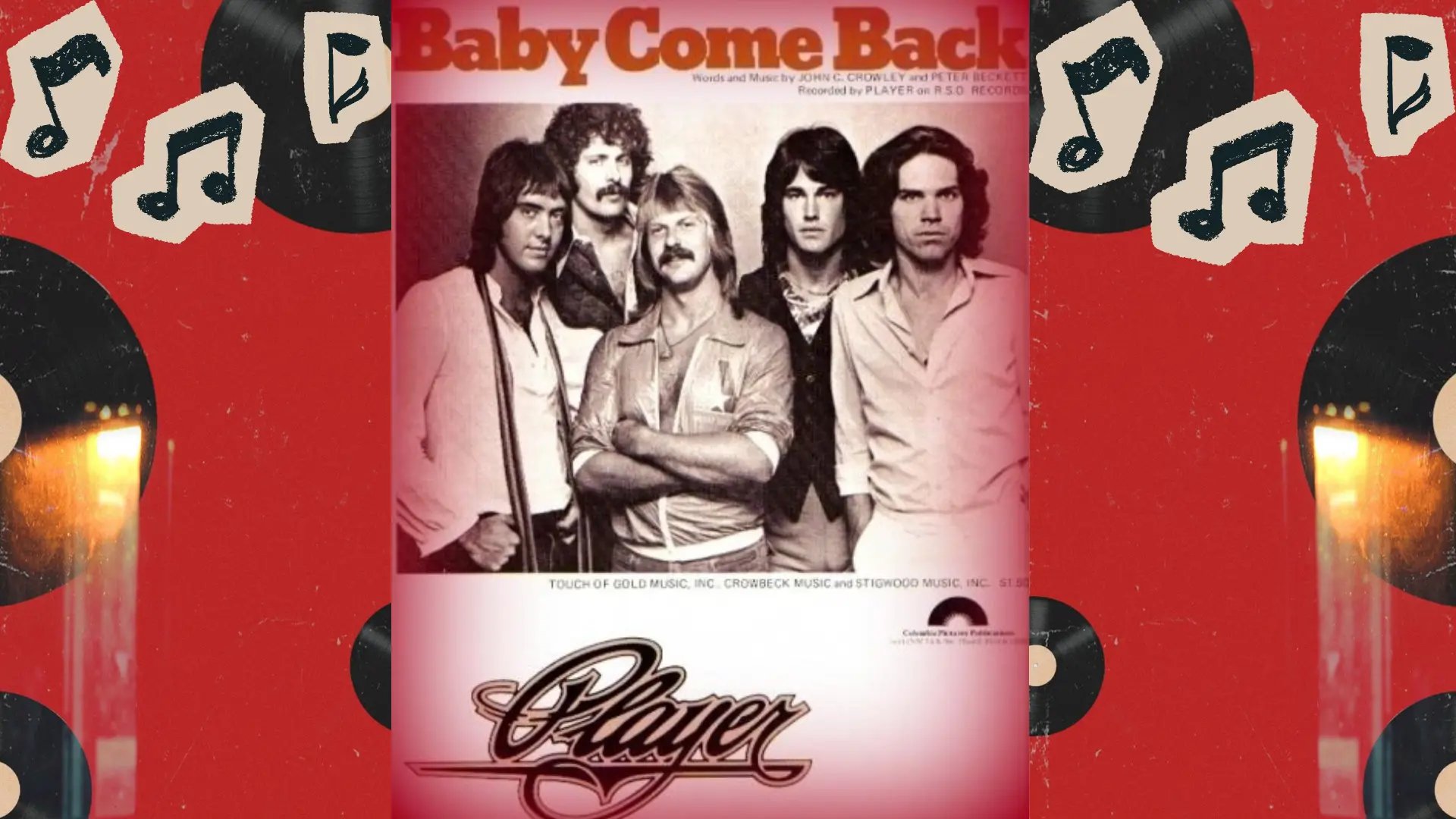
Few tracks encapsulate the bittersweet yearning of late-1970s soft rock quite like Player’s timeless anthem, “Baby Come Back.” Released in 1977 as the lead single from the band’s self-titled debut album on RSO Records, the track didn’t merely climb the charts—it captured a universal cultural mood. Written by band members Peter Beckett and J.C. Crowley, the song was forged in the crucible of real-life heartbreak, drawing directly from the dissolution of their respective romantic relationships.
Unlike many pop and rock ballads of the era that relied on flowery metaphors, dramatic hyperbole, or defensive posturing, “Baby Come Back” stands out for its radical emotional transparency. It offers a direct, unshielded admission of fault and a desperate plea for redemption. Produced by Dennis Lambert and Brian Potter, the track blends smooth, mellow acoustic textures, lush harmonies, and an infectious groove that masks a profound core of sorrow.
Decades after dominating the airwaves and seizing the No. 1 spot on the Billboard Hot 100 in January 1978, the song remains a gold standard for vulnerability in popular music. This retrospective examines the origins, lyricism, cultural footprint, and enduring legacy of a track that transformed personal failure into an immortal pop masterpiece.
Detailed Chronology: From Real-Life Breakups to Chart-Topping Glory
The genesis of “Baby Come Back” is rooted in the unglamorous reality of romantic failure. In 1976, musicians Peter Beckett and J.C. Crowley found themselves navigating the wreckage of separate long-term relationships in Los Angeles. Both men were struggling to gain traction in the fiercely competitive Southern California music scene while simultaneously dealing with the emotional fallout of being dumped.
Instead of keeping their pain compartmentalized, the duo turned to songwriting as a form of catharsis. Meeting in a modest apartment, Beckett and Crowley began piecing together the chords and melody that would become the backbone of Player. They consciously chose to avoid the poetic evasions common in songwriting at the time. They wanted the lyrics to reflect the humiliating, humbling reality of realizing that one’s own poor choices had driven a loved one away.
Once the song was fully formed, it caught the attention of producers Dennis Lambert and Brian Potter. Recognizing its commercial potential, they helped the newly formed band—which included guitarist Ronn Moss and drummer John Friesen—polish the track for the studio. Signed to Robert Stigwood’s powerhouse RSO Records, Player released the single in late 1977.
The song’s ascent was steady rather than meteoric, but it struck a profound chord with American listeners. By January 1978, “Baby Come Back” claimed the No. 1 spot on the Billboard Hot 100, maintaining its position for three consecutive weeks. It also crossed over onto the R&B charts, peaking at No. 10, a rare feat for a white soft-rock outfit at the time. The track transformed Player from an unknown studio project into international headliners, permanently cementing their place in music history.
Supporting Context & Metrics: The Anatomy of a Hit
To understand why “Baby Come Back” achieved such staggering success, one must examine both its commercial metrics and its sonic architecture.
Production and Musical Arrangement
Musically, the track is a masterclass in the "soft rock" aesthetic that dominated the mid-to-late 1970s. It relies on a sophisticated blend of acoustic guitar strums, electric piano textures, and slick, West Coast vocal harmonies. The rhythm section provides a subtle, almost funky undercurrent that prevents the ballad from feeling sluggish, allowing the melancholy lyrics to float over an accessible, groove-driven foundation.
Fact Sheet: "Baby Come Back"
| Detail | Information |
|---|---|
| Song Title | Baby Come Back |
| Artist | Player |
| Album | Player |
| Release Year | 1977 |
| Genre | Soft Rock, Pop |
| Songwriters | Peter Beckett, J.C. Crowley |
| Producers | Dennis Lambert, Brian Potter |
| Label | RSO Records |
| Billboard Hot 100 Peak | No. 1 (Jan 1978, 3 consecutive weeks) |
| Billboard R&B Chart Peak | No. 10 (1978) |
Lyrical Breakdown and Structural Analysis
The structure of the song mirrors the cyclical nature of regret. Each section peels back another layer of the narrator’s defense mechanisms.
Verse 1
Spending all my nights, all my money going out on the town
Doing anything just to get you off my mind
But when the morning comes, I’m right back where I started again
And tryin’ to forget you is just a waste of time
The opening lines immediately establish the narrator’s desperation. Hedonism and distraction—classic coping mechanisms—fail to provide genuine relief. The morning light strips away the illusions of the night before, leaving raw, unmitigated grief.
Chorus 1
Baby, come back, any kind of fool could see
There was something in everything about you
Baby, come back, you can blame it all on me
I was wrong, and I just can’t live without you
The chorus delivers the core thesis of the song. There is no attempt to share the blame. By stating that "any kind of fool could see" his mistake, the narrator acknowledges his own blindness while he was in the relationship.
Verse 2
All day long, I’m wearing a mask of false bravado
Trying to keep up a smile that hides a tear
But as the sun goes down, I get that empty feeling again
How I wish to God that you were here
Here, the song explores the performative aspect of heartbreak. The "mask of false bravado" highlights how societal expectations of toughness force men, in particular, to hide their emotional vulnerability during the day, only for the facade to crumble at nightfall.
Bridge
Now that I put it all together, oh-oh
Give me the chance to make you see
Have you used up all the love in your heart?
Nothing left for me? Ain’t there nothing left for me?
The bridge introduces a note of existential panic. The realization that time and emotional bandwidth are finite creates a sense of urgency. The fear that the former partner has completely moved on elevates the plea from a simple request to a desperate petition for grace.
Official Statements and Retrospective Reflections
In subsequent interviews looking back at the creation of the track, Peter Beckett and J.C. Crowley have often marveled at how a deeply personal, somewhat humiliating experience translated into a global phenomenon.
"We weren’t trying to write a chart-topper," Beckett noted in a retrospective interview. "We were just trying to survive our own lives. When you’re sitting in a room staring at the wall because the person you love walked out the door, you don’t think about hooks and choruses. You just think about what you did wrong."
Crowley echoed this sentiment, emphasizing that the lack of cynicism in the writing process was key to its longevity. "In the music industry, people always look for an angle. With ‘Baby Come Back,’ there was no angle. It was pure, unfiltered regret. People respond to that because everyone, at some point in their lives, has been the fool who messed things up."
Music critics over the decades have similarly praised the track for defining the pinnacle of the 1970s Los Angeles sound—often associated with bands like Bread, Firefall, and early-era Toto—while maintaining a lyrical honesty that transcends the smooth-production tropes of the genre.
Cultural Legacy and Future Outlook
Long after its chart dominance in the late 1970s, "Baby Come Back" has enjoyed a fascinating cultural afterlife. Far from being relegated to dusty vinyl bins, the song has woven its way into the modern pop-culture fabric through unexpected avenues.
Most notably, in 2008, the track experienced an ironic, viral renaissance when it was selected to soundtrack a major advertising campaign for the Swiffer WetJet mop. The commercial humorously applied the dramatic, lovelorn lyrics to the loss of a household cleaning tool, introducing the classic soft-rock ballad to an entirely new generation of listeners who might never have heard it on classic rock radio.
Furthermore, the song continues to find a home in film, television, and digital media, serving as shorthand for dramatic displays of romantic desperation and remorse. Its enduring presence on streaming platforms proves that the fundamental human experience of regret does not age.
Why the Song Endures
As we look to the future, the legacy of "Baby Come Back" remains secure for several key reasons:
- Unflinching Honesty: In an era where modern pop often leans into irony or defensive detachment, unironic, earnest vulnerability remains powerfully magnetic.
- Immaculate Craftsmanship: The combination of Beckett and Crowley’s songwriting, Lambert and Potter’s production, and the band’s tight instrumentation ensures the track is a sonic pleasure to listen to, regardless of era.
- Universality: Everyone makes mistakes in relationships. The song provides an anthem for anyone who has ever had to swallow their pride and utter the hardest words in the English language: "I was wrong."
Ultimately, Player’s masterwork proves that when raw human emotion is paired with world-class musicianship, the result transcends the transient nature of pop charts to become an permanent piece of our shared cultural heritage.