Executive Overview
In a development highlighting the increasingly precarious intersection of contemporary electronic music, digital-age moral panics, and state-level cultural gatekeeping, Italian electronic music artist and Afterlife co-founder Anyma has reportedly had his highly anticipated debut Istanbul concert banned. The live music event, which was scheduled to bring his cutting-edge, immersive ÆDEN world tour to the city’s Ataköy Marina Arena on September 12, was abruptly halted following a coordinated online campaign that alleged the artist’s high-tech audiovisual productions incorporate visual motifs linked to "satanic rituals."
The decision to pull the plug on the event—reportedly spearheaded by the Istanbul Governor’s Office—adds to a growing, troubling pattern of last-minute concert cancellations targeting international and domestic alternative acts across Turkey. Over recent years, local conservative pressure groups, amplified by algorithmic social media outrage, have successfully lobbied regional authorities to suppress events under the banner of protecting public morality and religious sensitivities.
Despite official confirmations trickling through independent Turkish media and fact-checking bodies, the situation remains fluid. As of early September, primary ticketing platforms were still processing purchases and distributing automated assurances that the show would proceed as planned, while neither Anyma—real name Matteo Milleri—nor his management team had issued a formal public statement regarding the cancellation. This report provides an exhaustive investigation into the unfolding events, examining the socio-political climate in Turkey, the mechanics of the online outrage, the broader context of Anyma’s ÆDEN production, and the chilling implications this precedent holds for international touring artists performing in the region.
Detailed Chronology of the Cancellation
The timeline leading up to the suppression of Anyma’s Istanbul debut reveals how quickly modern social media campaigns can mobilize state administrative machinery.
The Announcement and Anticipation
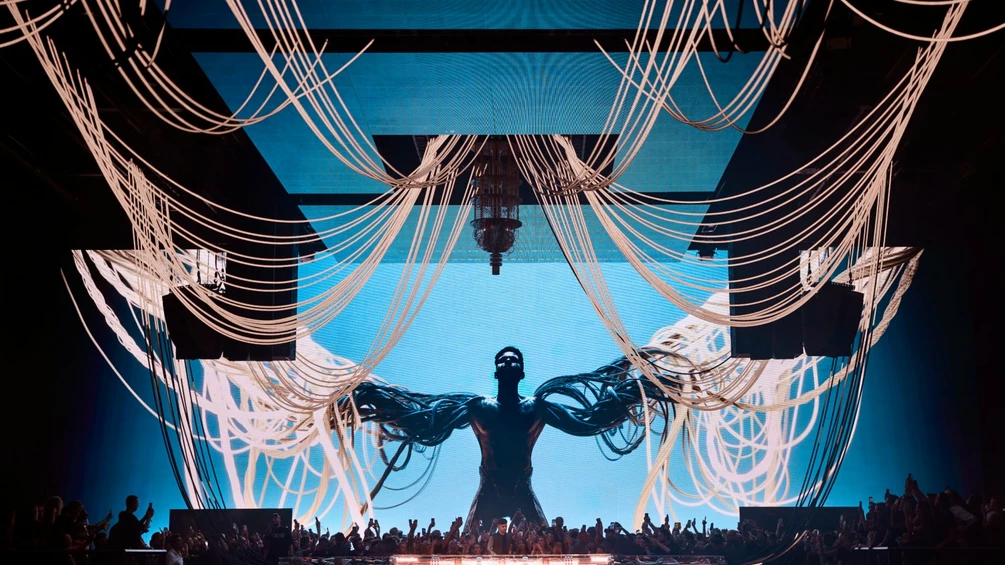
Earlier this year, Anyma—fresh off massive career milestones including a high-profile Ibiza residency at [UNVRS] and the release of the deluxe edition of his critically acclaimed LP The End Of Genesys—announced his expansive ÆDEN global tour. Known globally for pioneering a futuristic marriage of melodic techno, emotional soundscapes, and hyper-realistic digital art, Anyma’s shows have consistently sold out major venues worldwide. The September 12 date at Istanbul’s sprawling open-air Ataköy Marina Arena was billed as a landmark cultural event for the city’s burgeoning electronic music community, promising a sensory-overload experience combining custom-designed LED installations, towering cinematic humanoid visuals, and state-of-the-art spatial audio.
The Digital Backlash
As ticket sales ramped up and promotional material circulated across digital platforms, a faction of local conservative campaigners and social media users began scrutinizing the artist’s aesthetic choices. Clips and high-definition stills from previous stops on the ÆDEN tour—features known for their dystopian, cybernetic, and monolithic imagery—were isolated, shared, and reframed on platforms like X (formerly Twitter).
Critics argued that the dystopian visual narrative, which frequently features towering cybernetic entities, cryptic symbols, and towering android figures reminiscent of ancient deities or apocalyptic warnings, constituted "satanic imagery." These digital grievances rapidly gained traction, morphing from isolated online complaints into an organized petitioning campaign directed squarely at municipal and provincial authorities.
The Intervention of the Istanbul Governor’s Office
According to investigative reports published by Turkish Minute and verified by local independent outlets, pressure eventually reached the highest levels of local governance. While the Istanbul Governor’s Office initially maintained a public silence—refusing to issue a formalized, written decree outlining the specific legal grounds for a ban—administrative gears were already turning behind the scenes.
The crucial breakthrough in confirming the cancellation came via Teyit, a prominent Turkey-based independent fact-checking organization. In an inquiry launched to separate rumor from reality, Teyit reached out to the Provincial Press and Public Relations Directorate. Emin Gökçegözoğlu, speaking for the office, confirmed the reports: the concert had indeed been cancelled due to concerns surrounding its alleged "satanic elements."
The Ticketing Limbo
In a bizarre display of bureaucratic and corporate disconnect typical of such rapid political interventions, ticketing infrastructure lagged significantly behind state decisions. Days after the governor’s office informally confirmed the cancellation to fact-checkers, tickets for the Ataköy Marina Arena show remained actively available for purchase via the Passo platform.
Furthermore, automated telephone customer service lines operated by the ticketing agency continued to inform callers that the event was proceeding entirely as planned. Consumers were told that any structural alterations or cancellations would be communicated directly via email or SMS—leaving thousands of fans in a state of suspended animation, unsure whether to secure travel arrangements or demand refunds.
Supporting Context & Metrics: A Growing Pattern of Cultural Censorship in Turkey
To fully understand the cancellation of Anyma’s Istanbul show, one must examine it not as an isolated incident, but as part of an accelerating trend of targeted cultural suppression within Turkey over the past half-decade.
The Anatomy of Recent Bans
The targeting of electronic, post-rock, and heavy metal acts has become a recurring mechanism for local authorities seeking to appease conservative constituencies. The playbook is remarkably consistent:
- Digital Mobilization: Conservative influencers or digital monitoring accounts flag an artist’s past album art, lyrical themes, or live visual aesthetics.
- Moral Framing: The content is framed as an assault on traditional family values, religious orthodoxy, or public morality—frequently invoking buzzwords like "satanism," "subversion," or "degeneracy."
- Administrative Pressure: Local governor’s offices are inundated with complaints, leading them to invoke broad discretionary powers under public safety or public order laws to revoke permits.
- Last-Minute Execution: Bans are frequently communicated at the eleventh hour, minimizing the window for legal challenges or public pushback from music industry stakeholders.
A glaring parallel occurred earlier this year when acclaimed Irish post-rock outfit God Is An Astronaut faced a devastating cancellation. Their headlining performance at the exact same venue—Istanbul’s Ataköy Marina Arena—was abruptly called off a mere few hours before doors were scheduled to open. Promoters and fans were left scrambling after authorities intervened over unverified accusations that the band’s atmospheric, lyric-free instrumental music and stage designs promoted Satanism.
The Economic and Cultural Impact on Istanbul’s Nightlife
Istanbul has historically occupied a unique geopolitical and cultural bridge, serving as a vibrant beacon for international touring acts, electronic music connoisseurs, and creative industries linking Europe and the Middle East. The city boasts a world-class infrastructure of clubs, waterfront arenas, and festival spaces that drive significant tourism revenue and foster a progressive, globally minded youth culture.
However, repeated cancellations of high-profile events send a chilling ripple effect through the international booking ecosystem. Promoters face severe financial liabilities when permits are revoked after staging costs, freight shipping, artist deposits, and marketing expenditures have already been settled. Consequently, international artist management agencies may begin to categorize Turkey as a high-risk jurisdiction, resulting in skipped tour dates, diminished foreign investment in the local creative economy, and a progressive cultural isolation of the nation’s youth.
Official Statements and Institutional Responses
The handling of the Anyma ban underscores a systemic lack of transparency regarding administrative censorship in Turkey.
The Silence from the State
As of mid-September, the Istanbul Governor’s Office has not published a formal, itemized legal justification on its official web portal detailing the precise statutes violated by Anyma’s production. Reliance on verbal confirmations given to fact-checkers highlights an administrative preference for informal deterrence—achieving the desired outcome (the cancellation of the event) while sidestepping formal judicial scrutiny or constitutional challenges regarding freedom of expression.
The Artist and Management Vacuum
Conspicuously absent from the public discourse has been any statement from Matteo Milleri (Anyma) or his core management, booking, and PR teams. In the fast-paced world of global dance music, high-profile artists often navigate delicate geopolitical landscapes cautiously. A direct public confrontation with municipal authorities can sometimes jeopardize future licensing efforts, complicate regional visa approvals, or escalate tensions unnecessarily. However, the silence leaves fans starved of official guidance regarding ticket refund protocols, tour rescheduling possibilities, or the artist’s personal perspective on having his digital art mischaracterized.
The Role of Fact-Checkers and Independent Media
In the absence of transparent governance, organizations like Teyit and independent outlets such as Turkish Minute have become the primary sources of truth for consumers and industry professionals alike. By systematically cutting through bureaucratic obfuscation—querying municipal directorates and exposing the administrative contradictions—these bodies provide an essential public service, holding state entities accountable even when traditional corporate media self-censors or ignores cultural controversies.
Future Outlook: The Intersection of Digital Art, Geopolitics, and Live Music
The cancellation of the ÆDEN tour stop in Istanbul serves as a cautionary case study for the future of immersive entertainment in politically sensitive regions.
The Evolution of Audiovisual Censorship
For decades, music censorship focused primarily on explicit lyrical content, political dissent, or perceived blasphemy in spoken and sung words. However, the rise of modern electronic music—increasingly defined by high-concept, narrative-driven visual art, generative AI graphics, and complex technological world-building—has expanded the battlefield.
Anyma’s art, which explores themes of humanity, technology, existentialism, and post-industrial futures, relies on monumental, quasi-religious visual architecture. To an art critic or electronic music fan, a towering digital monolith evokes science fiction, cyberpunk literature, and philosophical inquiry. To an uninitiated observer or moral campaigner viewing compressed video clips out of context on social media, the same imagery can easily be stripped of its artistic nuance and weaponized as a symbol of occult subversion. As digital art becomes more abstract, grandiose, and technologically complex, the friction between avant-garde creators and conservative regional authorities is bound to intensify.
Navigating the Touring Landscape
For international tour managers, booking agents, and promoters operating in the post-pandemic live music economy, risk assessment models must now evolve beyond traditional logistics, currency fluctuations, and venue capacities. Factoring in the volatility of local sociopolitical climates and the preemptive power of digital outrage mobs has become an absolute necessity.
Whether Anyma will attempt to reschedule his debut in Istanbul under altered conditions—or whether promoters will pivot toward more culturally insulated markets—remains to be seen. What is certain, however, is that the suppression of the ÆDEN tour has ignited a wider conversation about artistic freedom, the weaponization of moral panic in the digital age, and the fragile state of cultural exchange in modern Turkey. As the dust settles on the Ataköy Marina Arena, the electronic music community watches closely, acutely aware that the boundaries of creative expression are contracting in real time.