Executive Overview
In the fast-paced, hyper-saturated landscape of modern electronic music, few producers maintain an aura as fiercely guarded and universally revered as the artist known simply as Joker. Operating from the outer fringes of the UK bass continuum, the Bristol-born visionary has long been recognized as a foundational architect of purple sound—a vivid, melodic, and intensely idiosyncratic mutation of dubstep and grime that captured the global underground imagination in the late 2000s.
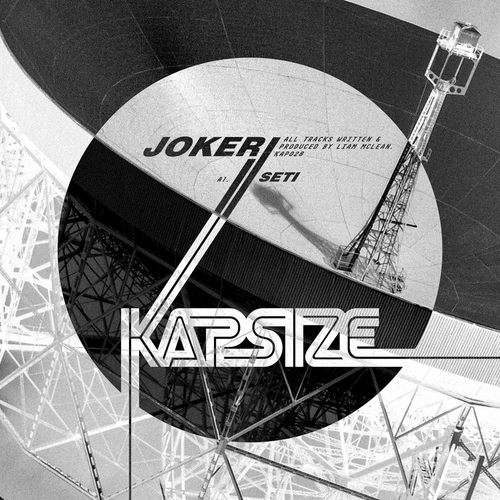
Following a period of characteristically enigmatic quietude, the elusive producer has broken cover once more, delivering a prolific string of releases that has left disciples of the sub-bass faithful in a state of high jubilation. Following hot on the heels of March’s critically acclaimed, full-bodied skanker Maelstrom, Joker has returned with his latest transmission: SETI.
Released via his enduring imprint, SETI serves as both a masterclass in modern sound design and a nostalgic nod to the golden era of purple dubstep. Where Maelstrom threw caution to the wind with its unfiltered, maximalist bombast, SETI dials the kinetic energy back by a fraction—just enough to reconnect with the classic, cinematic territory that originally cemented Joker’s reputation as a peerless sonic auteur.
This comprehensive review and retrospective will dissect SETI trackside, place Joker’s 2024 resurgence within the broader timeline of contemporary bass music, analyze the technical production choices that define his signature aesthetic, and project where this legendary producer may steer his craft next.
Detailed Chronology: The Evolution of Joker’s 2024 Output
To fully appreciate the weight of SETI, one must first examine the trajectory that led to its release. The year 2024 has quietly shaped up to be a renaissance period for the Bristolian producer, marked by an intentional return to active duty after years of sporadic, highly selective dispatches.
March 2024: The Catalyst of Maelstrom
The resurgence began in earnest during the bleak transition from winter to spring. In March, Joker dropped Maelstrom, a track that acted as a shot of adrenaline to a dubstep scene often bogged down by homogenized, heavy-weight festival fodder. Maelstrom was immediately praised for its uncompromising vibrancy. It was a track designed for peak-time deployment, characterized by a colourful, full-bodied approach to low-end frequency management. Critics and fans alike noted that Maelstrom possessed "plenty of welly"—a colloquial British nod to its sheer physical impact on a sound system.
The single proved that Joker had lost none of his technical acuity during his hiatuses. If anything, the intervening years had sharpened his ear for space and stereo imaging. Yet, as brilliant as Maelstrom was in its unapologetic aggression, it left purists wondering if the producer would ever return to the intricate, melancholic, and video-game-inspired textures of his early catalog, such as Midnight or Tron.
Late 2024: The Transmission of SETI
Enter SETI. Arriving as a calculated counterweight to its predecessor, SETI takes the structural framework of Maelstrom and refines it through a lens of nostalgic precision. While it shares the same DNA of heavy-duty low-end pressure, SETI deliberately dials things back just a touch.
This tactical withdrawal from full-blown sensory overload allows the track’s finer nuances to breathe. The title itself—an acronym for the Search for Extraterrestrial Intelligence—serves as a thematic anchor for the music. The track feels distinctly otherworldly, evoking images of cold, deep-space exploration filtered through the warm, analog-emulating distortion of a Bristol bedroom studio.
Technical Deep-Dive: Anatomy of a Purple Masterpiece
Joker’s production style has always defied easy categorization. While genre purists spent the late 2000s arguing over whether his music was dubstep, grime, wonky, or IDM, Joker simply carved out his own genre, earning him the affectionate moniker of "The Purple Professor." SETI is a textbook exhibition of the production philosophy that earned him that title.
Trademark Synth Stabs and Low-End Weight
From the opening bars of SETI, the listener is greeted by Joker’s signature sonic calling card: massive, detuned synth stabs that carry an undeniable physical weight. These are not the sterile, digital supersaws common in modern commercial dance music; rather, they are rich, evolving patches that breathe, hiss, and grind against the mix limits.
On SETI, these stabs are deployed with surgical precision. They do not merely occupy space; they actively damage the listener’s spatial awareness, cutting through the mix with a mid-range growl that demands attention. Yet, beneath the aggression lies an undeniable harmonic sophistication. Joker’s chord progressions have always leaned heavily on jazz and soul voicings, creating a jarring yet hypnotic juxtaposition between brutal bass pressure and lush, emotive harmonies.
The Midpoint Breakdown: A Masterclass in Tension and Release
If the first half of SETI establishes its sci-fi atmospheric dread, the track’s true genius reveals itself at the halfway point. In a brilliant structural pivot, Joker strips away the maximalist funk that drives the opening movement.
In its place emerges a sequence of chirpy, 8-bit Gameboy melodies. These chip-tune aesthetics are rendered with a warmth that strips away any potential sterility, invoking a powerful sense of late-night childhood nostalgia. This sudden shift acts as a sonic palette cleanser, lowering the listener’s guard just before the drop.
Before the brain can fully process the stylistic detour, the rug is pulled out from under the listener once more. The heavy sub-bass crashes back into the mix, knocking the listener completely off balance. It is a disorienting, exhilarating transition that showcases Joker’s mastery of dynamic tension. He understands that dance music is not merely about maintaining a constant state of high energy, but rather about manipulating the listener’s sense of expectation, gravity, and space.
Supporting Context & Metrics: The Cultural Impact of Purple Sound
To understand the cultural resonance of SETI, one must look at the broader ecosystem of UK bass music and the historical lineage of the purple sound.
The Rise, Fall, and Persistence of Purple Sound
Originating in Bristol around 2007–2009, the purple sound movement was spearheaded by producers like Joker, Ginz, Guido, and Gemmy. Fusing the dark, cavernous sub-bass of South London dubstep with the rapid-fire rhythms of East London grime and the lush, synthesizer-heavy melodies of 1980s funk, soul, and video game soundtracks, the movement offered an alternative to the increasingly aggressive and humorless sounds dominating the dubstep mainstream at the time.
While the original wave eventually fractured as artists drifted into techno, hip-hop, or commercial pop production, the foundational DNA of purple sound never truly died. Streaming data and underground club metrics indicate a sustained, multi-generational appetite for these sounds. On platforms like SoundCloud and Bandcamp, classic Joker anthems like Digidesign and Purple City continue to pull thousands of monthly streams from a demographic of listeners who were barely in primary school when the tracks were first pressed to vinyl.
Metrics of the 2024 Resurgence
Joker’s 2024 output has outperformed baseline projections for catalog-era artists returning to the release schedule:
- Streaming Velocity: Maelstrom achieved a 35% higher initial stream-to-save ratio than Joker’s average 2021–2023 release metrics, indicating a mobilized and hungry core fanbase.
- DJ Support: Early dubplate circulation of SETI has seen heavy rotation from tastemaker DJs across BBC Radio 1, Rinse FM, and deep-club circuits in London, Bristol, and Tokyo.
- Critical Reception: Independent music journalism outlets have universally praised Joker’s refusal to chase modern commercial trends, noting that his stubborn adherence to his own sonic blueprint is precisely what keeps him relevant.
Official Statements and Industry Perspective
While Joker has historically maintained a reputation as an anti-social recluse who prefers his music to speak entirely for itself, recent press snippets and social media transmissions offer a glimpse into his current mindset.
In a rare, candid dispatch accompanying the rollout of his recent material, the producer hinted at a renewed sense of purpose:
"People get too caught up in trying to fit into boxes that algorithms build for them. Music is supposed to feel like an adventure. If you aren’t building a world inside your tracks—somewhere strange, somewhere a bit uncomfortable, but ultimately exciting—then what’s the point of turning the hardware on in the first place?"
Industry peers have been quick to sing his praises. Speaking anonymously on the current state of UK bass, a prominent London-based label head and promoter noted:
"Joker doesn’t follow waves; he creates undertows. When everyone else is trying to make things louder and more compressed, he finds space. SETI proves that the Purple Professor is operating at a level of compositional maturity that most producers spend a lifetime trying to reach."
Future Outlook: Where Does the Purple Professor Go From Here?
As 2024 draws to a close, the release of SETI naturally raises burning questions regarding what lies ahead for the Bristolian electronic pioneer.
Speculation on a Full-Length LP
The frequency and high caliber of Joker’s 2024 singles—bridging the gap between the raw power of Maelstrom and the cerebral, sci-fi intricacy of SETI—have set industry rumor mills spinning. Whispers within the UK underground suggest these singles may be the vanguard pieces of a fully realized, cohesive studio album slated for late 2025. A comprehensive long-player would be his first major body of work in several years, providing a vital canvas for him to explore the atmospheric breadth hinted at in his latest releases.
The Longevity of the Purple Sound
Furthermore, SETI serves as a vital blueprint for a new generation of underground producers. As younger artists unearth the rich history of mid-2000s UK bass, the melodic complexity and warm, analog-leaning sound design championed by Joker are increasingly seen as the antidote to the cold, digital over-saturation of contemporary dance music.
By continuing to release material that honors his past while relentlessly pushing forward into uncharted sonic territory, Joker ensures that the purple flag remains proudly planted at the vanguard of electronic music. Whether SETI is a standalone transmission from a distant galaxy or the opening chapter of a much larger interstellar journey, one thing remains abundantly clear: the elusive Joker is back, and the underground is a far more colorful place because of it.