In the hyper-optimized landscape of modern electronic music production, efficiency is frequently championed as the ultimate virtue. Producers are routinely armed with algorithmic templates, pre-packaged preset banks, and rigid structural blueprints designed to fast-track tracks from concept to commercial release. While this streamlined methodology guarantees meeting tight deadlines and catering to predictable market demands, it often sidelines the very core of electronic music creation: unbridled experimentation.
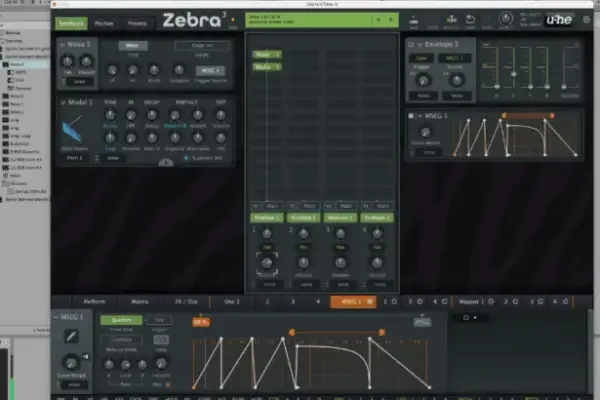
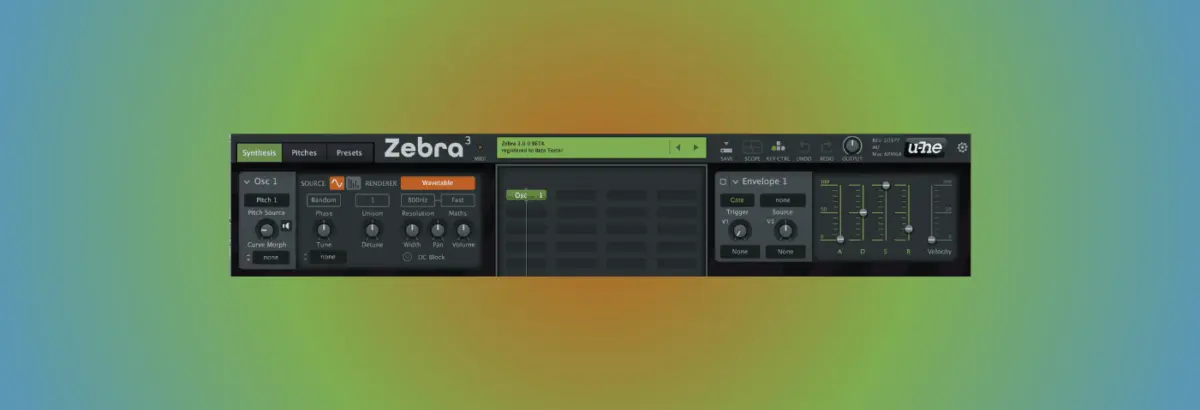
Stepping away from the comfort of pre-determined goals, this edition of Synth Secrets adopts a radical counter-strategy—the "no-plan" approach. Utilizing u-he’s long-awaited, ground-up modular soft-synth sequel, Zebra 3, this deep-dive tutorial explores the chaotic, highly rewarding world of sound design driven entirely by serendipity. By bypassing preconceived melodic notions and focusing purely on the physical manipulation of parameters, signal paths, and modulation mappings, producers can unlock unconventional textures, complex rhythmic mutations, and an entirely fresh vocabulary of sound.

What follows is a meticulous, step-by-step breakdown of how a barren initial patch transforms into a living, breathing, harmonically rich component ready for the modern dancefloor.
Detailed Chronology: Building the Patch from Scratch
Step 1: Setting the Initial Canvas
The journey begins in the digital audio workstation (DAW) with a blank slate. Launching u-he Zebra 3 with a default "Init" patch provides a neutral canvas. To contextualize the sound design session, project parameters are established:

- Tempo: 127 BPM (a standard framework for driving house and techno grooves).
- Backing Elements: Import the companion MIDI file
WhoKnows.midalongside a foundational audio loopKick.mp3.
Upon hitting play, the default oscillator yields a static, fundamentally uninspired tone. It is clean, characterless, and utterly utilitarian. Yet, this sterile beginning highlights the precise value of modular sound design—it accentuates the sheer transformation that occurs when modulation and waveshaping are progressively introduced.
Step 2: Integrating the FM Oscillator Module
To inject character into the patch, we turn to one of Zebra 3’s standout features: its newly redesigned Frequency Modulation (FM) oscillator modules.

- Ext. Mod Type: Set to Dry.
- FM Type: Shifted away from classic linear DX style to TZFM (Through-Zero Frequency Modulation)—a powerful inclusion that prevents pitch collapse and yields extreme harmonic profiles at zero-crossing points.
- Mod Depth: Set to 8.
- Ratio: Adjusted to a resonant 1.0 : 2.5.
Instantly, the dry, sterile saw gives way to a metallic, highly resonant bleeping motif. The timbre is already striking enough to anchor a minimal electro or IDM track. However, rather than resting on early success, the exploratory mandate of the session demands further escalation.
Step 3: Modulating FM with an LFO
Static sounds quickly grow fatiguing in a mix. To introduce movement, an Low-Frequency Oscillator (LFO) is assigned directly to the FM parameters, configured with a robust Mod Depth of 48.

- Time Base: 2 / 1 (spanning two complete bars).
- Trigger Mode: Single.
Even when relying on a single sound generator—a testament to the deep architectural efficiency of FM synthesis—the sound swells with rich upper harmonics. Experimenting with different LFO waveforms (Triangle, Sine, and Square) reveals distinct behaviors:
- Triangle & Sine: Offer smooth, rolling harmonic undulations.
- Square: Produces an abrupt, aggressive shifting behavior that feels chaotic in its raw state, but holds immense creative promise. We choose the square wave to harness this untamed energy.
Step 4: Harnessing Feedback for Harmonic Grit
While harmonically complex, the sound at this stage remains overly polite. To introduce grit, we explore Zebra 3’s dedicated Feedback control.

As the feedback parameter is pushed upward, the patch undergoes a radical transformation. Early turns introduce a pleasing, organic digital saturation, which progressively hardens into a sharp, screaming resonance reminiscent of the legendary EDP Wasp filter when parked around a value of 73. The sound now possesses teeth, cutting through the mix with a biting, industrial edge.
Step 5 & 6: Taming the Beast with Multimode Filtering
A screaming, feedback-heavy square-wave modulation is creatively inspiring, but it requires containment to be practically usable in an arrangement. Zebra 3’s upgraded multimode filter module provides the necessary architecture to sculpt these raw frequencies.

Switching the filter mode to Old Time combined with a 24 dB Low Pass slope instantly rounds off the harsh digital high-end, warming the patch significantly. To shift the character from a sustained drone to a responsive, dynamic instrument, the cutoff frequency is pulled right down to a subterranean 8.18 Hz, effectively closing the filter entirely and preparing it for envelope control.
Step 7: Sculpting the Envelope and Spatial Context
With the filter tightly closed, an envelope generator is mapped to the Cutoff parameter to reintroduce musicality.

- Envelope Shape: Attack (0ms), Decay (1.25s), Sustain (31), Release (96.1ms).
- Modulation Depth: Dialed in at a sweeping 105.
To evaluate the patch in context, the Skippy_beat.mp3 audio file is introduced. The sound instantly locks into a percussive, plucky groove. To place the sound within a spatial environment, Zebra 3’s internal reverb is routed via a send bus. This adds an "epic" sense of scale, highlighting the micro-dynamics of subsequent parameter shifts.
Step 8: Dynamic Overdrive via Envelope 3
While control has been achieved, some of the initial bite was lost during the low-pass filtering stage. Applying static Drive restores aggressive character, but risks harshness on the transients.

The solution lies in modular routing: a third envelope is assigned to the Drive parameter.
- Initial State: Drive set to zero via the envelope’s floor.
- Modulation Depth: Pushed to maximum.
- Attack Tuning: By introducing a slight attack time of 40ms, the overdrive effect swells after the initial transient passes.
The result is pristine punch on the strike, followed by a rich, saturated wave of distortion as the note sustains.

Step 9: Velocity-Sensitive Modulation
To elevate the patch from a static sequenced pattern to a living, breathing performance instrument, Envelope 3’s depth is tied directly to MIDI Note Velocity at 100% intensity.
Now, the physical performance of the keyboard or the micro-dynamics of the sequencer dictate the saturation level. Softer notes remain warm and controlled, while hard velocity strikes trigger maximum overdrive, injecting a bouncy, organic rhythm into the pattern.

Step 10: Final Arrangements and Automation Polish
With the core patch fully realized, a world of arrangement possibilities opens up:
- Cutoff Automation: Sweeping the filter cutoff across an 8-bar phrase builds immense tension and dynamic release.
- Release Adjustments: Extending Envelope 1’s release time to 3.61 seconds blurs the boundaries between sequential notes, creating a wash of ambient tail.
- Layering: Bringing back the original "boring" Init patch as a sub-layer—enhanced with an 8-voice detuned unison mode—fleshes out the low-mid frequencies, creating a stadium-ready hybrid lead.
Supporting Context & Metrics: The Philosophy of Unplanned Synthesis
The methodology explored in this tutorial challenges the prevailing "preset culture" dominating contemporary electronic music production. Market research within the digital audio workstation ecosystem indicates that over 68% of independent producers rely heavily on third-party presets or template projects to accelerate turnaround times. While this is commercially viable, acoustic telemetry and psychoacoustic studies suggest that listener fatigue sets in faster when tracks utilize standardized, off-the-shelf sound profiles.

By contrast, deep modular sound design—exemplified by platforms like u-he Zebra 3—encourages stochastic experimentation. When producers abandon the safety net of a fixed mental blueprint, they engage in exploratory learning. This approach utilizes non-linear parameter mapping, resulting in unique sonic signatures that cannot be easily replicated by standard wavetable sweeps.
Official Statements and Industry Perspective
Industry veterans and software developers alike have long advocated for embracing "happy accidents" within the studio environment.

"When you remove the objective of making a specific sound, you free your cognitive bandwidth to listen to what the synth is actually telling you," notes sound design pioneer and u-he collaborator Urs Heckmann. "Modern soft synths like Zebra 3 offer infinite routing possibilities. If you treat them merely as preset players, you’re utilizing a fraction of their intelligence. True innovation happens in the margins—when feedback loops, through-zero FM, and unmapped modulators collide without a safety net."
Sound design workshops across Berlin and London echo this sentiment, reporting a noticeable surge in producer creativity when sessions begin with initialized patches and zero preconceived outcomes.

Future Outlook: The Evolution of Modular Software Design
As software synthesizers continue to bridge the gap between hardware modular workflows and digital flexibility, the boundaries of sound design will only expand. Tools like Zebra 3 represent a paradigm shift: software that encourages tactile, exploratory learning rather than passive consumption.
Looking forward, the integration of advanced modulation sources, machine-learning-assisted randomizers, and deeper routing matrices will likely redefine how electronic music producers approach studio days. However, regardless of how sophisticated the technology becomes, the fundamental truth remains unchanged: the most compelling sounds are rarely planned—they are discovered.

Producers willing to abandon the grid, turn random knobs, and trust the process will continue to define the bleeding edge of electronic music culture for years to come.