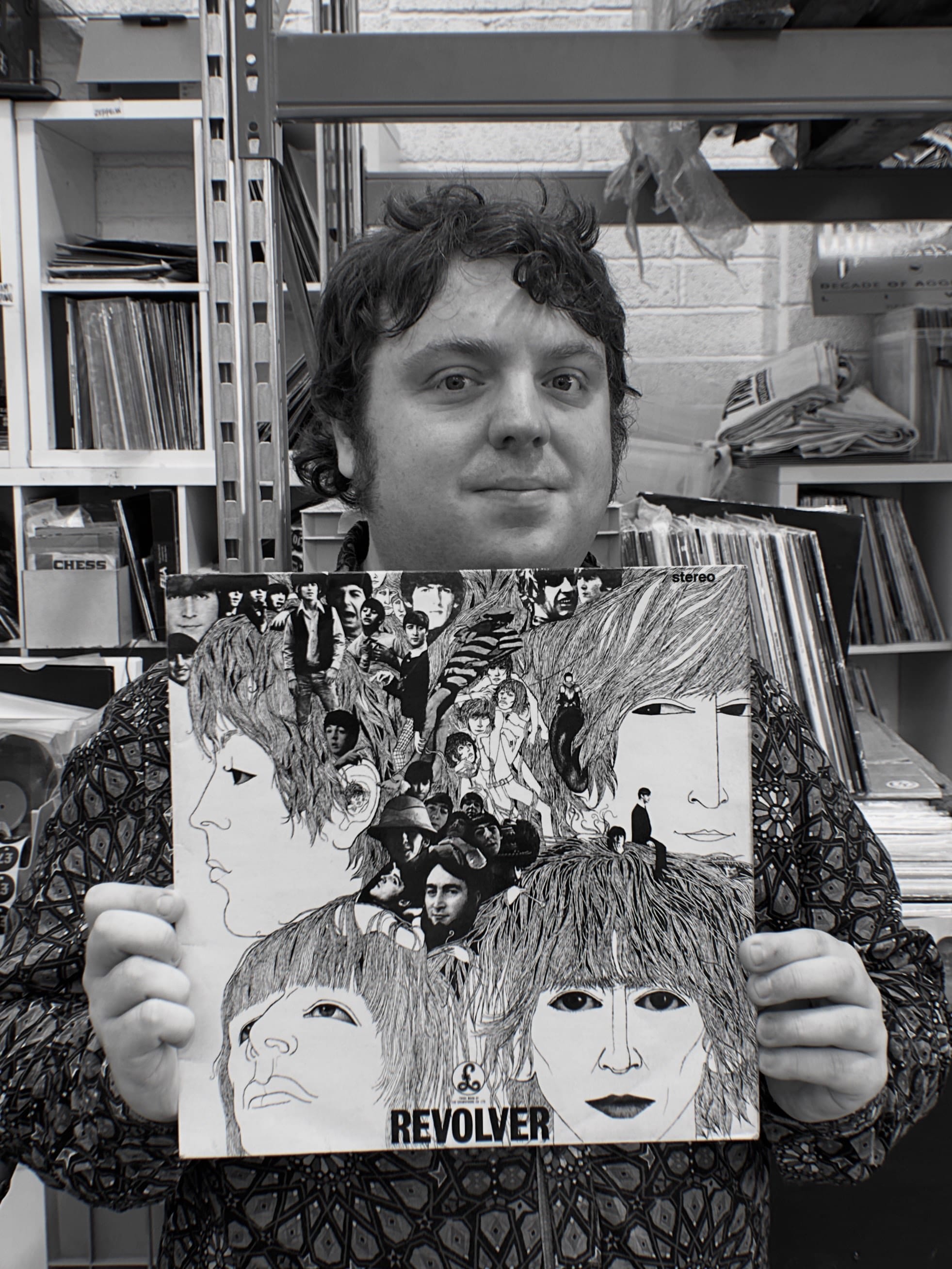
"Finally, if Sir Paul McCartney is reading and disagrees with any part of this article: give me a visit at the Rough Trade warehouse, Paul—we can work it out."
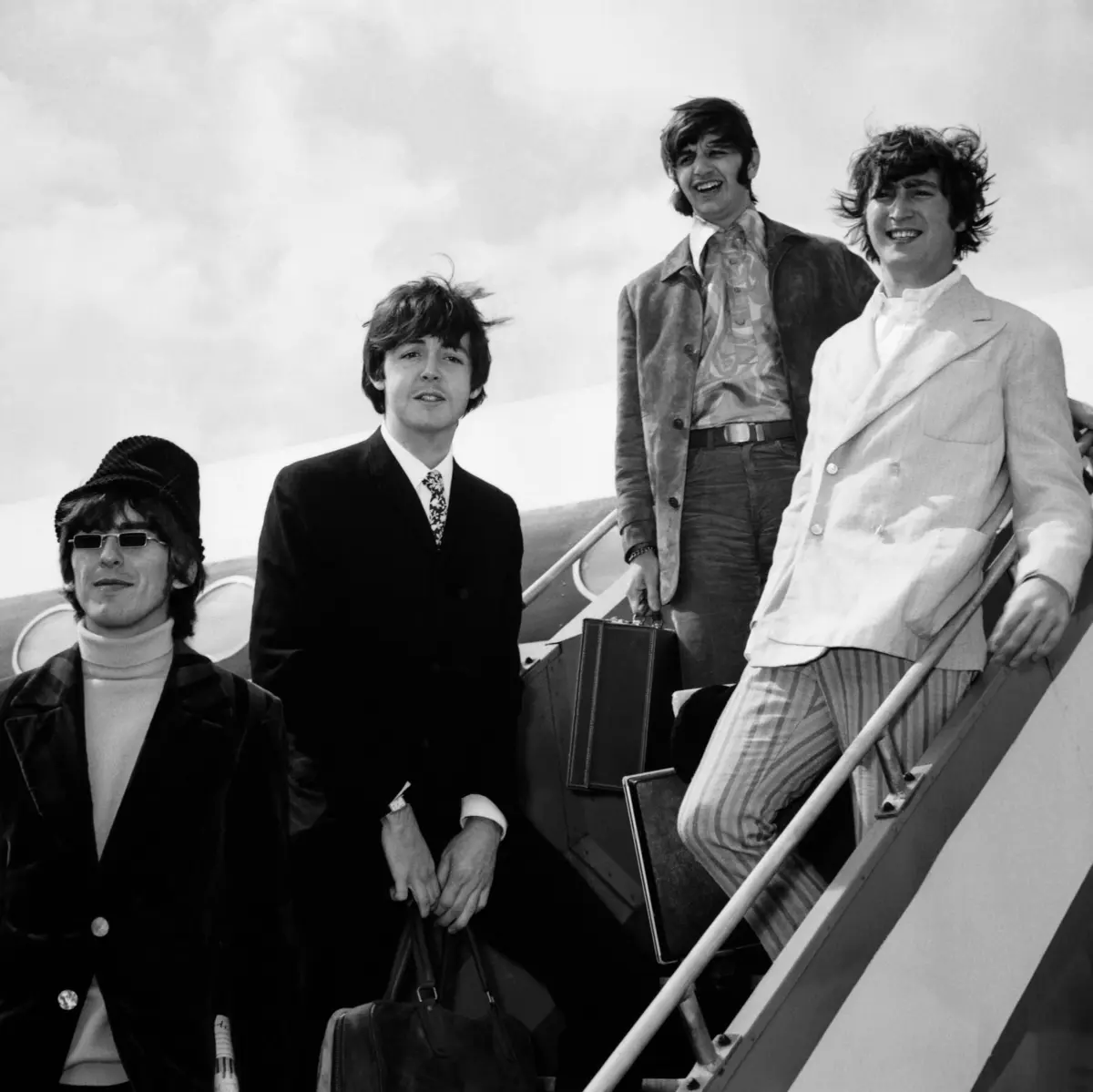
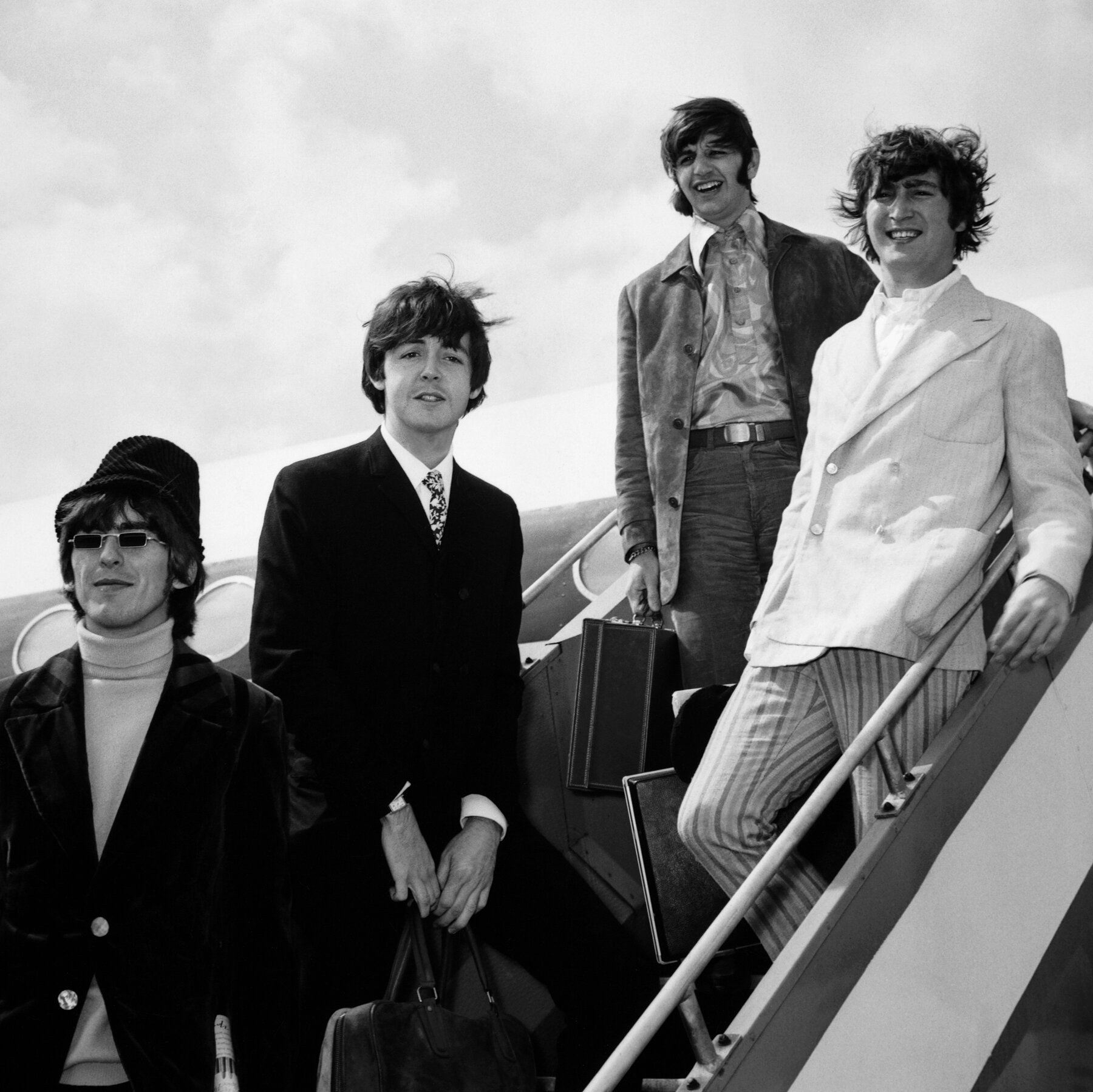
John Lennon, Paul McCartney, George Harrison, and Ringo Starr. The Fab Four. A band that fundamentally rewrote the possibilities of popular music, The Beatles’ collective legacy remains as vivid, untouchable, and fiercely debated as it was over half a century ago. Everyone has a take on The Beatles; their cultural footprint looms so large that forming an opinion on their output feels like an unofficial rite of passage by the time you reach adolescence.
My own conversion was inevitable, sparked by a cocktail of a 1972 Doctor Who episode where Jo Grant (Katy Manning) casually references I Am the Walrus, an unshakeable mobile phone commercial flash mob singing Hey Jude, and the natural trajectory of exhausting the catalogue of my first musical obsession—The Wombles.
As publicist Derek Taylor once predicted with uncanny precision, the "radioactive, cigar-smoking" children of future generations would derive as much profound pleasure from The Beatles as the audiences of the swinging sixties did. Glowing luminescent with that very same cultural radiation, I have taken on the arduous task of cataloguing, dissecting, and ranking the top ten studio albums of the greatest band in human history.
Executive Overview: The Immutable Standard of the Canon
When evaluating a discography as seismic as The Beatles’, standard metrics of critical analysis often buckle under the weight of sheer cultural ubiquity. Ranking their studio albums is remarkably akin to arranging precision rulers by length; the baseline standard of quality is simply astronomical.
Barring Beatles for Sale—their solitary proper studio omission from this top-tier reckoning—every long-player released between 1963 and 1970 represents a masterclass in songwriting, sonic experimentation, and cultural synchronization. From the infectious Merseybeat vitality of EMI Studio 2 to the avant-garde tape loops of their late-period psychedelia, this ranking navigates the evolution of four Liverpool lads who transformed themselves into the architectural engineers of modern sound.
Detailed Chronology: The Studio Albums Ranked (10 to 1)
10. With the Beatles (1963)
The Beatles’ second studio outing is, by any objective metric, an excellent record. It delivers a fantastic balance of razor-sharp covers and burgeoning originals that capture the ferocious verve of a band that had already seized cultural dominion over Great Britain. They arguably never played rhythm and blues with more conviction than here, witnessing the Smokey Robinson-inspired miracle of All I’ve Got to Do and the pure vocal attack of Money (That’s What I Want), which stands as arguably John Lennon’s greatest vocal performance ever recorded.
The record also established a direct, intimate dialogue with their audience: they ring you up (All I’ve Got to Do), they send you letters (All My Loving, Please Mr. Postman), and they unapologetically tell you to buzz off (Don’t Bother Me). So why place it tenth? Something has to occupy the cellar. It feels slightly weaker than the debut in terms of original material, suffering from a slight mid-album sag exemplified by tracks like Little Child and I Wanna Be Your Man—songs that rank among Lennon and McCartney’s least inspired compositions before they hit their true stride.
Key Track:Not a Second Time
9. Let It Be (1970)
How’s this for light critical appraisal? Let It Be is a Beatles album that commits the ultimate artistic sin: it fails to adequately transcend reality. Serving as the eventual soundtrack to Michael Lindsay-Hogg’s famously strained documentary film, it sounds precisely like what it is—sonic snapshots of a fractured band laboring through an uncharacteristically aimless month.
Of course, there are moments of transcendent beauty along the way (Across the Universe, Two of Us, I Me Mine), and the sessions are undeniably energized by the injection of keyboardist Billy Preston. Yet, it remains the Beatles LP that falls furthest from their peerless standards. With only one "new" Lennon-led track present in its original sequencing (as Don’t Let Me Down was bizarrely sidelined), one cannot shake the suspicion that the material cried out for one final production pass. Richard Hewson’s controversial orchestral overdubs, added in 1970, go some way toward making Let It Be sound like a convincing commercial record, even if its soul was already slipping away.
Key Track:Two of Us
8. Help! (1965)
Much like the madcap cinematic romp it accompanied, Help! finds The Beatles at their most heightened, cartoonish, and globally besieged. Their previous proper release, Beatles for Sale, had paired a predictable set of cover versions with uncharacteristically glum, acoustic-folk originals. Help!, by contrast, saw the lads loosen their neckties, introducing two George Harrison compositions (a relative luxury at the time), lashings of Hammond organ, exotic flute flourishes, a brand-new fuzz-box guitar pedal, and, in the form of Yesterday, a solo Paul McCartney performance backed entirely by a string quartet.
While some of the raw Merseybeat vitality was inevitably sacrificed in the pursuit of stylistic maturation, it is impossible to argue with the sheer melodic force of I Need You, You’ve Got to Hide Your Love Away, I’ve Just Seen a Face, and—despite John’s later protestations—It’s Only Love. The only true misstep is a frantic, contractual-obligation cover of Larry Williams’ Dizzy Miss Lizzy, which feels wildly out of place anchoring the album’s home stretch.
Key Track:I’ve Just Seen a Face
7. Please Please Me (1963)
"Sexual intercourse began in nineteen sixty-three… between the end of the Chatterley ban and The Beatles’ first LP."
Philip Larkin’s famous poetic verse may have been hyperbolic, but the old curmudgeon was undoubtedly tapping into a profound cultural shift. While I frequently push back against the revisionist narrative that treats The Beatles as "Year Zero" for all British pop history—ignoring the wonderful records that preceded them—dropping the needle on Please Please Me after digesting your Adam Faith and Cliff Richard singles induces an undeniable, visceral thrill.
Recorded almost entirely in a single, legendary marathon studio session, the album showcases John, Paul, George, and Ringo constructing their own red-brick Brill Building right inside EMI Studio 2. The stylistic range, compositional color, and, above all, the astonishing consistency of quality were entirely groundbreaking. All together now: one, two, three, FAW!
Key Track:There’s a Place
6. A Hard Day’s Night (1964)
"Though A Hard Day’s Night is not their greatest album, it may be their most perfect."
Both on record and on celluloid, The Beatles were an indomitable, cultural juggernaut in 1964; musical Daleks for whom resistance was utterly futile. Comprising 100% Lennon-McCartney originals, A Hard Day’s Night stands as their most triumphant sonic onslaught from the height of Beatlemania. Every single track is an unmitigated winner, with subtle structural dips into Latin grooves (And I Love Her) and rustic country-and-western (I’ll Cry Instead) pointing directly toward the band’s genre-defying future.
While contemporary fans occasionally undervalue the pristine pop perfection of their early output, history proves you ignore these records at your peril.
Key Track:And I Love Her
5. Rubber Soul (1965)
Rubber Soul represents the moment The Beatles executed their great conceptual step-up. Infused with driving Motown rhythms (Drive My Car, You Won’t See Me), explicit lyrical nods to Bob Dylan (Norwegian Wood), and emerging proto-hippie philosophies (Think for Yourself, The Word), the canvas expands across one of their most hyper-focused tracklists.
The concentration of canonical classics here is staggering. Had the band miraculously disintegrated at the end of 1966, Rubber Soul would rightfully be remembered as the definitive spark that ignited the psychedelic revolution on both sides of the Atlantic.
Key Track:Girl
4. Abbey Road (1969)
There is a deeply telling moment in The Anthology documentary series where George Martin recalls telling Paul McCartney he would agree to produce Abbey Road "only if you let me produce it the way we used to." This album—the final body of work the band recorded together—is uniquely shaped by the grand ambitions of McCartney and Martin.
It functions as their Sgt. Pepper sequel, serving as a blueprint for the blockbuster rock albums of the 1970s via its glossy orchestration and inspired side-two song-cycle. Disparate compositions—including two instant-classic contributions from George Harrison, a delightfully nautical country-canter from Ringo Starr, an eight-minute doom-rock precursor from Lennon, and a macabre McCartney ditty about a hammer-wielding student—mesh seamlessly into a cohesive whole. Released while Let It Be languished in post-production limbo, Abbey Road was an audacious, triumphant curtain call. They truly went out with a blinding flash of pyrotechnics.
Key Track:I Want You (She’s So Heavy)
3. Revolver (1966)
"Frankly, this could be my number one, but its indie credentials dictate that it can’t be too high in the charts."
Revolver has long held the title of the "cool" Beatles album. Of all their records, it bears the closest sonic kinship to modern alternative rock, serving as a primary structural blueprint for the entire Britpop movement decades later (two distinct Noel Gallagher/Chemical Brothers collaborations owe their existence directly to Tomorrow Never Knows).
It wasn’t always universally adored, however. Upon its 1966 release, it met with institutional skepticism: The Kinks’ Ray Davies bemoaned "the newer electronic stuff" in Disc and Music Echo, while MOR vocal group The Overlanders dismissed the record as "absolutely useless." History has rendered such verdicts laughable. Blending avant-garde tape manipulation with unmatched pop songwriting, it remains a pillar of modern music.
Key Track:Eleanor Rigby
Supporting Context & Metrics: The 60th Anniversary of Revolver
To properly contextualize the enduring dominance of Revolver (released originally on August 5, 1966), cultural celebrations are sweeping the music community. To mark its 60th anniversary, exclusive commemorative listening parties and Beatles-themed trivia events are scheduled across major UK cultural hubs, including Rough Trade Nottingham, Rough Trade Bristol (hosted by yours truly), and Rough Trade Liverpool. Fans are encouraged to bring their absolute A-game, as significant archival prizes await the victors.
Official Statements & Critical Evolution
2. Sgt. Pepper’s Lonely Hearts Club Band (1967)
For decades, Sgt. Pepper was universally crowned as The Beatles’ greatest and most culturally significant achievement. While its status remains virtually unassailable, its cultural star has dimmed ever so slightly in contemporary critical discourse—a phenomenon driven by its very success.
Pepper was instantly recognized as a seismic game-changer (as evidenced by Kenny Everett’s contemporary BBC radio broadcasts), but its mainstream triumph brought in an older demographic—parents and grandparents too aged for standard rock and roll, charmed by its Edwardian aesthetics, East-meets-West orchestration, and Lewis Carroll-inspired whimsy. This broad, multi-generational appeal cemented its status in "high culture," yet ironically fueled a minor cultural backlash among purist rock fans. Regardless of shifting critical fashions, Sgt. Pepper remains a peerless 20th-century artefact: Britain’s post-war arts boom encapsulated in thirty-nine breathtaking minutes.
Key Track:Within You Without You
1. The White Album (1968)
We all possess a personal favorite, and The White Album is mine. It is the definitive Beatles record where Lennon, McCartney, and Harrison all reached their absolute, concurrent peaks as master songwriters. It captures the entire, kaleidoscopic spectrum of their collective capabilities, sitting squarely in their discography like the enigmatic black monolith from 2001: A Space Odyssey.
The album grows progressively more haunting, surreal, and unpredictable the deeper you sink into it—a disorienting quality I have never fully adjusted to, and sincerely hope I never do. What is that strange gibberish muttered during I’m So Tired? Can anyone truly guide Paul back to where he once belonged? Why does the fading guitar outro of Long, Long, Long evoke such existential dread? Ignore the perpetual naysayers who argue it should have been edited down into a concise single LP; no condensed tracklist could ever match this level of thrilling, unbridled ambition. And yes—Revolution 9 is genuinely one of the most daring things they ever committed to tape. It is the bloody Beatles White Album—just shut up and listen.
Key Track:Martha My Dear
Future Outlook & Honorary Mentions
It should go without saying that virtually every note of recorded music issued by The Beatles between 1962 and 1970 demands your attention. Major omissions from a strictly studio-album ranking include Magical Mystery Tour—originally issued in the UK as an indispensable double-EP before being padded out with non-album singles for the North American market—and Yellow Submarine, which, despite housing masterpieces like Hey Bulldog and It’s All Too Much, functions largely as a soundtrack rather than a cohesive primary statement.
For the stray hits, essential B-sides, and non-album EP tracks, the Past Masters collections remain mandatory listening. Meanwhile, retrospective projects like the 1 compilation and the brilliant 2006 Love soundtrack—painstakingly remixed by George and Giles Martin for Cirque du Soleil—ensure that the Fab Four’s sonic tapestry will continue to mutate, enchant, and inspire generations of music lovers yet unborn.