Executive Overview
The 31st National Television Awards (NTAs) delivered an evening of unprecedented emotional resonance, historic category breakthroughs, and high-profile surprises as the UK television industry gathered at London’s O2 Arena on Tuesday. Amid dazzling musical numbers, red carpet revelations, and celebrations of enduring legacy, the ceremony cemented its status as the premier barometer of British public and critical taste.
Comedian Alan Carr emerged as the emotional focal point of the night, securing the prestigious Special Recognition prize following a remarkable professional renaissance driven by his viral turn on The Celebrity Traitors. Meanwhile, Sir David Attenborough notched another remarkable milestone by being named Best Presenter in his landmark 100th birthday year. The evening was further distinguished by historic shifts in dramatic representation—exemplified by Vicky McClure’s victory in the first all-female Best Drama Performance shortlist—and deeply moving moments of collective grief, highlighted by the victory of the BBC documentary Our Girls: The Southport Families in the Authored Documentary category.
As streaming platforms, terrestrial broadcasters, and public service media continue to navigate an evolving landscape, the 2026 NTAs demonstrated that powerful storytelling, authentic vulnerability, and shared cultural moments remain the bedrock of British television.
Detailed Chronology of the Ceremony
The evening’s proceedings at The O2 Arena began with characteristic theatrical flair, setting a high-energy tone that persisted throughout the multi-hour broadcast.

The Opening Act and Alan Carr’s Surprise Recognition
The tone for the night was established early when the London audience was treated to an elaborate, Traitors-themed musical performance crafted entirely in honor of Alan Carr. The spectacle reached its theatrical zenith when fellow cast member Paloma Faith emerged dramatically from a coffin on stage, much to the amusement and bewilderment of the assembled stars.
Prior to the ceremony, Carr had adopted a modest demeanor on the red carpet. Speaking with BBC News, he played down expectations for his semi-autobiographical comedy series, Changing Ends. "Comedy is so subjective," Carr joked. "Mrs Brown’s Boys wins every year, why am I even here?"
As predicted, Mrs Brown’s Boys subsequently claimed the Comedy prize, validating Carr’s tongue-in-cheek assessment. However, the evening held a much larger twist. Having previously warned reporters that he anticipated "ugly crying" if he won anything, Carr stayed true to his word when he was presented with the Special Recognition award—the sole category of the evening not determined by public vote. Overwhelmed by the musical tribute and the unexpected honor, Carr delivered a visibly emotional acceptance speech that captivated the arena.
The Phenomenon of The Celebrity Traitors
Carr’s triumphant night was compounded by the runaway success of The Celebrity Traitors. Reflecting on his time on the breakout hit, Carr described the experience to BBC News in terms of unprecedented public engagement. "I’ve never had popularity like it," he remarked, labeling the cultural phenomenon as a turning point in his multi-decade career.

The momentum continued when The Celebrity Traitors triumphed over the original civilian version of the format to capture the Reality Competition prize. The show’s cultural footprint was underscored by singer and co-star Charlotte Church, who reflected on the series’ finale—which pulled in an astonishing 15 million viewers within a seven-day window. Church praised the program’s climax as a "beautiful vignette of male tenderness and emotional expression," offering special praise to co-stars Carr, Nick Mohammed, and David Olusoga for their nuanced performances under psychological pressure.
Historic Breakthroughs in Drama and Documentaries
As the awards progressed, the focus shifted to dramatic and factual achievements. In the drama categories, Vicky McClure claimed the Best Drama Performance award for her gripping portrayal in the crime thriller Trigger Point. Notably, McClure’s win occurred within the context of the first all-female shortlist in the category’s history.
Speaking in the winners’ room backstage, McClure emphasized the systemic shift represented by the lineup: "Over the years it has not been our space, and here we are dominating that category. I feel honoured to be amongst those wonderful women." McClure had faced stiff competition from contemporaries such as Sheridan Smith, who was nominated for her raw portrayal of campaigner Ann Ming in ITV’s true-crime drama I Fought The Law. While Smith missed out on the individual accolade, her series found redemption by securing the coveted New Drama award.
In the Authored Documentary category, the competition was fierce, featuring deeply personal projects from Olympic legend Sir Chris Hoy, former Little Mix star Jesy Nelson, and Sharon Osbourne’s poignant film memorializing her late husband, Ozzy Osbourne. Speaking on the red carpet, Kelly Osbourne conveyed her family’s profound gratitude for the nomination, describing the project as a "tragic but beautiful story" and noting her close connection with her mother, Sharon, moments before arriving at the venue.

Despite the star-studded competition, the public ultimately bestowed the award upon Our Girls: The Southport Families. The devastating BBC documentary chronicled the lives and subsequent grief of the families of Alice da Silva Aguiar, nine, Bebe King, six, and Elsie Dot Stancombe, seven, who tragically lost their lives during a Taylor Swift-themed dance class in Southport in 2024. Accepting the award on behalf of the grieving families, Elsie’s mother, Jenni Stancombe, delivered a speech that left the arena in silence: "We never expected to be stood up here, so I don’t know what to say. We know you didn’t vote for us, you voted for our three girls."
Supporting Context & Metrics
The 31st edition of the National Television Awards captured several key metrics and structural changes within the UK television industry:
- Centenarian Recognition: Sir David Attenborough’s victory as Best Presenter during his 100th birthday year underscores the enduring public affection for natural history broadcasting and public service media. Attenborough’s triumph breaks established voting trends, bypassing traditional entertainment heavyweights.
- Audience Reach: The cultural dominance of event television was highlighted by The Celebrity Traitors finale, which amassed 15 million viewers within a single seven-day catch-up window—a metric that rivals historical broadcast peaks in an era of fragmented viewing.
- Category Evolution: The introduction of new categories, such as the Celebrity-Led Reality Docuseries (won for the second consecutive year by Clarkson’s Farm), reflects the shifting commercial viability of personality-driven, rural, and lifestyle programming against traditional fixed-rig docuseries.
- Representation Milestones: The entirely female shortlist for Best Drama Performance marks a watershed moment for gender parity in major British television acting categories, signaling an industry-wide pivot toward female-led narrative thrillers and crime dramas.
Official Statements and Red Carpet Insights
Beyond the glittering stage presentations, the red carpet and winners’ enclosures provided a platform for industry leaders and performers to articulate the philosophies driving modern television production.
Sir David Attenborough’s Environmental Imperative
Unable to attend in person due to ongoing commitments, Sir David Attenborough’s award was accepted by his long-time collaborator, Mark Brownlow. Brownlow relayed a direct message from the veteran broadcaster, which shifted the celebratory mood toward urgent global stewardship:

"Humanity has always needed the natural world for all the practicalities of life and for our mental wellbeing. Now the natural world needs us too: surely we must not ignore that simple fact."
Graham Norton on Production Culture and High-Profile Cameos
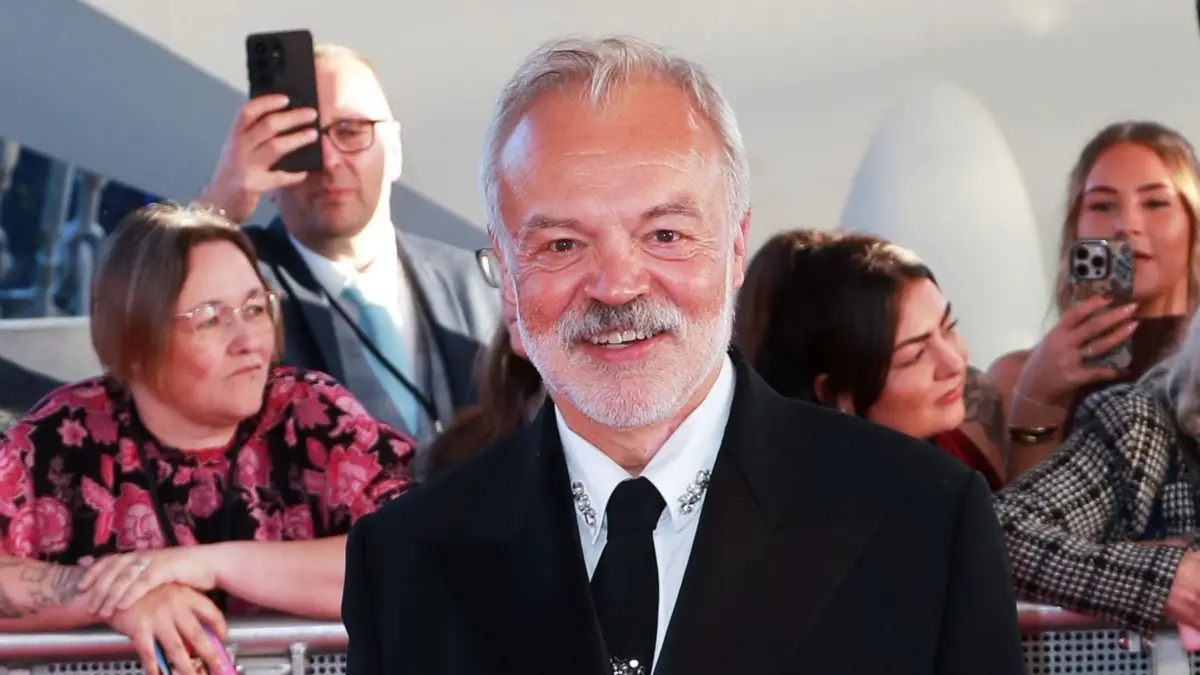
Nominated presenter Graham Norton provided comic relief and industry insight on the red carpet, where he revealed a surprising wardrobe crossover from earlier in the year: "This is what I wore to Taylor Swift’s wedding," he quipped to BBC News.
Addressing his recent appearance in Swift’s music video for Opalite, Norton praised the American pop icon’s organizational and interpersonal leadership: "It was such a happy set. Everyone was working as hard as they could for her. Working with her showed me what leadership is like at that level." Norton noted that guests at the high-security nuptials had mutually agreed to maintain strict discretion, preserving the privacy of the celebration through a shared unspoken pact.
Future Outlook
As the dust settles on the 31st National Television Awards, the trajectory of British television points toward a landscape defined by high-concept event formats, authentic personal documentaries, and increasingly diverse narrative spaces.

The success of The Celebrity Traitors and Changing Ends proves that linear and streaming broadcasters can successfully cross-pollinate light entertainment with deep emotional vulnerability. Meanwhile, the powerful public mandate given to Our Girls: The Southport Families demonstrates that television retains an unmatched capacity to bear witness to national grief, validate marginalized or traumatized voices, and foster collective healing.
Looking ahead to 2027, production houses will undoubtedly scrutinize the winning formulas of the 31st NTAs: the blending of high-stakes reality gamesmanship with genuine human connection, the commercial appeal of character-led rural docuseries, and the critical appetite for complex, female-led drama. As long as British creators continue to balance escapism with profound social empathy, the National Television Awards will remain an indispensable compass for the nation’s cultural identity.