Marking a decennial milestone since the explosion of the 1970s punk movement, cultural critics and music historians find themselves reflecting on the seismic cultural fractures of "Year Zero." The punk movement was more than just a musical genre; it was an ideological cleansing designed to erase everything that preceded it. Historically, popular music had always maintained a deep, reverent dialogue with its heritage. Blues, rockabilly, and early rhythm and blues were foundational pillars upon which successive generations built their craft. Punk, however, drew a jagged, uncompromising line in the sand, categorizing the immediate past as bloated, irrelevant, and fundamentally unacceptable.
Yet, as this retrospective analysis demonstrates, absolute purism is a myth. Even within the most dogmatic periods of cultural revolution, exceptions are made. A distinct caste of artists—dubbed "The Acceptables"—managed to bypass the punk gatekeepers’ strict ideological filters. Whether through stylistic alignment, personal patronage, or sheer undeniable kinetic energy, these performers secured exemption passes. This investigation explores the mechanics of that exclusion zone, examining how bands like Motörhead and Thin Lizzy, trailblazers like the New York Dolls and The Stooges, and the shape-shifting genius of David Bowie managed to inhabit both sides of the punk divide.
Detailed Chronology: The Evolution of "Year Zero" and the Exception Zone
1976: The Pre-Punk Stalemate
To understand the radical necessity of punk’s Year Zero, one must examine the state of rock music in 1976. Despite the vibrant, forward-moving energy found on mainstream pop showcases like Top of the Pops, the broader rock landscape was suffering from creative stagnation. Archival listening sessions of contemporary radio broadcasts—such as the seminal shows hosted by John Peel—reveal a peculiar paradox. Rather than acting exclusively as hotbeds for forward-thinking sonic innovation, these programs frequently retreated into the past, celebrating legacy acts like The Doors and The Beatles scarcely half a decade after their dissolution.
Concurrently, the live pub rock circuit was energetic but deeply flawed. While acts like Dr. Feelgood injected a dose of raw, stripped-down adrenaline into venues, the vast majority of recording acts peddling blues-based 1970s rock had reduced the genre to a dull, elongated, self-indulgent exercise. Progressive rock and stadium-filling "dinosaur" acts dominated the commercial sphere with twenty-minute synthesizer solos and sprawling conceptual suites. Rock music had lost its danger, its brevity, and its connection to the youth.
The Erection of the Wall
When the punk explosion finally hit, spearheaded by the raw fury of the Sex Pistols and the ideological rigor of The Clash, it demanded a total cultural reboot. In anthems like "1977," The Clash explicitly raised the stakes, targeting not just the establishment acts of the 1960s like The Beatles and The Rolling Stones, but even foundational icons like Elvis Presley.
For a brief, incandescent moment, the rock world was bifurcated. You were either on the side of the new wave of noise and rebellion, or you were stranded on the wrong side of history with the bloated dinosaurs.
The Forging of the Middle Ground: The Acceptables
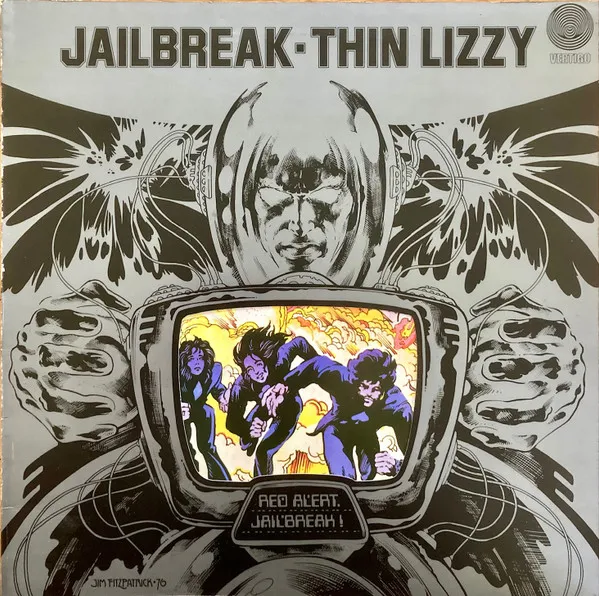
Inevitably, the rigid binaries of punk orthodoxy began to bend under the weight of reality. A middle ground emerged, populated by artists who secured an unofficial "exemption pass." Chief among these were hard-rock acts like Motörhead and Thin Lizzy. Despite operating outside the punk milieu, these bands were embraced as comrades in the war against musical boredom. Their inclusion was multifaceted: they favored short, sharp, high-octane songs; they displayed a sympathetic attitude toward the punk uprising rather than defensive hostility; and, crucially, they wore the requisite leather jackets.
Marc Bolan occupied a similarly privileged space. Bolan’s T.Rex bridged the generational gap in two vital ways. First, his television showcase actively platformed emerging punk bands at a time when mainstream broadcasters viewed the movement with open hostility. Second, a significant portion of the 1976 teenage punk audience had spent their formative childhood years worshipping glam rock—a lineage proudly honored later by artists like Siouxsie and the Banshees through their incendiary renditions of Bolan’s catalog.
The Revered Ancestors and the Bowie Nexus
As early champions like John Peel attempted to curate the burgeoning punk soundscape on the airwaves, they encountered a logistical hurdle: there simply were not enough recorded punk singles in existence to fill a broadcast hour. Consequently, DJs and tastemakers leaned on the "Revered Ancestors"—acts that had intuitively embodied the punk ethos long before the term was codified. The Velvet Underground, The Stooges, the New York Dolls, alongside 1960s garage-punk outfits like The Seeds and The Shadows of Knight, were retroactively drafted into the movement. Soon, every nascent punk band worth their salt featured a Stooges cover in their live set or nodded to Lou Reed in their B-sides.
At the epicenter of this ancestral web stood David Bowie. Bowie was the undisputed sovereign of the Acceptables. Like Bolan, he commanded the devotion of younger fans—anchored permanently by his songwriting contributions like Mott the Hoople’s "All the Young Dudes." However, unlike his glam-era peers, Bowie spent the entirety of the 1970s in a state of perpetual reinvention, refusing to stagnate.
While stadium rock acts grew bloated, Bowie remained an enigmatic, cult-adored figure of intense creative vitality. This halo effect extended outward to his collaborators: he produced records for Iggy Pop and Lou Reed, and partnered with sonic architects like Brian Eno and Robert Fripp. Even as Bowie pursued his own avant-garde paths with the Berlin Trilogy (Low, Heroes), record label RCA brilliantly captured his unique positioning with promotional campaigns that declared: "There’s Old Wave, There’s New Wave and There’s David Bowie."
Supporting Context & Metrics
To contextualize the scale of this musical polarization, analysts often look at commercial shifts, media airplay distribution, and demographic data from the late 1970s.
| Category | Pre-Punk Era (Pre-1976) | Punk & Year Zero (1976–1978) | Post-Punk / New Wave Splinter (1979–1985) |
|---|---|---|---|
| Dominant Song Length | 4 to 8+ minutes (Extended solos, prog suites) | 2 to 3 minutes (High tempo, stripped arrangements) | 3 to 4 minutes (Structured pop, synthesis, syncopation) |
| Industry Gatekeeping | Major label A&R domination; stadium-focused | Independent labels (Rough Trade, Stiff); DIY ethos | Corporate absorption of indie aesthetics; MTV integration |
| Stylistic Uniformity | Blues-rock, arena rock, progressive complexity | Raw distortion, anti-virtuosity, minimalist delivery | New Romantic, post-punk dissonance, synth-pop |
| Treatment of Heritage | Deep reverence for blues/rock pioneers | Total rejection ("Year Zero" purge) | Strategic selective adoption (Revered Ancestors) |
The economic and cultural metrics of the era demonstrate that while punk represented a sharp drop in traditional album sales for legacy progressive bands in 1976–1977, those very same "dinosaurs"—such as Genesis, Yes, and Pink Floyd—enjoyed massive commercial resurgences by the mid-1980s. The walls erected during Year Zero were ultimately porous, functioning more as tribal identity markers than permanent industry walls.
Official Statements & Critical Commentary
Cultural historians and participating musicians have frequently weighed in on the complex social stratification of the 1970s music scene:
- On the Paradox of Musical Purity: "Before punk, the idea of building a kind of wall between the new music and the old music would have been most bizarre—especially as rock music had always been very aware of its heritage and indeed respectful of it." — Music Critic & Historian Perspective
- On David Bowie’s Transcendent Status: "You couldn’t call Low or Heroes punk, but he was also somehow at the heart of it. Bowie remained exciting and cult-famous, and so, by extension, did everyone he worked with." — Archival Industry Assessment
- On the Reality of the Underground Airwaves: "There weren’t enough punk records to play, so Peel played the Revered Ancestors… Any band that seemed to encapsulate the proper spirit of punk or any aspect of punk was acceptable, and remained so." — Radio Broadcasting Retrospective
Future Outlook
As decades separate modern listeners from the primal screams of 1977, the rigid demarcation lines that once divided the rock ecosystem have largely dissolved into historical nuance. Contemporary music culture operates on a continuous, omnivorous timeline where genre boundaries are porous and historical revisionism is instantaneous.
Yet, the legacy of "The Acceptables" offers a vital lesson in cultural revolutions. No movement, no matter how radical or uncompromising its rhetoric of absolute destruction, exists in a vacuum. The desire for a clean slate—a Year Zero—inevitably collapses under the weight of artistic lineage. Whether through the leather-clad camaraderie of Motörhead, the ancestral bloodlines of The Stooges, or the cosmic adaptability of David Bowie, the history of popular music proves that true greatness always finds a way across the barricades. Today, as listeners sample past eras via algorithm-driven platforms, the once-strict list of who was allowed in and who was kept out has faded—leaving behind a rich, unified tapestry of rebellion and reinvention.