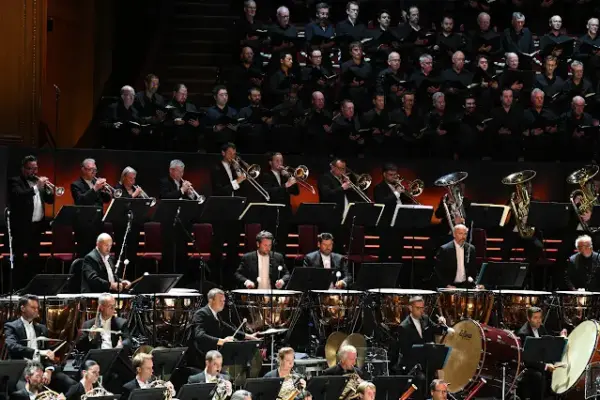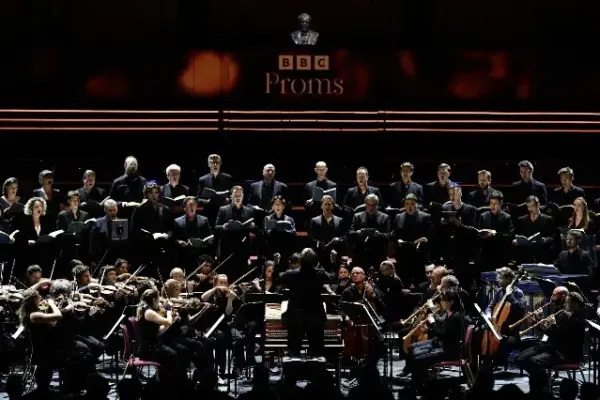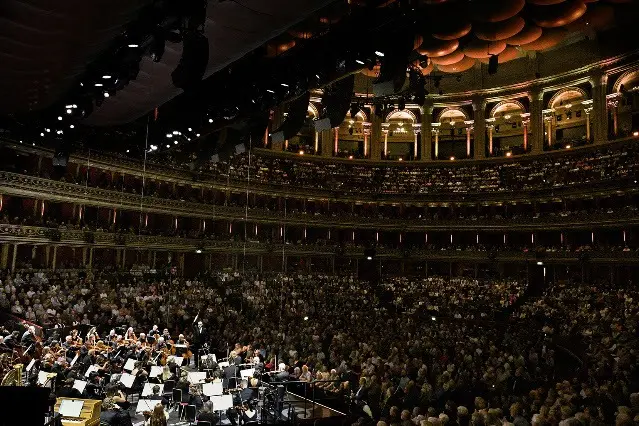
On Friday, September 4, 2026, the Royal Albert Hall bore witness to a masterclass in twentieth-century British orchestral programming. Under the incisive baton of Principal Guest Conductor Andrew Manze, the Royal Liverpool Philharmonic Orchestra (RLPO) delivered an intellectually rigorous and emotionally resonant concert for the BBC Proms.
The programme traced a fascinating chronological and stylistic arc across mid-century British composition. It paired early masterworks—Ralph Vaughan Williams’s 1910 Fantasia on a Theme of Thomas Tallis and Benjamin Britten’s searing 1939 Violin Concerto—with the contemporary voice of Carmel Smickersgill via the world premiere of A Brick Thrown with Love. The evening culminated in Vaughan Williams’s valedictory masterpiece, his Symphony No. 9 in E minor, completed shortly before his death in 1958 at the age of 86.
Featuring violinist Simone Lamsma as soloist in the Britten concerto, the concert offered a compelling meditation on legacy, innovation, and structural symmetry. Most notably, the evening drew attention to a subtle unifying thread: both the Britten concerto and Vaughan Williams’s final symphony conclude with a rigorous passacaglia. Despite the inherent challenge of staging complex, non-traditional repertoire at the world’s most famous classical music festival, the Proms audience packed the hall, rewarded the artists with rapturous applause, and confirmed the enduring vitality of these historically rich masterworks.
Detailed Chronology and Performance Analysis
Vaughan Williams: Fantasia on a Theme of Thomas Tallis
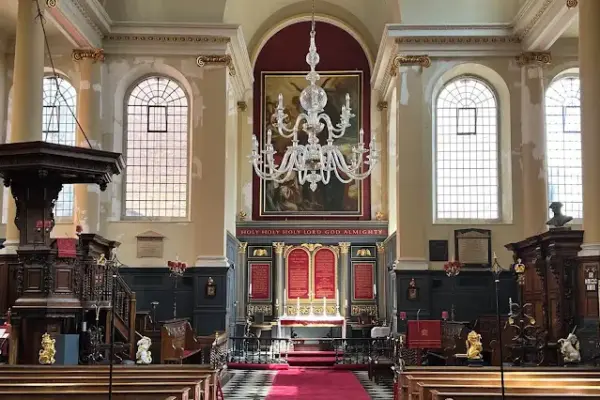
The evening opened with Vaughan Williams’s iconic Fantasia on a Theme of Thomas Tallis, a work that established the composer’s mature voice when it premiered at the Three Choirs Festival in Gloucester in 1910. Though Vaughan Williams was in his late thirties at the time—something of a late starter on the international stage—the piece sent shockwaves through the British musical establishment. Contemporary accounts note that young composers Herbert Howells and Ivor Gurney were so profoundly shaken by the premiere that they spent the entire night wandering the streets of Gloucester discussing its harmonic innovations.
.jpg)
While the Royal Albert Hall lacks the unique, reverberant stone acoustic of Gloucester Cathedral, Andrew Manze adapted brilliantly to the space. Utilizing the same expansive string body that would later power the Britten and the final symphony, Manze crafted an opening that was simultaneously lush and ethereal. The famous soaring melodies were delivered with a fine sense of rubato, while the orchestral tuttis maintained immense structural clarity.
Particularly striking was the deployment of the second orchestra of nine players, positioned behind the main body of strings. By employing a disciplined minimum vibrato, they created a stark, antiphonal contrast to the rich, warm timbres of the solo string quartet. Though the performance lacked the cathedral glow of its historical origins, the sheer textural transparency was breathtaking.
Britten: Violin Concerto with Simone Lamsma
The intensity escalated sharply with Benjamin Britten’s Violin Concerto, composed in 1938 during the composer’s self-imposed American exile and premiered in New York in 1940. Britten originally conceived the work for Spanish virtuoso Antonio Brosa—who famously faced immigration drama at Ellis Island as a "doubtful visitor" just days before the premiere. Musicologists have long theorized that the concerto’s driving, aggressive rhythms and elegiac undertones serve as a lament for the casualties of the Spanish Civil War.
For this performance, the RLPO was joined by Dutch violinist Simone Lamsma, an artist who has lived with the piece for over two decades, having won the Britten International Violin Competition with it in 2004.
.jpg)
From the opening bars, Manze emphasized the stark major/minor friction and relentless propulsion of the score. Over this unstable orchestral landscape, Lamsma spun a vocal, singing line. Her tone was slim, elegant, yet possessing an undeniable edge that kept the audience on edge.
- The First Movement: Lamsma’s phrasing brilliantly bridged the gap between rhythmic dance and haunting lament. Manze unmasked the underlying darkness of the orchestration, allowing the brass and percussion to punctuate the score with visceral stabs.
- The Second Movement: Recalling the sardonic, acerbic landscapes of Shostakovich, this movement was defined by driving rhythms and abrasive textures. Lamsma leaned heavily into the biting wit of the writing, matching the orchestra’s intensity stride for stride before launching into a formidable, blistering cadenza.
- The Finale: The transition into the closing passacaglia was handled with spine-chilling dramatic timing. As the trombones introduced the passacaglia theme while Lamsma was still completing her cadenza, a sense of profound unease settled over the hall. Lamsma’s entry bore an eerie, distorted echo of Vaughan Williams’s pastoral vocabularies, yet it quickly mutated into an urgent, searing soliloquy. The final orchestral tutti unleashed the passacaglia in all its architectural glory, resolving into an enigmatic, powerful yet fragile final solo.
Carmel Smickersgill: A Brick Thrown with Love (World Premiere)
Providing a vital contemporary anchor, the programme featured the world premiere of A Brick Thrown with Love by Carmel Smickersgill. Smickersgill enjoys an established relationship with the RLPO, having captured their Rushworth Composition Prize in 2018 before writing for their new music wing, Ensemble 10/10.
Smickersgill’s work is underpinned by an overt philosophical and didactic conceit: an exploration of the jarring disconnect between intention and action, symbolized by the violent act of a brick being thrown through a window.
Structured in three distinct movements, the piece opened with The Why, introducing the disturbing motif of the thrown brick via a perky, deceptive clarinet line that rapidly metastasized into vibrant orchestral chaos. The central movement, Construction, Compassion, Community, Consequence, worked on a macro scale, building a massive architectural structure out of disparate, pointillistic fragments. The textures grew increasingly dense and accelerated at a breathless pace. The final movement, The Voice that Says ‘DO IT’, drove forward with breathless, furious momentum to an abrupt, striking conclusion.
.jpg)
While the philosophical framing of the piece occasionally risked over-explaining a purely sonic experience, Smickersgill’s instinctive command of large orchestral forces was undeniable. Employing a massive forces roster identical to the one required for the subsequent Vaughan Williams symphony, she demonstrated a sophisticated understanding of multi-layered textures operating at competing speeds and conflicting meters. The result was an undeniably crowd-pleasing, visceral addition to the contemporary repertoire.
Vaughan Williams: Symphony No. 9 in E minor
The evening drew to a monumental close with Ralph Vaughan Williams’s final symphonic statement. Premiered in 1958 at the Royal Festival Hall under Sir Malcolm Sargent, the initial critical reception was strangely tepid. The elderly composer famously quipped, "I don’t think they can quite forgive me for being able still to do it at my age." However, public sentiment proved vastly different; when Sargent conducted it at the Proms later that summer, the reception was overwhelming. Tragically, it was Vaughan Williams’s final public appearance; he passed away just three weeks later.
True to his late-career obsession with unconventional orchestral timbres—having already written concertos for harmonica and tuba, alongside an expansive percussion battery in the Eighth Symphony—the Ninth calls for an unorthodox woodwind section. It features a trio of saxophones and a prominent flugelhorn, creating an eerie, autumnal harmonic palette.
- First Movement: Andrew Manze eschewed any gentle nostalgia, treating the ominous, held E-minor chord and the weeping entry of the saxophone trio with uncompromising urgency. Yet, sudden lulls offered glimpses of the composer’s earlier pastoral idiom, complicated by a duetting violin and flugelhorn.
- Second Movement: Opening with a melancholic solo from flugelhorn player Tom Fountain set against a brooding bass section, this movement evoked an undeniable cinematic narrative—widely believed by scholars to reflect Thomas Hardy’s Tess of the d’Urbervilles. The tonal architecture was intensely restless, balancing moments of fragile consolation against looming darkness.
- Third Movement: The scherzo-like third movement opened with a sharp, satirical edge from the saxophone trio, explicitly recalling the grotesque demonic dances of the ballet Job (1930). As the music escalated into violence, the textures abruptly evaporated at the movement’s close, leaving only the three saxophones hanging in the air. As Ursula Vaughan Williams later noted of this passage, it signaled a profound threshold: "I thought, well, that is the end of Ralph’s life and I can see a turning point. It is leading out into another place."
Supporting Context & Metrics
- Date of Performance: Friday, September 4, 2026.
- Venue: Royal Albert Hall, London (Capacity: approx. 5,272).
- Broadcasting: Broadcast live on BBC Radio 3 and made available on-demand via BBC Sounds for 37 days post-broadcast.
- Ensemble: Royal Liverpool Philharmonic Orchestra (RLPO).
- Conductor: Andrew Manze.
- Featured Soloists: Simone Lamsma (Violin), Tom Fountain (Flugelhorn), Thelma Hardy (Violin).
- Attendance Metrics: Despite featuring non-traditional or historically under-appreciated repertoire—specifically Vaughan Williams’s Ninth Symphony, which has historically suffered from critical neglect compared to its companion symphonies—the Royal Albert Hall reached near-capacity attendance, notably outdrawing concurrent high-profile opera broadcasts at the Proms such as Glyndebourne’s Ariadne auf Naxos.
Official Statements & Critical Reception
The critical consensus surrounding the concert has highlighted the daring nature of the programming and the exceptional technical standard maintained by the RLPO under Andrew Manze’s direction.
.jpg)
Reviewing the evening’s architecture, musicologists and critics alike praised the thematic unity of the programme, which successfully dismantled the artificial barrier between early-century romanticism and post-war modernism.
- On the Britten Performance: Critics singled out Simone Lamsma’s interpretation for its rare synthesis of intellectual rigor and emotional vulnerability. Her decades-long relationship with the score manifested in effortless technical command, allowing her to negotiate the work’s jagged Spanish rhythms and lyrical sighing motifs without sacrificing structural clarity.
- On the Vaughan Williams Ninth: Commentators praised Andrew Manze for stripping away the "safe, pastoral" clichés frequently misapplied to Vaughan Williams’s output. By highlighting the abrasive, modernistic orchestration—particularly the spectral blend of the saxophone trio and the flugelhorn—Manze framed the Ninth Symphony not as the fading whisper of an aging master, but as a genuinely forward-looking, structurally daring masterwork.
Future Outlook
The success of this Proms appearance solidifies the ongoing critical re-evaluation of British twentieth-century orchestral music, proving that challenging, non-standard repertoire can capture the public imagination when executed with absolute conviction.
For the Royal Liverpool Philharmonic Orchestra and Principal Guest Conductor Andrew Manze, this acclaimed appearance at the Royal Albert Hall reinforces their status as leading interpreters of British masterworks on the international stage. Furthermore, the inclusion of Carmel Smickersgill’s A Brick Thrown with Love demonstrates a healthy, forward-facing commitment to nurturing contemporary compositional voices within traditional orchestral frameworks.
Listeners who missed the live broadcast can stream the performance on BBC Sounds for a limited window of 37 days, ensuring that this landmark concert continues to reach audiences far beyond the physical walls of the Royal Albert Hall.