Executive Overview
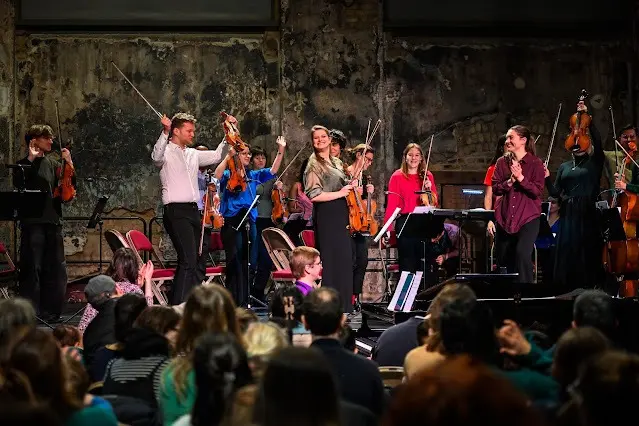
The landscape of British classical music is undergoing a vibrant transformation, driven by innovative ensembles that prioritize artistic excellence alongside rigorous youth development and community integration. At the forefront of this movement is the Chromatica Orchestra, which has officially announced a landmark appointment ahead of its upcoming 2026/27 season at the Battersea Arts Centre. Marking a pivotal milestone in its brief yet illustrious history, the orchestra has named the 27-year-old rising British maestro Oliver Cope as its first-ever Principal Conductor.
Cope, whose meteoric rise through the international conducting ranks has captured the attention of the classical music establishment, will take the podium to launch the orchestra’s third consecutive residency at the historic Battersea venue. This appointment signals more than just a leadership change; it represents a shared vision between an ambitious young maestro and an ensemble dedicated to redefining how symphony orchestras interact with emerging talent, multidisciplinary programming, and local communities.
Founded in 2024 by visionary musician Peter Manning, the Chromatica Orchestra has rapidly carved out a distinctive niche. By bridging the gap between exceptionally talented emerging professional orchestral players and world-class soloists, the ensemble serves as a vital launchpad for the next generation of classical artists. With Cope at the helm, the upcoming season promises an intoxicating blend of bold 20th-century masterworks, contemporary concerto showcases, and an expansive educational outreach initiative designed to democratize access to orchestral music for South London’s youth.
Detailed Chronology and Artistic Trajectory
To understand the significance of Oliver Cope’s appointment, one must examine the rapid and methodical ascent of both the conductor and the orchestra itself.
The Rise of Oliver Cope
Despite his youth, Oliver Cope has accumulated a CV that would be the envy of conductors twice his age. His artistic authority has been forged on competitive international stages and through high-profile engagements with some of the most prestigious broadcasting and symphony orchestras in Europe.
Cope’s pedigree is underscored by top-tier international accolades. He earned First Prize at both the Koussevitzky International Conducting Competition and the International Athens Conducting Competition, before securing a prestigious prize at the highly competitive 2026 Gustav Mahler Conducting Competition. These victories served as catalysts, opening doors to major symphonic podiums across the United Kingdom and continental Europe.
Within the UK, Cope has already commanded respect while conducting the Hallé, the BBC Scottish Symphony Orchestra, the Royal Scottish National Orchestra, and the Bournemouth Symphony Orchestra. Internationally, his relationship with the Bamberger Symphoniker has proven particularly fruitful; he returns to Bamberg this season for a prestigious studio recording session with BR-KLASSIK, cementing his reputation as a trusted interpreter of complex orchestral repertoire in the recording studio.
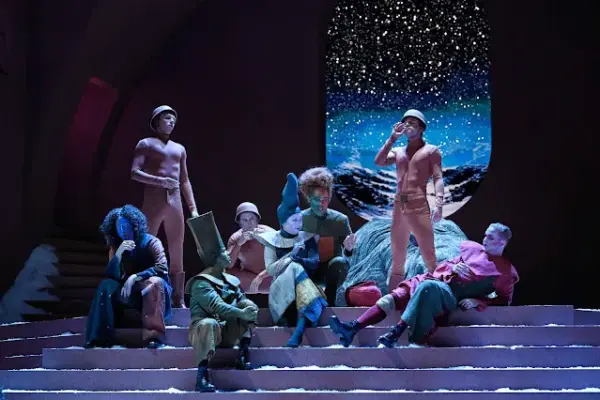
Cope’s versatility extends seamlessly into the realm of opera and musical theater. His theatrical instincts were honed through compelling interpretations of canonical and modern operatic works. He has previously conducted Tchaikovsky’s emotionally charged Eugene Onegin and Britten’s searing chamber opera The Rape of Lucretia with Hampstead Garden Opera (HGO). Most recently, during the summer of 2026, Cope conducted British Youth Opera in a critically acclaimed staging of Stravinsky’s neoclassical masterpiece, The Rake’s Progress, fittingly performed at the Battersea Arts Centre—the very home of his new orchestral residency.
The Inception and Evolution of Chromatica Orchestra
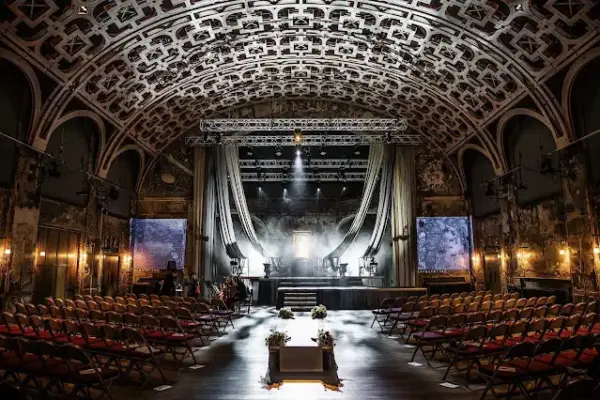
The story of the Chromatica Orchestra is rooted in a desire to reform the traditional orchestral ecosystem. Established in 2024 by Peter Manning, the orchestra made an immediate impact with its debut at the Battersea Arts Centre, establishing a permanent home that values acoustic intimacy and architectural character over conventional, cavernous concert halls.

From its inception, Chromatica was designed as a dual-purpose entity: a high-level performance ensemble capable of executing demanding, eclectic repertoire, and a professional incubator. The model works. Alumni of the Chromatica Orchestra have rapidly transitioned into permanent seats within some of the UK’s leading professional ensembles, including the City of Birmingham Symphony Orchestra, the BBC Philharmonic, the BBC Concert Orchestra, and the BBC National Orchestra of Wales.
By appointing Oliver Cope as Principal Conductor for the 2026/27 season, the orchestra is signaling a generational alignment between its artistic leadership and its foundational mission of nurturing youthful excellence.
Supporting Context & Metrics: The 2026/27 Season and Educational Impact
The upcoming 2026/27 season is structured to showcase Cope’s affinity for stark contrasts, cinematic tension, and virtuosic collaborations, while simultaneously expanding the orchestra’s community footprint.
Programming Highlights
Cope’s inaugural concert as Principal Conductor sets a high-octane tone. The programme plunges headfirst into the psychological depths of the 20th century, pairing Bernard Herrmann’s tense, iconic suite from Alfred Hitchcock’s Psycho (1960) with Dmitri Shostakovich’s mercurial, neoclassical Symphony No. 9 (1945). The centerpiece of the evening is Erich Wolfgang Korngold’s lush, cinematic Violin Concerto (1945), performed by the extraordinary South Korean violinist Sarang Seohyun Kim. Kim, herself a prodigy and the youngest-ever winner of the Tibor Varga International Competition, represents the exact demographic of peerless youthful brilliance that Chromatica was founded to champion.
Looking further ahead into the season, Cope and the orchestra refuse to rest on standard repertoire. Programming includes eclectic explorations of music by Osvaldo Golijov and Francis Poulenc. A major highlight of the winter schedule arrives in November, featuring Daniel Soley’s innovative Accordion Concerto. The work will be performed by Ryan Corbett, the acclaimed accordionist who originally premiered the piece. This is followed by a festive Christmas concert in December and an accessible, engaging family concert scheduled for February 2027, continuing a tradition that saw the orchestra perform Camille Saint-Saëns’s Carnival of the Animals to packed houses in early 2025.
Educational Metrics and Community Partnerships
Beyond the concert hall, the Chromatica Orchestra operates as an educational powerhouse. Its youth engagement framework is deeply embedded in South London’s cultural infrastructure, driven by established partnerships with the Music in Secondary Schools Trust (MiSST) and the Bobby Moore Academy, alongside newly forged collaborations with several South London music hubs.
The core philosophy of Chromatica’s educational work is radical empowerment. Rather than treating young people as passive audience members, the initiative focuses on giving secondary school-age musicians true autonomy over their musical experiences. A key pillar of this program is dedicated conducting opportunities tailored for students from diverse socio-economic and cultural backgrounds.
The scope of these educational metrics and activities includes:
- Side-by-Side Opportunities: Allowing aspiring student musicians to sit directly alongside professional players from the Chromatica Orchestra during rehearsals and workshops, absorbing professional standards of discipline, tone production, and ensemble breathing in real-time.
- Conducting Workshops and Coaching: Providing hands-on masterclasses led by Oliver Cope and guest artists, demystifying the art of conducting and offering practical baton technique to teenagers who might otherwise never access such high-level instruction.
- Family and Creative Composition Sessions: Interactive events designed to demystify classical composition, encouraging young participants to invent their own sonic landscapes and perform them in professional environments.
Official Statements and Industry Reception
The appointment of Oliver Cope has sent ripples of approval across the British classical music scene, drawing praise from educational leaders, orchestral managers, and critics alike.

Industry analysts have noted that appointing a 27-year-old conductor to a principal role reflects a broader, much-needed industry shift toward youth-led artistic renewal. Traditional hierarchies within classical music are notoriously rigid, often requiring decades of waiting in the wings before securing a principal appointment. By handing the artistic reins of a major residency to Cope, the Chromatica Orchestra demonstrates a fearless commitment to fresh perspectives and unjaded artistic vitality.
While specific organizational press statements regarding the appointment emphasize the synergy between Cope’s dynamic rehearsal room presence and the orchestra’s collaborative ethos, insiders point to his extensive work across British youth and regional orchestras as the deciding factor. Having cut his teeth with the BBC Scottish, the RSNO, and British Youth Opera, Cope possesses a rare blend of administrative flexibility, interpersonal warmth, and ironclad technical precision on the podium.
Furthermore, the board of the Battersea Arts Centre has privately and publicly lauded the ongoing residency of the Chromatica Orchestra. The venue, known for its experimental and boundary-pushing theatrical and musical programming, provides an ideal incubator for an orchestra that rejects the stifling formality of traditional concert halls in favor of direct, visceral audience engagement.
Future Outlook: A Blueprint for the Modern Orchestra
As the Chromatica Orchestra prepares to lift the curtain on its 2026/27 season under the baton of Oliver Cope, the ensemble stands as a compelling blueprint for the 21st-century symphony orchestra.
In an era where traditional classical institutions frequently struggle with aging demographics, diminishing public arts funding, and disconnection from local communities, Chromatica offers a counter-narrative. By intertwining elite professional performance with grassroots youth empowerment—giving teenagers the keys to the podium, the composition desk, and the orchestral chair—the organization ensures a sustainable, vibrant future for the art form.
For Oliver Cope, this appointment marks the transition from being viewed merely as a "conductor to watch" to becoming an institutional leader capable of shaping taste, cultivating talent, and defining the sonic identity of an ensemble. With a gripping inaugural programme featuring Herrmann, Shostakovich, and Korngold, followed by bold contemporary explorations with soloists like Sarang Seohyun Kim and Ryan Corbett, Cope and the Chromatica Orchestra are poised to make the Battersea Arts Centre the most exciting classical music destination in London.
Full ticketing details, seasonal brochures, and comprehensive information regarding the orchestra’s extensive educational workshops can be accessed directly via the official Chromatica Orchestra website.