Executive Overview
Nestled within the rolling green hills and historic heartlands of Kent, the annual Music@Malling festival has established itself as one of the United Kingdom’s most imaginative cultural celebrations. Opening tomorrow, Friday, September 18, and running through September 27, the festival transforms the picturesque market town of West Malling and its surrounding historic architectural marvels into vibrant acoustical laboratories. This year’s ambitious ten-day programme deliberately dissolves boundaries between eras, genres, and geographies, pairing the ethereal sonic landscapes of Japanese master Tōru Takemitsu with canonical European repertoire by Ravel, Debussy, Stravinsky, Messiaen, and the jazz innovations of Miles Davis.
True to its curatorial DNA, Music@Malling thrives on creative juxtaposition. Centuries-old compositions by John Dowland sit comfortably alongside newly minted works by Huw Watkins, Deborah Pritchard, and Atifeh Einali. Baroque counterpoint rubs shoulders with the sonic experiments of Radiohead and the Beatles. Yet, what fundamentally elevates this festival above standard classical music gatherings is its symbiotic relationship with its venues. Performances do not merely take place in historic spaces; they are deeply informed by them.
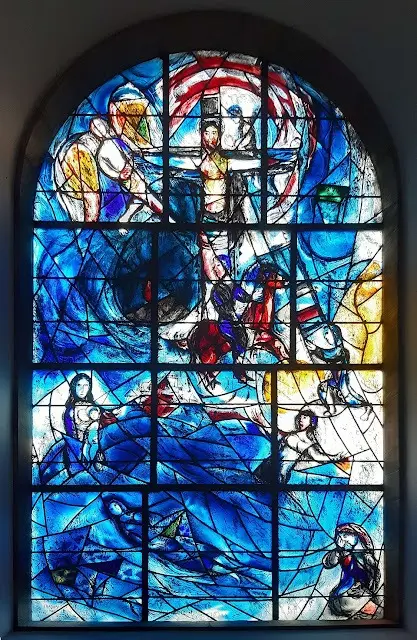
Audiences are invited to experience world-class chamber music, jazz, and contemporary sound art inside structures that have witnessed centuries of British history. From the Romanesque grandeur of St. Mary’s Church, built in the 11th century by Gundulf of Rochester, and the sprawling medieval remnants of Malling Abbey (founded in 1090), to the evocative moated fortress of Ightham Mote and the glowing sanctuary of All Saints’ Church in Tudeley—home to the world’s only complete set of stained-glass windows designed by Marc Chagall—the festival offers an immersive, multi-sensory pilgrimage. Under the artistic direction of violinist and conductor Thomas Kemp, Music@Malling continues to balance high-art accessibility with rigorous community outreach, cementing Kent’s position as a premier destination for adventurous arts programming.
Detailed Chronology and Programme Highlights: A Journey Through Sound
The ten-day itinerary is meticulously structured to guide listeners through shifting stylistic paradigms, offering daily highlights that traverse centuries of musical evolution.
Opening Weekend: Impressionism and Jazz Reimagined
The festival launches on Friday, September 18, with a masterclass in finesse as internationally renowned pianist Peter Donohoe takes to the stage to perform works by Maurice Ravel and Claude Debussy. Donohoe’s virtuosic yet deeply sensitive touch provides an ideal entry point into the impressionistic core of the festival.
The following evening, the atmosphere shifts dramatically. James Pearson, the celebrated artistic director of London’s legendary Ronnie Scott’s Jazz Club, steps up to reinterpret core classical pieces from the festival’s overarching programme through a dynamic jazz lens. This crossover sets a precedent for the entire festival: nothing is sacred, and everything is open to fresh interpretation.
Mid-Week Explorations: Minimalism, Modernism, and New Commissions
As the week progresses, the programming diversifies into rigorous explorations of 20th-century modernism and contemporary minimalism.
- The Sacconi Quartet, joined by celebrated horn player Ben Goldscheider, deliver rich textures of Ravel alongside the premiere of a major new work by British composer Huw Watkins.
- The Fidelio Trio tackles a monumental pairing: Ravel’s exquisite Piano Trio alongside Sally Beamish’s ingenious chamber arrangement of Debussy’s orchestral masterpiece La Mer, interwoven with the delicate sound-worlds of Tōru Takemitsu.
- The Smith Quartet presents a hypnotic programme rooted in American and European minimalism. Featuring works by Philip Glass, Gavin Bryars, and Arvo Pärt, their set also includes Igor Stravinsky’s Three Pieces for String Quartet. Notably, these pieces were inspired by the legendary Victorian music hall star Little Tich, who grew up in nearby Cudham, Kent, grounding the avant-garde performance in local heritage.
- Cloud Chamber, the compelling cello and piano duo, bridge cinematic landscapes by weaving works of Gavin Greenaway alongside iconic screen scores by Takemitsu, Ennio Morricone, and Hans Zimmer.
Mid-Festival Currents: English Roots and Global Voices
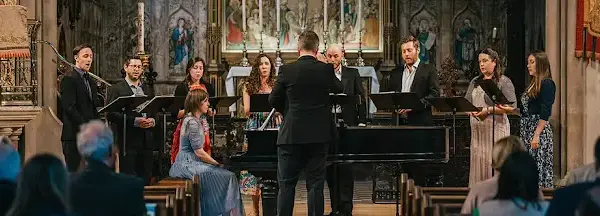
Mid-week concerts turn an analytical ear toward the lineage of English music and its dialogue with international voices. Artistic Director Thomas Kemp leads his elite ensemble, Chamber Domaine, in a thoughtfully curated exploration of how early music has directly influenced modern British masters such as Benjamin Britten, Michael Tippett, Thomas Adès, and Peter Warlock. This programme is further enriched by the world premiere of a striking new work by Iran-born, UK-based composer Atifeh Einali.
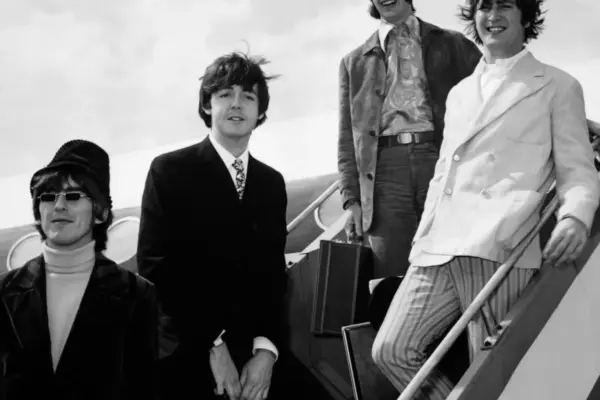
In a playful nod to genre fluidity, the Intesa Duo juxtaposes 17th-century baroque miniatures with anthems by Radiohead, The Beatles, and The Killers, proving that structural complexity transcends generational boundaries. Meanwhile, virtuoso classical guitarist Craig Ogden performs Tippett’s demanding masterpiece The Blue Guitar, alongside works by Takemitsu, Leo Brouwer, and William Walton—all performed against the kaleidoscopic backdrop of Chagall’s stained-glass windows at All Saints’, Tudeley.
The Mendelssohn Legacy and Historic Instruments
A major highlight for chamber music enthusiasts involves cellist Guy Johnston and pianist Melvyn Tan, who delve deep into the sibling rivalry and creative symbiosis of Felix and Fanny Mendelssohn, placing their works in dialogue with Beethoven and Schubert.
The Mendelssohn exploration continues in an intimate concert at Ightham Mote’s historic Drawing Room. Soprano Ruby Hughes, pianist Huw Watkins, and violinist Thomas Kemp join forces for a programme featuring Haydn, Schumann, Schubert, and Brian Elias. The undisputed star of this particular evening, however, is the room itself—and the rare 1830 Stodart piano housed within it, which Watkins will play, offering authentic period resonance to the Romantic repertoire.

Towards the Finale: Early Music, Sacred Spaces, and Miles Davis
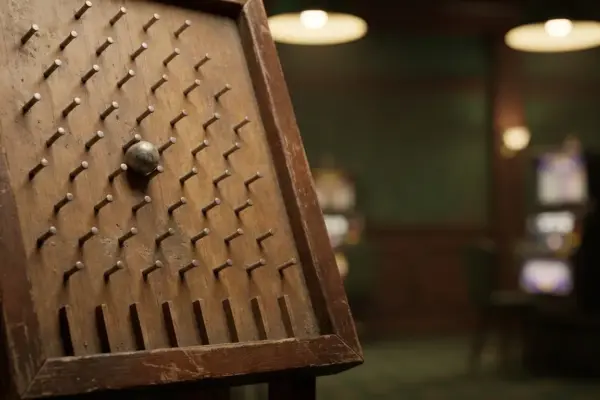
As the festival draws to a close, it looks back across four centuries of vocal and instrumental tradition. Dowland’s Foundry commemorates the 400th anniversary of John Dowland’s death with an emotionally resonant programme of Elizabethan lutesongs. For a lighter touch, period-instrument ensemble Apollo’s Cabinet presents Apollo’s Jukebox, an interactive concert where the audience physically curates the running order from a menu of 18th-century tunes.
Sacred and contemporary choral traditions collide when The Marian Consort joins Chamber Domaine to perform sacred minimalist masterpieces by Arvo Pärt, interspersed with sharp contemporary statements from Deborah Pritchard and Rosemary Shapes.
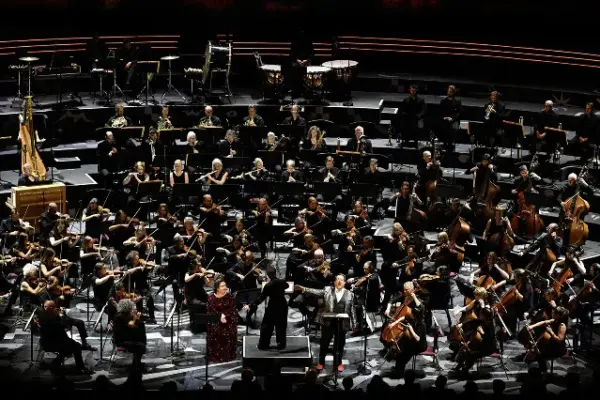
Shifting gears entirely, Thomas Kemp conducts the powerhouse London Sinfonietta in a programme that sets Takemitsu alongside Debussy, John Cage, and Anton Webern. Fittingly, the festival reaches its crescendo on September 27 with James Pearson leading an electrifying, high-octane tribute to the immortal jazz innovator Miles Davis.
Supporting Context, Architecture, and Metrics
What distinguishes Music@Malling from urban-centric summer festivals is its deep-rooted topography. The choice of venues is not merely aesthetic; it is an act of historical and acoustical reclamation.
The Venues: Living History
- Malling Abbey (Founded 1090): One of the oldest continuously inhabited religious houses in England, providing an austere, soaring stone acoustic ideal for vocal and chamber ensembles.
- Ightham Mote: An 800-year-old moated manor house complete with a medieval Great Hall and a 19th-century Drawing Room. It serves as both a performance space and an active gallery.
- St. Mary’s Church, West Malling: Built by Gundulf, the Norman architect of the Tower of London and Rochester Cathedral, this 11th-century church offers robust stone acoustics that amplify brass, strings, and choral arrangements.
- All Saints’ Church, Tudeley: Universally renowned as the only church in the world featuring a complete set of stained-glass windows designed by Marc Chagall. Completed as a memorial to Sarah d’Avigdor-Goldsmid, the vibrant blues, yellows, and reds of the glass react dynamically to the shifting Kentish daylight, creating a synesthetic dialogue with Craig Ogden’s guitar performances.
Immersive Exhibitions and Intellectual Discourse
The festival extends beyond pure performance into the visual and academic realms. Deborah Pritchard, a composer and visual artist, presents Inside Colour, an immersive gallery exhibition of her acclaimed Music Maps at Ightham Mote. These visual translations of sound invite audiences to literally "see" musical structures. Complementary daytime events include scholarly and poetic talks exploring 19th-century drawing-room culture and historical espionage for Queen Elizabeth I.
Educational Outreach and Community Impact
Music@Malling maintains a steadfast commitment to accessibility and social responsibility, integrating outreach deep into its organizational framework. Key community initiatives include:
- Spadework Partnership: Tailored workshops, informal concerts, and bespoke listening playlists designed for adults living with mental and physical disabilities, dementia, and chronic mental health challenges.
- Side-by-Side Mentorship: Emerging young musicians perform shoulder-to-shoulder with professional artists from Chamber Domaine and The Marian Consort.
- Music@Malling Scratch Orchestra: Inclusive community music-making open to instrumentalists of all ages and abilities.
- School Workshops: Collaborative educational sessions where local primary and secondary students visit Ightham Mote to create their own visual Music Maps under the guidance of visiting artists.
Official Statements and Curatorial Vision
Reflecting on the overarching ethos of the 2023 edition, Artistic Director Thomas Kemp emphasized the festival’s core mission to dissolve boundaries between historical eras and cultural traditions:
"Music@Malling was founded on the belief that great art is borderless. By placing a modernist visionary like Tōru Takemitsu next to Debussy, or pairing Elizabethan lutenists with Radiohead, we invite our audiences to listen differently. Our historic venues in Kent are not mere backdrops; they are active participants in the acoustic experience. When you sit beneath the Chagall windows in Tudeley or listen to a Stodart piano in the historic drawing room at Ightham Mote, the music acquires a depth that a sterile modern concert hall simply cannot replicate."
Future Outlook
As Music@Malling prepares to open its doors for its ten-day run from September 18 to September 27, its trajectory points toward continued innovation in regional arts programming. By successfully marrying world-class musical execution with deep architectural heritage and comprehensive community engagement, the festival offers a sustainable blueprint for cultural festivals across the United Kingdom.
Organizers report strong advance ticket sales across multiple marquee events, indicating robust public appetite for adventurous, cross-genre programming outside major metropolitan hubs. Looking ahead, Music@Malling aims to expand its commissioning of new works—exemplified this year by compositions from Huw Watkins and Atifeh Einali—ensuring that historic Kent continues to be a fertile breeding ground for the living, breathing music of the 21st century.
For full programme details, box office bookings, and venue access information, visit the official Music@Malling website.